Flagship Species and Medicinal Plants in Green Mountains
 Facebook
 Twitter
 Linkedin
 Google +

Leveraging consumer affection for ‘flagship species’ alongside successful models of sustainable use, conservation, and restoration will inspire and inform the 2050 vision of the Convention on Biological Diversity.
As policymakers prepare for the 15th meeting of the Conference of the Parties to the Convention on Biological Diversity (COP15) in Kunming, China, the world has become aware, more than ever before, of the crisis confronting our planet. The UN Intergovernmental Panel on Climate Change’s report in 2021, for example, issued a “code red” for humanity. COP15 will almost surely develop a 2050 vision for biodiversity conservation and sustainable use. The question is: How will the 2050 vision be implemented?
Initiatives for a greener China
Bridging the gap between collective vision and implemen-tation is a real challenge that requires international and regional cooperation at multiple scales. Yet it must be done. I have found hope in achievements made by four initiatives at different spatial scales, from very large to smaller-scale “model projects” in or around some of Asia’s most biodiverse mountain systems not very far from Kunming.
Two of these four initiatives have been implemented on a massive scale over more than 20 years. First, the 1998 ban on commercial logging has been fully implemented by China’s Natural Forest Protection Programme since 2000. By 2018, about 129.6 million hectares of forests in 16 provinces including Heilongjiang, Jilin, Hebei, Yunnan, Hunan, and Liaoning went under strict protection. Logging natural forests has been completely banned in these regions. The second was the 1999 “Grain for Green Programme” (GFGP), the world’s largest reforestation programme. By 2017, the GFGP had re-established 137 million hectares of forests and grasslands across China. This made the GFGP the world’s largest “Payment for Ecosystem Services” initiative. Massive potential remains for biodiversity benefits because planted forests will become subject to periodic harvesting and replanting, opening up the possibility of more diversity over tens of millions of hectares at little extra cost.

Flagship species and mini-flagships
Two other inspiring initiatives with a more specific biodiversity focus have occurred in smaller areas where both the logging ban and the GFGP have also been implemented. Both are linked to the home of the world’s most famous “flagship” species: the giant panda. Work complementing all of these efforts was specifically detailed in the Convention on Biological Diversity’s post-2020 framework document, which reads “biodiversity is valued, conserved, restored and wisely used, maintaining ecosystem services, sustaining a healthy planet and delivering benefits essential for all.”
One of the two specific initiatives is a 2017 decision to establish the Giant Panda National Park that connects 30 identified panda populations inhabiting six mountain ranges. Covering an area three times the size of Yellowstone National Park in the United States, the park has been facilitated by coordinated management under China’s National Forestry and Grassland Administration.
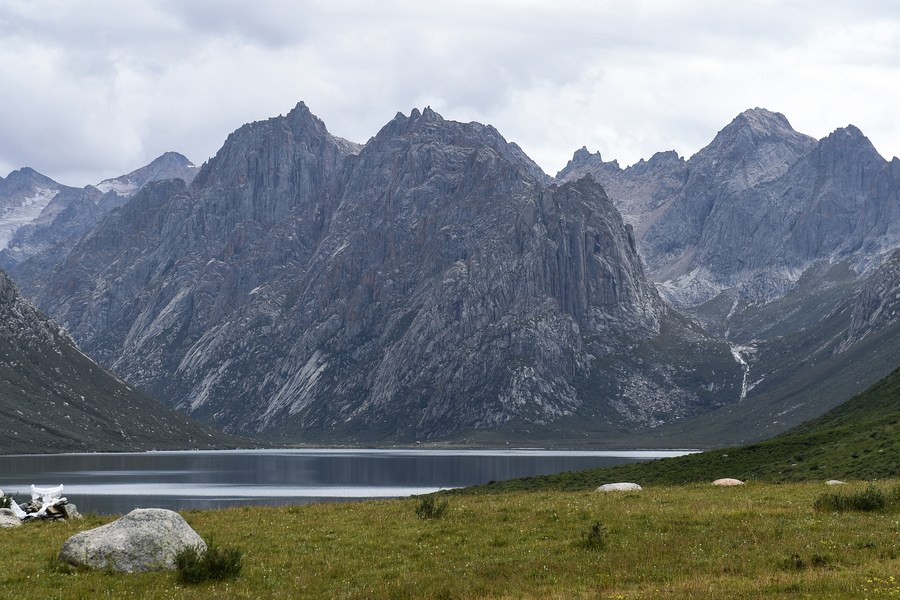
The other involves work initially launched in 2005 by WWF Germany and WWF China addressing conservation concerns about illegal exploitation of vulnerable species that could be used as traditional medicines. Just as the giant panda has become a “flagship” animal species for the mountainous areas in provinces including Sichuan, Shaanxi, and Gansu, two medicinal plant species have emerged as “mini-flagships” representing complementary conservation strategies in these biodiverse landscapes. They have become practical examples of sustainable use outside the core conservation areas that benefit local communities.
Complementary conservation strategies
The conservation of Schisandra sphenanthera and Paris polyphylla highlights the government’s efforts for building a green economy.
Schisandra sphenanthera can help resist infections, improve skin health, and combat insomnia, coughing, and other problems.
From Daping Village’s first commercial sale of 500 kilograms of Schisandra sphenanthera in 2009, the annual quantities rocketed to 30 tons in 2017. Wild harvest was later expanded to 22 villages with residents working under the Pingwu Shuijing Traditional Chinese Medicine (TCM) Cooperative.
Over the past 16 years, an incentive-based conservation model has withstood the test of time. It provides a practical demonstration of how pandas, plants, people and the planet are all interlinked that inspires the 2050 vision of the Convention on Biological Diversity.
Paris polyphylla is traditionally used to relieve various ailments such as snake bites, insect bites, infected wounds, and sore throats.
In China, a massive transition of Paris polyphylla utilization is taking place from wild harvest to cultivation. Increased interest in cultivation of Paris polyphylla for sale of rhizomes has generated a huge market for the species’ seeds as well. And cultivation of this medicinal herb now occurs in many villages in Yunnan and Sichuan, covering a total area of 3,000 to 3,500 hectares. Such cultivation outside high conservation value areas needs to be encouraged and supported.
Rising public awareness
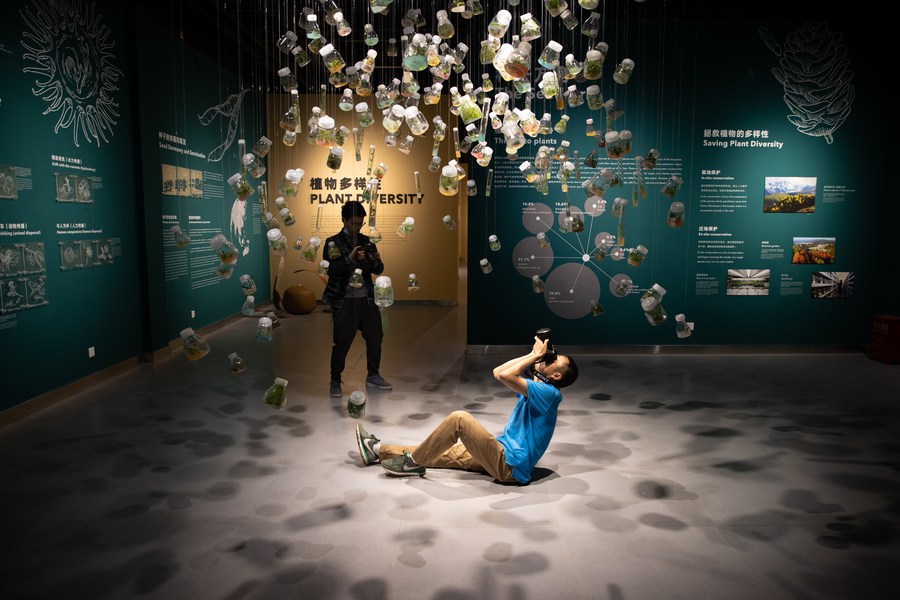
A good understanding of medicinal plant supply chains also raises consumer and corporate awareness and stresses the need to “go green.” And unlike plants, these “flagship species” attract a lot more public attention and conservation action. And better knowledge amongst caring consumers can support change.
For example, when conservation-conscious consumers learn that commercial herbal medicine collectors can have an impact on snow leopards, they may choose more carefully when they buy. They may want to learn more about the negative impact on snow leopard populations in Bhutan and Nepal made by herbal medicine collectors diminishing the blue sheep populations (the main prey for snow leopards) in high mountain areas. Similarly, in Bhutan, commercial collectors of medicines such as caterpillar fungus hunt blue sheep and bring yaks and horses into high mountain pastures, reducing grazing for blue sheep. Leveraging consumer affection for “flagship species” alongside successful models of sustainable use, conservation, and restoration will inspire and inform the 2050 vision of the Convention on Biological Diversity.
The author is a South African scientist who has visited China nearly annually for over 30 years. An adjunct professor at both the University of KwaZulu-Natal (South Africa) and Murdoch University (Australia), he was the Society of Economic Botany’s 2016 “Distinguished Economic Botanist” and was also a recipient of the Sir Peter Scott Award for Conservation Merit from the IUCN Species Survival Commission.
Source: China Pictorial










