From Disaster to No Disaster
 Facebook
 Twitter
 Linkedin
 Google +
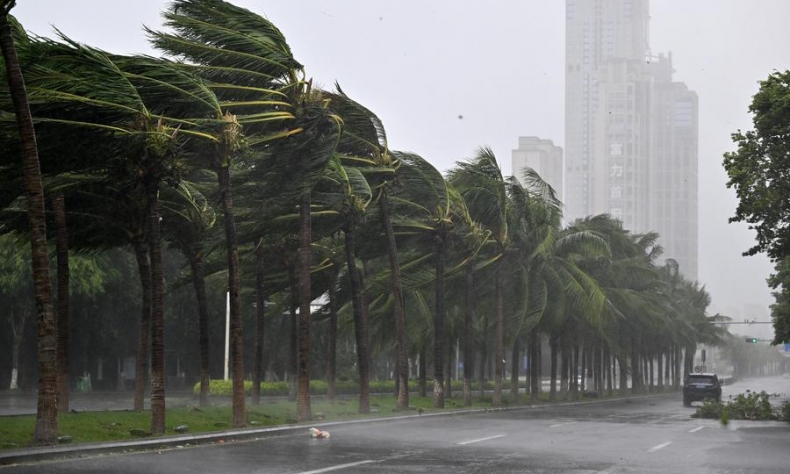
Mitigation requires public participation in monitoring and warning, but this works only in a well-ordered society.
The world is discharging greenhouse gas emissions at the fastest rate in history. This is increasing global temperatures and creating the need for planning to prevent unavoidable and unprecedented climate events from becoming disasters.
October 13 was the International Day for Disaster Risk Reduction, this year focusing on education and children. Children are those who will suffer most if the world continues to heat up. Hence, they need to learn how to cope with the consequences of the selfish failure of their parent’s generation to respond quickly enough to scientists’ warnings.
The Red Cross in Hong Kong marked the day with a carnival in the Sai Kung District that introduced children to the five biggest climate events threatening the city. Each was represented by a heat-fighting character: Rainy, Stormy, Heaty, Floody and Landy.
The symbolism of the first four characters is self-evident but the fifth warrants explanation. Introduced in children’s language, this heat fighter “helps others escape to safety with its elastic feet.” In adult-speak, it emphasizes the importance of community action, individuals coming together to assist and protect others.
The vital importance of raising public awareness and engaging the community in preventative action was also a key learning point to emerge when a group of young scientists from around the world met in Beijing in October. The meeting took place at the Integrated Research on Disaster Risk (IRDR) 2024 International Conference, a scientific program cosponsored by the International Science Council and the United Nations Office for Disaster Risk Reduction. The conference was opened by the new IRDR Executive Director Yang Saini.
Four scientists from Brazil, China, Benin and Greece each detailed the rising risk of adverse climate events to which their governments needed to respond. A fifth scientist, Nchini Livinus Wayih from Cameroon, detailed the perils created by extensive urban development on the flanks of an active volcano. As recently as 1999 an eruption damaged buildings in Buea, a regional capital in Cameroon that has since grown into a city with a population of 300,000.
Volcanic eruptions, of course, are not climatic events although they can have a major impact on climate. Volcanoes erupting over the last 260 million years have led to mass extinctions of life, the release of carbon dioxide super heating the planet on several occasions. More recently, single eruptions such as that of Mount Pinatubo in the Philippines in 1991 and Hunga Tonga in the Tongan archipelago in the southern Pacific Ocean in 2022, have cooled global temperatures. This is perhaps due to the ejection of dust into the atmosphere.
As with climatic events, disasters associated with volcanic activity can be avoided by establishing early warning systems that engage local communities in risk assessment and mitigation efforts. However, resources are always short, especially in developing countries.
Given universal cost constraints, developing cost effective solutions is essential. Wu Shengnan of the Chongqing Academy of Governance, speaking at the IRDR conference, explained how the Chinese experience might have relevance for other countries.

On August 7, 2010, a catastrophic flow of debris cascaded down a mountainside in Zhouqu County, Gansu Province, destroying an area of land 500 meters wide and five kilometers long; 1,501 people died and 264 remain unaccounted for.
Several exceptional events occurred to cause the debris flow at Zhouqu. The county lies in rugged terrain characterized by complex geological structures, soft and fragmented rock and highly weathered surface materials. Two years beforehand, the Wenchuan earthquake had occurred further fracturing the rock strata.
But most significantly, the area had been experiencing unprecedented drought conditions over the previous nine months causing soils to dry and crumble. Then a “once in more than 50-year storm” occurred with over 90 mm of rain falling overnight. The landscape was transformed into an unstable fluid that submerged buildings and their inhabitants as they slept.
There had been no warning but there could have been. Nowadays, drones, optical remote sensing and devices such as the interferometric synthetic aperture radar could and would be used to provide advanced warning. But these methods are expensive as are the potential consequences of doing nothing.
Prevention, therefore, became the goal when reconstructing Zhouqu, assessing risk, rebuilding in low-risk areas, and engineering to divert future debris flows away from built-up areas.
Perhaps more importantly, China has established a system of localized public participation in monitoring and warning (PPMW) which now operates in almost 40,000 townships. The PPMW system relies on community education and active involvement.
Observers are appointed at village level, trained, and required to check potential hazard sites routinely, more often when weather forecasts suggest it to be necessary. Their duty is to alert the village committee of potential hazards with reports then being passed onto the township to initiate a professional assessment of risk. All residents are provided with hazard mitigation information including evacuation instructions and emergency contacts and with personalized guidance reflecting the needs of individual households.
In 2018, an event very similar to that in Zhouqu occurred near Boli Village in Sichuan Province. A landslide buried 80 hectares of farmland and destroyed 186 houses. However, because the PPMW system was active, nobody was killed. Official estimates suggest that the PPMW system saved over 96,600 Chinese lives between 2017 and 2019.
In the same IRDR conference session, Gouvidé Jean Gbaguidi from the West African Science Service Centre on Climate Change and Adapted Land Use explained how climate change in Benin is creating a variety of new hazards in different parts of the country. Flooding and coastal erosion are increasing in the south. In central Benin, problems of drought and bushfires are being exacerbated by intensive farming. In the north, the lethal combination comprises drought and seasonal flooding. Rapid urbanization, as in Cameroon, is aggravating the problem; housing cheaply built of local materials offers little protection against floodwaters.
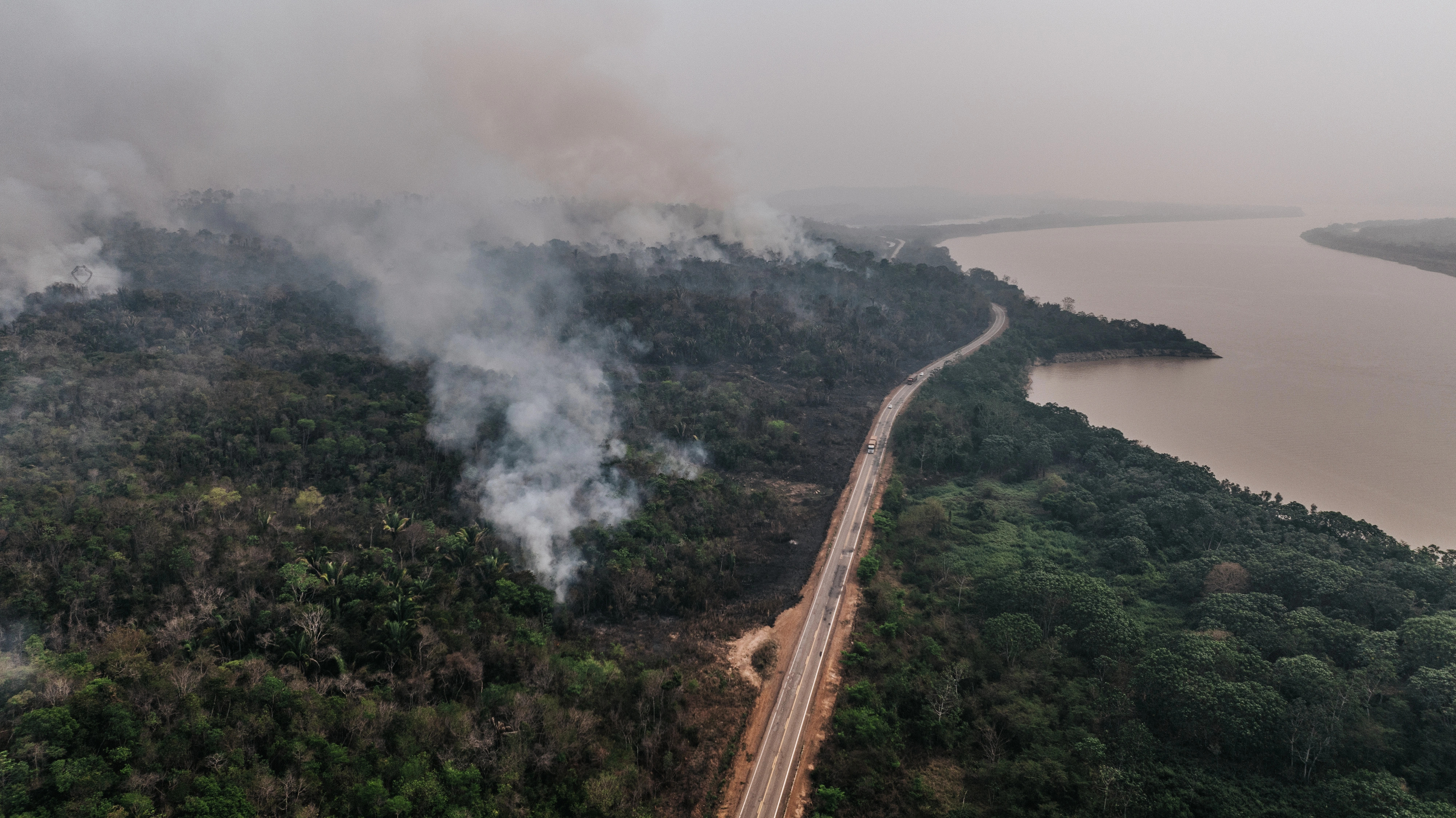
Drought is also a growing problem in the semi-arid regions of Brazil. As drought events become more frequent and severe due to climate change, access to water is becoming increasingly problematic. Lidiane Costa, a graduate student from S?o Paulo State University, focused attention on the vulnerability of people living in urban areas. She and her team found that access to water varied markedly even within cities. The predictors of vulnerability were often associated with poverty: shared housing, no bathrooms or pipe water and low incomes.
Greece is increasingly prone to fires and floods and also experiences over 300 significant earthquakes annually. Chrysoula Chitou, a PhD student at the University of Ioannina, reporting joint work with Professor Stella Tsani of the National and Kapodistrian University of Athens, discussed the policy frameworks of the European Union, and elucidated how the Greek government is striving to build robust regulatory frameworks to be able to assess and manage flood and fire risks.
Greece is one of five European pilot areas seeking to respond to wildfires by integrating social, economic and policy concerns in assessing, reducing and adapting to the new normal. In this, there are some parallels with the Chinese PPMW system.
However, as Chitou explained, Greece faces different challenges, ones shared by other countries represented in the seminar. Policy responsibilities are often spread across different ministries resulting in a lack of coordination. Land use and urban planning laws are inconstantly applied because local governments lack necessary funding and technical expertise and come under pressure from special interest groups. Short-term political priorities, sometimes driven by electoral considerations, often take precedence over the seemingly less immediate need for greater resilience. Public engagement is frequently limited despite efforts to enhance awareness. People seem not to appreciate the importance of following guidelines especially when they counter individual interests – a property cheap enough to afford, or one overlooking the sea or with a mountain vista.
China’s PPMW system works because China is a well-ordered society. Participative government reaches down to the village. Local communal decisions are the norm rather than the exception. Officials are presumed to be acting in the public interest. People are therefore prepared to follow instructions and have always mobilized in pursuit of shared goals. The centrality of the Communist Party of China means that strategic planning is not only possible but results in demonstrable achievements: reduced risk, greater resilience, lives saved.
China, though, is a hard act for other countries to follow.