From Great Nation to Great Power
 Linkedin
 Google +
The road ahead for the PRC after 70 years’ growth
As the People’s Republic of China crests 70 years and is expected to become a great power, there are at least six questions that should be asked of it or any other nation that seeks such a distinction:
First, is it committed to good causes, with an eye on both the present and the future, and especially attentive to those who are most vulnerable and least powerful? Second, does it enjoy the support of most of its people, including economic and cultural stakeholders, and does it provide the means for validating their support and including them in decision-making? Third, does it effectively meet its people’s needs and expectations through good governance? Fourth, does it do well by its neighbors and others in the international community in ways that serve good, greater than narrow national interests? Fifth, does it help protect and improve the natural environment? Sixth, does it accurately acknowledge, and to the extent possible, take responsibility for its history?
Good causes
Socialists can criticize China for not being socialistic enough; capitalists can criticize it for being too socialistic. Nevertheless, first and foremost, one can argue that China’s commitment to socialism—which has taken different and sometimes contradictory forms over the past seven decades, but which today claims a strong and rising nation as its prize and more than 700 million people lifted out of poverty—illustrates a firm commitment to a good cause. While these achievements have never been easy and have sometimes been accompanied by missteps and costs, for many Chinese the ends have justified the means. China’s commitment to good causes touches on a broad range of issues, several of which will be discussed further.
Popular support
It’s widely accepted by many scholars that most people in China support the Chinese leadership in Beijing. When Xi Jinping first took office as China’s top leader, he exhorted Communist Party of China members to study Mao Zedong’s mass line concept, draw close to the people, understand their needs, help shape their expectations in reasonable ways and help improve their material conditions along the way. The government’s anti-poverty efforts and campaigns to revitalize the countryside have likewise drawn approval. Furthermore, the ongoing anti-corruption campaign has been popular, and increasingly, Chinese people appear to have accepted China’s position vis-à-vis the U.S.-instigated trade war.
But surely a great power can accomplish more. Whether or not efforts to further invigorate the Chinese People’s Political Consultative Conference mechanism or to reform and strengthen neighborhood committees and other grassroots organizations can be developed as effective means for increasing popular input remains to be seen. What is clear is that many at least have acknowledged this as an existing need that should be addressed for further progress.
Good governance
Xi has already published two volumes titled Xi Jinping: The Governance of China, and while he may use the word innovation and other words in official discourse, it should be clear, given the anti-corruption campaign, institutional reforms at both the national and local levels, as well as other ongoing efforts, that governance is the key organizing principle of his thought. Such pursuits, while proper and noble, do not in themselves mean that governance is yet good enough, and Xi’s speeches clearly indicate this is the case. In fact, he has explicitly stated that while the government has strengthened its capacity and activities aimed at helping to meet people’s needs—and data seem to support this—there is still a long way to go in terms of meeting people’s expectations. Two well-known examples at the center of nearly everyone’s life are the need to reform primary and secondary education and improve both the quality of and access to healthcare. Ongoing efforts are clear in the latter, and rumors of upcoming major reforms in the former are growing.
A good neighbor
As recently as the Asian financial crisis in 1997, China had built a lot of goodwill with many of its immediate neighbors and had cordial relations with most. Geostrategic shifts affecting national security as well as longstanding historical claims with respect to the Diaoyu Islands, the South China Sea and various points on the Sino-Indian border have complicated matters in recent years. There are likewise those who either fear or welcome the Belt and Road Initiative. That said, China still officially eschews hegemony and pursues massive trade and investment deals, even with countries that Westerners sometimes perceive as China’s enemies.
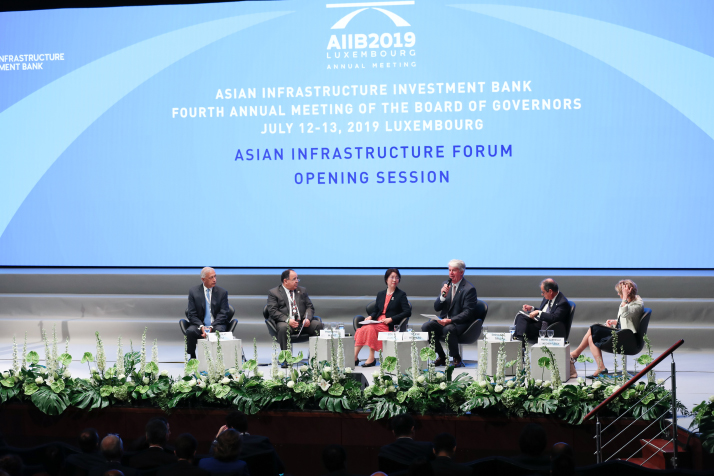
The focus on promoting win-win strategies, trying to avoid the mistakes of neo-colonialism in Africa, promoting multiple poles of international power and building new multilateral institutions and practices such as the Asian Infrastructure Investment Bank, among others, appears to trigger many related concerns that sometimes smack of hyperbolic alarmism. For example, aircraft carrier development in China leaves Western hawks screeching and yet, for comparison’s sake, the U.S. has 11 in service, whereas China has one, a part-constructed vessel left over from the Soviet Navy that was purchased and retrofitted by China largely for research and development. Italy has three; India has three, counting two that have been decommissioned, and is building another, while China is building two.
Environmental position
China’s position on the environment in recent years is mixed but trending progressive in many respects. Unlike the U.S., which appears to be moving almost completely backward at least in terms of federal policymaking, China remains openly committed to reducing national and global carbon emissions, curtailing desertification and promoting green technology and development, among other things. Anti-pollution efforts have made significant progress in recent years following the implementation of new accountability systems.
Nevertheless, there are concerns that China remains too dependent on coal for energy and Chinese consumers’ appetite for cars, even electric ones (which in some cases draw energy from coal-fired plants) is too big, which, among other issues, have limited environmental stewardship. Others worry that massive Belt and Road projects may destroy natural habitats and create new avenues for pollution. A great power needs to meet these concerns head on.
Historical responsibility
While no one should dwell too much on the past, those who lose their foothold on history risk becoming lost in time. This lesson is older than Sima Qian, China’s premier historian, and has been dear to many great thinkers since, including Karl Marx, who believed critical consciousness must be substantially grounded in a robust and accurate understanding of history. But it is hardly surprising that many great powers past and present deliberately shirk this responsibility. Few in the U.S. today can explain why the U.S. started the Second Gulf War in Iraq or what led to the global financial crisis in 2008. Few in the UK appear to have a reliable understanding of Brexit. The current row between the Republic of Korea and Japan over historical responsibility for wartime atrocities no doubt strikes a strong chord with many Chinese as well, as research indicates that most Japanese have little to no awareness of such matters and very little inclination to learn about them. China of course has had its own difficult moments, and in various ways it has acknowledged them, although rarely to the satisfaction of critics. It’s not necessary to satisfy critics and naysayers and likely impossible to do so; and it’s certainly true that China’s accelerated development has compressed history in such a way that makes the perhaps unavoidable foibles of nation-building still a tender scab if not an open wound for some. Does confronting history pick at the scab or help heal the injury? It may well be that a truely great power achieves its greatest leap forward by confronting directly the most difficult moments of its past.
These six standards, it can be argued, are not universalist in a narrowly cultural or civilizational context; rather, they have roots in traditional Eastern and Western mores as well as scientific rationality. That said, they represent ideals that must be grounded firstly in reality while accounting for the frequent tensions that exist among them. For example, popular opinion at home might undercut neighborly relations abroad; there are frequent trade-offs between environmental protection and economic growth and development. No great power has excelled consistently in all six.
The author is a professor of politics and director of the International Graduate Program at East China Normal University in Shanghai