From Poverty Eradication to Common Prosperity
 Facebook
 Twitter
 Linkedin
 Google +
Given that such measures would also contribute to the fulfilment of the goal of common prosperity, alongside rural revitalisation they offer China a win-win-win solution to the challenge of achieving well-rounded human development.
Policy in China does not stand still. Since China eradicated extreme rural poverty in February this year, policy attention has turned to the goal of achieving common prosperity.
To Western eyes, Chinese policy goals often look imprecise and even poetic rather than specific and directive. China has always been a centralised state with power residing in Beijing, literally the Northern capital, for most of the last 800 years. However, China is so vast and varied that policy needs to be interpreted and then implemented by provinces, counties, townships, and villages.
Public officials, party members and academics are currently studying the speech that President Xi Jinping’s gave on July 1st at the centennial commemoration of the founding of the Communist Party of China (CPC) at Tiananmen Square. An important event demands an important speech, and it is generally considered in China that this once-in-a-hundred-years oration lived up to its billing.
President Xi in his speech emphasised the CPC’s “people-centred philosophy of development”. In seeking to make “substantive progress toward achieving well-rounded human development and common prosperity for all”, he stressed the need to “safeguard social fairness and justice, and resolve the imbalances and inadequacies in development, and the most pressing difficulties and problems that are of great concern to the people”.
Since opening-up of the economy under Deng Xiaoping, China has witnessed unprecedented economic growth. While this aided China to eradicate abject rural policy, it has left a legacy of inequality. Growth favoured China’s eastern provinces with trade connections to the outside world and, to a lesser extent, the adjacent central provinces. Western areas, however, were slow to develop, reliant on agriculture and, supplying raw materials to the rest of China, did not benefit from their added value. Urbanisation similarly concentrated wealth in the cities and often left villages in rural areas denuded of their working age population. They are now often reliant on remittances received from migrants working in urban areas.
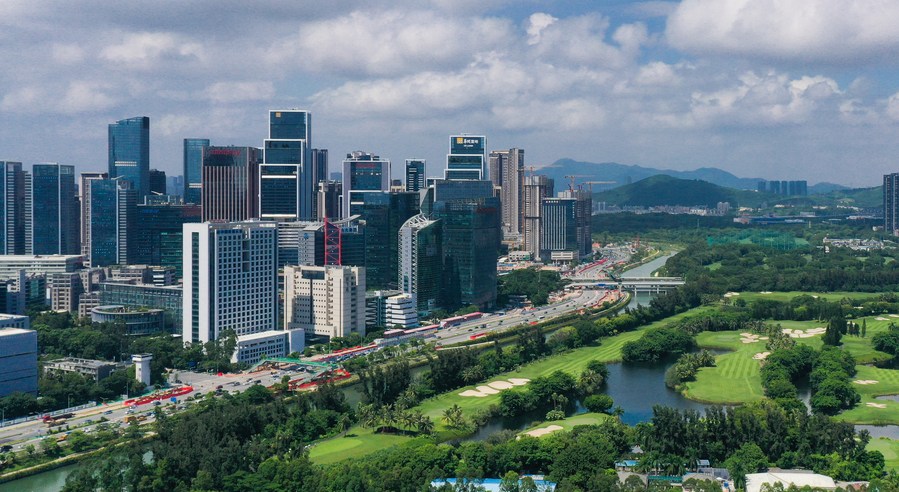
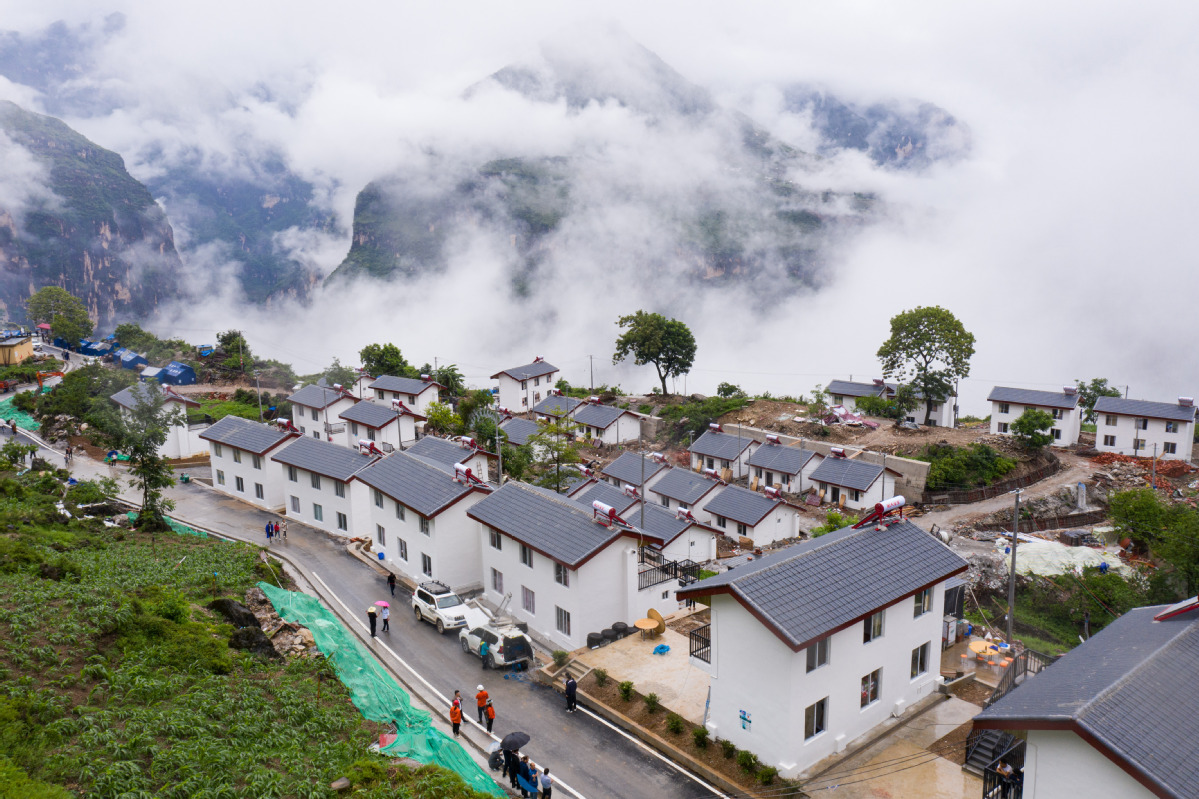
As President Xi made clear, achieving the CPC goal of common prosperity requires these imbalances to be resolved. There are clues as to how this might be done. The State Council Leading Group Office of Poverty Alleviation and Development has become the National Administration for Rural Revitalization. The new Administration has been given the long-term goal of equivalising living standards in rural and urban areas. This is a world-leading objective that is likely to require dispersed urbanisation with the development of secondary cities, and a strengthening of urban-rural linkages perhaps to be achieved by expanding food systems that add value close to village farms. In parallel, many forms of capital will need to be enhanced – human, social and financial –to ensure that rural livelihoods can be improved. Moreover, all of this must be realised while, to borrow President Xi’s words, “promoting harmony between humanity and nature” and “making our country beautiful”.
Although income inequality in China remains high by global standards, the average tax take is comparatively low. This points to a complementary fiscal strategy for achieving common prosperity. China’s tax-to-GDP rate is only 22.1 per cent compared to 27.4 per cent in South Korea, and 33.8 per cent for countries belonging to the Organisation for Economic Development and Cooperation (OECD). Moreover, just five per cent of taxation is taken from personal income, much less than the 24 per cent average for OECD countries. Instead, taxes on goods and services are proportionately high and these tend to be regressive meaning that poorer families pay a disproportionate share. The result is that China’s system of tax and transfers currently has no effect on income inequality whereas policies in most advanced economies typically reduce inequality by over a third. This places China in the enviable position of being able to promote common prosperity without increasing taxes overall. Instead, China could simply shift the balance from sales taxes to income tax which should be progressive with China’s wealthy contributing most.
While progress towards common prosperity can be made by reapportioning taxation, it is surely also important to continue to increase the incomes of the poorest families. Dibao, China’s national social assistance system, protects families against extreme poverty. But many cities are already setting low-income lines much above the urban dibao threshold. They realise that dibao is not itself sufficient to allow people to enjoy an adequate standard of living given China’s growing prosperity. The World Bank reports that the average poverty line set by high middle-income countries like China is $5.50/day. This is, in fact, very close to the low-income line set by cities such as Wuhan. Coincidently, it also approximates to the measure of relative poverty commonly proposed by the OECD: 50 per cent of median disposable income. Ensuring that everyone had an income equivalent to this OECD-World Bank standard would go a long way to achieving common prosperity.
Based on 2017 figures, around 300 million people have incomes below the OECD-World Bank standard and costs would necessarily be incurred in supplementing family incomes. However, in the aftermath of the COVID-19 pandemic, the OECD has already encouraged China to introduce a stronger social safety net, to extend the coverage of unemployment insurance to all workers, and to ensure the “portability” of pension benefits – that is to ensure that pensions acquired under one provincial scheme can be added to and received when living in another province. These measures would all contribute to lifting incomes towards the $5.50/day standard.
Moreover, the OECD has emphasised that such reforms would also “reignite consumption and thus make growth more sustainable” providing China with a win-win strategy for the years ahead. Given that such measures would also contribute to the fulfilment of the goal of common prosperity, alongside rural revitalisation they offer China a win-win-win solution to the challenge of achieving well-rounded human development.
The article reflects the author’s opinions, and not necessarily the views of China Focus.