Governments Must Place Health at Core of Climate Action
 Facebook
 Twitter
 Linkedin
 Google +
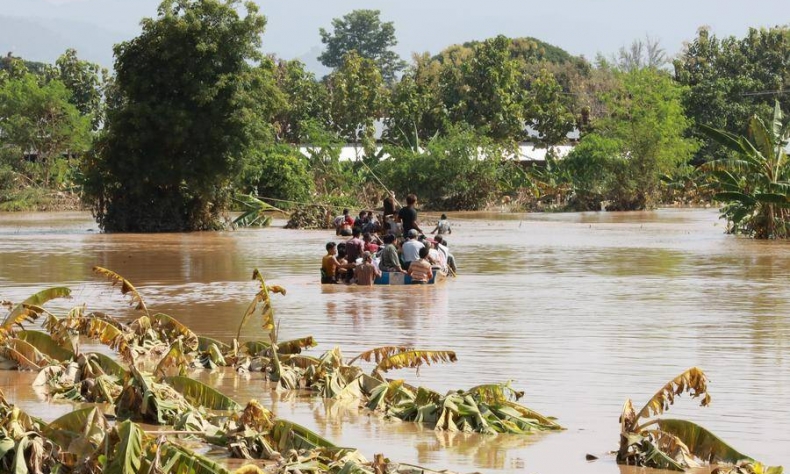
The climate crisis is a health crisis for millions of the most vulnerable people on our warming planet.
As leaders gather for the 29th Climate Conference (COP29) in Azerbaijan, they must face the reality that the climate crisis is a health crisis for millions of the most vulnerable people on our warming planet. Responding effectively means placing health at the center of discussions, policy and funding decisions while also learning from Southeast Asian insights.
My colleagues at Médecins Sans Frontières/Doctors Without Borders (MSF) work in some of the world’s most climate-vulnerable settings, among people who already lack access to basic health care or are deliberately excluded from it. The climate crisis is hitting them hardest. We know because we see them in our waiting rooms more frequently. We can see how failures in climate action have ripple effects on health care in humanitarian settings.
Adamo Armando Palame, an MSF health promotion supervisor in Mozambique, explains it this way: “Those who wonder what climate change looks like should come to Mozambique. We are bearing the brunt of actions by the world’s most polluting countries. We now have malaria all year round, and we are struck by cyclone after cyclone.”
Climate change exposes vulnerable people to greater health risks in two ways. The first is directly through extreme weather events and communicable diseases, including vector-borne and waterborne illnesses. The second is indirectly, as it erodes essential community resources – from basic health care and clean water to livelihoods and sanitation systems. Most-at-risk communities often possess the least adaptive capacity to handle the complex and compounding impacts of climate change, while humanitarian responses to amplified needs become more complicated. In South Sudan, an MSF team observed how unpredictable seasonal patterns and rains forced a usually sedentary community into semi-nomadism for survival, complicating the rollout of a three-round multi-antigen vaccination campaign.
The majority of the 25 countries most vulnerable to climate change and least ready to adapt are affected by armed conflict. Recent armed conflict analysis by the Peace Research Institute Oslo indicates state-based armed conflict is at its highest level in 30 years. With wars in Burkina Faso, Ethiopia, Gaza, Myanmar, Nigeria, Somalia, Sudan and Syria, communities face mounting challenges. These conflicts intensify suffering by destabilizing health care systems and infrastructure, leaving populations even more vulnerable to climate-driven disasters.
In the last two years alone, my colleagues responded to the impacts of widespread flooding in Africa’s Sahel region and parts of Asia, severe tropical cyclones in Madagascar and Mozambique, and relentless heat and drought that have driven millions to the edge of starvation in Somalia and Ethiopia.
In the same period, we also responded to cholera outbreaks in more than 10 countries where poor access to clean water and inadequate health care infrastructure collided with rising temperatures and extreme weather cycles. Data from the World Health Organization (WHO) indicates that 35 countries had cholera outbreaks in 2023 – 13% more than in 2022.
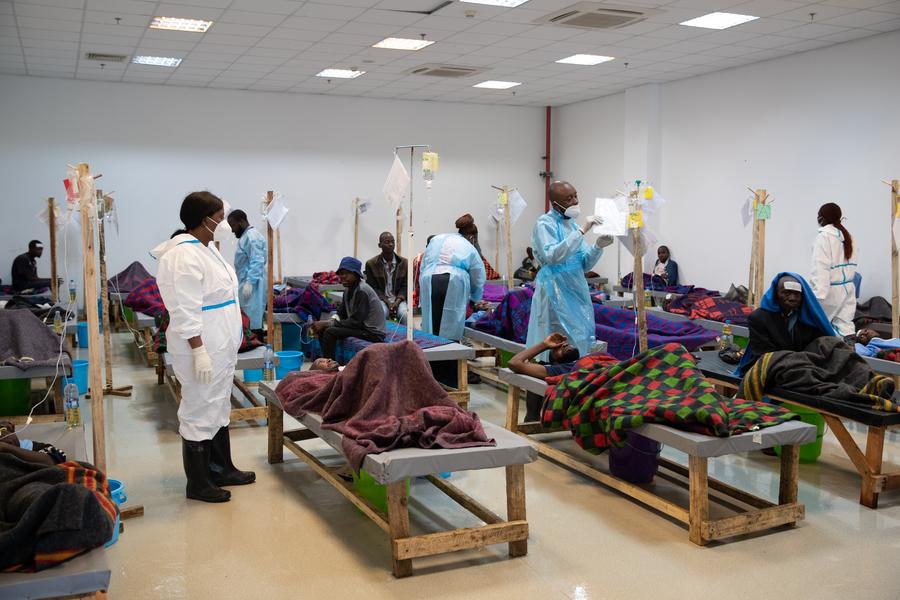
A deadly mix of malaria and malnutrition has kept our pediatric wards full across the Sahel region. In Chad, our teams now provide prevention and treatment for malnutrition all year round rather than just seasonally as before.
From Niger to Mozambique and Honduras to Bangladesh, we’re seeing more malaria and dengue cases as climate change allows mosquitoes to thrive in new locations and for longer periods. Dengue is the most common and concerning. Over 3.9 billion people are estimated to be exposed to the disease globally today, while the number will likely increase by a further billion by 2050, according to WHO.
Dengue is already endemic in Southeast Asia. MSF has replicated elsewhere some of the successes that Indonesia, Malaysia, Thailand, and Vietnam have had in trialing innovative vector-control methods. In Honduras, where more than 10,000 cases of dengue are reported annually, the transmission potential has increased significantly, and MSF teams have responded to seven outbreaks in 14 years.
Traditional chemical vector-control methods are less effective now because mosquitoes have become resistant to them. Last year, MSF and the Honduran Ministry of Health launched new vector-control studies, including a Wolbachia method pilot similar to one done in Southeast Asia. The mosquito population of a Tegucigalpa district is being replaced with mosquitoes inoculated with the Wolbachia bacteria, which blocks dengue viruses from replicating, thereby cutting transmission. In previous studies, Wolbachia was proven to reduce dengue transmission by up to 95%. The method appears to be environmentally safe, self-sustaining and cost-effective.
I hope that trialing practical solutions in Southeast Asia in ways that humanitarian groups like MSF can replicate elsewhere in the world becomes a feature of the emerging future humanitarian landscape. This region can be a source of solutions for other places where institutions are sometimes less strong or reliable. That would be an excellent expression of solidarity via concrete action.
Other steps should include producing and sharing knowledge to fill gaps. An MSF review of the latest assessment reports by the authoritative Intergovernmental Panel on Climate Change highlighted that meningitis, snakebite, leishmaniasis, measles, Ebola and human African trypanosomiasis – all climate-sensitive diseases and humanitarian health problems – were underreported or absent in the latest edition.
While health doesn’t yet feature prominently in international decision-making processes, it urgently needs to be at the center of all multilateral climate negotiations, policies, commitments and action. This means bringing health organizations and stakeholders to the negotiating table. Here too, Southeast Asia can play a significant role.
Finally, coherence in planning for and responding to climate health emergencies is essential since efforts still often remain siloed, with little coordination and coherence across sectors – perhaps most of all, in terms of funding. A key focus of COP29 will fall on finance, and we already see some countries choosing to cut humanitarian funding and divert that money to climate programming. This is the wrong approach. Coherent climate action must fill gaps and enhance humanitarian and development assistance, not be set up to compete with it.
Christopher Lockyear is secretary general of the international medical humanitarian organization Doctors Without Borders/Medecins Sans Frontieres (MSF).