Green Is Gold
 Facebook
 Twitter
 Linkedin
 Google +

China is dedicated to enhancing its living environment to create a beautiful and sustainable home for all, a home characterized by lush mountains, verdant fields, vibrant wildlife and blooming flora.
On April 30, 2021,?during the 29th group study session of the Political Bureau of the 19th Communist Party of China Central Committee, President Xi Jinping quoted?the?ancient proverb?“Plants, trees and forests are a nation’s wealth”?to?underscore the importance of maintaining?harmony between humanity and nature.
The text?has its origins in the ancient Chinese political and philosophical text?Guan Zi?written by?philosopher and statesman Guan Zhong?some 2,700 years ago. It?expresses the idea that a good ecological environment has both an economic and social value in its own right.
China has exerted significant efforts to advance?an ecological civilization, recognizing its vital role in sustaining the development of the nation. The belief that “green is gold” is a?widespread?consensus among the country’s population, reflecting the shared understanding that prioritizing environmental harmony is crucial for both nature and humanity.
Take, for example,?Yucun Village in Anji County, Zhejiang Province.?Once a major limestone-mining area,?the village?has?transformed?itself?into a picturesque?community featuring?a sea of bamboo,?in turn becoming?a?highly?sought-after?tourist?destination.
Once plagued by droughts, Youyu?County in Shanxi?Province?has?witnessed a remarkable increase in forest coverage, soaring?from less than 0.3 percent 70 years ago to?a current?57 percent.?The once barren land is now?a?lush oasis,?with an eco-ranch and agro-tourism emerging as major sources of local income.
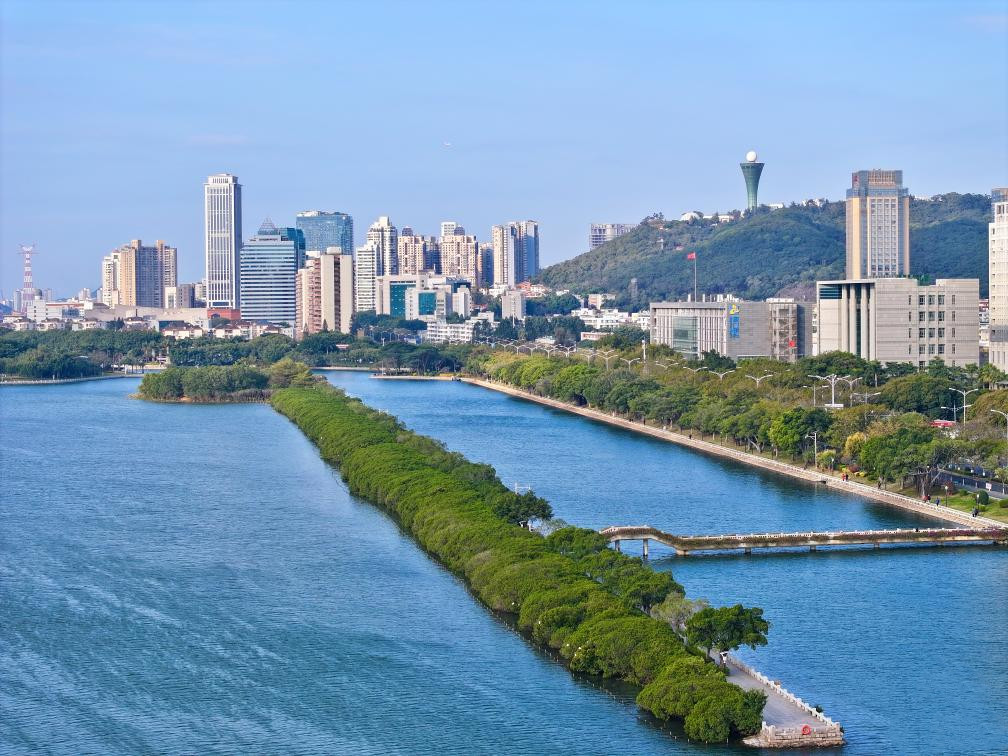
Thanks to continued?ecological?conservation?efforts, Yundang Lake in Xiamen, Fujian Province, has been converted from a polluted,?foul-smelling?water body?covered in litter and overgrown weeds?into an area?well-known?for its clean water, mangroves, egrets and other wildlife.?It has become a popular tourist attraction and a landmark of the coastal city.
To coordinate the preservation and restoration of ecosystems in mountains, rivers, forests, farmlands, lakes, grasslands and sandy lands, the Chinese Government?in 2016?launched the Shan-Shui Initiative under which it has thus far?carried out dozens of?massive?projects to restore vital ecosystems.?Shan-Shui literally translates to “mountains and rivers.”
In December 2022, the initiative was included as?one of?the?10 global flagship projects recognized by the United Nations for aiding planetary health. As of December 2023, 5.33 million hectares had been restored.
The efforts to translate these environmental benefits into?foundation?for?ecological agriculture, industry and?tourism continue to be a priority throughout China.
The country?is dedicated to enhancing its living environment to create a beautiful and sustainable home for all,?a home characterized by lush mountains, verdant fields, vibrant wildlife and blooming flora.
The magnificent landscape not only enhances the income and aesthetic enjoyment of the Chinese people, but also fosters sustainable economic and social development.?In turn, a?greener China?contributes to the creation of a?more beautiful global village.
Harmony between humanity and nature?is one of the key features of Chinese modernization.
China?will consistently prioritize environmental protection to inject?powerful?impetus?into the country’s high-quality development.