Growth and Green Ambition Forge a Global Blueprint
 Facebook
 Twitter
 Linkedin
 Google +

While China pioneers a revolutionary model of ecological civilization, some Western nations, faltering under fragmented policies and infrastructural inertia, should catch up, reconciling prosperity with planetary survival.
China has demonstrated remarkable success in navigating the intricate interplay between economic growth and ecological sustainability, a formidable challenge that demands nuanced balance. This achievement stems from a coordinated nationwide effort: central, provincial, municipal, and county authorities collaborate seamlessly with industry leaders, energy providers, the scientific community, and citizens alike. Through sustained, cross-sector partnerships and a shared commitment to long-term goals, China is forging a model of integrated development where economic progress and environmental stewardship reinforce one another.
Slow progress in the West
Europe’s energy transition efforts exemplify the complexities inherent in balancing ambitious climate goals with practical implementation. The EU in general and Germany specifically are already on track to miss their 2030 and 2035 emissions reduction targets by significant margins. Key challenges abound: The pace of adoption of electric vehicles (EVs), for example, is falling far short of what is needed, funding policies appear inconsistent, and regulatory processes are often poorly coordinated, asynchronous, or even contradictory.
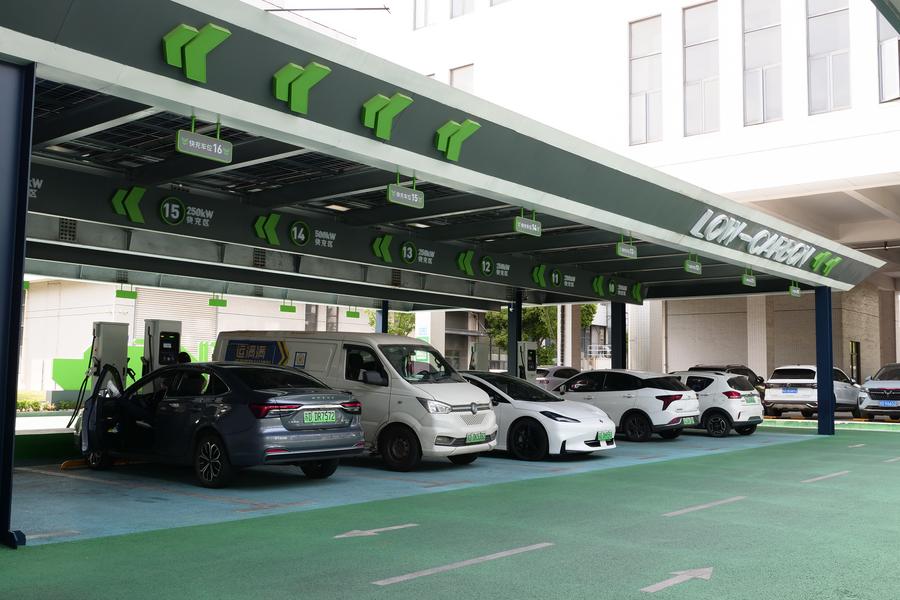
A critical bottleneck lies in the glaring inadequacy of charging infrastructure to support the envisioned EV expansion. Meanwhile, parallel policies governing nuclear energy, coal, gas, renewables, and heat pump incentives frequently clash, lacking both coordination and a coherent long-term strategy. This disjointed approach undermines progress, creating inefficiencies and conflicting priorities across sectors.
The limitations of Germany’s high-voltage electricity grids starkly illustrate these systemic issues. These grids were originally designed for centralized power distribution, not for transporting vast quantities of wind-generated energy from the country’s north to industrial hubs in the south. The resulting instability in voltage and power flows has forced manufacturers to contend with costly production disruptions, eroding confidence in the energy transition’s feasibility.
There are other problems as well: Hydrogen energy initiatives are struggling to gain traction, while Germany’s industrial base, particularly small and medium-sized enterprises (SMEs), faces mounting pressures. The automotive industry, a cornerstone of the economy, is now investing more abroad (notably to the U.S. and China). In many industries, new investment is waning. And it is difficult to keep individual consumers in line with an active climate and renewable energy (RE) policy. Private-sector skepticism toward climate policies is growing amid rising costs. Even the EU’s emerging battery manufacturing sector, symbolized by the beleaguered Northvolt project, is now teetering on the brink of collapse.
China’s ecological progress: a holistic vision for civilization
In China, climate and environmental policies have long been driven by a visionary goal: building a comprehensive ecological civilization that acknowledges the complexity of global challenges and strategically addresses them through calculated, multifaceted action.
The nation’s approach combines long-term, multidisciplinary strategies spanning industrial, infrastructure, innovation and fiscal policies, alongside skilled labor development, sustainable agriculture, and public engagement. Central to this framework is a dual focus: establishing clear standards while creating opportunities for citizens and industries to thrive.
At the heart of China’s strategy lies a recognition of humanity’s interdependence. As ecological crises threaten global stability, China champions the concept of a “community with a shared future,” reflected in its global initiatives for development, civilization, and security.
These efforts align with what has also been called “global commons” in Europe, promoting cooperation through platforms like the Belt and Road Initiative (BRI), regional partnerships, and South-South dialogue. Today, over 150 nations collaborate under these frameworks, reshaping trade, labor, and ecological globalization.
China has emerged as the world’s first ecological superpower, harmonizing ambitious goals with systemic action. Public discourse increasingly centers on collective responsibility for Earth’s future, translating into tangible change.
“Green lifestyle for all citizens” ethos has moved beyond policy to daily life. Chinese consumers prioritize sustainable packaging, lead global adoption of mini-EVs, and engage in mass reforestation.
Underpinned by history’s largest reforestation program, China has expanded forests to 25 percent of its land. Projects like the 3,000-km Green Wall around the Taklamakan Desert (30 million hectares of trees by 2024) combat desertification, enhance regional climates, and sequester carbon emissions.
China’s biodiversity strategy is embedded in the most spectacular reforestation program in human history. Gigantic swaths of forests, national parks, and specialized nature reserves as well as biodiversity zones, are all thriving due to a strategy that requires highly qualified, multidisciplinary, long-term measures. It has pushed back deserts and created new water cycles and regional climate improvements.
We see tree belts and protected greenery everywhere, even in the clean, quiet, and livable Chinese cities, as well as along the highways. And the air quality in the cities with millions of inhabitants has improved greatly over the last two to three decades.
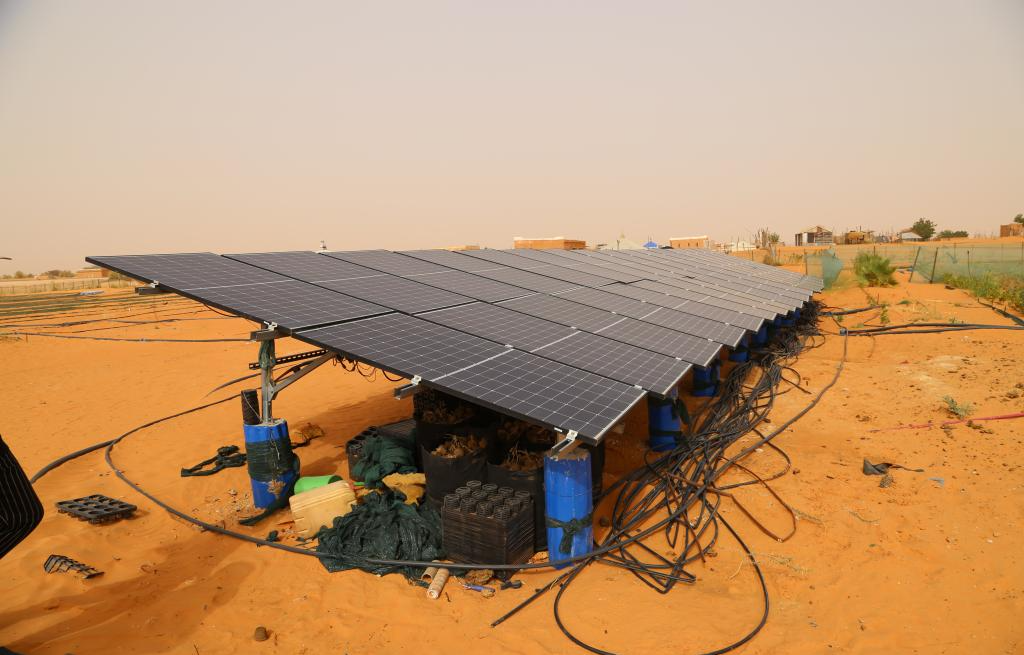
In the clear energy domain, China produces and innovates more renewable technologies – solar, wind, EVs, hydrogen, and smart grids – than all Western nations combined. Renewable electricity now costs less than fossil fuels, demonstrating a market-driven green transition.
Technical progress in China is being driven forward in such a way that it enhances productivity during production and lowers carbon emissions (eco-efficiency) during consumption.
China’s progress merges productivity with sustainability. During the 13th Five-Year Plan period (2016–2020), annual GDP growth of 5.7 percent required just 2.8 percent energy growth. During the 14th Five-Year Plan period (2021–2025) China surpassed targets: energy consumption per GDP unit fell by 13.5 percent, and carbon intensity dropped by 18 percent.
From urban green belts to cutting-edge clean tech, China’s ecological transformation proves that systemic change is possible. By intertwining innovation, policy, and public participation, the nation offers a blueprint for reconciling economic growth with planetary survival.
Global climate transition demands global cooperation
While Western nations often label China’s ecological transformation – marked by the closure of coal mines, coal-fired power plants, and legacy industries like steel, alongside rapid advancements in renewable energy, green technologies, and sustainable products – as creating “overcapacities” that “flood global markets,” this perspective overlooks critical nuances.
China’s ecological progress is deeply intertwined with its market competitiveness, driven by a vast and growing domestic market, economies of scale, fully integrated supply chains, world-class infrastructure, a skilled workforce, and regulated capital and profit margins.
All this enables green technologies and products also affordable for ordinary households. The average price of a new car in China is around US $18,000, but in the EU region, it can be as high as US $49,000, a disparity reflecting China’s cost-efficiency in sustainable innovation.
Though China leads in developing and manufacturing eco-technologies across a majority of industrial sectors, it prioritizes domestic demand over exports. Only a small share of its production targets Western markets. Meanwhile, China is pioneering ecologically sustainable industrialization in the Global South.
Through initiatives like the Kunming Biodiversity Fund, the Shanghai Model for debt relief tied to environmental investments, and green financing under the UN and Belt and Road Initiative (BRI), China supports developing nations in leapfrogging to cleaner growth pathways.
Today, the Green Silk Road is by far the largest interconnected eco-project in the world and the most important driver for the global green transition. Analyses suggest China’s efforts have already tangibly reduced global carbon dioxide emissions.
Yet even these strides fall short of meeting urgent climate goals. The International Energy Agency warns that by 2030/35, global renewable energy expansion must triple, NEV sales must surge 4.5-fold, and solar PV deployment must increase tenfold.
China’s role as the “green factory of the world” is undeniable, with breakthroughs spanning fusion energy, thorium-based nuclear reactors, advanced energy storage, ultra-high-voltage grids, biomaterials, and smart mobility systems. Daily innovations in recyclable materials, emission-free industrial parks, and sustainable urban planning further cement its leadership.
As China drafts its 15th Five-Year Plan (2026–2030), the focus remains on boosting productivity and quality while evading the middle-income trap. The nation has transcended the false dichotomy between economic growth and ecological health, instead positioning green transformation as a catalyst for societal progress. Its 2030 climate targets are projected to be exceeded years ahead of schedule.
For Germany and others committed to a green transition, collaboration with China offers mutually beneficial opportunities. With global challenges escalating and timelines tightening, proactive partnerships are essential. The door to cooperation is open – but time, much like the climate crisis, waits for no one.
Wolfram Elsner is a professor of economics at the German University of Bremen, a longtime China expert, and author of numerous publications on China.