Indonesian Ambassador: Developing Synergy Between BRI and Indonesia’s Global Maritime Fulcrum
 Facebook
 Twitter
 Linkedin
 Google +

Indonesia-China relations have shown a satisfying enhancement, especially after both agreed to form a comprehensive strategic partnership in 2013 and succeeded in synergizing Indonesia’s Global Maritime Fulcrum and the BRI in 2018.
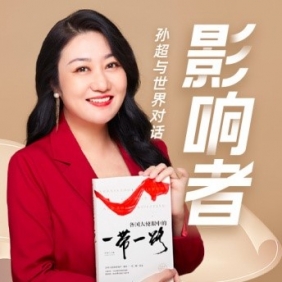
Editor’s Note:?President Xi Jinping proposed to jointly build the 21st-Century Maritime Silk Road for the first time during his visit to Indonesia on October 3, 2013. The Silk Road Economic Belt and the 21st-Century Maritime Silk Road were later known as the Belt and Road Initiative (BRI). Today, Indonesia has become an important participant of the BRI. The G20 Presidency has put Indonesia at the center of international attention in 2022. Mr. Djauhari Oratmangun, Ambassador of Indonesia to China shares his insights into the bilateral relations and the cooperation on the BRI in an interview with Ms. Sun Chao, the author of “Global Leaders on the Belt and Road Initiative”. Authorized by Sun Chao, the excerpts of the interview are published by China Focus.
Sun Chao: Mr. Ambassador, how do you feel life in Beijing? What is the biggest difference between China and Indonesia?
Djauhari Oratmangun: During my diplomatic career, I have been to China for more than 20 times. I witnessed the real development of China. The first time I went to Shanghai was in the year of 1999. I was staying in a hotel at Pudong. And the first time I went to Beijing was in 2000. I was staying at Westin Hotel. There was a large area in front of the hotel in the construction. There were not so many big shopping malls as well. But 18 years later, you have so many big shopping centers, new high-rise buildings and well-planned green cities here. China’s development is unbelievable.
I like to ride my bicycle in Beijing. I like pedaling along broad avenues or through winding lanes in Beijing. Every morning, a lot of beautiful things happen in Beijing. People dancing, people singing, and people selling their food. There are many things to do here in Beijing because Beijing is rich in culture. Beijing is rich in history, and one important thing as well is that I think you have warm hearts here in Beijing.
Sun Chao: Mr. Ambassador, as the G20 Presidency puts Indonesia at the center of international attention, what else do you want us to know and to remember about your country Indonesia?
Djauhari Oratmangun: We are of course one of the biggest economic powers in the world. For population, we are No.4 now with about 270 million people. We have over 17,400 islands; we have more than 1,000 ethnic languages, but we are all united to become one country. President Sukarno and Vice President Hatta announced the independence of the Republic of Indonesia on August 17, 1945. That is Indonesia. In terms of economy and GDP, we are No.15 in the world. We have already passed USD one trillion at GDP with such a great population and stronger middle class. We have affluent labor force, especially young and middle-aged ones. Our economy growth in the last five years has increased steadily at more than 5 percent. We are one of the leaders in Southeast Asia in the fields of digital economy and e-commerce.
With abundant resources and potential, Indonesia is perfectly matched with China’s cutting-edge technologies, financing and so on. With this understanding, Indonesia is open to China’s investment to tackle today’s global trends and issues, such as health, digital, and energy transition issues. The collaboration with China is also essential to boost our government’s efforts to strengthen Indonesia’s downstream industries, leading to value-added export commodities and making Indonesia the center of the global value chain in many products such as lithium batteries and vaccines.

“I participated in the negotiations to establish the WTO”
Sun Chao: Mr. Ambassador, I know you have a very successful career. Would you like to share the unforgettable stories during your professional life?
Djauhari Oratmangun: As a young diplomat, I started my diplomatic career in 1986 at the Indonesian Mission to United Nations in New York. It was quite exciting for me to be at the centre of multinational diplomacy. During the four years there, I have experienced and learnt quite a lot. And then after New York, I moved to Geneva, still in the United Nations. I was there for four years as the second secretary and then the first secretary. When I was in Geneva, I participated in the negotiations to establish the WTO, which finally set up in 1995. After in New York doing something very macro, I moved to Geneva to do something very micro, which was quite different, because you need to negotiate from line to line.
After Geneva, I returned to New York again. I became a senior diplomat in charge of the economy issues at the United Nations. I still remember that once I chaired a negotiation on the information and communication technology for development. That was the first time that we had the United Nations to discuss the information, communication and technology. After that, the Internet governance was also included in the topic list. We also started the negotiation on the sustainable development, and then millennial development goals were adopted in the year of 2000.
In the year of 2001, I went back to Jakarta, becoming the director of the multilateral department. After working in this position for a few years, I moved to Netherlands as the Minister of Indonesia. Netherlands is an interesting country because the population there is about 16 million, but like 10 percent of their population, about 1.5 or 1.6 million are Indonesian descent.
After that, I returned to Jakarta to become the deputy minister in charge of relative affairs of the ASEAN. During that period, Indonesia chaired the ASEAN in 2011. After ASEAN, I went to Russia to be the ambassador to Russia for four years (2012-2016). Then I became the adviser to the Foreign Affairs Minister on the strategic issues to other countries. In 2018, I proudly become the ambassador to China in beautiful Beijing.
Sun Chao: Would you please share with us your deep understanding on multilateralism and globalization?
Djauhari Oratmangun:?International organizations have experienced a complete change, because more and more emerging markets, developing countries including China have played a more positive role in the international multilateral system. More changes will happen in the years to come. So, I think the international macroeconomic infrastructure or international financial infrastructure need to be adjusted as well to accommodate the coming of the new economic powerhouse.
The developing countries become more developed so they would like to have a say as well in the regional architecture, global geopolitics and geo-economics, so this is something happening naturally. China is now becoming an economic power, so do some of the ASEAN countries and Asian countries. The world order now has completely changed. India is coming, ASEAN is coming, Brazil is coming, so it is and will change the geo-economics and geopolitics. We need to promote further cooperation while the new players are coming.

Sun Chao: Mr. Ambassador, just now you have mentioned e-commerce a few times. The new industry like big data, electronic payment and e-commerce are also booming in your country. Therefore, how is the development of these emerging industries in Indonesia?
Djauhari Oratmangun: Now we don’t need to embrace new technology, because new technology is already coming. We need to adapt to it as quickly as possible and get benefit from it. Like you mentioned, big data, Artificial Intelligence, cashless payment, block chain, cloud technology…they are already here and change our lives quickly.
I have already visited a lot of big companies in China. I have been to Huawei. And I visited Alibaba headquarters in Hangzhou and accompanied Ministers to meet Mr. Jack Ma Yun in Jakarta. I visited Tsinghua University. I visited Tencent in Shenzhen and JD in Beijing. I talked to leaders of JD to take full advantage of their platform to further advance business interaction between our two countries.
Tsinghua Southeast Asia Center was established in Bali, Indonesia. I was there during the inauguration with the president of Tsinghua University. What’s more, Alibaba Institute in Southeast Asia was also located in Indonesia. Both Alibaba and Tencent have already started to negotiate with the government of Indonesia on using cashless payments including Alipay and WeChat pay, since there are too many Chinese tourists.
In addition, Tencent invested one of the leading start-up companies in Indonesia, Go-Jek. And then, JD.ID, the branch of JD, has already existed in Indonesia. Not to mention TikTok (whose parent company is ByteDance), which is popular from China to Indonesia.
Vision 2030 of Indonesia
Sun Chao: Indonesia is the starting point of “the 21st Century Maritime Silk Road”. So how do you see the Belt and Road Initiative (BRI) and what?actions?and plans have Indonesia undertaken to better engage in the initiative??
Djauhari Oratmangun: We are the starting point of “the 21st Century Maritime Silk Road”. We’ve already started some of the projects that we implement within the context of the Belt and Road Initiative.
Morowali Industrial Park is one of the success stories of cooperation between two countries. China has already joined in the parks of Indonesia, not only in Morowali but also, we start discussing the projects in North Maluku and Kalimantan. Even in North Maluku Chinese companies have already settled. It is a good thing. Some of these biggest industries, including the steel industry, would like to locate their factories in Indonesia. These all benefit from the closer relations and dialogue between leaders of Indonesia and China. Many companies respond to the vision of leaders and things happen in a positive way.
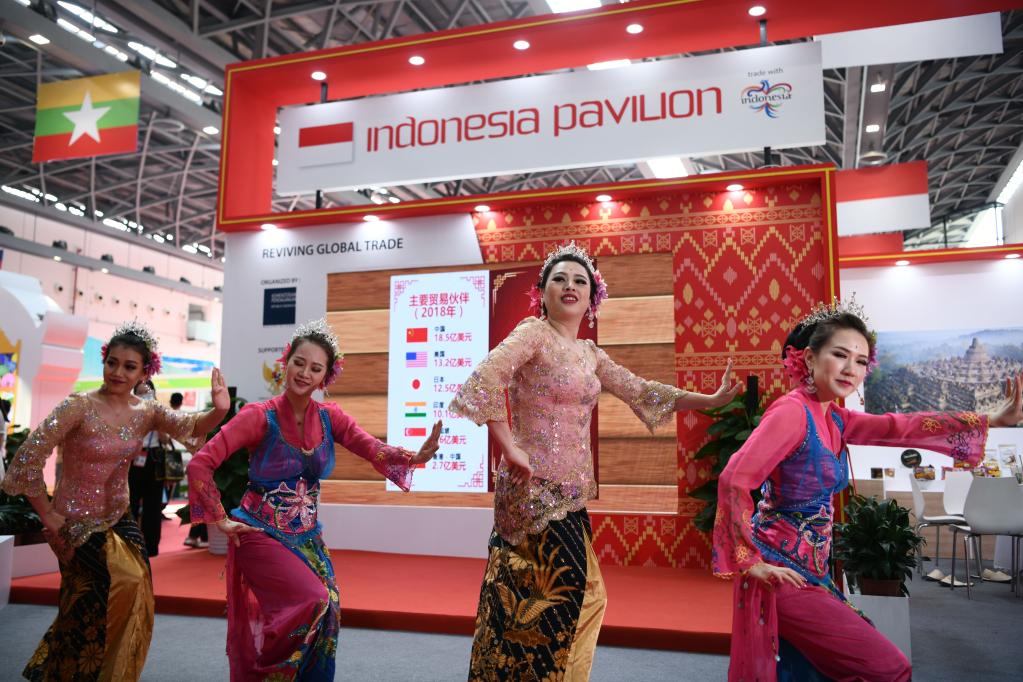
We need to accelerate our economic growth to 6 percent. If we are able to do that, then we can guarantee that beyond 2030 Indonesia is going to become one of the top five in the world economy. Then how can we accelerate our economy growth?
Number one is to increase export. China is the biggest trading partner of Indonesia, so if the government of China will open the market for Indonesian products, the export of Indonesia will increase dramatically.
Number two is to expand investment. China is the third biggest investor in Indonesia now. If China can continue to increase the investment in Indonesia, it can guarantee the acceleration of economy growth of Indonesia.
Number three is to develop tourism economy. Before Covid-19, the contribution of tourism has taken up almost 10 percent of our GDP. And the most of tourists come from China.
Number four is to develop digital economy and e-commerce. Those four elements of acceleration of the Indonesia national economic growth are related to China, so we hope to promote cooperation with China in these fields.
RCEP furthermore strengthens regional economic integration
Sun Chao: How do you evaluate economic and trade cooperation between China and ASEAN countries, especially Indonesia?
Djauhari Oratmangun: Indonesia-China relations have shown a satisfying enhancement, especially after both agreed to form a comprehensive strategic partnership in 2013 and succeeded in synergizing Indonesia’s Global Maritime Fulcrum and the BRI in 2018. The mature relations are reflected in numbers as follows:
In the investment sector, in 2021, China’s investment in Indonesia reached $3.2 billion. With this figure, China became the third largest investor in Indonesia. Meanwhile, China’s Hong Kong Special Administrative Region (SAR) became the second largest investor with a total realized investment of $4.6 billion. The total trade between Indonesia and China in 2021 reached $124.3 billion, increasing 58.4 percent year-on-year.
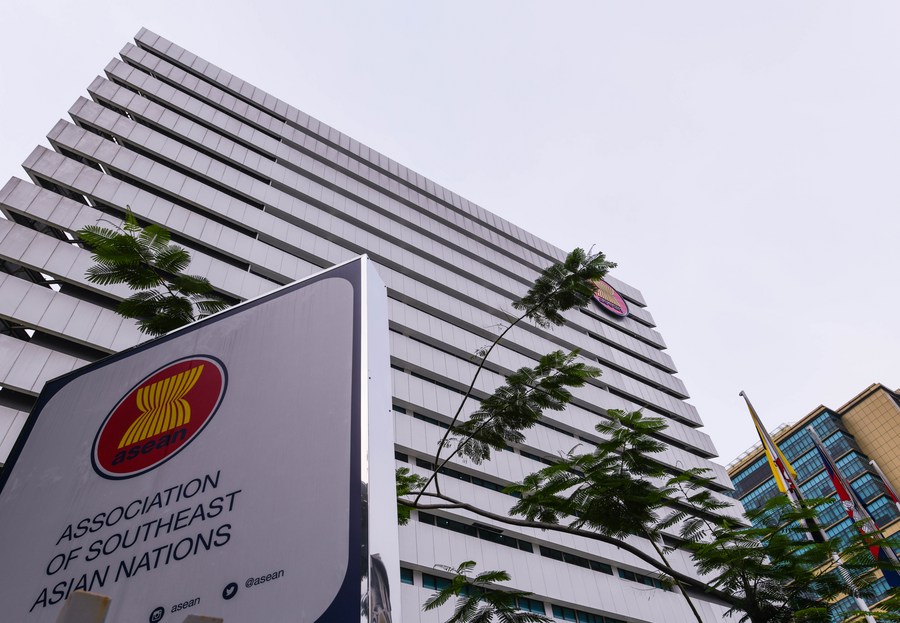
In the future, Indonesia, China and other countries can continue to cooperate under the framework of ASEAN; and China could cooperate with Indonesia, the ASEAN members and ASEAN partners like Australia, New Zealand, Japan, Canada and the United States. Because of ASEAN-China Free Trade Agreement, the mechanism of cooperation is already there and meanwhile we could also cooperate with partners out of ASEAN.
Sun Chao: The Regional Comprehensive Economic Partnership (RCEP) agreement was initiated by Indonesia when it took over the ASEAN presidency in 2011. How do you evaluate the outcomes that the RCEP has created for bilateral economic and trade ties after the agreement has entered force?
Djauhari Oratmangun: The entry into force of the RCEP agreement reflects the region’s determination to keep its markets open, free, fair and inclusive, while also indicates that the rules-based multilateral trading system will ultimately contribute to the joint efforts of the global post-pandemic recovery. RCEP furthermore strengthens regional economic integration.
RCEP will also create new business opportunities, strengthen supply chains in the region, and encourage SMEs’ participation in regional value chains and production hubs.
Sun Chao: Mr. Ambassador, what achievements have been made and what progresses have impressed you the most since you became of the Ambassador of Indonesia to China?
Djauhari Oratmangun: As I mentioned to you, I proudly become the Ambassador of Indonesia to China in 2018. And in the same year, Indonesia and China agreed to synergize the Global Maritime Fulcrum and the Belt and Road Initiative through the signing of a Memorandum of Understanding on Jointly Promoting Cooperation within the framework of the Global Maritime Fulcrum Vision and the Silk Road Economic Belt and the 21st Century Maritime Silk Road.
We both agreed to develop four economic corridors in Indonesia: North Sumatra is being developed as an “Economic and Business Hub for ASEAN”, North Kalimantan as “Energy and Mineral Hub”, Bali as “Hightech and Creative Economy Hub” and North Sulawesi as “Pacific Rim Economic Hub”.
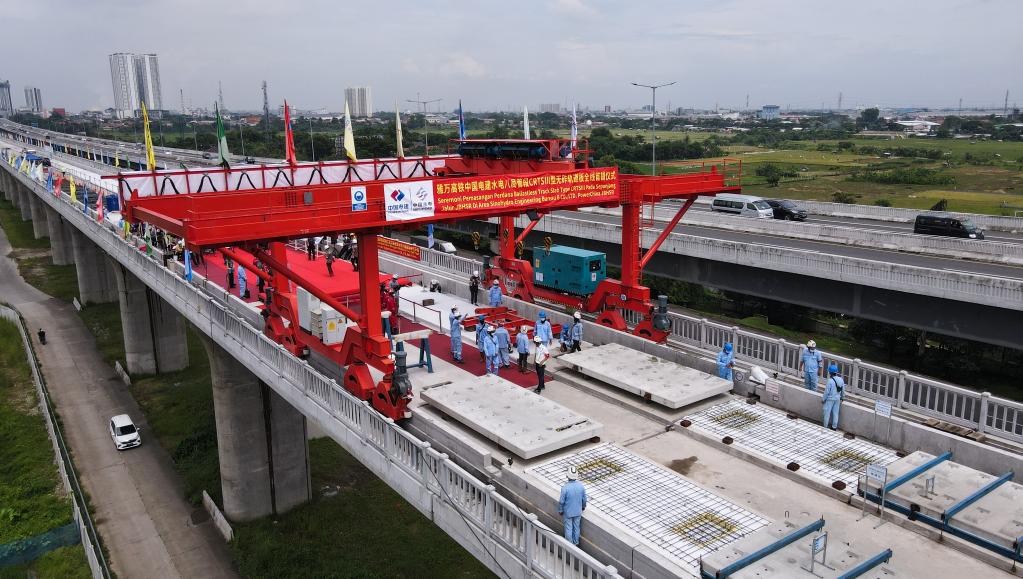
The synergy has resulted in many essential projects, some of which have become our national priority projects, including the Jakarta-Bandung High-Speed Railway Project, the Development of “Two Countries Twin Parks”, the development of Tsinghua Southeast Asia Center on Kura Kura Island in Bali and the North Kalimantan Green Industrial Park.
?“Pursue Your Dream”
Sun Chao: Mr. Ambassador, I know you enjoyed your another very important and adorable title–the “Global Ambassador of Panda”. What is the story of that?
Djauhari Oratmangun: I am really happy. In Indonesia, if you look at the big cheek of panda, it creates smile on your face. Being an Ambassador of Panda means I can bring smile and happiness to people and also improve relationship between our two countries, so I am happy about it.
Sun Chao: Mr. Ambassador, What’s your favorite motto in life?
Djauhari Oratmangun: It’s quite simple – “pursue your dream”. If you pursue your dream, it will become the reality. If your dream is happiness, then pursue it, you will have the happiness in your life.