Interconnections Enhance Global Development Synergies
 Facebook
 Twitter
 Linkedin
 Google +

Finding synergies with the BRI could amplify win-win situations in the Asia Pacific, and subsequently in Eurasia, Africa, and Latin America.
When?the West is exceptionally obsessed with erecting walls, the world needs a dose of sobriety to be clear about what its progress really demands. The inclusive Belt and Road Initiative (BRI), since it was first proposed in 2013 by China, has been open to all countries, trying to build a cooperative platform to connect countries along the routes through cooperation programs, to boost their economies and promote people-to-people exchanges, while sowing seeds of friendliness and solidarity. Now, its peer, a US $600-billion global infrastructure initiative, was announced by the wealthy West in late June. Instead of seeking to really benefit the developing world, it is mainly intended to rival with China.
Over nearly a decade, the BRI has empowered geographic interconnection by bringing states, people, and companies across continents closer together. It has, in effect, contributed to transforming the concept of “international community”—which until recently meant a handful of countries in the Northern hemisphere — by giving Global South countries broader development opportunities and choices, and offering developed countries greater interconnective potential.
History is to states what character is to individuals
The traditional Chinese saying: “If you want to prosper, first build a road” presents one perspective on the BRI’s inspirational power. The BRI has ultimately clarified the geoeconomic reality of this digital age whereby it is not geography itself that changes, but rather the ways of perceiving and acting on it. China has applied this premise, incorporating the clear component of shared prosperity and spreading chances of a win-win situation, to our era.

Almost one decade on, expectations are still high, but then so also are the stakes. Infrastructure is the physical foundation upon which business, employment, travel, and other social needs and financial services are built. It can consequently contribute to poverty alleviation — China’s most resonating success over the past four decades. The global demand for infrastructure is expected to reach US $14 trillion by 2035, with a financing gap of US $4.3 trillion, or approximately US $270 million per year, as highlighted by Jin Liqun, president and chairman of the Asian Infrastructure Investment Bank (AIIB), according to the book?China and the World: The Long March Towards a Community of Shared Future for Mankind. Sustained synergies are hence in order. These include the public consultations that the AIIB conducted on its Energy Sector Strategy Update in June and July of this year, with the aim of providing interested stakeholders with a further opportunity to contribute to the process.
When president Xi visited the UNESCO headquarters in Paris in 2014, he made the observation: “History tells us that only by interacting with and learning from each other can a civilization enjoy full vitality. If all civilizations can uphold inclusiveness, the so-called ‘clash of civilizations’ will be out of the question and the harmony of civilizations will become reality.” Such issues as Trumpist-inspired trade wars, the pandemic, conflicts, investment disengagement, and global supply chain disruptions should hence be considered as relative obstructions. Let’s remember that throughout its long history, China, in dealing with challenges, has tended to be on a three-fold footing, that is to say, from the immediate, mid-term, and long-term perspectives, and that it has, over time, managed them accordingly. As distinguished sinophile and statesman Henry Kissinger, who acknowledges China’s strategic thinking and policy scope as encompassing past, present and future, once remarked, “History is to states what character is to individuals.”
In more practical terms, the BRI sets out to fill a vacuum, regionally and globally, in tandem with parallel initiatives such as the AIIB (established in 2015). Together, both have contributed dramatically to expanding connectivity and exchanges. In fact, both have triggered synergies primarily through initiatives and networks across Asia. These include the Master Plan on ASEAN Connectivity 2025; the Central Asia Regional Economic Cooperation (CAREC) Program 2030 strategic framework whose five operational clusters include infrastructure and connectivity; the Great Mekong Subregional Economic Cooperation Program; and the Asia-Africa Growth Corridor, among other initiatives.
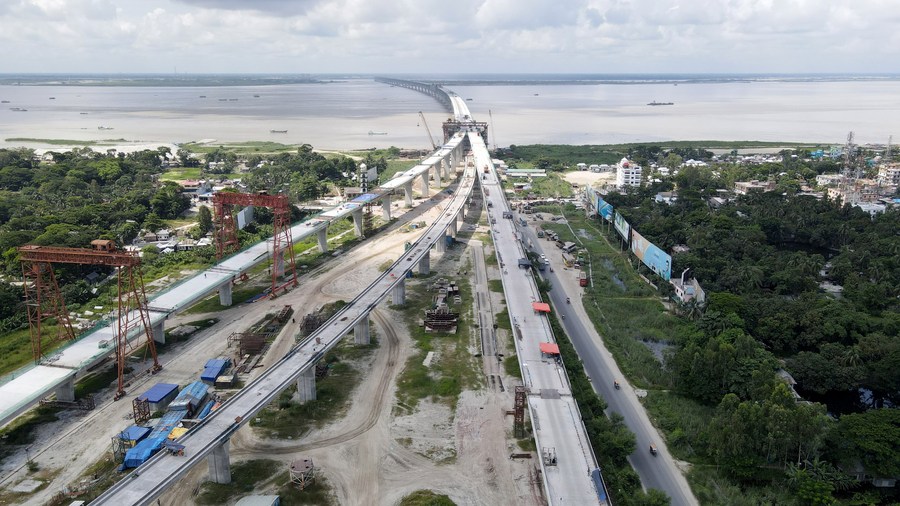
Connections, interconnections, and progress
In the 1990s, certain Western analysts concluded that Africa was so poor that if — metaphorically speaking — the continent were to sink to the bottom of the ocean, the international economy would be unaffected. This comment reveals a blatant disregard for the reality of the situation in that it fails to take into account the forces already at stake; namely, the continent’s capabilities and resources, not least its own diplomatic networks, and notably its ties with the People’s Republic of China. After all, let’s not forget Beijing’s resilience. In the 1970s, for example, a particularly difficult period for China’s economy, Beijing nevertheless managed to build an almost 2,000 kilometers railway linking the port of Dar es Salaam on Tanzania’s Indian Ocean coast to landlocked Zambia. Moreover, since the BRI’s appearance, China has participated in the construction of Sudan’s Merowe Dam, a pipeline and a railway from South Sudan to the Indian Ocean, and rebuilt Kenya’s railway to Lake Victoria, originally laid but subsequently abandoned in British colonial times. Also worth mentioning is that despite the World Bank’s legacy of financing postwar reconstruction, in the 1960s the focus of its aid nevertheless shifted from infrastructure, thus neglecting the African continent’s basic irrigation, transportation, and electrification systems. The BRI has filled that gap through a virtuous process which earned China the epithet of “symbiotic partner” in analyst Parag Khanna’s famous work,?Connectography: Mapping the Future of Global Civilization.
Beyond Asia and Africa, the BRI’s impact is also apparent in Latin America, and expected to gain greater visibility during the current decade through both the Andes and the Amazon through infrastructure deployments already underway, as well as through interconnective submarine cabling both in the Atlantic and in the Pacific. Trade with China, having increased 17-fold since 2001, also reflects these extraordinarily close bilateral ties.
The BRI has at times been regarded in the West as unilateral, a reaction that implies an absence of continuous, global-reach ideas from other powers or blocs. Interestingly enough, Europe rolled out similar interconnectivity initiatives after the end of the Cold War. This was especially apparent on its eastern flank and towards the Caucasus and Central Asia through various programs whose focus was on diplomacy, infrastructure, and energy, and some of which appeared as attempts to emulate the old Silk Road. But the EU’s expansion towards Eastern Europe, from the end of the 1990s to the start of the 21st century, due to the 2008 economic crisis, as well as a relative lack of internal unity of purpose as reflected in the year 2016’s Brexit, dramatically slowed the momentum of interconnectivity plans with Central Asia.
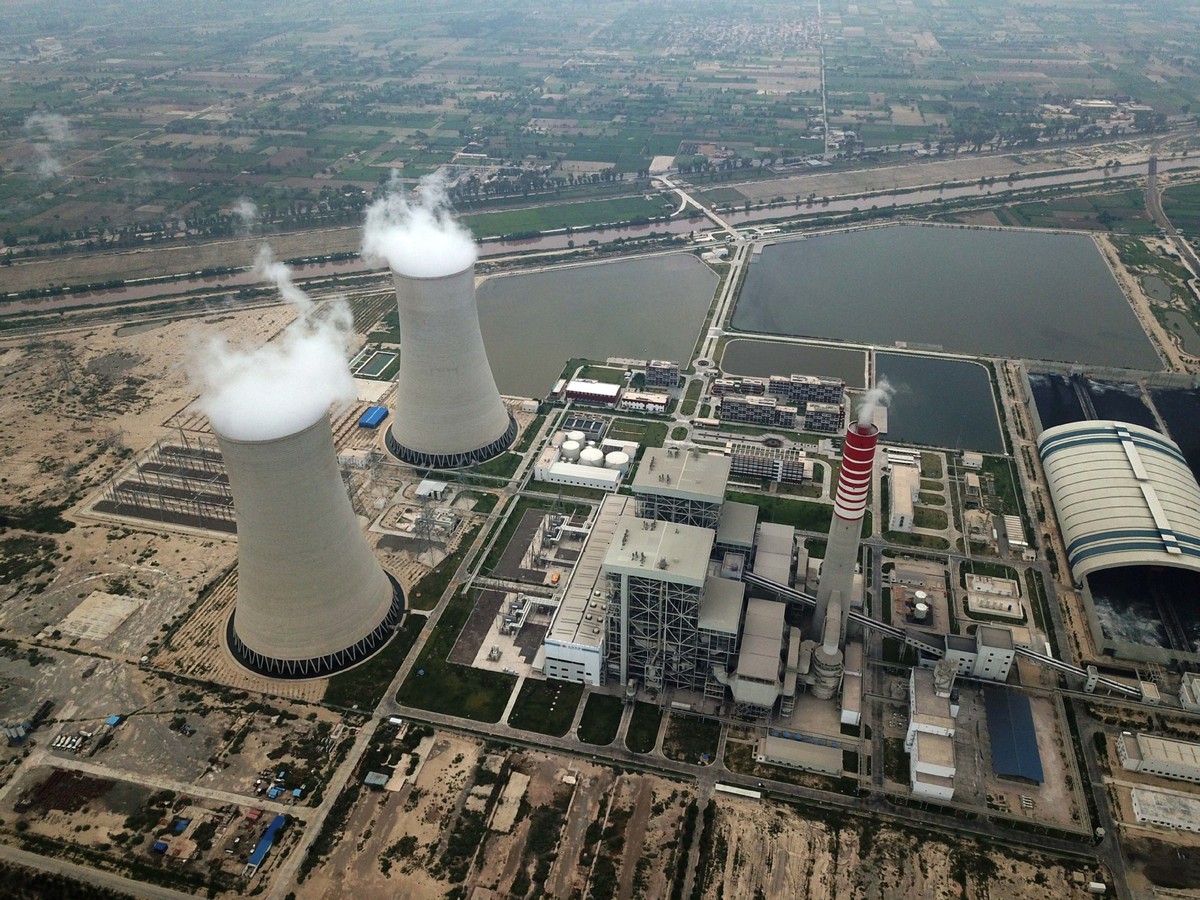
However, the BRI currently has the explicit support of the European Bank for Reconstruction and Development (EBRD), of which China has been an active member since 2016, including an alternate Chinese governor and a contributing budget. Some European countries, moreover, have been developing significant BRI ports, railways, and highways connectivity projects, while others have signed the BRI’s Memorandum of Understanding with Beijing. In 2014, the BRI’s Yiwu-Madrid railway flagship project, which traverses Kazakhstan, Russia, Belarus, Poland, Germany, and France before entering Spain and arriving in Madrid, has had huge impact on economies along its route.
On the other hand, however, the U.S. was invited, but declined, to participate in the BRI during the Obama administration. This was no small omission, bearing in mind that initiatives of considerable significance to the world order — which is currently going through a redefining process — have come from Washington. Subsequently, Trump did all he could to boycott the initiatives of his predecessor, thus exerting myopic isolationism. His successor Joe Biden has since deployed initiatives of his own. But as a man who forged his career at the height of the Cold War era, Biden has so far distinguished himself mainly through geopolitical initiatives, often with a military component. Nothing he has done is comparable to Franklin Delano Roosevelt’s magnificent New Deal program of the 1930s, or to the very Marshall Plan that rebuilt Europe after World War II. But let’s wait and see how Biden’s recently announced global infrastructure initiative evolves.
During this decade, however, one open door in the broad field of interconnectivity is all too apparent in the growingly urgent fight against climate change. As the BRI also has a green dimension, one significant step forward in that respect would be an initiative under a climate working group to facilitate bilateral, as well as multilateral, cooperation in developing countries. Finding ways to work with Beijing towards amplifying such green benefits is a must. Finding synergies with the BRI could amplify win-win situations in the Asia Pacific, and subsequently in Eurasia, Africa, and Latin America.
The author is director of the Dialogue with China Project, an independent electronic platform.