Is the US “Strategic Ambiguity” on the Taiwan Issue Ending?
 Facebook
 Twitter
 Linkedin
 Google +
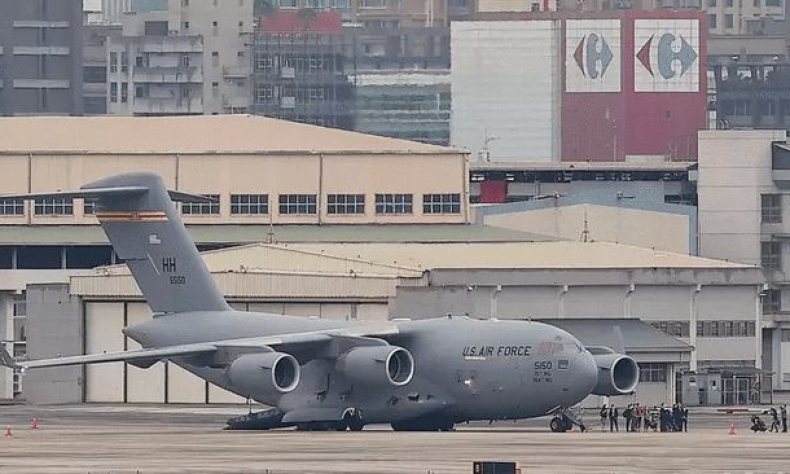
The Biden administration must reflect carefully on the direction in which it appears to be heading. Confrontation with China is not in the US national interest.
The Biden Administration is off to a rough start with China. The persistence of a Cold War mindset in Washington impairs US foreign policy and the long-term national interest. The Taiwan issue may well become a point of increasing tension.
To assess the present situation historical context is useful. After World War II, some Chinese led by Chiang Kai-shek fled in 1949 to the island of Taiwan. The island had long been China’s territory. After a brief occupation by the Netherlands during 1624-1662, General Zheng Chenggong recovered the island in 1662.? After China’s defeat by Japanese imperialism in the 1895 Sino-Japanese War, the island came under Japanese occupation but was liberated by the defeat of Japan in 1945 and thus returned to China.
The island’s status, however, became a Cold War issue. Of course, there is only one China and the island was and is part of it. But after 1949 Chiang made the claim that his government in exile was the government of all China including Taiwan. Many foreign governments, however, saw through this fanciful claim and recognized the People’s Republic of China led by Mao Zedong, including US ally, the United Kingdom. But Cold War hysteria in Washington caused the US to withhold diplomatic recognition and to support Chiang and his exile regime on the island. Taiwan was under a fascist martial law from 1949-1987, a fact conveniently forgotten in Washington and by the US media.
What are the politics in the US on the Taiwan issue? Today’s Cold War thinking about Taiwan is directly descended from the 1940s anti-Communist “China Lobby”. During the Chinese Civil War era, the Chiang supporters spread a great deal of money around Washington lobbying Congress. This complex of Chiang support and a bloc of Congressmen and Senators became known as the China Lobby, which lobbied against US recognition of the mainland PRC as well as against the admittance of PRC into the United Nations organization.
US media followed an anti-China and pro-Chiang line led by the Luce Time-Life publishing empire. Various US pressure groups such as the “Committee of One Million” lobbied Congress in favor of Chiang and his regime on Taiwan.
If this sounds similar to today’s situation, it is. That is the problem. What was formerly called the “China Lobby” after seven decades is today the deeply embedded “Taiwan Lobby” in Washington. Realistically, the Taiwan Lobby is not going away in Washington any time soon and will be a powerful factor in US-China relations particularly impacting Congress. The Taiwan Lobby problem cannot be solved in Washington but only in China.
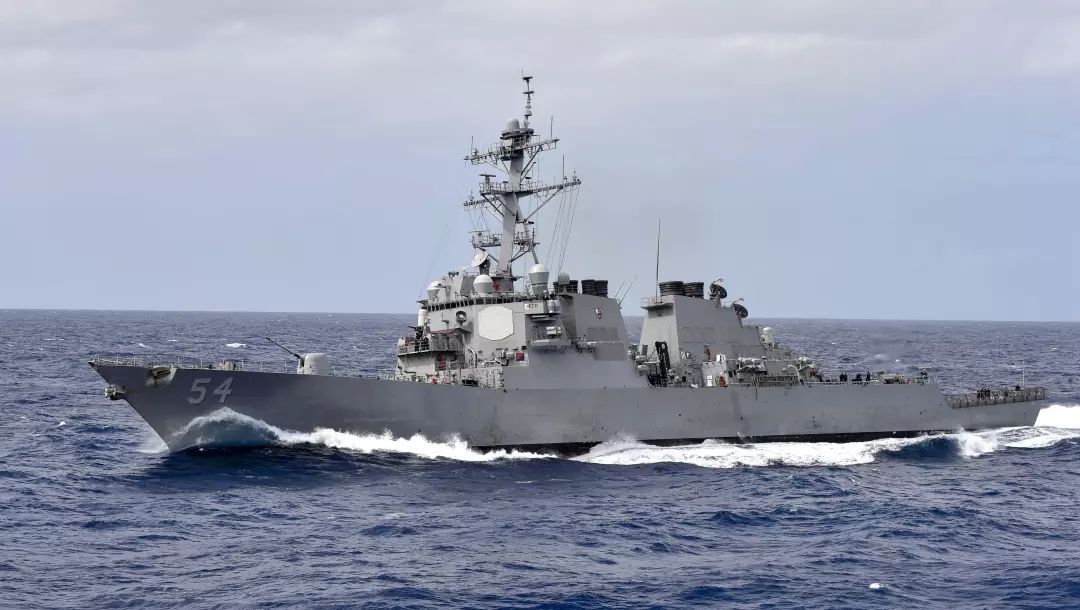
Although Washington and Beijing have established several understandings over the years, increasing tensions leave them frayed. The danger is that the US with its increasingly provocative behavior on the Taiwan issue may spark direct confrontation.
The US accepted the One China formula in the 1972 Shanghai Communiqué which states in plain English: “…there is but one China and that Taiwan is part of China.” On January 1, 1979, the US under President Jimmy Carter switched diplomatic recognition from the Taiwan-based regime to the Beijing-based government of the People’s Republic of China. Congress passed the Taiwan Relations Act which did not recognize the former regime. Under President Ronald Reagan, the US in its “Six Assurances” stated explicitly in the fifth that it would not recognize Taiwan as an independent country.
Washington has maintained an ambiguous policy despite such diplomatic rhetoric. Such ambiguity can lead to an increasingly confrontational situation. The US has not recognized the PRC sovereignty over Taiwan. The US has not recognized Taiwan as a sovereign country. The US considers Taiwan’s status as unsettled.
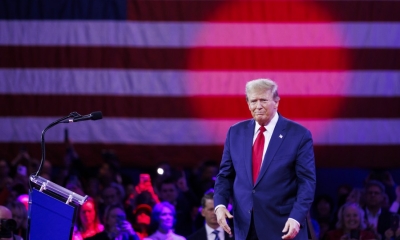
President Donald Trump, after his election but before his taking office, spoke with the leader of Taiwan and declared that he would not necessarily follow a One China approach. This blunder caused quite a commotion so two months later when in office he seemingly backed off and said he supported One China. No doubt it was explained to him that the US position is ambiguous by design. Further, that the US could support forms of Taiwanization and take other measures to fortify Taiwan against Beijing that would prepare it for eventual independence.
The loudmouth Republican secretary of state, Mike Pompeo, went so far as to denounce the opening to China in 1972 led by President Richard Nixon. This expression of present-day anti-Communist hysteria is an indication how firmly entrenched Cold War anti-China thinking is in the dominant factions of the Republican Party.
Although Democrats have not denounced President Jimmy Carter’s constructive diplomacy with China, they are equally anti-China and equally vocal. They denounce Beijing’s policy in Hong Kong and Xinjiang.
Is the era of US “strategic ambiguity” on the Taiwan issue ending? Republicans and Democrats both see the Taiwan issue as a means of so-called “l(fā)everage” against a rising China. In this regard, the Xinjiang and Hong Kong issues are viewed similarly. China is today viewed by Washington in stark Cold War terms with calls for a more assertive, if not confrontational, US policy to counter a so-called ever-growing “China Threat”.
Biden has not relaxed elements of Trump’s hard-line policy on China. Thus, tensions over Taiwan issue may well increase. The US Establishment appears to now believe that the era of strategic ambiguity is over and that a new more forward policy against China to include the Taiwan issue is in order. The Biden administration having just taken office cannot be expected to have a fully developed China policy yet. However, as the administration settles in this year and conducts various policy reviews, it is not unreasonable to expect the Biden policy on China will take on more edge in substance although not in the frenzied Trump style.
An increasingly forward US policy against China may engender more effort by Beijing to respond from a position of strength to US provocations regarding Taiwan. While effective diplomacy can halt a downward spiral to serious confrontation, Washington has not shown any capacity for serious effective diplomacy in quite some time particularly as its foreign policy has been militarized.
The militarization of US foreign policy over the past two decades of foreign wars has taken its toll on US diplomacy as has the rise of Cold War hysteria in both political parties. Thus, it could be argued that unlike in the past, Washington today would be willing to risk war over Taiwan.
Of course, the American people would not be so inclined even if they could locate the island on a map. But they did not stop Washington from wasting $5 trillion in unnecessary wars in Iraq and Afghanistan. Congress appears to be in an increasing state of anti-China delusion and hysteria as analysis of legislation and politicians’ speeches suggest.
Indications are that the Biden administration will follow the new bipartisan Establishment calls for tougher policy on the Taiwan issue as a feature of ending strategic ambiguity. Such a policy change would include not only the military dimension but would also include expanded diplomatic, economic, political, and information activity to counter China.
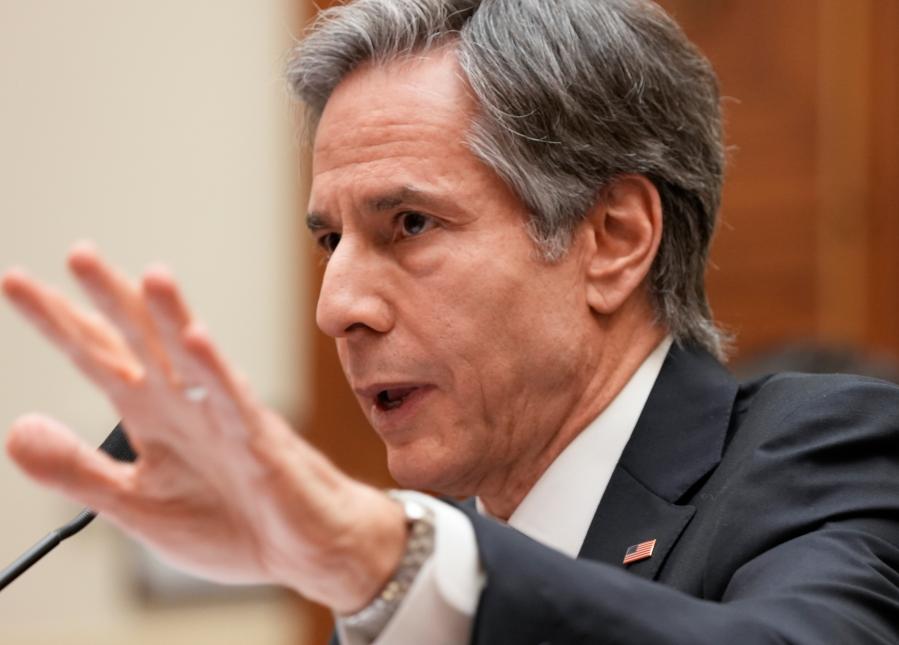
Already a few diplomatic signals have been given by the Biden administration. US Secretary of State Tony Blinken pressured Paraguay and Palau to maintain relations with Taiwan. US diplomats in an unprecedented move are meeting with Taiwanese diplomats in various locations around the world to include France. The US attempted to get Taiwan into the WHO and pressured G7 countries to take a stance.
Even though formal inter-agency policy reviews take a number of months to complete, the Biden administration appears already to be headed in the direction of increased pressure on Chinese. This leaves the hope of many for cooperation behind and puts zero-sum “competition” if not confrontation ahead.
The Biden administration must reflect carefully on the direction in which it appears to be heading. Confrontation with China is not in the US national interest. The correct way forward is to repair the significant damage already done to relations by the US and to move forward to stabilize relations on a practical basis of cooperation and win-win thinking.
?
The article reflects the author’s opinions, and not necessarily the views of China Focus.