Jointly Building the Future
 Linkedin
 Google +
The Belt and Road Initiative is a new international public good provided by China to the whole world and an important conduit for China to promote building a community with a shared future for mankind in the new era, demonstrating China’s key contributions to global peace, development, and win-win cooperation.
By Jin Ruiting
In recent years, the global economic outlook has generally been considered trending positively. But with recent developments of protectionism, isolationism and populism, profound adjustments in global governance, industrial structure, energy layout, monetary system and geopolitics are unfolding one after another.
The Belt and Road Initiative, which focuses on optimizing the process of economic globalization, advocates safeguarding the international order based on multilateralism and aims to achieve common development and prosperity in all countries. It is a new international public good provided by China to the whole world and an important conduit for China to promote building a community with a shared future for mankind in the new era, demonstrating China’s key contributions to global peace, development, and win-win cooperation.

Δ May 13, 2018: Nearly 40 overseas students from 12 countries along the Belt and Road routes who are studying at Sichuan University learn and experience traditional Chinese art and culture such as Sichuan cuisine, tea ceremony and bamboo weaving at Meishan Vocational and Technical College in Sichuan Province. IC
Impressive Joint Construction
The Belt and Road Initiative has yielded fruitful results after only five years since its inception.
In terms of policy coordination, China has signed 103 cooperation documents with 88 countries and international organizations to jointly implement the Belt and Road Initiative and has completed alignment with the “Bright Road” initiative of Kazakhstan, the Eurasian Economic Union proposed by Russia, the Juncker Plan of Europe, the “Steppe Road” program of Mongolia, and the “Two Corridors and One Ring” initiative of Vietnam.
In terms of infrastructure connectivity, a number of railways, highways, ports, airports and cross-border bridges have been built. The Jakarta-Bandung Railway, Gwadar Port, China-Laos Railway, Hungary-Serbia Railway and the second line of the China-Russia oil pipeline are all proceeding well. More than 8,000 trains of the China Railway Express run to Europe, and the network now extends to 42 cities in 14 European countries. These projects are gradually paying out real development dividends and improving the people’s wellbeing.
In terms of unimpeded trade, the total volume of goods trade between China and countries along the Belt and Road has reached more than US$5 trillion, and China’s outbound investment in those countries exceeds US$70 billion. As of April 2018, China has built 75 overseas economic and trade cooperation zones in countries along the Belt and Road routes, with a total investment of US$25.5 billion. More than 3,800 enterprises have settled in those cooperation zones, creating nearly US$1.7 billion of taxes for host countries and nearly 220,000 jobs for locals.
In terms of financial integration, the Silk Road Fund has signed financing contracts with 19 projects, promising investment of US$7 billion in support for the projects. China Development Bank, the Import-Export Bank of China and China’s commercial banks are increasing investment to support the construction of the Belt and Road.
In terms of closer people-to-people ties, China has signed cultural cooperation agreements with more than 60 countries, and the concept of the Belt and Road Initiative is becoming more understood, better recognized and optimistically supported by people of countries along the routes. Over the past five years, mutual visits made by tourists between China and countries along the Belt and Road routes exceeded 25 million.
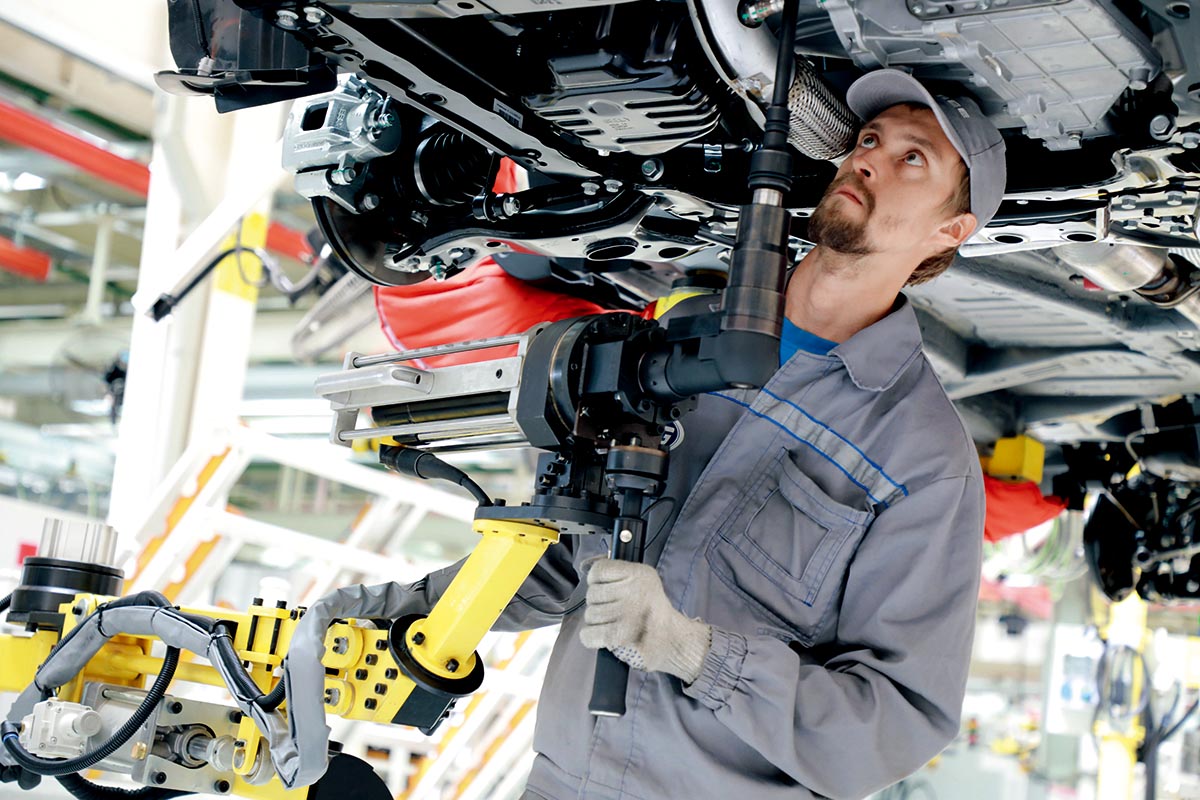
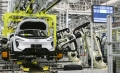
Δ?July 5, 2018: A worker assembles a car at the assembly plant of Chinese carmaker Geely in Belarus. On average, the plant witnesses a vehicle rolling off its assembly line every 240 seconds. IC
Building a Community with a Shared Future for Mankind
Building a community with a shared future for mankind is the core element of contemporary Chinese foreign policy, as well as the most distinctive feature of major-country diplomacy with Chinese characteristics and the unique Chinese wisdom contributing to the development of greater human society. The idea of building a community of shared future is rooted in the achievements of ancient and modern civilizations. Proposed in response to the new era, it involves state-to-state relations, group-to-group relations, relations between various civilizations and relationship between man and nature, and radiates rich connotations. Joint construction of the Belt and Road and promoting broader, deeper and higher-level economic and trade cooperation among the Belt and Road countries are conducive to building consensus, carrying forward the new concept of mutual benefits and win-win outcomes and more accurately addressing vital interests of most countries. It also facilitates the construction of a community with shared interests and responsibilities. The community, in turn, provides fresh new opportunities and experiences for each of its members.
Jointly constructing the Belt and Road rides the tide of peace and development of the era and provides a solid guarantee for safeguarding the common interests of mankind. As the economic globalization trend continues, the flow of capital, technology, information and personnel around the world has become increasingly interdependent. The existing international order and international rules have formed a common interest bond around the world. The world is facing severe challenges, and the Silk Road Spirit, which features peace and cooperation, openness and inclusiveness, mutual learning and mutual benefit, is more needed now than ever before. No matter how complicated and sharp contradictions between states, groups, religions, and social classes may be, human beings as a whole share the ultimate glories of victory and pains of defeat. Joint construction of the Belt and Road provides a practical path for realizing common interests of mankind under the theme of peace and development. By adhering to the cooperative concept of the Belt and Road, the international community will become more resistant to every kind of crises, and our collective strength will be continuously enhanced, thus more effectively safeguarding world peace and development.
The Belt and Road Initiative points the direction and designs a blueprint for the future development of human society and the constant promotion of people’s wellbeing. It aligns with the United Nations millennium development goals to reduce poverty, promote development through cooperation and narrow development disparities. It embodies China’s commitment and new role in promoting global development. China advocates the principles of extensive consultation, joint contribution and shared benefits in international cooperation, and is willing to work with other countries to realize the ultimate goal of creating a better world free from want where all can live in dignity.
The Belt and Road Initiative is an innovation made by China for global economic governance, with an aim to promote a fair and reasonable global economic order. Ahead of the onset of the 2008 international financial crisis, global economic governance was dominated by the framework of the Washington consensus. After the outbreak, the Washington consensus lost much of its glory. The global economic governance system is obviously calling for reform to reinforce inclusiveness, representativeness, effectiveness and risk control. The concept of the Belt and Road calls for constructing an inclusive and coordinated world development governance structure, an open and cooperative global trade and investment governance structure and a safe and efficient international financial and market governance structure. It is based on China’s experience, which has inspired the scheme and concept for solving problems hindering world development and improving global economic governance. It is an institutional public good of great theoretical and practical significance in reshaping the international economic order that China provides to the international community to promote reforms towards a just and inclusive global economic governance system.
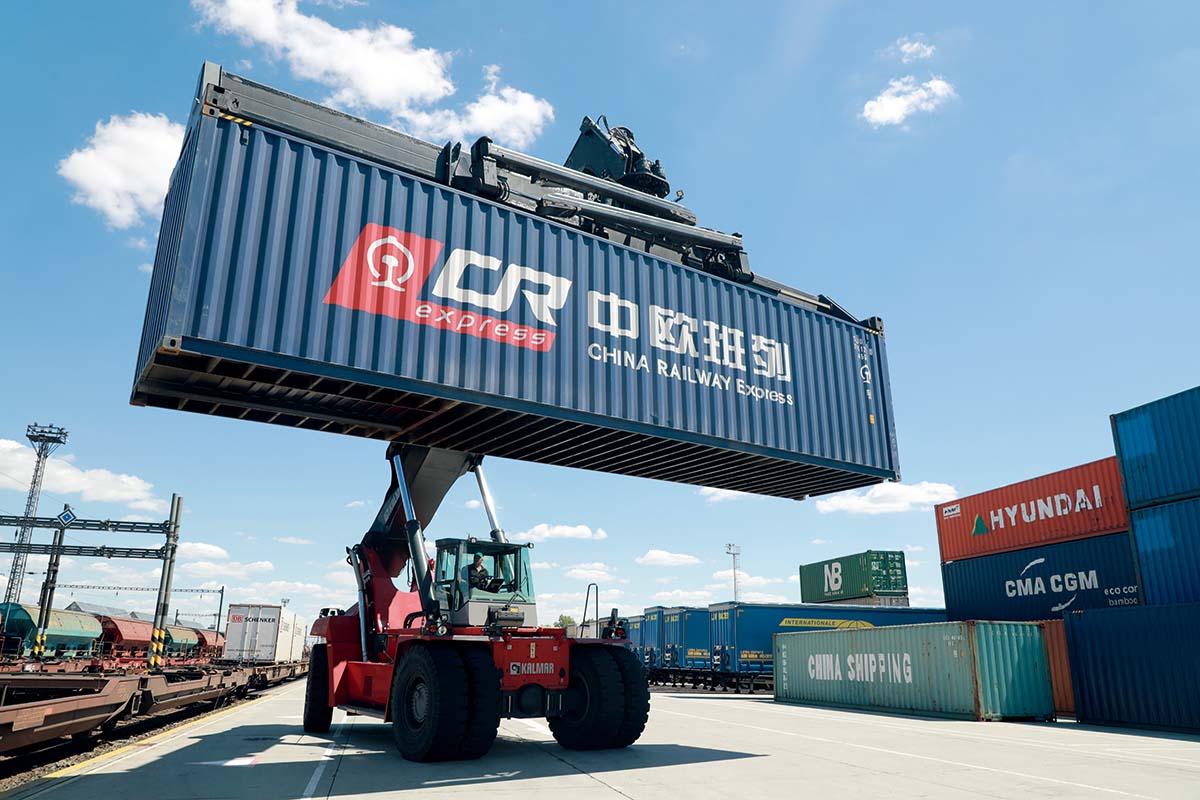
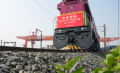
Δ The Czech freight train station of the Madrid-Yiwu line of China Railway Express to Europe, July 2, 2018. China Railway Express to Europe is an international container-shipping railway line that runs through countries along the Belt and Road routes. In the past five years, 52 service lines that extend to 12 countries and 32 cities in Europe were opened, and 33,882 TEUs of cargo were transported on 402 trips. IC
Glaring Lags
The development disparity between countries along the Belt and Road is quite glaring, which increases difficulties in constructing an inclusive and universal cooperation mechanism. Those countries vary in economic, political and cultural conditions. In terms of economic development level, the Belt and Road Initiative covers developed economies in Western Europe, energy and resource-exporting countries of Central and West Asia, emerging industrialized countries of Central and Eastern Europe and ASEAN and underdeveloped agricultural countries. From the political point of view, both capitalist and socialist countries are included as are democracies and monarchies. From the cultural perspective, the Belt and Road Initiative covers six of the eight categories of civilizations identified by Samuel P. Huntington: Chinese, Hindu, Islamic, Western, Orthodox and African civilizations. Countries along the routes have different interests, values and cooperation modes. This diversity has increased the complexity and difficulty of building an inclusive and universal cooperation mechanism.
China has long been on the receiving end of global multilateral governance rules, and is not well prepared to build multilateral cooperation mechanisms. For a long time, China tended to follow and adapt to the rules of multilateral institutions such as the WTO, IMF and World Bank. In the past two years, China has been actively voicing its opinions and playing the lead role on multilateral diplomatic occasions such as the summits of the G20, BRICS and the SCO. But China has not been positioned at the center of the world stage for long and still lacks profound theories and experience in establishing multilateral cooperation mechanisms and setting standards and rules. The lack of talent reserves, capital investment and effective support of domestic institutional mechanisms in the operation of multilateral mechanisms also demands China make preparations more carefully.
Furthermore, the geopolitical sensitivity and complexity of countries along the Belt and Road pose a major obstacle in strengthening multilateral and institutionalized cooperation. The Belt and Road Initiative involves sensitive areas of the Middle East, East Asia and Eastern Europe as well as India, Pakistan and other regions suffering conflicts. Many contradictions exist for countries along the routes in politics, economics, culture, religion and other realms. Some long-standing divergences are difficult to reconcile, while some exist due to competition and maneuvering between global major countries. In the foreseeable future, China’s efforts to promote a multilateral cooperation mechanism under the framework of the Belt and Road Initiative will easily be affected by sensitive geopolitical relations.
Future Policies
The focus of China’s future policies to promote the construction of the Belt and Road can be summed up in three aspects:
First, based on existing bilateral and multilateral cooperation agreements, China will establish a strategic planning and coordination mechanism under the Belt and Road Initiative. On the foundation of the existing bilateral cooperation strategic agreements signed by China and countries along the routes or international organizations, a number of permanent working groups can be organized to map out future plans for alignments of development plans and carry out major cooperation projects. For the medium and long term, permanent mechanisms under the Belt and Road Initiative, such as strategic docking cooperation commissions and informal meetings of senior officials of strategic planning departments, can be set up to ensure coordination and communication on macroeconomic policies between relevant countries, such as formulating transnational or transregional economic development strategies and plans and promoting the deeper integration of countries along the routes.
The second aspect is consolidating the achievements of the existing free trade areas (FTAs) and designing rules and mechanisms for trade and investment under the framework of the Belt and Road Initiative. Based on previous international experience, FTAs are key platforms for coordinating trade in goods, trade in services, investment, intellectual property, environment and other related fields. Already, the China-ASEAN FTA, the Eurasian Economic Union (EEU) and other FTAs have been set up between countries along the Belt and Road despite their distinct differences in mechanism standards. By actively advancing the China-GCC FTA and the China-EEU FTA, the overall framework of FTAs along the Belt and Road routes has gradually taken shape. In particular, in addition to such topics as trade, investment, and technical barriers, the overall framework also includes issues that embody the concept of building a community of shared interests, responsibilities and future, such as intellectual property protection, environment, infrastructure, capacity building and cooperation. However, considering the varying national conditions of relevant countries, specific rules and regulations should be flexible and differentiated. In the medium and long term, similar to the Free Trade Area of the Asia-Pacific (FTAAP), we should draw on the experience of the APEC model to establish a large-scale FTA that covers all countries along the Belt and Road routes led by China and ASEAN and is open to even countries beyond the region. Effective integration will provide a “Chinese solution” for reforming and improving global economic governance.
Finally, we should integrate the Asian Infrastructure Investment Bank and other financing platforms and improve the financing arrangement mechanism under the framework of the Belt and Road Initiative. Most countries along the routes are relatively underdeveloped and lack financial resources. Some projects along the Belt and Road routes require lengthy construction time and only produce modest commercial returns. In addition, significant geopolitical and economic risks reduce the motivation for international capital to invest in the region. Forming a unique Belt and Road financing system by integrating various types of financing platforms including development banks, commercial financial institutions and aid funds is the effective solution to the huge funding gap plaguing the construction of the Belt and Road.
The author is an associate research fellow at the Institute of International Economic Research of the Chinese Academy of Macroeconomic Research.
Source: China Pictorial