Keeping Commitments, Meeting Expectations
 Facebook
 Twitter
 Linkedin
 Google +

The Forum on China-Africa Cooperation has set the bar for ‘Africa+1’ mechanisms and summits, and has led to real, tangible global changes and significant improvements in African development outcomes.
The idea of establishing the Forum on China-Africa Cooperation (FOCAC) in 2000 initially came from African countries, eager to coordinate and manage their relationship with China.?
Almost a quarter of a century later, as African leaders and organisations prepare to take part in the ninth meeting of FOCAC in September 2024 in Beijing, it is apt to ask is the mechanism working? This question is also pertinent in the context of a proliferation of so-called “Africa+1” mechanisms: From Italy to the US to Türkiye to South Korea … there is a growing list of countries that ostensibly want to offer Africa new development partnerships. Is FOCAC different? Is it setting the standard for cooperation? And what is still missing? As we look forward to the ninth FOCAC, it is useful to evaluate the progress and challenges for the entirety of its existence as well as over the past three years since the eighth FOCAC meeting in Senegal in 2021, and in doing so offer suggestions for improvements.?
When it comes to progress in China-Africa relations over the last decades, two particular areas always stand out: Infrastructure cooperation and trade, and FOCAC has been central to both of these areas.
Infrastructure cooperation
We all know that China has now become Africa’s largest bilateral lender, a position it did not hold back in 2000, although in most African countries, China remains behind multilateral lenders and in some behind European lenders. This is because Chinese financing has often been more concessional than financing available from others – especially for African middle-income countries, and also because it has almost always been directed to infrastructural projects.?
From a Chinese perspective, Africa is also important in this area. Africa today remains China’s second-largest overseas market for engineering contracts, especially for transport projects, and with the scale of real estate development and urbanisation continuously rising in Africa, this is unlikely to fall.?
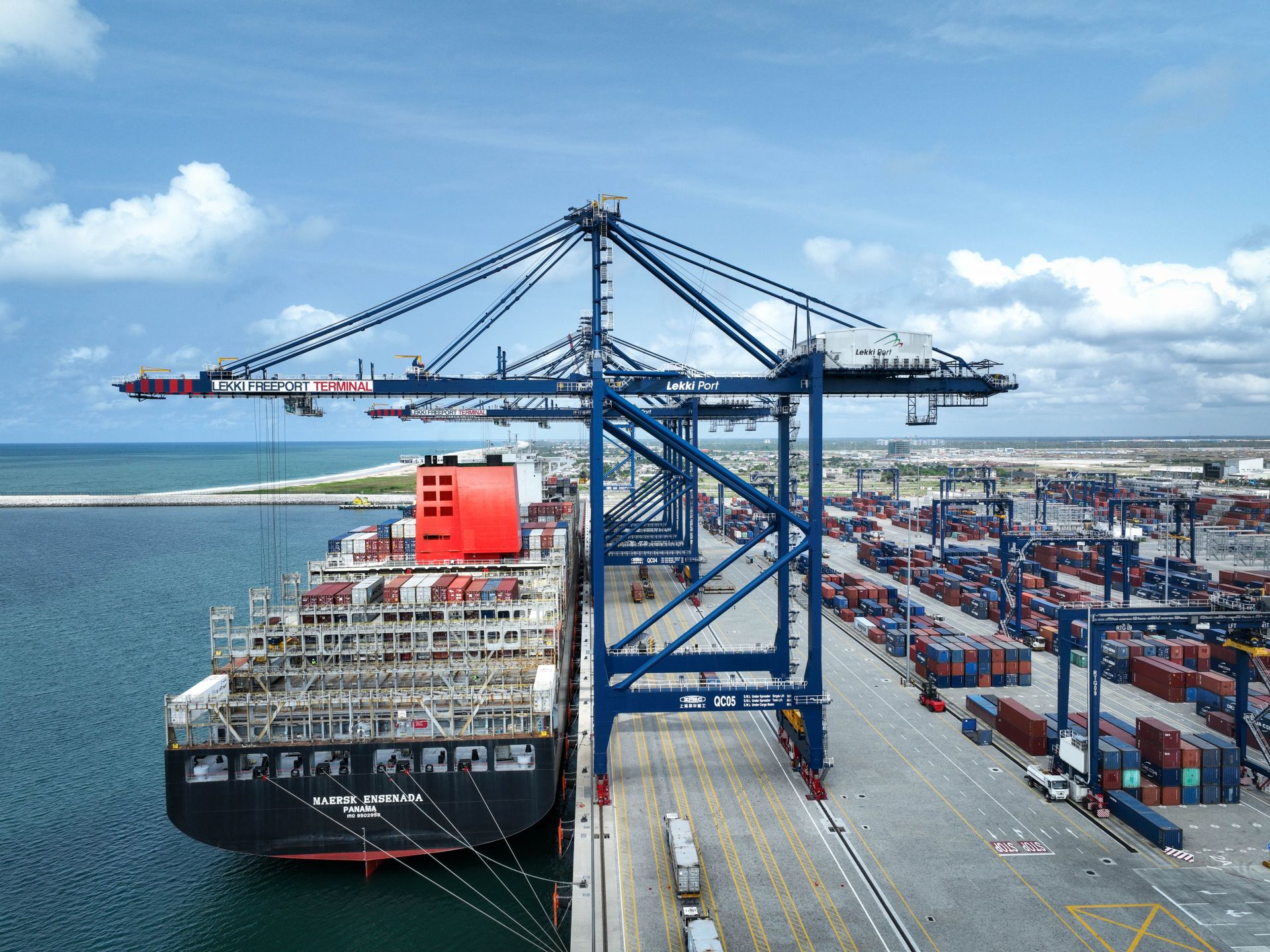
Data collected by Boston University’s Global China Initiative (GCI) suggested that in 2022 nine loans totalling $994 million were made by Chinese banks to African countries. And infrastructure projects that Chinese contractors have been commissioned to deliver since the eighth meeting of FOCAC have enhanced cross-border connectivity, such as the Ngongo-Kimpangu road linking DR Congo to Angola, and the Tiébissou-Bouaké highway connecting landlocked West Africa to the port of Abidjan in C?te d’Ivoire. Public-Private Partnerships have also emerged as a model for infrastructure investment since the eighth meeting of FOCAC. A notable milestone is the completion of the first phase of the Lekki Deep Sea Port in Nigeria in November 2022, with the significant investment of $1.5 billion.
African trade promotion
We also know that China is the largest trading partner of almost all African countries. But it’s less well-known that China has been Africa’s largest export destination since 2009.
FOCAC has been crucial to this shift. For instance, at the eighth FOCAC meeting, China pledged to import African products worth $300 billion over three years. This was the first-ever import target that had been set for Africa by any development partner, not just China. The target was based on the fact that between 2019 and 2021, China imported $275 billion worth of goods from Africa. It was also based on various other supportive measures announced at the eighth FOCAC meeting such as “green lanes” to streamline inspection and quarantine procedures for African specialty agricultural imports.?
This target is very likely to be met as African goods exports to China between the beginning of 2022 and mid-2024 reached $286 billion, and since the eighth FOCAC meeting, China signed Sanitary and Phytosanitary agreements for 16 new agricultural products with 11 African countries. Certainly, African exports are still dominated by crude oil and minerals, and most African countries still have trade deficits with China, highlighting the need for diversification, but there is no doubt that active trade management measures proposed by African countries at FOCAC and implemented by both sides are making a difference to African development.?
At the same time, despite these two areas of major progress, there remain three significant challenges, some of which emerged after the eighth FOCAC meeting, especially as the world recovered from the COVID-19 pandemic. These challenges, however, provide opportunities for new directions and stronger cooperation between African countries and China.
Financial and industrial capacity
The first major challenge China-Africa relations have faced over time is inadequate long-term financing – both from the Chinese government and private sector.?
Although, as mentioned earlier, African countries have successfully turned to China for concessional infrastructure financing, this is not sufficient to meet all the needs of the continent. Moreover, aside from African governments themselves, there are only a few other organisations – such as the African Development Bank and Afreximbank – that are committed to financing infrastructure and productive, asset creating projects, such as new factories. Although African countries often borrow more from the IMF and the World Bank than China and African banks, the Bretton Woods organisations hardly agree to invest in infrastructure or industrialisation.?
Yet, Africa’s aspiration is to become the largest manufacturing hub in the world by 2063. This requires more infrastructure as well as industrial capacity. China can play a much stronger role in this going forward in two ways.?
First is by expanding the availability of infrastructure loans – especially for large, cross-border flagship projects, ideally covering African trade corridors to support Africa’s free trade area. While many African governments may remain somewhat risk-averse to borrowing due to debt distress perceptions, directing Chinese financing into African banks could be a key means to deliver on infrastructure while balancing risk. Chinese banks could also explore and pilot other creative ways, such as panda bonds, currency swaps or pooled-risk instruments for regional projects.
Second is by directing more Chinese factories to relocate to Africa and invest in adding value to raw materials sourced from African countries before exporting to China. The last three years saw nascent signs of diversification of China’s FDI in Africa, expanding into construction materials, automobiles, and chemicals. Industrial parks were a key strategic means to do so. By mid-2023, according to China’s official data, the total number of Chinese-funded parks in Africa reached 25, attracting over 620 enterprises, with cumulative investments of $7 billion and employing 42,000 local workers.?
More of this will address the challenge, and hugely strengthen China-Africa relations, leveraging China’s unique features as a development partner, while reducing African dependency on a few commodities and creating opportunities for job growth and skill development.?
Green development
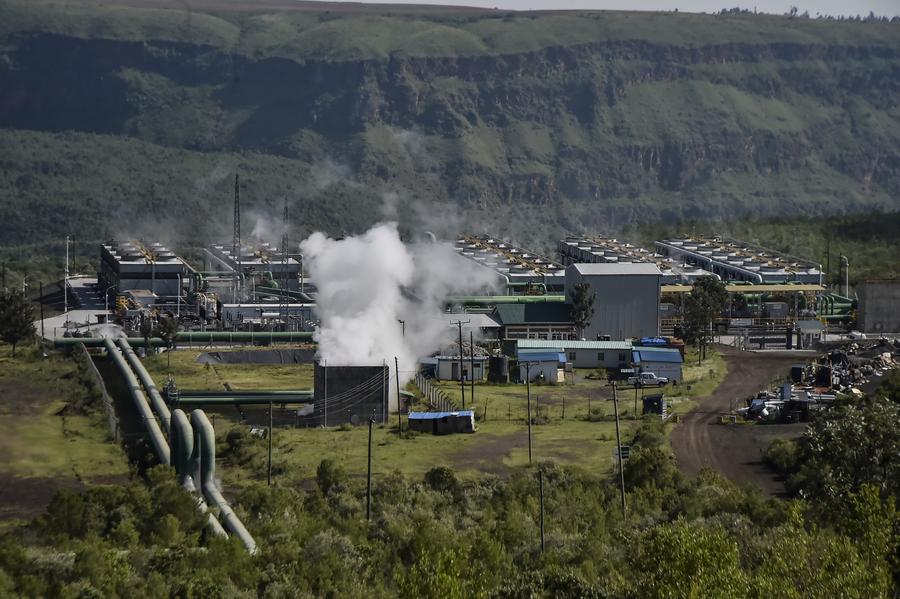
The second major challenge China-Africa relations have faced recently is how to respond to African calls for ambitious climate action, while managing what is known as a “just transition” – the need for African countries to have the freedom to use their own fossil fuels for development, given their very small contribution to climate change to date. Since eighth FOCAC meeting, for instance, in 2023, African countries agreed a goal to increase their renewable energy from 59 gw now to 300 gw in 2030, which would require significant annual growth in solar, wind and hydropower deployment. But it also takes advantage of Africa’s major relative advantages in renewable energy, which is even stronger than African relative advantages in fossil fuels.
Since the eighth FOCAC meeting, our data suggests that 37 African countries worked with Chinese stakeholders in different roles – as contractors or financiers or both – on at least 77 renewable energy projects in Africa, potentially generating over 27 gw of green energy. If China were able to make more concessional financing for renewable energy available to African countries, the country could make a major contribution to this new African goal.?

Strengthening African coordination
The third and final challenge that has been faced before and since the eighth FOCAC meeting is coordination on the African side. While FOCAC itself was an African idea, coordinating African inputs into all “Africa+1” mechanisms are in reality very challenging, because most – including FOCAC – are basically bilaterally driven. It becomes the job of the partner side – like China – to “add up” or “collate” asks as well as track implementation. While China is arguably better at delivering and tracking implementation compared to many other development partners, the result of the lack of coordination on the African side is two-fold. First, many pan-African needs are never voiced, and second, most African governments think commitments haven’t been met, because they don’t have resources to track what’s happening in every other African country.
The African Union (AU) Commission has played a stronger role in African FOCAC coordination since 2018, the year the AU representative office in China opened. The African co-chair of FOCAC has also always played a crucial role. That said, more can be done by the African side to use FOCAC to set even stronger precedent for coordination of “Africa+1” summits. For example, an African FOCAC monitoring committee could be created composed of the AU Commission, the (annually rotating) AU Chairperson, the previous, current and coming African co-chairs of FOCAC. African observers of FOCAC may also be invited.
The fact is, FOCAC has set the bar for “Africa+1” mechanisms and summits, and has led to real, tangible global changes and significant improvements in African development outcomes. Addressing the challenges it has faced head on will help FOCAC to continue to do so, and for that, action on both the Chinese side and African side will be crucial.
Hannah Wanjie Ryder, CEO, Development Reimagined.?
Chen Huiyi, Research and Coordination Analyst, Development Reimagined.?