The Belt and Road Initiative
 Facebook
 Twitter
 Linkedin
 Google +
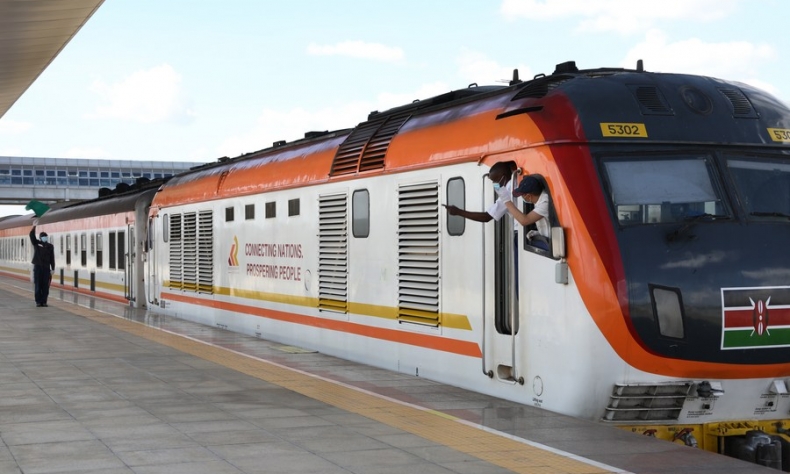
The Belt and Road Initiative offers concrete opportunities for other developing countries to break out of the old cycles of underdevelopment while also providing China with opportunities to realize its own full potential in tandem with the large public goods associated with global peace and socioeconomic justice.
Introduced by President Xi Jinping in 2013, the Belt and Road Initiative is a key feature of China’s foreign policy, consistent with Xi’s push to advance what he describes as a new era of major-country diplomacy. Substantively, the initiative aims to promote mutual economic development and inter-regional connectivity.
This is consistent with China’s need to assume a greater international leadership role given its fast rising position as a global power in an increasingly multipolar world, and can be described as a liberation-oriented effort that’s trying, once and for all, to break cycles of underdevelopment and poverty, reversing colonial and neo-colonial exploitations, and resisting old and new hegemonies.
Win-win strategy
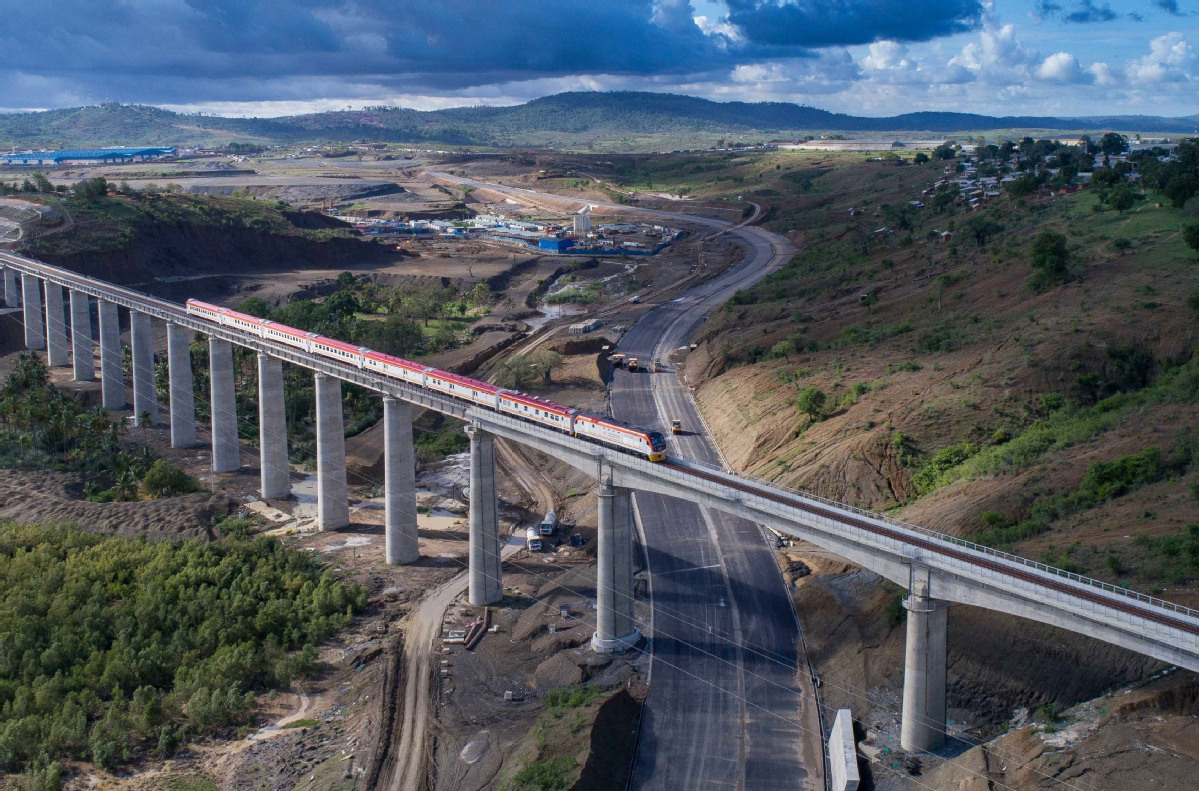
Belt and Road is a succinct English translation of the Chinese term, “one belt, one road” (yidai yilu). Belt refers to the Silk Road Economic Belt, a network of overland road and rail routes the initiative has already built, is building or has proposed, primarily through Central Asia. Its name deliberately recalls the historical Silk Road, a network of trade routes that preceded it centuries ago, connecting east and west in positive ways for more than 1,000 years. Road refers to the 21st-Century Maritime Silk Road, and includes sea routes and ports linking Chinese waters with Pacific island nations, Southeast Asia, South Asia, the Middle East, Africa and Europe, with Latin America on the horizon.
Studies published by leading scholars and international organizations have emphasized the transformative effect Belt and Road projects can have on the world economy and, above all, the Global South. For example, last year, the World Bank estimated these projects will increase participating countries’ trade by an average of 4.1 percent while also cutting their trade costs by as much as 2.2 percent. Developing countries in East Asia and the Pacific region that are joining Belt and Road projects might?expect GDP increases in the range of 2.6-3.9 percent.
Also, last year, the Center for Economics and Business Research, an economic consultancy based in London, published a study estimating Belt and Road projects will help grow the global GDP by $7.1 trillion per year by 2040, particularly as improved infrastructure makes trade cheaper and easier. This explains why 151 countries around the world have already signed up for inclusion in the initiative, and why more are expected to join.
Some leading international media have referred mistakenly to the Belt and Road Initiative as being written into China’s Constitution in 2018 (that said, we shouldn’t be surprised if it’s included in possible amendments this year during the annual National People’s Congress session in March). However, the initiative is mentioned in the Communist Party of China Constitution in a key section discussing China’s foreign policy values. There, it is linked with following “a path of peaceful development” consistent with a “win-win opening-up strategy,” which not only helps foster a “favorable international environment for China’s reform, opening up, and modernization,” but does so in ways that promote “peace, development, fairness, justice, democracy, and freedom… to build a community with a shared future for mankind.” The commitment of working to “develop good neighborly relations between China and its surrounding countries” is being asserted, along with working to “strengthen unity and cooperation between China and other developing countries.” In this context, the initiative is noted to follow the “principle of achieving shared growth through discussion and collaboration.”
Counter-initiatives
Although some have fretted over it as an initiative that will position China as a new global superpower, and perhaps the only superpower, these kinds of narratives are generally based on misunderstandings and, in some cases, intentional fear-mongering. Nevertheless, the Belt and Road Initiative has encouraged other countries to more actively engage in trying to advance similar efforts in a competitive, if not zero-sum, mode of strategic thinking, but none of the West’s counter-initiatives have yet demonstrated the Belt and Road Initiative’s scope or commitment, including an mishmash of primarily U.S.-led initiatives, including the Blue Dot Network (2019), the Free and Open Indo-Pacific Strategy (2019), and B3W or Build Back Better World (2021). The key difference here of course is that the China-proposed initiative aims primarily to help participating countries, especially developing countries, develop, while the U.S.-led efforts aim principally to knock back China, i.e., a developing country the U.S. fears will effectively resist American hegemony.
On the one hand, if such counter-initiatives also help developing countries advance, then such competition should be applauded, as some scholars have argued. On the other hand, there are reasons to worry that these alternatives only offer empty promises, simply aiming to dissuade more countries from joining the Belt and Road Initiative. However, if some of these anti-China efforts gain traction, they risk creating uncoordinated projects that may imperil efforts overall, and threaten the wellbeing of developing countries struggling to realize their potential. This raises the specter of a postmodern imperialist competition, and may well be the byproduct of U.S. moves to foster “great-power competition.” It may prove reminiscent of Western colonialism in the developing world, which historically veered from exploiting and deliberately underdeveloping the countries it seized to then neglecting them later, as the famed African scholar Walter Rodney first described in his famous study in 1972.
Such risks in some respects have become even more pronounced in the wake of the COVID-19 pandemic, which put a lot of downward pressure on development projects around the world, including those associated with the Belt and Road Initiative. In fact, U.S. mismanagement of the outbreak at home led it to implement massive, debt-financed stimulus packages that did little to create sustainable growth but did much to contribute to global inflation, which then intersected with U.S.-led provocations in Europe via NATO, resulting in the ongoing conflict in Ukraine.
The U.S. in turn has accelerated the conflict as a proxy war against Russia, which has contributed to more food and energy insecurity around the world, particularly in developing countries. This led the U.S. Federal Reserve to raise interest rates to protect Americans from their own government’s failures and misadventures, and created spillover effects worldwide, especially in the Global South, where it has now become much more costly to borrow money and service. This has made it difficult for some Belt and Road projects to advance, thereby achieving one of Washington’s strategic goals. However, these prospects remain bright for the simple reason that China’s economy is expected to make a robust post-COVID recovery this year and next, and then remain a global engine for growth and development, with the Belt and Road Initiative growing in turn.
Long-term?commitment
Some leading policymakers like U.S. Secretary of Treasury Janet Yellen continue to repeat long debunked claims that the Belt and Road Initiative is prone to creating “debt traps,” and that it does so intentionally, while ignoring the larger and more unregulated financial roles Western governments and lenders still play proportionately in the historical debt problems that have accumulated in developing countries, especially under longstanding financial hegemonies.
Yellen and like-minded critics have also ignored China’s demonstrated willingness to restructure and even forgive debts, or use lend-lease options when both countries agree and changing financial circumstances make them sensible. Of course, most Belt and Road projects are long-term investments, particularly those related to infrastructure, and are expected to pay off in a decade or two at the earliest. Given the normal ups and downs experienced in the global economy, felt more acutely by developing countries and all the more so given repeated black swan events in the past few years, the Belt and Road will sometimes be bumpy, but China has made long-term investments and assumed tremendous risks that no others have, including many leading Western countries that first became rich and powerful by exploiting weaker nations.
Ultimately, the Belt and Road Initiative offers concrete opportunities for other developing countries to break out of the old cycles of underdevelopment while also providing China with opportunities to realize its own full potential in tandem with the large public goods associated with global peace and socioeconomic justice. Increasingly, contrary to concerns the Belt and Road projects pose environmental risks, many are intersecting positively with Beijing’s fast developing “ecological civilization” values, as well as China’s leading position in developing green solutions and renewable energy. These developments have already produced many achievements, and many more will soon be realized.
The author is a professor of politics and international relations at East China Normal University and a senior research fellow with the Institute for the Development of Socialism with Chinese Characteristics at Southeast University.