Long-term Policies Are Key to Overcoming the Impact of the COVID-19 on Job Market
 Facebook
 Twitter
 Linkedin
 Google +

Long-term policies are key for the job market to emerge from the current difficulty and to cope with the long-term challenges such as a decline in labor force due to the aging population, a mismatch between skills of job seekers and the demand of employers, as well as short-term shocks such as uncertainties in the external environment
The novel coronavirus disease (COVID-19) epidemic halted many business activities and put downward pressure on the economy. Rising unemployment in hard-hit regions has become a major concern to the public and the government.
However, the impact should not be exaggerated. There are also new growth opportunities in the areas of the digital economy, new technologies as well as employment-boosting information sharing and vocational training. Amid the epidemic, stabilizing the job market is a key priority.
Long-term policies are key for the job market to emerge from the current difficulty and to cope with the long-term challenges such as a decline in labor force due to the aging population, a mismatch between skills of job seekers and the demand of employers, as well as short-term shocks such as uncertainties in the external environment.
Market woes
Data released by the National Bureau of Statistics (NBS) shows that the surveyed urban unemployment rate in China rose to 6.2 percent in February from 5.3 percent in January, while in March, it went down slightly to 5.9 percent. In comparison, the rate was respectively 5.3 percent and 5.2 percent in February and March 2019, and stayed between 5 percent and 5.3 percent throughout last year.
A report on China’s job market jointly published by the China Institute for Employment Research (CIER) and online recruitment platform Zhaopin.com on April 22 said in the first quarter, the number of job vacancies decreased 22.61 percent, while the number of job seekers fell 9.38 percent.
Accordingly, the CIER index, an indicator to measure the ratio of labor demand to supply, dropped from 2.18 in the fourth quarter of last year to 1.43 in the first quarter of this year, in particular to 1.02 in March, indicating a more sluggish labor market. In comparison, the index was 1.68 in the first quarter of 2019.
The change is partly caused by reduced recruitment due to impact of the epidemic. Many companies suspended production and operation during the peak period of the outbreak, especially in service industries such as hotel, catering and tourism. The global spread of the pandemic has also hit demand for exports and related jobs.
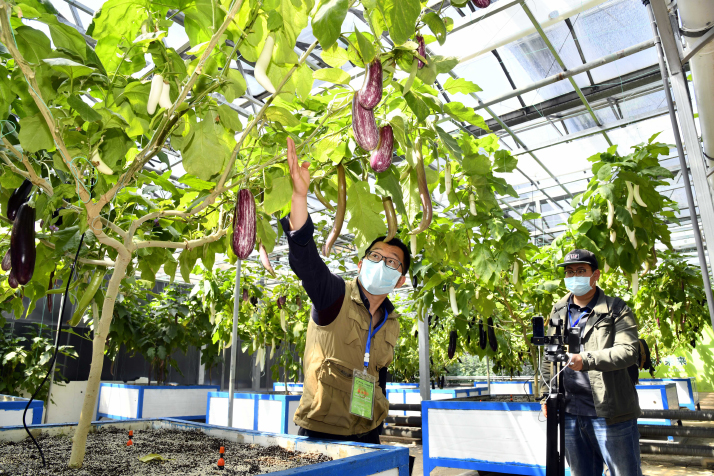
Dim job market prospect is causing anxiety among college graduates this year. In a joint online survey conducted by the CIER and Zhaopin.com in February and March, 51 percent of the respondents said it would be very difficult to find work, while another 41.2 percent thought it was somewhat difficult.
Though COVID-19 has increased pressure on the job market, it has also presented new opportunities for job creation.
For example, the measures to contain the epidemic compelled people to telecommute or study at home, spurring the development of the digital economy.
Besides, new job opportunities can arise when the focus shifts from external demand to domestic demand, and China speeds up the construction of new infrastructure including 5G network, the Internet of Things, big data, artificial intelligence (AI), the industrial Internet and smart cities. More investment in education, public health and public service sectors will also drive the labor market. Moreover, increased investment in human capital is very important for improving employment quality.
When analyzing the labor market to formulate responses, policymakers should take into consideration both the challenges and opportunities, as well as long-term trends and short-term shocks.
Changing landscape
Over the past decade, China has made great strides in boosting employment. However, the labor market has also been going through a transition.
NBS data shows that the working-age population shrank more than 26 million between 2012 and 2018, mainly a result of the family planning policy. The labor participation rate has also fallen, because more young people are joining the labor force late due to access to higher education, and more people aged 55 and above are withdrawing from the job market due to improvement in retirement benefits.
Meanwhile, the growth of the employed population has declined continuously. It dropped from 4.1 percent in 2010 to 2.5 percent in 2016, and became negative at the end of 2018, for the first time since 1962.
Another change in the labor market is the rise of flexible employment—employees are not bonded with a certain employer, but are free to work for multiple companies via online platforms. These platforms generate jobs. For instance, e-commerce giant Alibaba has created tens of millions jobs for online retail vendors. Digital reading platform China Literature has only 1,300 workers, but the number of its registered writers exceeds 8.1 million. Live-streaming platforms create jobs for a large number of hosts, platform administration staff, and other related upstream and downstream jobs such as Internet service and advertising.
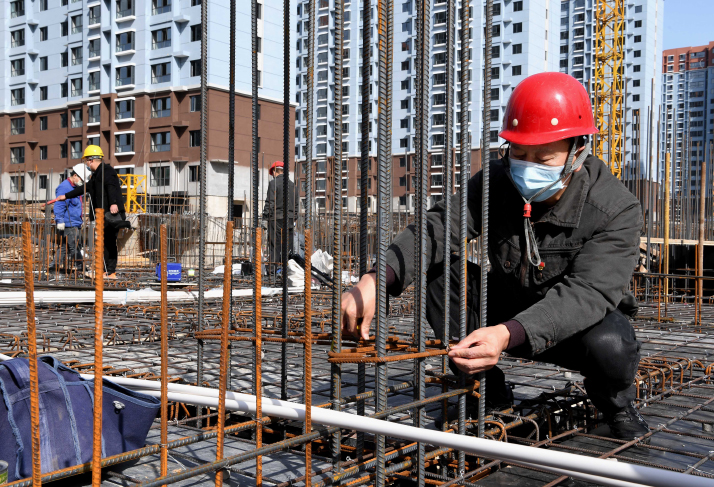
On the other hand, platforms have also caused job losses in traditional industries and steeper income inequality, while many people working on the platforms are not offered social security benefits.
In addition, structural imbalances between labor supply and demand still persist. China has about 280 million migrant workers with relatively low level of education and occupational training, which limits their job choices. Chinese colleges have expanded annual enrollment from around 1 million in 2000 to approximately 8 million in 2018. Some college graduates have found it difficult to get hired as they lack skills desired by employers. Structural imbalance also exists between more developed eastern regions and relatively underdeveloped central and western regions.
Even before the epidemic outbreak, the job market had already weathered some storms. Amid China’s transition to a more sustainable and eco-friendly development model in recent years, a large number of polluting businesses were shut down and workers laid off. The trade friction between China and the U.S. since 2018 has also had an adverse effect on many export-oriented enterprises.
Suggestions
Steady economic growth is essential to stabilize the job market. Major projects should be evaluated on their job-generating capacity. More investment should go into human capital, and into preschool education, health education and medical facilities in underdeveloped regions.
The incomes of low-paid groups should be increased through measures such as transfer payment so as to boost domestic demand. The operation cost of companies should be reduced and cuts in taxes and administrative fees should be part of a long-term policy. Besides, since the low labor participation rate is expected to become more prominent due to the aging population, it’s time to figure out a flexible retirement system and ways to increase labor participation of women.
New technologies such as big data, AI and the mobile Internet are beneficial for the job market as they can make up for the decline in labor supply. AI and other technological advances should be encouraged to replace human labor for dangerous and arduous tasks to improve employment quality, but excessive market intervention from the government should be avoided. More attention should be paid to flexible employment while protecting workers’ legitimate rights and interests.
Information sharing should be strengthened to make the job market more efficient. The government should create a nationwide platform to release information on job vacancies, occupational classification, job market outlook and graduating students. This will reduce frictional unemployment because of information asymmetry.
Vocational training should be more market-oriented and emphasize both professional skills, such as writing and accounting, and soft skills like interpersonal communication, analysis, organization, team work, as well as qualities such as sense of responsibility, motivation and perseverance.
The author is director of the China Institute for Employment Research at Renmin University of China