Marxism, Markets and the Myth of Capitalist Democracy
 Facebook
 Twitter
 Linkedin
 Google +
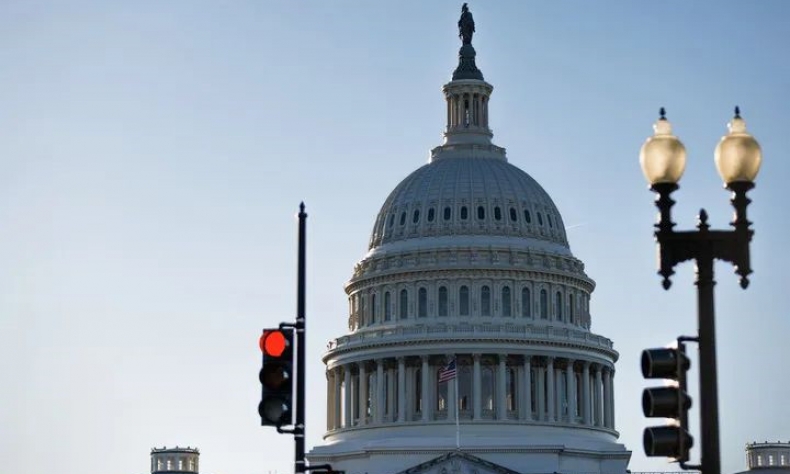
China’s approach promotes sustained and substantial public engagement, which more authentically reflects democracy’s original purpose: to ensure that people truly govern their own lives.
Carlos L. Garrido, an adjunct professor of philosophy at Southern Illinois University, Carbondale, the U.S., and Secretary of Education for the American Communist Party, visited China in April. In an interview with?Beijing Review reporter Li Wenhan, Garrido shared his initial impressions of China, discussed his experiences engaging with Marxism, offered insights into China’s socialist market economy and the country’s concept of “whole-process people’s democracy,” and addressed the U.S. fentanyl crisis. Edited excerpts from their?conversation follow:
Beijing Review:?Can you share some impressions of China? How did you initially become interested in Marxism? What has your visit to China taught you about the country’s governance practices?
Carlos L. Garrido:?It’s my first time in China, and I must say the experience has completely exceeded my expectations. This reality starkly contrasts with the narratives typically presented by U.S. media. The American media often misrepresents China, creating a distorted image. If more Americans could visit and witness firsthand the reality of Chinese society, they’d quickly realize those media narratives are baseless propaganda.
My engagement with Marxism began through personal reflection triggered by real-life events and philosophical inquiries. Growing up in the U.S., I observed stark contrasts: enormous skyscrapers with many empty rooms alongside streets filled with homeless individuals. Witnessing such disparities, even as a young child, prompted me to question deeply why we had abundant housing yet people still suffered without shelter. Such contradictions drew me toward Marxist philosophy, which addresses systemic inequalities head-on.
The U.S. today faces severe economic challenges. Over 60 percent of Americans are one paycheck away from homelessness, missing just a single paycheck can result in dire circumstances. This instability reflects a broader crisis in American society, where a record-breaking 700,000 people are homeless, many of whom are veterans. This stark reality highlights fundamental flaws within the American socioeconomic structure.
Today, Americans are markedly skeptical because they see clear contradictions between official narratives and their lived realities. Only 11 percent of the population trusts mainstream media, and a mere 19 percent believe their representatives genuinely act in their interests. Consequently, 81 percent perceive their elected officials as disconnected from their concerns. This widespread disillusionment explains why alternative perspectives, such as those shared through social media channels like TikTok on topics like communism and American socialist history, have resonated with Americans.
The foundational principle of American democracy is the notion of a government of the people, by the people and for the people. Interestingly, China often adheres more closely to these principles in practice than the U.S. does. Here in China, governance genuinely centers on the needs and interests of the general population, rather than serving big businesses and financial institutions. When Americans visit China and share their experiences online, they frequently express surprise at discovering a society that prioritizes public welfare over corporate profit.

The U.S. fentanyl crisis remains a pressing public health challenge, one of the major reasons causing homelessness. What are the underlying reasons for this? And how it can be solved? Is it a domestic problem, or we need multiple parties teaming up to solve it?
The fentanyl crisis in the U.S., sadly claiming around 70,000 lives annually, primarily among younger individuals, originates within the American pharmaceutical industrial complex. Specifically, the Sackler family, owners of Purdue Pharma [which filed for bankruptcy in 2019—Ed.], aggressively promoted opioids despite knowing their addictive nature. Their significant influence allowed them to lobby doctors, universities, clinics and even government agencies to falsely advertise opioids as non-addictive, underscoring a system where economic interests and profits overshadow human life.
Meanwhile, blaming China becomes a deliberate tactic used by political forces in the U.S. to deflect accountability away from domestic pharmaceutical corporations and their enablers. By attributing responsibility to an external adversary, particularly a country the U.S. views as a geopolitical rival, Washington conveniently obfuscates systemic domestic failures. This scapegoating fosters negative sentiment toward China, which serves broader political goals, notably justifying increased hostility and the framing of a new Cold War narrative. The reality remains clear, however: The fentanyl crisis is a fundamentally American-made problem, rooted deeply in domestic policy and corporate misconduct.
In your book The Purity Fetish and the Crisis of Western Marxism, you discuss the concept of China’s socialist market economy. Can you elaborate on this?
The case of China is particularly significant given the new Cold War dynamics initiated by the U.S. against China. When explaining socialism and communism to others, China serves as a powerful reference due to its remarkable transformation since the 1949 establishment of the People’s Republic of China, from a semi-feudal and backward nation into one of the world’s most prosperous countries. It’s essential to understand that markets and private property are not exclusive to capitalism.
So it’s absurd to say that just because the market plays a specific role under capitalism, that all markets are capitalism. Markets function according to the production modes they are embedded in. Under capitalism, they operate exploitatively, whereas under socialism, they serve broader societal goals aligned with public welfare.
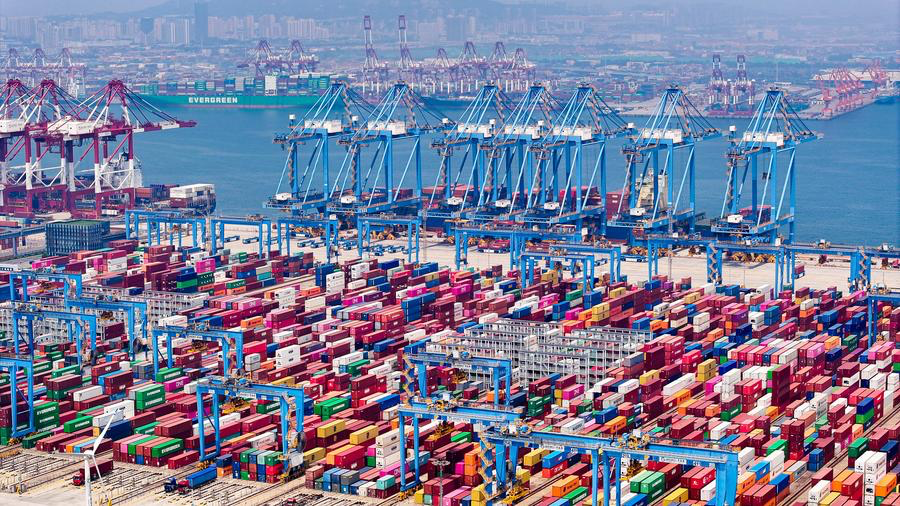
China is currently in an ongoing, evolving process of development. At this particular stage, markets and private property serve as central and auxiliary components of China’s socialist market economy. They are explicitly designed to promote the common good. As long as markets and private property fulfill this role, they remain integral to the early stages of socialist?construction.
China has introduced the concept of “whole-process people’s democracy.” How do you interpret this idea, especially when compared to Western liberal democracy?
In many ways, Western liberal democracy has drifted far from the original, etymological meaning of democracy. In ancient Greece, “democracy” was rooted in two terms: demos, meaning the common people, and kratos, meaning power or rule. At its core, democracy was about the empowerment of ordinary citizens, not necessarily tied to the multiparty electoral systems emphasized today in the West.
Modern Western liberal democracies, despite their electoral procedures, often fail to provide genuine democratic empowerment. Citizens may vote in multiparty elections, but many feel disconnected from the political process and powerless to effect real change. In the U.S., for example, you can have multiparty elections and still have a population that feels powerless, lacking any real control over their lives. While it maintains the formal institutions of what Marxism terms bourgeois or capitalist democracy, it lacks the true essence of democracy: rule by the people.
In contrast, China’s concept of “whole-process people’s democracy” revives the foundational spirit of democracy by embedding citizen participation across all stages of governance. Within China’s socialist democratic system, ordinary people engage in public affairs not just during elections but through ongoing mechanisms that enable meaningful involvement in policy formation and implementation.
American democracy often reduces civic engagement to voting every few years, a practice that, while symbolic, offers little real influence over candidates or policies. This minimal, periodic participation is a shallow expression of democratic ideals. By contrast, China’s approach promotes sustained and substantial public engagement, which more authentically reflects democracy’s original purpose: to ensure that people truly govern their own lives.