Future Moon Exploration Must Be Set Within UN Framework
 Facebook
 Twitter
 Linkedin
 Google +

If countries are going to be able to look back in 75 years and say these laws have stood the test of time, then they will have to make sure that the problems on Earth do not transfer when making them for the Moon.
In July 1945, leaders from the United States, the Soviet Union and the United Kingdom met at Cecilienhof Castle in Potsdam to carve out a new blueprint for international governance and the construction of a new world order.
Led by the US, the three victors were given carte blanche to implement sweeping changes to the international system, changes that have continued to guide international relations to this day.
But while these have for the most part helped preserve peace across the world, they have also created an unbalanced system, one that favours the founding nations despite their diminishing importance as the political landscape continues to shift from West to East.
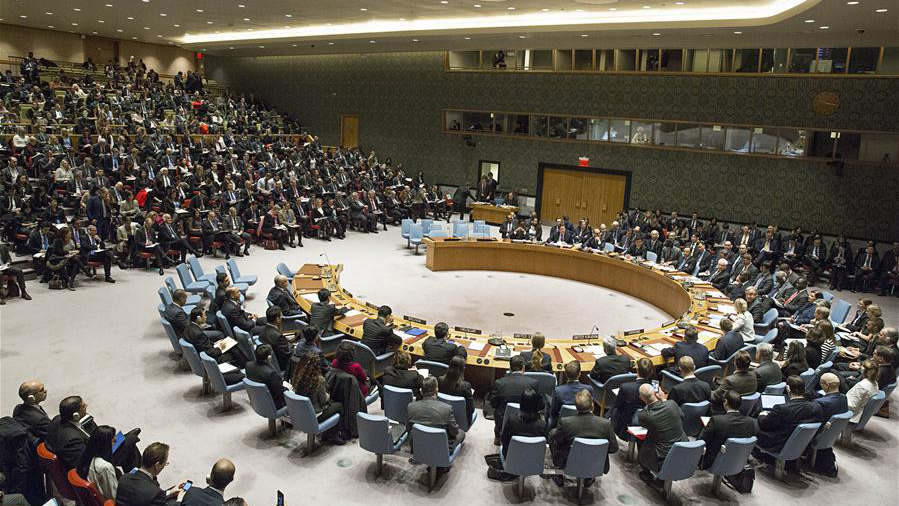
The United Nations Security Council perfectly illustrates this problem. Created in the aftermath of the Second World War, only 25 percent of the world’s population is now represented by its permanent members – a number that dwindles to just 7 percent without China – with four of the five permanent members considered “western” nations. Africa, on the other hand, has no permanent representation on the council, despite making-up the largest group of countries with UN-membership.
Seventy-five years on, these issues should serve as a warning to the problems associated with unilateral rule-making, especially as the need for new internationally-agreed legislation increases as previously inaccessible areas become attainable.
Increased Moon exploration needs new rules
The Moon, in particular, is one such area. Over the past few years, the number of national governments, space agencies and private companies looking to claim its vast geopolitical, economic and technical benefits has exploded.
National governments spent $20 billion last year on missions to the Moon and other space operations, an amount that has grown annually at a rate of five-percent for the past five-years, while there are now thirty-one countries and space agencies actively engaged in space exploration, along with increasing numbers of private companies.
But the rules that govern it have not kept pace with this increased expansion. The Outer Space Treaty, agreed in 1967, and the Moon Treaty, signed in 1979, have been criticised as “toothless” in holding actors to account, and lacking the signatures of many space agencies – including NASA.
Rather than compelling agencies to work together to solve this problem, some actors have decided to increasingly act unilaterally, in particular American space agency NASA.
The agency has recently constructed its own set of rules to determine how future Moon exploration should be governed and conducted. Dubbed the Artemis Accords, these rules have since been endorsed by space agencies from the UK, Italy, Australia, Canada, Japan, Luxembourg, and the United Arab Emirates – a point NASA has highlighted as a sign of the global approval that these rules have received.
Not universally endorsed
But these accords have been far from globally approved.
Having been constructed outside of the United Nations Committee on the Peaceful Uses of Outer Space (COPUOS) – the UN body responsible for constructing laws in Space – the US has missed the chance to gather a universal consensus on this topic.
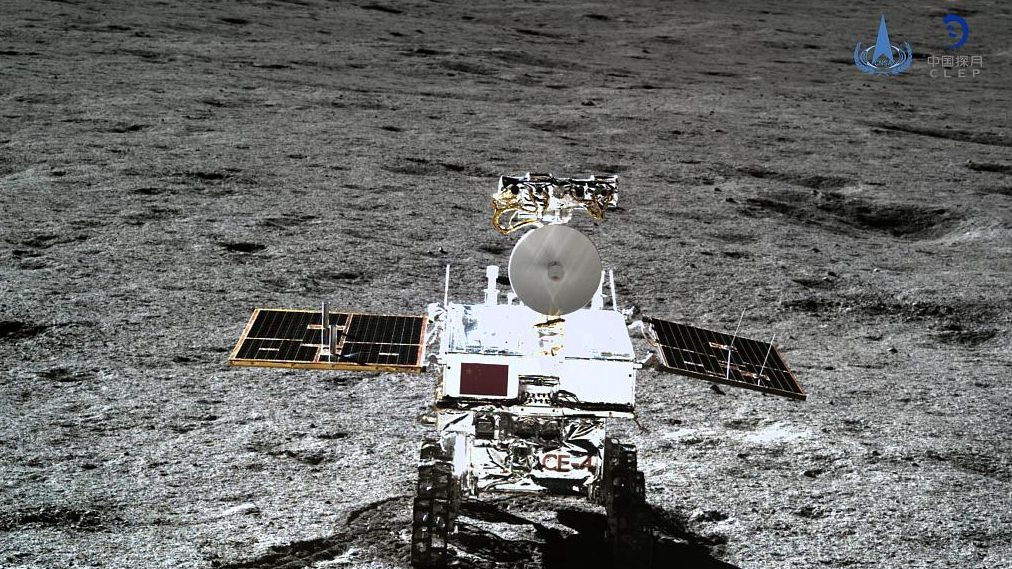
A number of important space agencies – including Russia’s Roscosmos and the Chinese National Space Administration (CNSA) – have as a result refused to back their proposals. Roscosmos head Dmitry Rogozin has stated them as “too US-centric”, while the CNSA cannot legally sign bilateral agreements with NASA as a result of the Wolf Amendment, expelling them from any cooperation.
As a series of bilateral agreements between NASA and other agencies, the Accords have also not been properly scrutinized, which has raised concerns that they have been intentionally rushed through to ensure those who object can have no say.
“What impact will this have on the multilateral discussions we have at COPUOS?” Andre Rypl, a diplomat at Brazil’s mission to the UN offices said in response to the Accords. “Shouldn’t we be discussing some of these elements here: all the countries, all member states, together?”
US keen to be rule-setter
The US has, in response, cited the painstaking time it takes to reach an international consensus on new rules to justify why it has bypassed COPUOS.
“If we turned to an international body and had them assemble all the nations of the world and then start moving forward, it would take a very, very long time,” NASA chief Bridenstine admitted,? while his acting associate administrator for international and interagency relations Mike Gold, has also said that the US “cannot wait for every single issue to ultimately be resolved before going to the Moon.”
But given the US has recently established a sixteen-thousand strong Space Force and sought to resurrect its 1980s “Star Wars” missile detection program, their actions have raised questions to what their true intentions really are on the Moon – and Space in general.
“Is this a way to force agreement?” Cassandra Steer, a mission specialist at the Australian National University (ANU) Institute for Space said in response to the signing. “There appears to be a preselection of whose voices get to be involved in determining the nitty-gritty [of the Accords].”
Two Canadian academics have also voiced similar criticisms, raising concerns that the Accords place the US in a position as “de facto gatekeeper to the moon”, a move that violates the very spirit of international space treaties and “puts the safe development of space at risk.”
Multilateralism and cooperation key
Rather than making the Moon “available for everyone”, as per NASA’s slogan, the agency has instead created a set of rules that further damages the US’ already battered reputation for cooperation, and increases suspicions that it acts for the benefit of the few and not the masses. They are also unlikely to be effective, especially without a global consensus, which would need ratifying through the COPUOS.
As Guoyu Wang, a Chinese delegate to the body wrote, the Accords are “not a treaty … [nor] an international agreement” and as such have no legal basis to plug the gap of enforcing the current laws governing the Moon.
Despite their lack of legality or consensus, the Artemis Accords may still go on to become the basis of Moon law going forward. But if countries are going to be able to look back in 75 years and say these laws have stood the test of time, then they will have to make sure that the problems on Earth do not transfer when making them for the Moon.