New Five-Year Blueprint Is a Set of Major Adjustments
 Linkedin
 Google +
In so many words, these multiple plans and strategies unfolding with the 14th Five-Year Plan aim to avoid new problems while laying a foundation for a stronger future economy, improved governance and better national security.
A key focus of the Fifth Plenary Session of the 19th Communist Party of China (CPC) Central Committee, held in Beijing from October 26 to 29, was the blueprint of the 14th Five-Year Plan (2021-25), which will be a key guide for Chinese development for years to come.
This plan is a set of major adjustments as China continues to pivot away from export-led growth and implements the dual-circulation strategy—which consists of making the country more self-sufficient, increasing domestic demand, and simultaneously maintaining opening up and Chinese exports, for the near-long-term at least.
This adjustment arrives with the convergence of three factors—longstanding needs, new pressures associated with Washington’s China containment efforts and threats of decoupling, and a very fluid global situation due to the novel coronavirus disease (COVID-19).
Plenaries were already closely watched affairs, both in and outside China, and their importance has accelerated even more so this year. Indeed, China’s status as a rising power vis-à-vis the U.S. as a declining power, as the anchor of the Asian century and increasingly, as the manufacturing capital of the world, as an emerging global health superpower, and by some measures the world’s most advanced technological society, means that others in the world increasingly look to China to be a driver of solutions to global problems.
These include producing vital supplies, bringing stability and stimulus to the global economy in a time of pronounced crises, and serving as a global leader for preserving and reforming multilateralism, in tandem with confronting intersecting problems like global warming and the pandemic. But it also means that some international firms will find their China-related business models significantly affected for better or worse.
The new five-year plan, to be initiated at a time when China and the world are undergoing major changes, marks, for China, the first of two 15-year periods. The first is expected to basically achieve socialist modernization by 2035, in part by maintaining an annual growth rate of 5 percent, avoiding the “middle income trap,” and improving governance.
This would likely include when China achieves parity with the U.S., and serve as a bridge to the second 15-year period, through which China aims at establishing a fully modernized socialist country, marking the 100th anniversary of the founding of the People’s Republic of China. And along the way, if all of this proves successful, it demonstrates the power of central planning.
Responding to uncertainties
China was in some instances pushed into reactionary positions, particularly as the U.S. targeted it with illegal tariffs and undermined China’s reputation and advanced technology sectors worldwide, and also as the pandemic unfolded at home and abroad and required major unplanned adjustments.
While the U.S. decoupling threat and the pandemic have impacted strategic planning in China, it’s easy to overestimate their effects. In fact, many of the new ideas and core concepts can be viewed as reinvigorated commitments to older plans that had been lagging due to pre-existing difficulties associated with implementing them, and which were further exacerbated by new challenges presented by the U.S. and the pandemic.
On the one hand, the U.S. trade war, tech cold war and decoupling threat might make it more difficult to initiate deeper economic reforms that might have been implemented more quickly after the Party completed the bulk of its anti-corruption drive. On the other hand, U.S. pressure has now made it clear that these reforms are vital, and these older ideas have emerged more forcefully in better defined concepts like dual circulation, an improved global strategy for the yuan, and embracing inbound and outbound foreign direct investment and international growth and go-global development strategies like the Belt and Road Initiative.
One outstanding question is how state-owned enterprises (SOEs) might be affected by the new plan, especially the large ones. With the pandemic this year, maintaining employment was given priority over growth rates.
Another question is, since the threat of COVID-19 continues, and the likelihood of other new diseases is increasing, what can China do to be better prepared for these challenges while also improving its domestic healthcare system and emerging as a global health superpower?
Dual circulation strategy
While the term dual circulation has become relatively common only this year, its core concepts are not entirely new. The term itself indicates two tactics at work simultaneously: continuing to export as much as possible while creating self-sufficiency in terms of domestic production and consumption.
These efforts have been hastened by U.S. pressures. But above all, China wants to make itself less susceptible to foreign disruption and global economic crises while also expanding domestic consumption as a means for improving the quality of life.
Middle income trap?
There are many reasons why economies fall into a “middle income trap.” Here are three: legal and political systems become entrenched and prevent significant and effective reforms; a nation fails to innovate and remain competitive; and external forces, like foreign competitors, successfully limit or contain development and reform.
If a “middle income trap” emerges in China, it would present a significant problem. However, if the leadership maintains clarity on reforms and combines these efforts with an effective go-global strategy and national defense, then China is unlikely to become stuck or vulnerable the way other countries have.
Public consultation
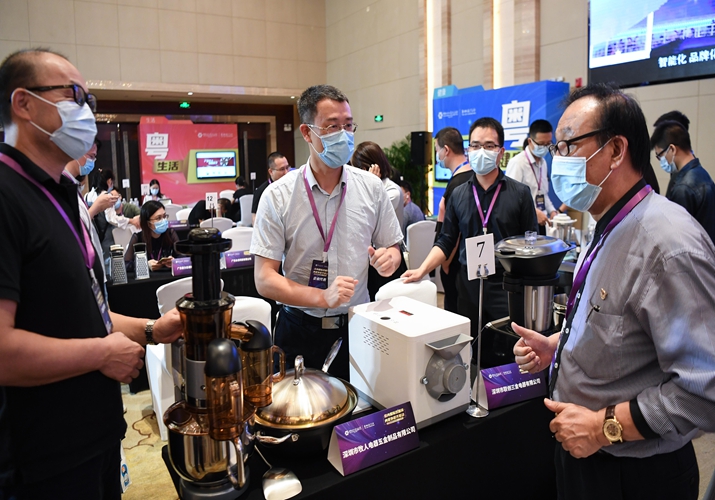
This year, Chinese citizens can comment on the plan via official websites. In fact, on both the local and national levels, China has been experimenting for many years with increasing public consultation, institutionally through the Chinese People’s Political Consultative Conference, the political advisory body, as well as soliciting public comments for proposed legislation and rule-making.
No matter to what extent this helps shape actual policymaking, it provides nevertheless a voice for the people, and therefore, it is both inclusive and informative. Perhaps most importantly, it helps the government better understand what people think and want and vice versa, and provides an important opportunity for stakeholders to make their positions clear. This marks a clear improvement for two-way communication.
New infrastructure,technology
Arguably, China was already emerging as the world’s leading technological society, and the pandemic has only hastened this development, particularly via digitalization. Before and during the pandemic, the U.S. responded in part by provoking global efforts to limit and in some cases outright ban Chinese tech-associated products, and Washington has largely abandoned or disavowed international efforts aimed at curtailing global climate change.
Conversely, China has countered this in several ways. Aside from not abandoning the Paris Agreement for greenhouse gas emission mitigation, it has become a global leader in developing and implementing sustainable development and renewable energy. It has also committed to reaching carbon neutrality by 2060.
In response to the United States’ tech cold war, China has moved quickly to identify and resolve various choke points with an increasingly vast array of public and private initiatives. Given both economic and national security, it seems incredibly unlikely that these efforts will be allowed to come up short.
These efforts also link with government incentives for the private sector to rapidly expand and build up new infrastructure—including data centers, 5G networks, artificial intelligence, the Internet of Things and electric vehicle charging stations.
Of course, China was already developing in this direction before the pandemic, but the new infrastructure strategy has become a focal point for leveraging the private sector more effectively in economic recovery and growth in the wake of COVID-19, and also with an eye on long-term development.
In this respect China is outpacing many, if not all, international competitors, not just in building the infrastructure of the future, but also by avoiding the sort of bail-out/stimulus-related problems that accumulated in the wake of the global financial crisis of 2008, and that are accumulating now in the U.S. and other places.
Therefore, in so many words, these multiple plans and strategies unfolding with the 14th Five-Year Plan aim to avoid new problems while laying a foundation for a stronger future economy, improved governance and better national security.
The author is professor of politics at East China Normal University in Shanghai