Next-Generation Robots
 Facebook
 Twitter
 Linkedin
 Google +
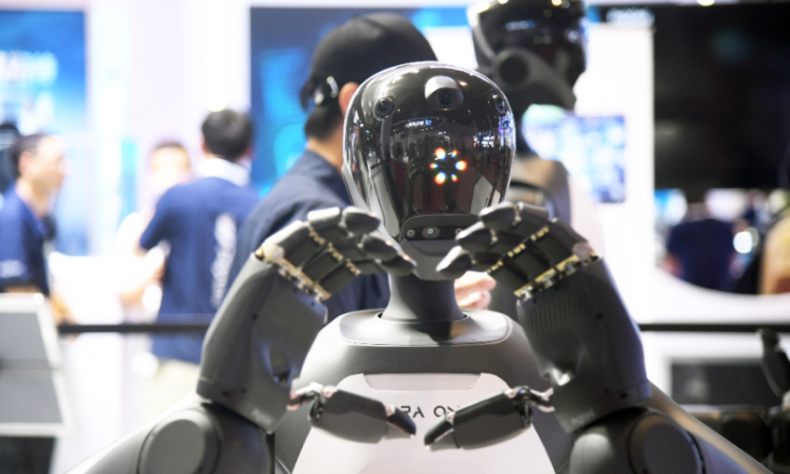
Today, progress in humanoid robots has become an important measure of a country’s innovation capacity and high-end manufacturing output.
Since the idea of embodied artificial intelligence was born, the U.S. has been an international frontrunner in the research and development (R&D) and application of the technology, while China has been a capable chaser in recent years, particularly in the area of humanoid robots.
A latecomer
The U.S. has a mature ecosystem for the commercialization of embodied AI technology. A research report compiled by China-based Haitong Securities last November showed that long before embodied AI-powered agents began working in auto factories at a small scale, autonomous warehouse robots had already been widely used in the U.S. logistics industry, transforming how goods are sorted and delivered.
Since Amazon acquired Massachusetts-based Kiva Systems in 2012, the U.S. tech giant has been focusing on the application of various robots and intelligent technologies in the field of warehousing and logistics. Today, Amazon has deployed more than 750,000 robots across its operations network, making it one of the largest users of robots worldwide.
Developed by Agility Robotics, born at Oregon State University in the U.S., the humanoid robot Digit started working in a GXO Logistics warehouse at the end of 2023. This robot can carry out tasks such as cargo handling, climbing stairs, and crossing complex terrain. The use of robotic workers has cut the handover time from warehouse to truck by 50 percent, offering a solution to the “last mile” problem in supply chain management. As of August 2024, Digit robots had fulfilled 10,000 orders, which preliminarily proved their commercial value.
?“The latest development and application of embodied AI systems has mostly taken place in the U.S.,” said Zhang Yueming, professor at Beijing University of Technology. “Chinese companies now urgently need to catch up or even surpass their U.S. peers in the global race of industrial automation.”
?“Policy guidance is particularly important at this moment,” opined Gao Chao, deputy general manager of CCID Consulting Advanced Manufacturing Research Center, who called for stronger policy support for R&D plans addressing the basic and common needs in the industry. He also advocated for encouraging institutional users to provide profound application scenarios. Increased financial and tax support is also needed to ensure healthy and rapid development of the industry, Gao added.
In January 2025, the Beijing municipal government issued an exposure draft of its 2025-2027 action plan for technological innovation and industrial development of embodied intelligent robots. The Chinese capital aims to nurture a group of unicorn companies, leading tech firms, national high-tech enterprises, and “little giant” firms (small and medium-sized enterprises using special and sophisticated technologies to produce novel and unique products) in the field of embodied AI.
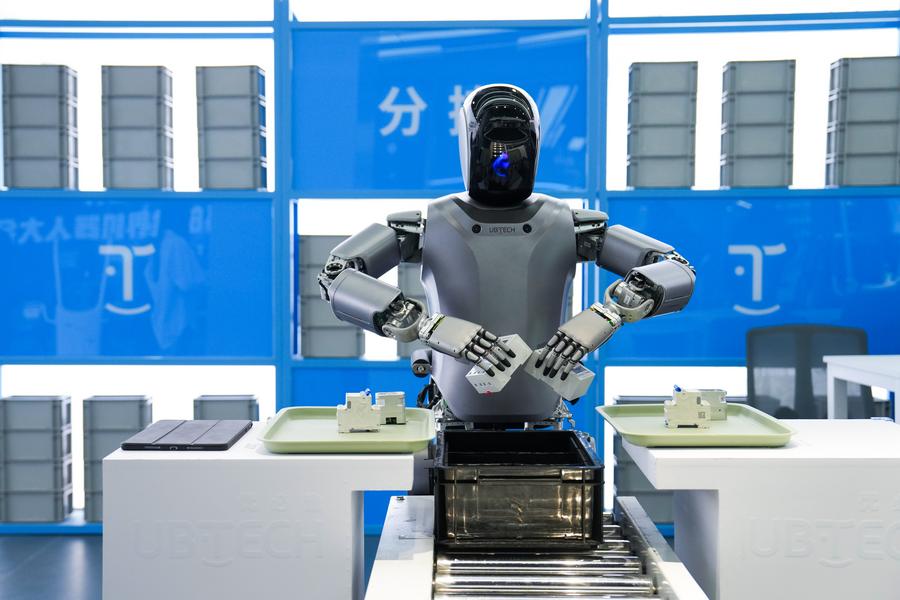
In addition to Beijing, a dozen other Chinese cities and provinces such as Shandong and Chongqing have also included embodied AI or humanoid robots in their 2025 government work reports, underlining the important role the technology can play in promoting industrial upgrading and high-quality economic development.
Statistics from the State Administration for Market Regulation of China showed that China registered 451,700 companies in the intelligent robotics sector as of the end of 2024, with a total registered capital of 6,444.557 billion yuan (US$880 billion). The number of such firms grew steadily and increased by 206.73 percent from the end of 2020 and 19.39 percent from the end of 2023.
Focus on developing humanoid robots
Located in Beijing Economic-Technological Development Area, the National and Local Co-built Embodied AI Robotics Innovation Center (Co-built Innovation Center) is one of the first Chinese tech companies to focus on the core technology, product development, and application of embodied AI robots.
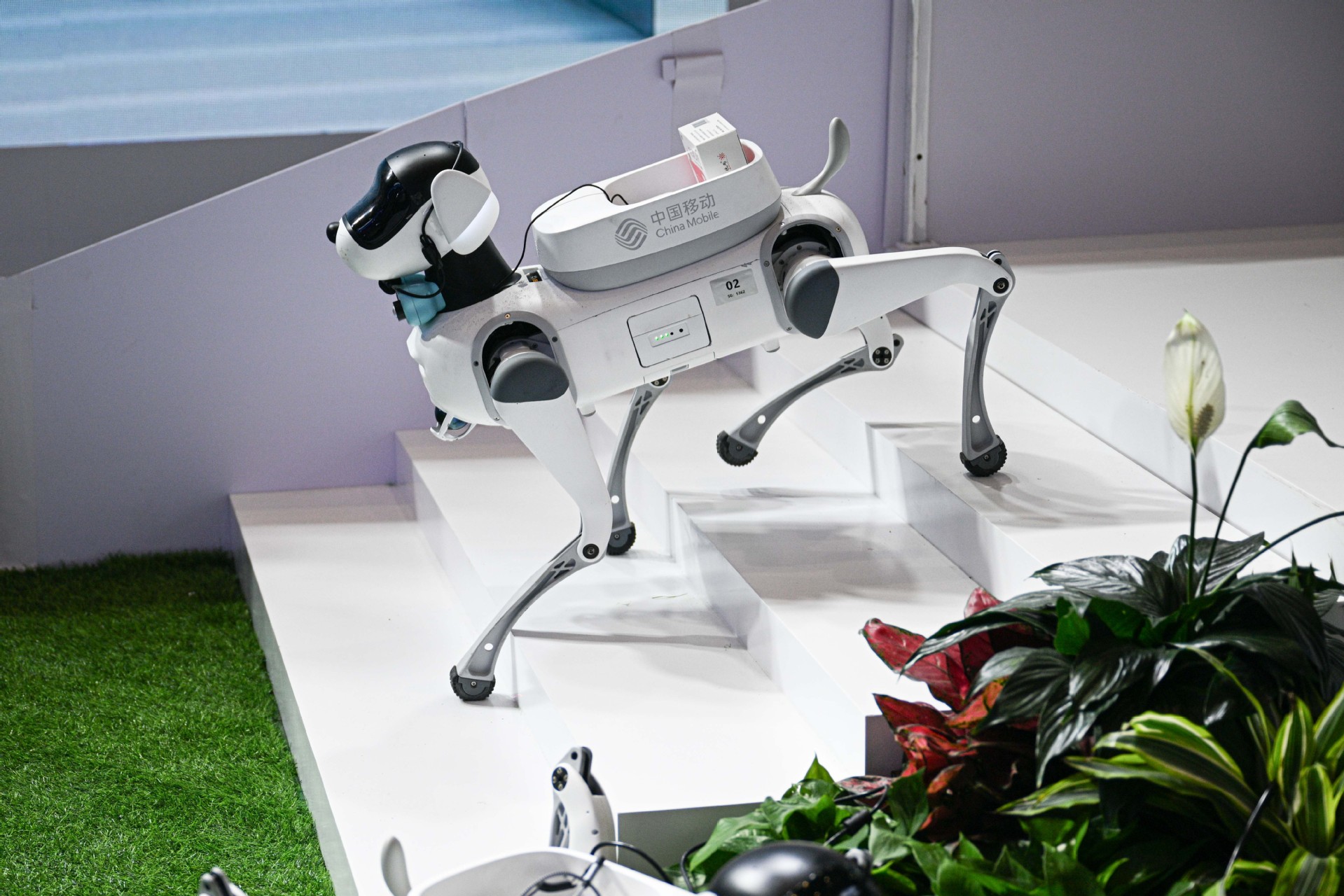
According to Wei Jiaxing, head of public relations at the Co-built Innovation Center, embodied AI robots can come in a variety of types including humanoid robots, fixed-base robots, wheeled robots, tracked robots, and quadruped robots. They are designed to work in different scenarios. With limited mobility but excellent precision, fixed-base robots are often used in laboratories and industrial settings. Tracked robots excel in navigating challenging terrains for field operations. Wheeled robots are ideal for patrol inspection thanks to their high efficiency of mobility. Humanoid robots are the most optimal embodied AI system, and they are also a key subject of R&D at the Co-built Innovation Center. This is because humanoid robots can better adapt to the real-world work and living environment and develop affinity with humans, Wei explained.
On October 20, 2023, the Chinese Ministry of Industry and Information Technology issued?Guiding Opinions on the Innovation and Development of Humanoid Robots, setting long-term objectives for robotics development in the country. Today, progress in humanoid robots has become an important measure of a country’s innovation capacity and high-end manufacturing output. A new area for technological competition, humanoid robotics is poised to serve as a key growth driver of future industries.
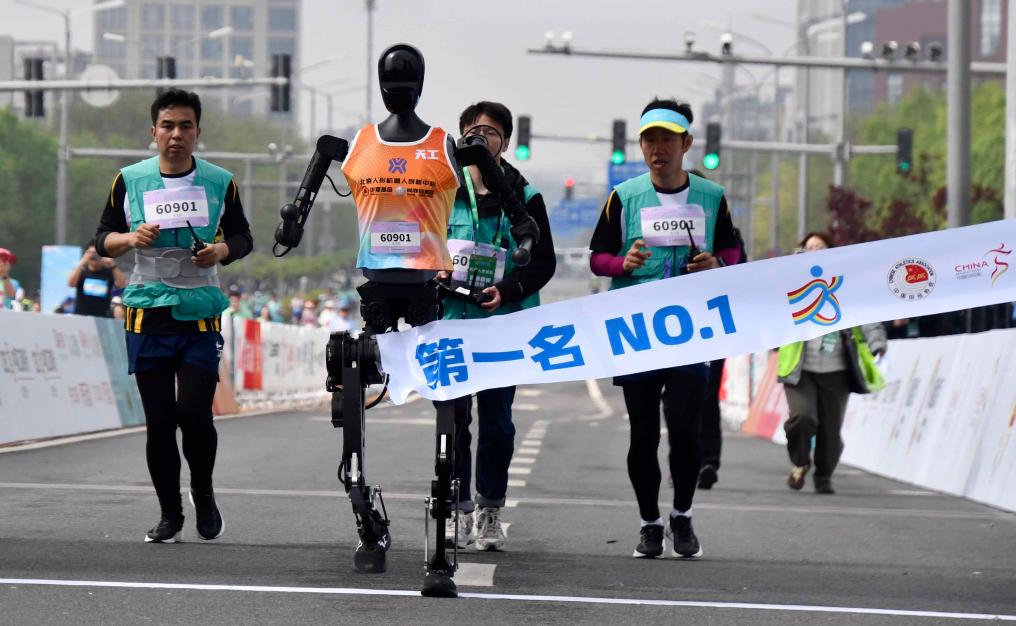
In April 2024, the Co-built Innovation Center released Tiangong 1.0 Lite, China’s first general-purpose humanoid robot platform and the world’s first full-size, purely electric-driven humanoid capable of behaving like a human. Four months later, Tiangong 1.1 Pro was unveiled with enhanced capabilities to interact with the environment and fulfil tasks. Standing at a height of 163 centimeters and weighing 42 kilograms, Tiangong 1.1 Pro boasts 42 degrees of freedom and multiple built-in visual perception sensors and six-dimensional force sensors. It is equipped with an inertial measurement unit and a three-dimensional vision sensor, capable of making 550 trillion calculations per second.
Recently, Tiangong began field operations in a 10kV high-voltage power distribution room at a training facility owned by Yizhuang Power Supply Company. The robot navigated complex terrains like steps and narrow passages to carry out patrol inspection in the room. It used handheld devices to conduct multi-point temperature monitoring on several cabinets. Thanks to its dexterous upper limbs, Tiangong could also perform challenging tasks on the No. 245 bus tie breaker. It turned knobs, pressed buttons, and completed the closing, opening, and other switching operations in strict accordance with relevant procedures.
Works on technical upgrading and performance improvement of Tiangong will continue with the aim of managing a wider range of complex scenarios in areas such as industry, manufacturing, commerce, and household service and contributing to the development of new quality productive forces.
An optimistic picture
Chinese tech companies are optimistic about the future of embodied robotics.
Headquartered in Hangzhou, capital of Zhejiang Province, Unitree Robotics hopes humanoid robot development will herald a milestone event. For example, a terminal product becoming commercialized in the secondary industry or the service sector would trigger a surge in shipments. The head of the company predicts such a surge could come as fast as the next three to five years.
Chinese robotics firms have considerable justification for their optimistic estimates. U.S. tech giants such as Nvidia, OpenAI, Microsoft, and Google are all betting on embodied AI, while Chinese venture capitalists have also been active in the field. Humanoid robot companies in China received a total of 74 venture capital investments in 2024, and 10 such funding rounds occurred in January 2025. China ranked first in the world in terms of humanoid robot-related patent applications. In the past five years, China submitted 5,688 such applications, nearly three times more than the U.S. (1,483).
In its report?The Humanoid 100: Mapping the Humanoid Robot Value Chain?released this February, U.S. financial services firm Morgan Stanley ranked the top 100 companies in the global humanoid robotics industry. The report showed that 73 percent of the world’s humanoid robotics-related companies are based in Asia, with Chinese companies accounting for 56 percent of this group.
?“Humanoid robots developed by foreign companies usually have better operational capabilities,” Gao Chao said. “But our home-grown products are now making fast progress.”
Since China’s Ministry of Industry and Information Technology issued a guidance opinion to promote innovative development of humanoid robots in 2023, a group of embodied AI start-ups have emerged in China thanks to a rapid increase of capital inflow. Most of the founders of these companies have a deep technical background. They have deployed diversified approaches to develop smarter, more versatile robots.
Spirit AI, founded in February 2024, uses ViLa (Vision-and-Language Models) and CoPa (Constraints of Parts) to realize data acquisition. Established in 2023, Galbot was the first to verify the feasibility of a pure visual FSD (full self-driving) model in the field of embodied AI. The motion capture data serving this model is acquired through imitation learning of the real world. Founded by Tsinghua University alumni, Galaxea AI proposed the concept of “one brain, multiple forms,” and its models can perform complex tasks by learning from a small number of demonstrations. Noematrix, co-founded by Lu Cewu, a professor at Shanghai Jiao Tong University, developed two “force-centered” large embodied AI models, empowering robots to complete fine operations like shaving.
Nicholas Wright, a neuroscientist at the Center for International and Strategic Studies, a U.S. think tank, argued in a?Foreign Policy?article that “in the global race to win the prize of dominance in humanoid robots, China and the United States have different strengths.” “China’s big edge is manufacturing at scale,” he wrote, while “the United States’ big edge is in the most cutting-edge technologies at companies such as Nvidia, in its hub of start-ups, and at universities.”
In the long run, Morgan Stanley estimated that by 2050, the size of China’s humanoid robot market is expected to hit around 6 trillion yuan (US$820 billion), while the U.S. humanoids market could generate a total revenue of about US$1 trillion.