Open to Chinese Democracy
 Facebook
 Twitter
 Linkedin
 Google +
With the benevolent state in control, individuals enjoy the freedom to live their lives, the state being there to support them.
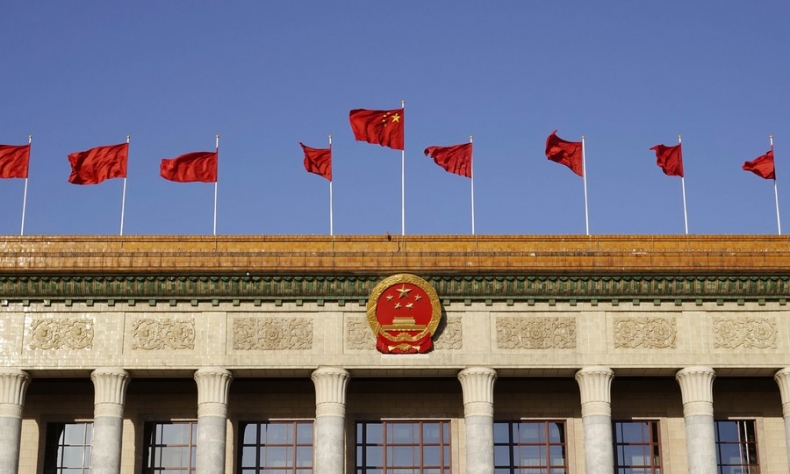
Some?2,977 elected deputies will be attending the second plenary meeting of the 14th National People’s Congress at the Great Hall of the People in Beijing in early March.
This, the world’s largest legislative body, is the most striking manifestation of China’s governance system, whole-process people’s democracy. For outsiders, the gathering seems symbolic and ceremonial. However, the deliberation undertaken by the unpaid deputies in the week that they are together is merely the most visible element in a complex consultative system of government.
Whole-process people’s democracy is often misunderstood by foreign commentators. It is not simply “a phrase popular with China’s communist leaders” as some would opine. Rather it is a constitutional system attuned to deliver effective governance across an enormous geographical area that embraces much cultural diversity and economic disparity.
Part of the misunderstanding arises through difference. Social policy is an academic discipline concerned with the efficient delivery of public services. In teaching the subject to overseas students, one witnesses their growing realization that the governance that they grew up with is not the only one that exists. Nor is it necessarily the best.
American students, for example, tend to believe that the only form of democracy is that which President Abraham Lincoln described as “government of the people, by the people, for the people.” Chinese democracy is different. The Communist Party of China (CPC) “governs for the people…by relying on the people.” As such, it can be described as a consultative democracy following the principle of “from the people, to the people.”
It is not straightforward to determine which form of governance is best. It depends on the evaluative criteria that are used which may be culturally specific. It is highly unlikely that American style democracy would ever work in China, nor the Chinese system in America.
One reason is the difference in the meaning of freedom. Many European settlers arrived in North America fleeing state-sponsored religious oppression. The U.S. Declaration of Independence, the division of powers embedded in the U.S Constitution and the first 10 constitutional amendments – termed the Bill of Rights – serve to impose limits on state power. Taken together, they prescribe what the state is not allowed to do. It seems that America’s founding fathers did not trust themselves not to abuse their own power.
In contrast, Chinese ideology, grounded in Confucian thought, envisages state leaders (emperors in ancient times) as fathers of the nation ruling benevolently in the interests of their national “children.” Chinese society was thought to be hierarchically organized based on virtue, manifest by a concern for the well-being of one’s social inferiors. If the emperor, who should have been the most virtuous was found not to be so, they could legitimately be deposed.

This understanding of the nature of government has been retained in the new China. Corruption – prioritizing self- rather than community-interest – is the antithesis of good government; it is therefore to be eliminated wherever found. State paternalism is acceptable and accepted. Very few citizens would dispute the contention that the CPC “is committed to doing everything for the people” even if it does not always succeed. Nor would most contest that “The CPC is the governing party, and the other parties accept its leadership… and function as its advisors and assistants.” With the benevolent state in control, individuals enjoy the freedom to live their lives, the state being there to support them.
Such positive freedoms are anathema to many Americans. Indeed, some on the U.S. political right contend that positive rights themselves amount to tyranny and begrudge the tendency for later amendments to the U.S. Constitution to confer positive rights. The Reconstruction Amendments, for example, ratified following the U.S. Civil War, sought to guarantee civil rights and freedom from discrimination for citizens who were formerly enslaved. The antagonism towards positive rights is because their implementation requires state intervention whereas negative rights serve to prevent it.
While these differences are foundational, they are not simply historic. Modern values reflect cultural traditions. According to the 2024 Edelman Trust Barometer, 85 percent of Chinese respondents trust their government whereas only 40 percent of Americans do. Indeed, the Pew Research Center in 2023 found just 16 percent Americans saying that they trusted federal government to do what is right, “just about always” (1 percent) or “most of the time” (15 percent).
In interpreting these results, it is also important to recall, as Professor Tony Saich – Director of Harvard’s Ash Center – reminds us, “that for many in China, and in their lived experience of the past four decades, each day was better than the next [last].” This has not happened in the U.S.; real wages – what a worker’s wage can buy – increased by just 12 percent in the 54 years to 2018. In China, real disposable incomes increased by 424 percent in the 33 years to 2023.
Whether China’s greater success in delivering rising living standards is due to its form of government is a topic for another article. However, the fact that the National People’s Congress meets for perhaps a week each year, whereas the U.S. Senate sits for about 165 days and the U.K. House of Commons for 152 days, does not make it inferior or even less democratic. Nor does the fact that NPC deputies are not directly elected.
In broad terms, China has five tiers of democratically elected governance with people’s congresses active at township, county, prefecture-level city and provincial level as well as nationally. Deputies to the lowest tier of congresses are directly elected by residents aged 18 and above with a required minimum turnout of 50 percent; those at all other levels are elected by deputies at the next lowest level. Deputies at the National People’s Congress elect members of the Standing Committee of the NPC which undertakes the business of the Congress when it is not in session. About one-third of the 175 Standing Committee members do not belong to the CPC.

The functions of the different congresses vary according to the nature of devolved legislation and their policymaking powers. But contrary to the U.S. principle of division of powers, the NPC is the sole source of constitutional authority. It has the power to amend the Constitution, to enact and alter basic laws, to elect the President and Vice-President of the PRC and to appoint many other offices of state including those that are nominated by the President. It is also mandated to review and approve national economic and social development plans and their implementation, to review reports on central and local budgets, and to decide on matters of war and peace.
Western media often present the NPC as merely “rubber-stamping” decisions made elsewhere. Certainly much work has to be completed quickly, examining departmental reports and government budgets, and deliberating and voting on proposed legislation. But to dismiss the NPC is to misunderstand China’s consultative democracy and the fact that the bills being passed have previously been through a protracted process of consultation and redrafting.
Consultations will have included with the National Committee of the Chinese People’s Political Consultative Conference (CPPCC) which, though without legislative power, must be consulted on all major decisions. With a tiered regional structure paralleling that of people’s congresses, the CPPCC consults on major national policies and local government measures, undertakes studies and surveys relating to matters of public concern, and offers comments, criticism, and suggestions. Membership is drawn by recommendations from different fields, including eight non-communist political parties, the all-China Federation of Trade Unions, NGOs, and specialist academics and experts. The CPPCC submitted some 7,000 policy proposals in 2023.
Beyond formal work and largely out of public gaze, annual sessions of the NPC provide deputies opportunities to introduce bills for consideration that typically seek to enact, amend, repeal, interpret, or codify laws. While bills are seldom recommended for immediate consideration in an NPC plenary, they are later reviewed by 10 NPC specialist committees. Research evidence suggests that deputies’ bills, averaging 465 per annum, serve to build legislative consensus, influence State Council’s legislative plans and the substance of government-sponsored bills, and lead to improved enforcement of existing laws.
If willing to be open to difference, China’s democratic model, founded on consensus and the concentration of power, stands up well against those based on the division of powers, competition, and conflict.?