‘Peak China’ Is More Western Wishful Thinking Than Reality
 Facebook
 Twitter
 Linkedin
 Google +
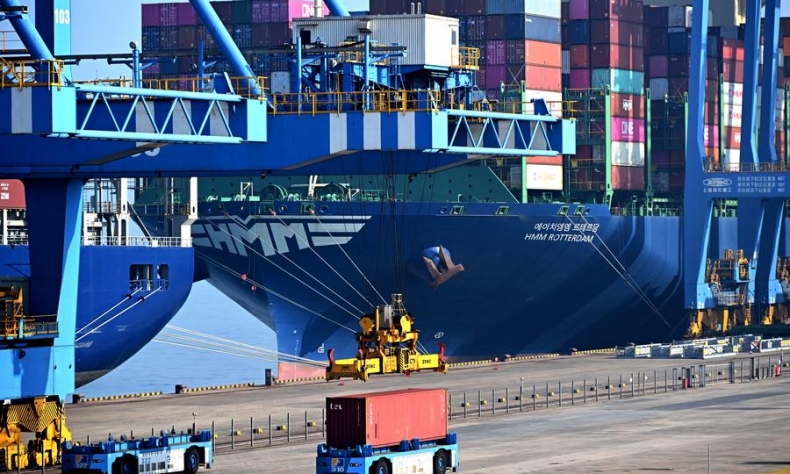
The assumption of ‘peak China’ is based more on hope than facts. This is part of a long-standing debate about China, reflecting what can be termed the West’s ‘China syndrome.’
The resurgence of China as a prominent global political and economic player since the late 1970s has been widely seen?as one of the most significant events in modern world history. Over the past four decades, China has achieved remarkable economic success, emerging as the largest contributor to global economic growth while lifting hundreds of millions of its population out of poverty. Its?integration with the global economy has had worldwide influence?across nearly every socio-economic and socio-political domain.
If we accept that “power” is a relative and comparative concept, China’s comprehensive national power, compared with that of the U.S. and other Western countries, is steadily increasing across various metrics, including economic development, political stability, military modernization, and technological advancement.
Although its aggregate national power is continuously rising, China’s economic growth rate has slowed in recent years due to a combination?of factors. Internally, China faces challenges such as a different?demographic trend. Moreover, its economy is transitioning from an export-oriented, manufacturing-driven model to one emphasizing domestic consumption and services. Externally, the Chinese economy has been significantly affected by various factors, including the COVID-19 pandemic, and efforts by the U.S.-led West to reduce China’s role in the global economy through strategies such as “deglobalization,” “decoupling,” and “de-risking.” Consequently,?economists often use different sets of Chinese economic data, leading to varied predictions and outcomes.
Whether China has reached the peak of its power is not the issue; rather, the issue is why Western media, including new media outlets and influencers, are actively promoting narratives centered around the notion of “peak China.” Additionally, the “middle-income trap” is another prevalent theory that has emerged in recent years, predicting China’s potential stagnation. This theory suggests a scenario in which Chinese wages are seen as relatively high for producing standardized, labor-intensive goods, while its productivity may be considered insufficient for competing in higher value-added activities on a large scale.
Over the past 40 years, fascination or irritation with China has influenced Western scholarship and journalism, resulting in a range of sentiments from excessive approval and unqualified optimism to unwarranted revulsion and deep pessimism. The 1980s saw a hopeful projection of China’s economic reform as a beacon of “global opportunity” and the “second Chinese revolution” that could lead the country toward a Western-like democracy. However, deep antagonism toward China emerged due to its resistance to the so-called political liberalization after the Cold War. Since then, there have been recurring instances of exaggerated predictions portraying China’s rise as a threatening ascent to “superpower” status, potentially leading to a “Chinese world order,” or unwarranted forecasts ranging from “peak China” to predictions of impending collapse. Periodically, Western academics, politicians, and opinion-makers selectively use fluctuations in China’s development trajectory to validate their existing theories and ideologies, resulting in China being categorized as either a threat, a challenger, a rival, an opportunity, or even a superpower and order-shaper.
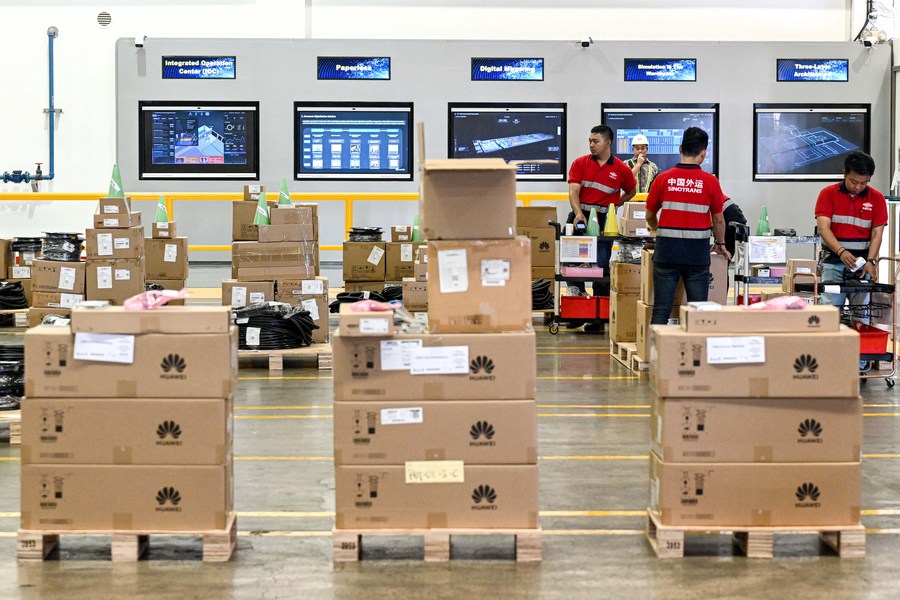
It’s important to emphasize that China continues to uphold its status as one of the world’s largest and most dynamic economies, maintaining leading positions across various sectors, including infrastructure, green technology, renewable energy, information technology, and more. China’s structural power in global manufacturing and its pivotal position in the global supply chain is?reflected in its sophisticated and comprehensive supply chain ecosystem, consisting of networked suppliers, component manufacturers, and distributors. This ecosystem makes China a highly efficient and cost-effective location for manufacturing. Any company that leaves this ecosystem, characterized by clustered and networked industries, is bound to encounter numerous difficulties because navigating goods and information across long distances comes at a cost. These crucial interconnected structural factors explain why it is so difficult to decouple from China. Even if some foreign companies intend to relocate their production to Southeast Asia as a feasible alternative for lower-end production, they soon realize that the region remains highly reliant on China for equipment and raw materials to sustain its manufacturing sectors. No Southeast Asian manufacturing hub can afford to be disconnected from Chinese inputs.
In my view, Western powers are fully aware that it is premature to claim that China’s national power has peaked. The assumption of “peak China” is based more on hope than facts. This is part of a long-standing debate about China, reflecting what can be termed the West’s “China syndrome.” This syndrome refers to a set of symptoms characterized by psychological anxiety, emotional hysteria, and expressive denial. It reveals rising anxiety in the West regarding several probing questions: What kind of power will China become? Will it be a destructive or constructive world power? Status-quo or revisionist? A force for continuity or disruption?
This is a phenomenon where the West finds it difficult to conceptualize, analyze, and deal with China as it is outside the frameworks that it feels familiar and comfortable with. To many Western politicians and opinion-makers, China simply does not conform to their perceived belief systems about what makes nations grow. Hence, the “peak China” debate acts as a form of cognitive warfare, shaping global perceptions about China and its prospects of?development in the long run.
Finally, the “peak China” debate underscores the West’s uncertainty about whether China’s?continuous rise simply represents a redistribution of comparative advantage within the current world order, or signifies fundamental structural changes — a paradigm shift — where existing institutions, norms, and values rooted in the current world order must be redefined. The “peak China” discussion is by no means conclusive; there will be more debates about China’s role and influence in the future.
Li Xing is a distinguished professor at the Guangdong Institute for International Strategies and a professor at the Department of Politics and Society at Aalborg University.