People — Foundation of a State
 Facebook
 Twitter
 Linkedin
 Google +
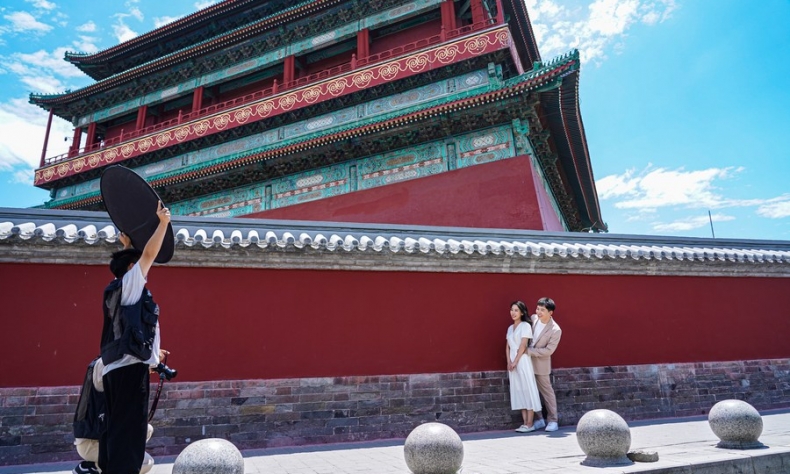
The people are the foundation of a country and only when the people lead a good life can the country thrive.
The concept that “the people are the foundation of a state” is the best expression of the people-centered philosophy of ancient China. Past Chinese sages and philosophers reached this conclusion in their study of state governance amid the rise and fall of dynasties over thousands of years. Based on the belief that the people’s support of state power is vital for its success, this precept has inspired policies and practices aimed at nurturing, benefiting and enriching the people throughout Chinese history.
A core tenet of state governance
“The people are the foundation of a state” is a line from Shangshu, or the Book of Documents. It appeared in the section talking about Taikang, the third ruler of the Xia Dynasty (C. 2100-1600 BC) who was known for his penchant for extravagance and negligence of duty. Once Taikang put state affairs aside and went on a hunting trip along the Luoshui River (a tributary of the Yellow River) that lasted for more than 100 days, causing strong discontent among his people. Taking advantage of this opportunity, Hou Yi, a clan leader, occupied a strategic position on the Yellow River, blocking the emperor’s way back to the capital on the other side of the river. Desperate and exasperated, Taikang’s mother and five brothers drove a carriage to the place where the Luoshui River flowed into the Yellow River to wait for his return. There the five brothers recited the exhortation of Yu the Great, founding father of Xia, in the hope that it would arouse Taikang to his senses. The message they conveyed was: A ruler must maintain a close relationship with his people, and must not take them lightly, as the people are the foundation of the state; only when the foundation is strong will the state be safe and stable.
The fall of Xia and Shang helped the rulers of the succeeding Western Zhou Dynasty (C 1100-771 BC) realize the important role the people play in the ruling of a state. As a result, they put forward the idea of valuing virtues and protecting the people in the same way parents take care of newborn babies. The Duke of Zhou even proposed that rulers should take public sentiment as a measure of their performance. This clearly demonstrates that the philosophy of a people-centered governance had emerged by this time.
During the Spring and Autumn Period (770-476 BC), this thinking was further enriched. Confucius preached that when the people are better-off, their rulers are better-off. Laozi said that a virtuous man takes the will of the people as his own will. Mencius went a step further and said, “The people are the most important element in a state; next are the gods of land and grain; least is the ruler himself.” Xunzi also compared the relationship between the ruler and his subject to that of a boat and water: “The ruler is the boat; the people are the water. Water carries the boat, but can also sink it.” These remarks all underscore the importance of the will and power of the people.
Drawing on lessons of previous periods, the wise rulers and officials in Chinese history realized the close connection between people’s livelihood and the fate of their country. They hence applied the concept that “the people are the foundation of a state” into their policies, creating such measures that encouraged agriculture and animal husbandry, reduced corvée and taxes, granted land to farmers, built water conservancy projects, and provided relief for disaster victims.
The people-centered philosophy also influenced the perception of relationship between officials and the public. For instance, Liu Zongyuan (773-819) of the Tang Dynasty held the view that officials are servants of the residents residing in their precincts. Wang Fuzhi (1619-1692) of the late Ming and early Qing dynasties argued that the government should be strict with its officials but lenient with the people.
In addition, under this philosophy ancient regimes incorporated moral education into their efforts to improve people’s wellbeing. During the Han Dynasty (206 BC- AD 220), primary-level officials were appointed to promote feudal ethics. By the Northern Song Dynasty (960-1127) a term “xunli” was coined to refer to officials who were honest and concerned about the people’s wellbeing. These officials focused more of their efforts on conducting moral education than imposing punishment, and effectively maintained social stability by spreading Confucius teachings such as the ideas of love and benevolence.
At the same time, it must be noted that despite such people-focused thinking and policies, average people in ancient China still remained in a subordinate position to the monarch of the day. In no monarchy had the people-centered philosophy brought them the rights as principal players in state politics. The monarchs made the decision whether to implement this philosophy, and to what extent, and it served their interests first and last. As a result, this philosophy never became a reality in those days.

Foundation of modern democratic theories
The concept of the people as the basis of a state was greatly expanded during the late Ming and early Qing dynasties. Many thinkers attempted to implement it into reality through redesigning the political system. Huang Zongxi (1610-1695), for example, put forward the idea that the people are the host and the ruler is the guest, pointing out that the people should play the principal role in managing state affairs while the emperor is supposed to serve their interests. Yan Fu (1854-1921) and Tan Sitong (1865-1898) also redefined the relationship between the ruler and the people, saying that the ruler is selected by the people to manage public affairs, and therefore can be removed from power if he fails the people. All these propositions focus on checks and balances for the powers of the monarch, with the goal of making him rule for the people instead of ruling over the people.
After the Reform Movement of 1898 and the Revolution of 1911, people’s livelihood, democracy and civil rights gradually became the rallying call of China’s political movements. Liang Qichao (1873-1929), for instance, interpreted the word “guomin” (meaning national citizens in Chinese, with guo for country and min for people) in this way, “A country is the public property owned by all its people.” Dr. Sun Yat-sen believed that the goal of democracy is to let the people share state power. The Provisional Constitution of the Republic of China, issued in 1912, made it clear in Chapter I General Provisions, “The Republic of China is composed of the Chinese people. The sovereignty of the Chinese Republic is vested in the people.” These developments indicate that the traditional people-centered philosophy began to be incorporated into national institutions and took on democratic elements. Although at this time average people were still excluded from the operations of their state, this change was significant, as it paved the way for the ideal’s realization in China in later times.
A valuable asset of Chinese political civilization
The Communist Party of China (CPC) embraces the theory of historical materialism that “it is the people who make history.” It has infused new vitality into the traditional people-centered philosophy and given it new meaning. Its Constitution declares, “The Communist Party of China has remained true to its original aspiration and founding mission of seeking happiness for the Chinese people and rejuvenation for the Chinese nation.” And the Party has made wholeheartedly serving the people its fundamental purpose as well as that of the Chinese government. Finally the age-old idea that people are the foundation of a state was adopted in the political sphere.
Since the 18th CPC National Congress in 2012, General Secretary Xi Jinping has reiterated on several occasions, “The CPC has its foundations in the people and maintains a close bond with the people.” He has also made a series of expositions and decisions on people-centered development. In this spirit, China has introduced a raft of measures to improve people’s livelihood, covering such aspects as income distribution, social security, education, and medical care. China has eliminated absolute poverty, built a moderately prosperous society in all respects, and is striving to realize common prosperity for all. The concept that “the people are the foundation of a state” is still relevant today, and has provided rich cultural nourishment for the Chinese modernization drive.
The people are the foundation of a country and only when the people lead a good life can the country thrive. As a key idea of political philosophy and a core tenet of state governance in ancient China, this concept also laid the foundation of China’s democratic theories in modern times. After the founding of the People’s Republic of China, it has become a valuable asset of China’s political civilization, and has been creatively transformed and developed in the new era of socialism with Chinese characteristics. It has provided strong support for the continuous development of the Chinese nation.
Li Cui is a research fellow at China Confucius Research Institute.