Poverty Alleviation the Chinese Way – as a Human Right
 Facebook
 Twitter
 Linkedin
 Google +
The achievement of human rights is a process of progressive realization. As countries become more prosperous, they can comply more fully with human rights obligations.
Poverty is a violation of human rights. This is because an inadequate command over economic resources curtails the basic freedoms necessary for human dignity.
The 2015 agreement by all 193 member states of the United Nations (UN) to eradicate poverty by 2030 therefore marks a major milestone towards the fulfilment of human rights everywhere.
However, human rights are delivered by actions not international agreements. China’s poverty alleviation policy – delivered at national, provincial and local level – demonstrates this. On February 25, 2021, Chinese President Xi Jinping announced that absolute poverty had been eliminated in China, nine years ahead of the target established by the UN agreement.
Philip Alston, the former UN Special Rapporteur on Extreme Poverty and Human Rights, has no doubts about China’s historic contribution, as he explained in a report to the UN General Assembly in 2020: “Much of the progress … is due not to any global trend but to exceptional developments in China, where the number of people below the International Poverty Line dropped from more than 750 million to 10 million between 1990 and 2015.”
The achievement of human rights is a process of progressive realization. As countries become more prosperous, they can comply more fully with human rights obligations. Poverty thresholds can be raised, and the generosity of welfare provision increased.
At the general debate of the 76th Session of the UN General Assembly in 2021, Xi Jinping encouraged the world to stay committed to a people-centred approach: “We should safeguard and improve people’s livelihoods and protect and promote human rights through development, and make sure that development is for the people and by the people, and that its fruits are shared among the people.”

It is important to recognize that not all governments accept this progressive interpretation of human rights. In 2018, for example, President Trump withdrew U.S. support for the UN Guiding Principles on Extreme Poverty and Human Rights. He did so after the then UN Special Rapporteur Philip Alston described the American government ‘punishing and imprisoning the poor’ and funding ‘financial windfalls to the very wealthy … partly by reducing welfare benefits for the poor.’
When the Biden administration re-affirmed its general acceptance of the Guiding Principles, it qualified its commitment to the ‘right to development.’ It refused to recognise development ‘a(chǎn)s a universal right held and enjoyed by individuals and which every individual may demand from his or her own government.’ Rather it argued that the right to development ‘protects states instead of individuals.’
This is a perverse interpretation of human rights with the U.S. government denying responsibility for the well-being of its citizens. It is, though, consistent with the extreme individualism that characterizes American political culture. The reality of the American Dream – that anyone can achieve anything – is that they must achieve it without the assistance of government.
It also helps explain why the U.S. relative poverty rate is higher than that in all but one OECD country. (The exception is Costa Rica, a nation with per capita GDP less than a fifth that of the U.S.A.) Extreme poverty, which has been eradicated in China, is experienced by between 1.4 and 5.2 million Americans (excluding those who are homeless). Moreover, the number has risen, not fallen, in recent years.
Contradicting the principle of progressive realization, the U.S. abolished its universal financial safety net in 1996, the only country ever to have done so. Also, the U.S. system of workfare – in which people in poverty are forced to work to receive welfare payments – appears inconsistent with the spirit, and probably the letter, of the 1957 ILO Abolition of Forced Labour Convention (No. 105).
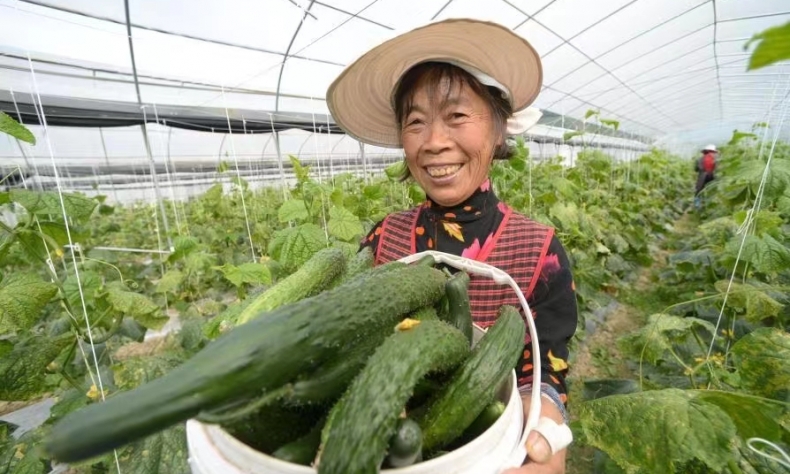
The Chinese approach to alleviating poverty is very different and more successful – but not without its challenges. Rather than the state withdrawing support as in the U.S., it has sought to mobilise all sections of the community towards the shared goal of eradicating poverty. This means, for example, that cities in the prosperous east of China have supported poor communities in the west, and successful corporations have shared expertise with start-up enterprises in poverty-stricken counties.

Since the implementation of the reform and opening-up policy initiated by Deng Xiaoping in 1978, the central government has prioritized growth but with the intention that the benefits of growth would be widely shared. Deng Xiaoping took the classical Chinese concept of Xiaokang, found in the ancient Book of Songs, to capture his vision of a China that would be moderately prosperous. As early as 1986, the Leading Group for the Economic Development of Poor Areas was established pioneering the principles of social mobilisation and geographic targeting. Counties were first targeted, then villages. In 2015, for the first time anywhere, a national database of people experiencing poverty was set up and used to target individuals for personalized support.
While Beijing has directed strategic investment, building – for example – more than 161,000 kilometres of expressways and 40,000 kilometres of high-speed railway, much poverty alleviation has been coordinated at provincial level. Guizhou serves as an excellent example.
Guizhou was once a province with the largest impoverished population in China. Mountainous with a subtropical climate, soils are often poor, water shortages common, habitation dispersed and transport difficult. Villages, inaccessible even with the ingenuity of Chinese engineers, have highlighted the challenging indivisibility of human rights. To eradicate poverty, it proved necessary for 1.92 million people experiencing poverty to leave the mountains and their livelihoods to take up residence in new communities. Beyond physical infrastructure, employment, education and training needed to be provided, and persons relocated had to adapt to new lifestyles.
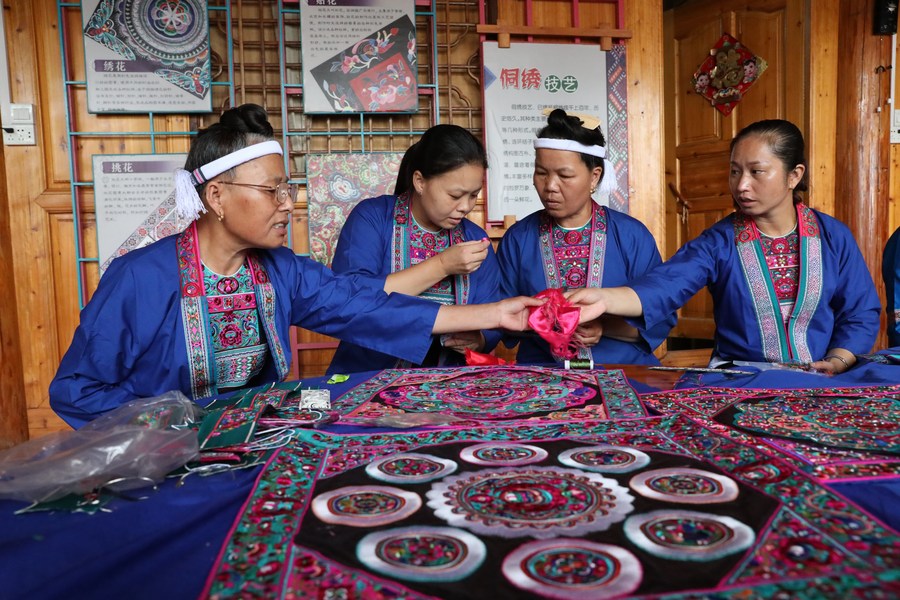
Over half the area of Guizhou Province comprises autonomous prefectures and counties for ethnic minorities that account for some 37 percent of its population. Local policymakers have had to reconcile the imperative to reduce poverty with China’s commitments under the UN Declaration on the Rights of Persons Belonging to National or Ethnic, Religious and Linguistic Minorities. Many aspects of Miao, Dong and other local ethnic cultures owe their origins to subsistence agriculture that cannot support living standards commensurate with modern China. For example, it has proved difficult for Dong women to convert their traditional embroidery skills into economic remuneration.
In many counties in Guizhou, poverty alleviation has been based on stimulating out-migration to cities in eastern China. While succeeding in raising village incomes and integrating urban and rural economies, the challenge for policymakers has proved to be retaining the social and economic vitality of villages left with disproportional numbers of children and elderly residents. The goal of rural revitalisation, in the long-term to equate rural and urban living standards, is demanding great ingenuity from policy makers. An initiative launched in July 2021, centred on the tourist city of Bijie City in the Wumeng Mountains, seeks to realise the economic multiplier effects of combining tourism and local production through real-time, on-line commerce.
Consistent with the progressive realisation of human rights, Guizhou’s minimum guarantee standard – the income level below which benefits can be accessed – has year-on-year been increased above the inflation rate. Rolled out from the provincial capital, Guiyang, to other parts of the province, the policy has contributed to reduced inequality between urban and rural living standards.
Guizhou, though, has yet to follow other provinces in formally defining and measuring urban poverty that, unlike rural poverty, has yet to be eradicated. Indeed, while rural migrants have escaped absolute poverty, they experience relative poverty in the city. Concentrated in low-skilled informal employment, migrants are largely denied access to urban social security.
With Xiaokang achieved, the new goal of Gongtong fuyu – common prosperity – entails equalising access to public services. Winning the support of China’s burgeoning middle class could prove challenging given stigma towards rural migrants and the belief held by some urbanites that poverty results from personal failings However, Chinese insistence that the fruits of development are to be shared prioritises human rights over individual ones; never ‘my rights before theirs.’
As China has demonstrated, poverty can be eradicated, and human rights enhanced. However, poverty is always, metaphorically, the enemy outside the city gate waiting to return. Rising living standards lift the poverty threshold and technological change hurts weaker groups unless proactively managed by the state. The once rich industrial heartlands of America and Europe, built – like Guizhou’s traditional industries – on locally mined coal, are still characterised by poverty 50 years after de-industrialisation.
While the current energy crisis means that Guizhou’s coal production is increasing, 161 mines closed between 2019 and 2020. All may need to shut – displacing thousands of workers – if China is to reach “carbon neutrality” before 2060.
Market forces cannot deliver just technological transitions that reduce global warming, foster rural revitalisation, and achieve common prosperity; transitions that avoid increases in poverty and a lessening in the realisation of human rights. China needs, therefore, to continue delivering human rights through policy innovation.