Poverty Alleviation With Chinese Characteristics: Lessons for Developing Nations
 Facebook
 Twitter
 Linkedin
 Google +

Developed and developing nations should realize and recognize the achievements and progress made by China in eliminating extreme poverty and enabling its citizens to enjoy a better life.
With the inception of 2021, the government of China under the leadership of President Xi Jinping announced that China is no longer a country with absolute poverty, which is another miracle and milestone the country has achieved in recent years.
Since 1978, China through its flexible approach and targeted policies towards poverty alleviation, has moved 850 million of its citizens out of extreme poverty including 100 million residents just in the last 10 years. ?The government’s policies and strategies set an example for other developing nations to follow in dealing with extreme poverty.
To eradicate poverty from society, the government of China utilized a multitude of flexible and targeted conventional and innovative approaches. Conventional policies primarily targeted households through education, healthcare, savings, funding and subsidies, skill development and training, and asset provision.
The Innovative policies mostly revolved around the Chinese socio-economic principles and characteristics. The key features of the groundbreaking and relevant policies that can be linked to the Chinese way of thinking were the relocation of poor communities, infrastructure growth, creation of new towns, and coupling (institutions, towns, cities). As a form of support for disadvantaged communities, the measures were enforced at both the local and national levels.
During the last decade, the Government of China focused on the relocation and resettlement of impoverished families to fulfill its poverty-eradication goals. Officials claimed that peasants’ income was reduced by living in remote terrains and that the costs of delivering and transporting municipal services were high. To assist families in escaping poverty, city officials organized huge resettlement and relocation drives in which impoverished residents were relocated to neighboring towns with basic services and income opportunities.
At the end of 2015, China pledged to spend 600 billion yuan ($89.1 billion) over the following five years to relocate approximately 10 million impoverished people. China’s rural areas have seen significant improvements as a result of the initiative. The country pulled 10 million people out of impoverishment in 2019.
To utilize the human resources and surplus labor force in rural areas, the government of China also set up industries keeping in mind the requirements in different villages all across the country. To help poor people make more money and reduce poverty in rural areas, China developed a large number of labor-intensive industries. In 2019, reports suggested that 210 million people were employed in the secondary industry.
The government also promoted investments in the poor regions by reducing taxes on investors and providing subsidies for setting up businesses and industries in the poor communities. These policies not only created employment opportunities but also reduced the emigration of workers to other cities.
For supporting and assisting the Central Government’s poverty alleviation targets, officials and government employees were encouraged to work in poor and remote areas of the country. Under the policy, just in 2016, a total of 775,000 officials were sent to the countryside, where they worked for one to three years to improve conditions in deprived regions. The policy certainly contributed to cutting the poverty rates of the areas.
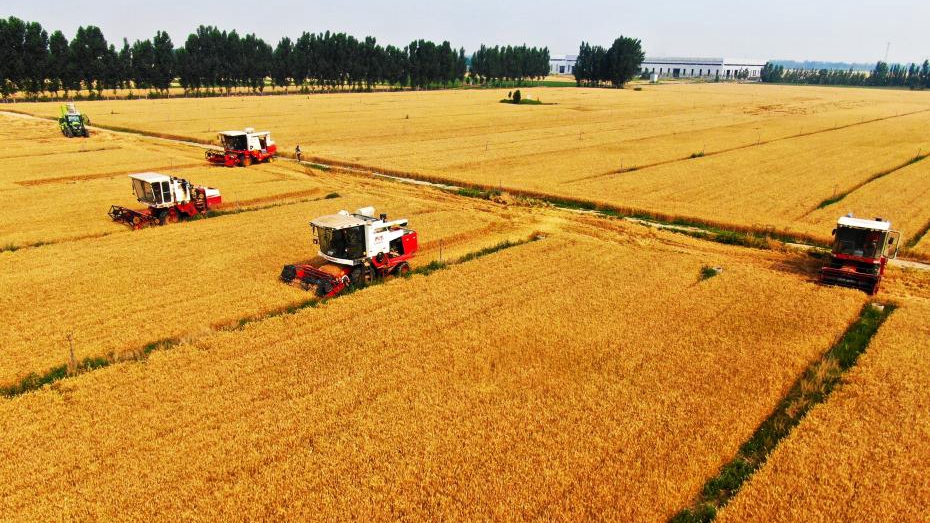
The Government of China under President Xi’s leadership also focused on the strategy of rural revitalization and reforms related to Agricultural modernization for the development and sustainability in the agricultural sector. Agri-industry development substantially boosted the income and employment in impoverished regions.
In addition, land mergers amongst farmers who grow the same products resulted in specialization and increased agricultural production. For farmer management and training, the local government recruited young people from the community and trained them as managers to help the government support and train farmers to increase their productions and income. Farmers were able to earn a stable income and break the cycle of poverty as a result of these efforts.
The Communist Party of China (CPC) continued to place a strong emphasis on youth. The government devised policies that would lead to the creation of opportunities for the young generation in order to capture and mobilize the young population. The “entrepreneurship and poverty alleviation” model and “vocational education cooperation” were developed to encourage rural youth to become affluent leaders who can assist impoverished young people in escaping poverty, as well as to actively support poor young people who want to start their own businesses and get rid of poverty.
The tourism sector has also become a primary priority and significant tool in eradicating poverty. To raise local revenues, the government increased funding for poor communities to build infrastructure and other facilities in order to expand the rural tourism sector and attract both domestic and foreign tourists.
In 2019-2020, a total of 320 villages were designated as national-level key spots to promote rural tourism. According to national figures, 3.2 billion tourists visited China’s rural areas in 2019, adding over 850 billion yuan ($119.4 billion) to the tourism industry.
Through the notable policies of the government, China was not only able to achieve the goal of poverty alleviation 10 years before the target year set by the UN 2030 SDGs but also maintained a steady average growth level above 6 percent since 1989. Given its remarkable strides in poverty alleviation, China presents the “Chinese approach” as a suitable model for other countries grappling with systemic poverty.
The outbreak of COVID-19 in 2020 proved to be devastating for nations all across the World by socio-economic and geo-political indicators. The crisis halted economic activities and drove nations into economic downfall and recession. On the other hand, the way China managed to control the effects of the pandemic while eliminating poverty at the same time certainly provides valuable lessons for the World to cope with such conditions.
Developing nations around the world are also facing serious challenges and issues related to poverty. The specific and targeted strategies adopted by China in certain periods and areas can provide huge implications for these developing nations. According to the statistics of the World Bank, over 900 million people live in extreme poverty across the globe and the situation is assumed to worsen due to the consequences of the recent COVID-19 pandemic. Many nations are already witnessing a decline in income, growth, and economy, rise in unemployment, and thus, there is a major risk of a rise in global poverty levels.
Developed and developing nations should realize and recognize the achievements and progress made by China in eliminating extreme poverty and enabling its citizens to enjoy a better life. These policies can be ideal yardsticks for many nations to follow in accordance with their own statuses. The World needs to learn from the best practices and productive policies of China, and the post-pandemic era provides a strong base for it.