Prosperity for All
 Facebook
 Twitter
 Linkedin
 Google +
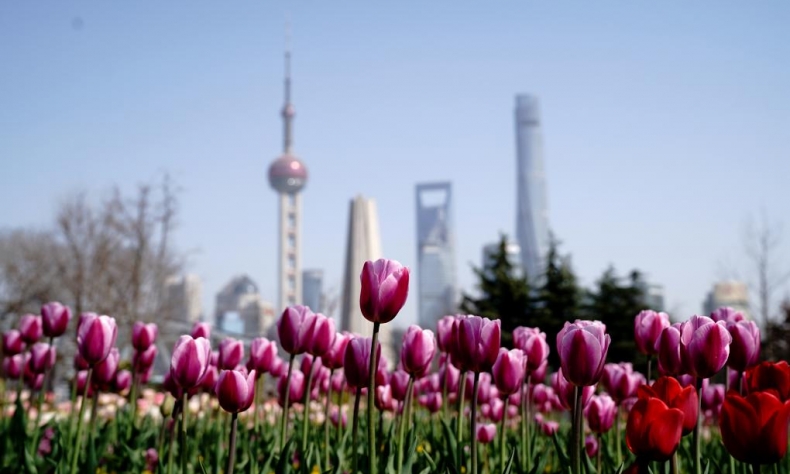
Common prosperity is not just about individual advancement, about individuals getting richer; it’s about everybody getting richer together and together spending that money wisely to create the best possible life for everyone.
Having met people’s basic needs for food and shelter, eradicated absolute poverty, and achieved moderate prosperity, China is working toward its next goal. Termed common prosperity, it envisions an olive-shaped society where middle-income earners constitute the largest proportion of China’s population and is set to materialize by the mid-21st century.
In a recent interview with?Beijing Review, Robert Walker, a professor at the Jingshi Academy, Beijing Normal University, shared his observations on the historical, current and future significance of this goal. Walker is also a professor emeritus of Green Templeton College at the University of Oxford, and over his career has written more than 20 books on poverty alleviation and social security. Edited excerpts of the interview follow:
Beijing Review: What do you think of China’s concept of common prosperity?
Robert Walker:?It is a dream, an aspiration, one that must become a reality. It represents a better life, the best possible life for everyone. It provides a reason for government. It justifies the Chinese revolution and the founding of the People’s Republic of China in 1949.
I think the term was first used in 1953 in the People’s Daily and it truly was a dream then, talking of common prosperity in the context of collectivization at a time when 87 percent of people in China were poor. You can go back longer perhaps to Confucius, the idea of the great unity, and the realization that great inequality is a problem for society that works against the aspiration of harmony.
Chinese leader Deng Xiaoping saw that common prosperity was a goal of socialism. His view was that some people could be enabled to get rich first, but that this was in the context that other people would follow. So common prosperity is not precisely defined. It is open to interpretation.
The term common prosperity is interpreted and reinterpreted at all levels of government, but perhaps the best idea is given by President Xi Jinping. He suggests that we need to transform into an olive-shaped society, which means there would be very few rich people and very few poor people and that everybody else would be somewhere in between, enjoying a shared life of common prosperity.

In your opinion, where is China now in achieving common prosperity? What has it already achieved and what goals is it still pursuing?
China is still a very long way off from achieving common prosperity. The government expects that we should see marked progress by 2035, by which point everybody in China will have access to basic public services and the hope is that common prosperity will be recognizably achieved by 2050. But that won’t be the end. Common prosperity is a way of thinking, a way of living. It means doing well for ourselves but putting others first.
But there has been progress, lots of it. Think about the 1950s when the majority of people living in rural China was poor. In 2020, China succeeded in eradicating extreme poverty for good. Income distribution in China may still look like the shape of a pyramid, but the World Bank tells us that in each of the last eight years, substantial progress was made toward what it calls shared prosperity. This was at a time when the United States, the most unequal of the developed countries, was going backward.
What are the main systems, programs, policies and organizations that facilitate achieving common prosperity?
All policies have a role to play in achieving common prosperity as do all Chinese citizens. President Xi has identified several aspects of the policies that China should pursue. First of all, there’s a role of strategic investment to promote revitalization of rural areas and to move quickly toward a post-carbon economy, where it can exploit artificial intelligence and invest in solutions for the future. He talks, too, about people and investing in human capital development so that China can upskill the labor force so as to embrace high technology, and that it can move away from the large informal labor market sector where people receive low wages. Achieving this would enable China to increase market incomes, which would enable it to raise taxation to facilitate further strategic investment so it can improve social security and social protection, particularly in rural areas, enhance social insurance for migrant workers and provide more effective health and social care services.
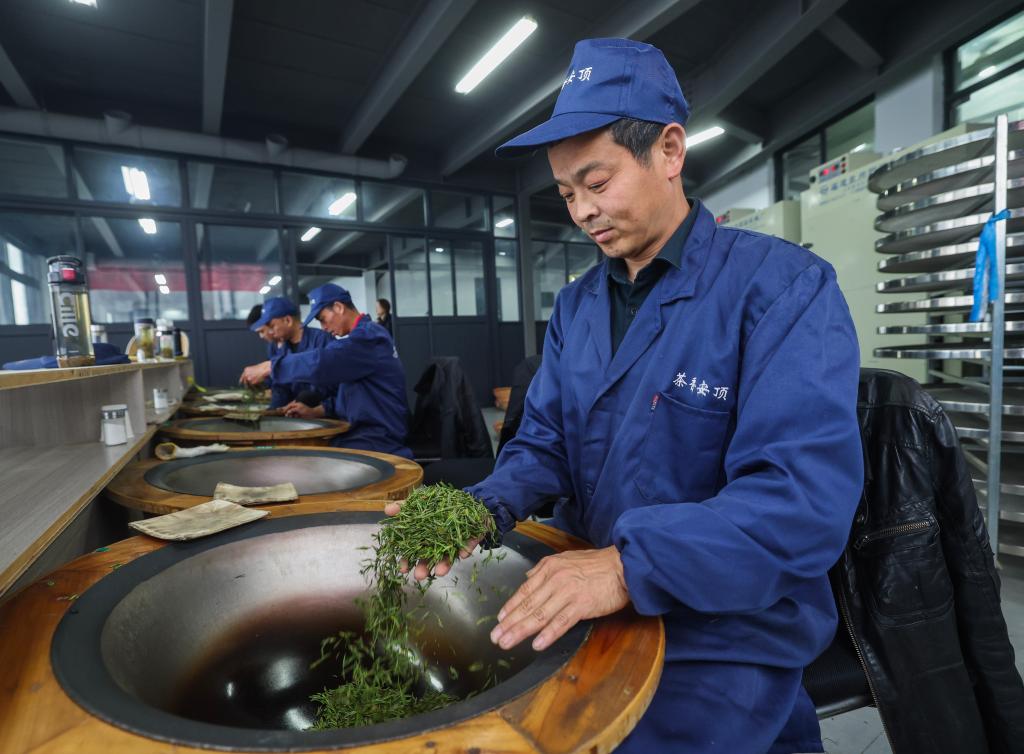
There is a pilot of common prosperity in Zhejiang Province, a demonstration zone, and there they again think about three routes forward, three roads into the future. The first is seeking to increase personal incomes for the majority of the population, better minimum wages and holiday pay, for example. The second is to make the best use of government revenue to develop a more robust safety net. The third way forward is to encourage high-income groups and entrepreneurs to repay society, to share that growing wealth. But that social responsibility, to my mind, is not just about the super rich. If we are to get rid of low pay, cheap labor, then we are going to have to pay more, for example, for our goods to be delivered to our front door. We are going to have to pay more to enjoy the wonderful parks and gardens that make Beijing and other Chinese cities such great places to live in.
How does the pursuit of common prosperity intersect with other Chinese initiatives, such as Chinese modernization and the Belt and Road Initiative?
In a speech in 2023, President Xi suggested that common prosperity is the unique component of Chinese modernization. In other words, in order to modernize, you don’t have to Westernize.
Another logic is straightforward. Think about poverty existing in a particular country. It exists because of an unfair distribution of primary income. In other words, some wages are too high and others are too low, but the second factor is that the redistribution of that income through taxation is also unfair globally.
Poverty, or the lack of development of a country, is the result of an unfair distribution of market income globally and the fact that unfair distribution is not adjusted by other mechanisms. The Belt and Road Initiative is an example of trying to make the primary distribution much fairer by investing heavily in infrastructure so that economies can grow and wages and incomes can rise.
In terms of the redistribution of global income, we need a new form of governance. Again President Xi is helpful in terms of thinking what that should be, talking about this shared future for all humankind, to build a community that makes that possible. But in order to do that, we need to create a new model of international governance, a democratic model in which the international rules are written by all, global affairs are governed by all and the fruits of that development are shared by all. So that’s a form of common prosperity globally.
How does China’s pursuit of common prosperity compare to other social policy programs around the world?
China’s pursuit of common prosperity has the potential to be bigger, better and more successful than social policies elsewhere. Take those in the United States or the United Kingdom for example. They focus on the alleviation of poverty, but they are ultimately divisive. Those who are experiencing poverty are called lazy, but they’re generally not lazy. It’s just that those who are richer do not care sufficiently enough. Countries in continental Europe emphasize a partnership between government, business and workers. That’s much better, but it has moved increasingly in the direction of provisions such as those in the United States and in the United Kingdom, with a smaller role for the government. Scandinavian countries are richer and there the government has played a large role in creating jobs, and that’s one of the reasons they’re so rich.
In China, the government has a great role to play, but it is also shown that China is able to mobilize all parts of society. Think about the battle against poverty-—the eradication of rural poverty where rich cities in the east of China supported poorer provinces and counties in the west, and how big businesses invested in startup industries in smaller, poorer, less developed places. That mobilization is central and we need that mobilization to achieve the goal of common prosperity. Common prosperity is not just about individual advancement, about individuals getting richer; it’s about everybody getting richer together and together spending that money wisely to create the best possible life for everyone.