Pursuing Common Good for All under Heaven
 Facebook
 Twitter
 Linkedin
 Google +
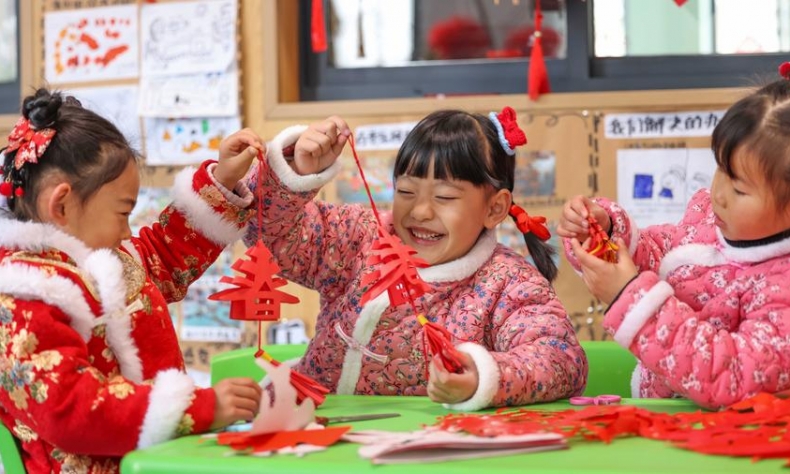
Fairness, justice, and equality are long existing pursuits of Chinese philosophers from ancient times to today.
As a political ideal, the ancient Chinese saying “Tian Xia Wei Gong”, or “pursuing common good for all under heaven” has been influencing Chinese politics and collective mind of the Chinese people since the time Confucius proposed it.
More than two millennia ago, the concept of “Tian Xia Wei Gong” was first introduced in the Liyun section of The Book of Rites. According to written records, one day, after attending a year-end sacrifice of the vassal state of Lu, Confucius was in a gloomy state of mind. His disciple Yan Yan, who was accompanying him at the time, asked him the reason for his low spirits. It turned out that Confucius was very disappointed at the rude behavior the ruler displayed during the ceremony. Thinking about the chaotic era he lived in where breaching social etiquette and disrespecting rules and regulations was a common thing, he couldn’t help but feel discouraged.
Confucius had always longed for a society where great harmony was prevalent, but unfortunately this was at odds with the reality of his day. In his ideal society, the good and capable people are selected for public service, people respect, love, and help each other, everyone maintains integrity and harmony, each person realizes their potential, everyone enjoys peace and happiness, and there is no corruption, theft, or disorder in society. In Confucius’ view, the most important symbol and core concept of the Datong society or “community of great harmony” is “pursuing common good for all under heaven.”
The Chinese character “Gong” in “Tian Xia Wei Gong” is an ideogram which means selflessness and justice. Imagine, if everyone in the world upheld a sense of public morality, the whole society would be full of fairness and justice, and the global resources would be shared equally by all. Who wouldn’t aspire to such a society?
The idea of a Datong society has a long history in China and is not just an illusory utopia. In as early as the times of the Three Legendary Emperors – Yao, Shun, and Yu, between 4000 and 3000 BC, those great rulers allied various tribes of China into a political community through observing celestial phenomena, controlling floods, and connecting the nine states. The deeds of Yao, Shun, and Yu who abdicated the throne in favor of the capable, appointed people of virtuous moral standing to official positions, and cared for people have been widely spread. The well-known story of Yu’s dedication to completing his task of controlling the floods of his day over a 13 year period during which he passed by his house three times but refrained from going in occurred at this time. This story showcases a fine example in ancient Chinese history of pursuing common good for all under heaven.

Before Confucius, the concept of “pursuing common good for all under heaven” had already become a common idea in the Chinese society. There is an inscription in the bronze vessel Suigong Xu which was made between the mid and late Western Zhou Dynasty (1046-771 BC). It consists of 98 Chinese characters recording the deeds of Yu, a moral and benevolent ruler. He dredged rivers and mitigated floods, and then created a peaceful and prosperous life for his people, which clearly bears similarities with the concept of the Datong society. The owner of this bronze vessel, Duke Sui, strongly agreed with the stability under Yu after the flood was brought under control. He regarded Yu as a role model to emulate, emphasizing in the inscription that rulers should be virtuous to their people and teach them how to live a moral life. In this nearly 100-character inscription, the character “morality” appears six times, indicating that the virtuous spirit contained in “pursuing common good for all under heaven” was highly valued by people during the Western Zhou Dynasty.
During the Spring and Autumn and Warring States periods (770-221 BC) when Confucius lived, the emperor’s law and regulations were disrupted, vassal states were in incessant wars, and the common people were reduced to great misery. People yearned for peace and a restoration of social stability. As a result, “pursuing common good for all under heaven” became a universal social concept.
Confucius, taking King Wen and King Wu of the state of Zhou as role models, harbored a longing to emulate the rule of Yao and Shun. He believed that Yao was able to govern the country in accordance with the Heavenly Way. That’s why he created a peaceful and prosperous era where the rulers and ordinary people lived together in harmony and displayed virtuous characters. At the same time, Confucius also believed that Shun could cultivate himself, be good at empowering people, and govern the country without intervening too much.
In addition to Confucius, thinkers such as Laozi, Mozi, and Zhuangzi who lived in the pre-Qin period of China also coincidentally paid attention to the concept of “pursuing common good for all under heaven.” It could be said that the concept had already become a political and cultural consensus at that time. Afterwards, through political practice since the Qin and Han dynasties and the interpretation of thinkers, this long-standing classical concept has given rise to richer political wisdom and philosophical implications in traditional Chinese society.
The political principle of serving the public is deeply embedded in the concept of “pursuing common good for all under heaven,” which is in drastic contrast to the concept of “pursuing good for the small interest group.” A country is shared by its people, not exclusively owned by the emperor. A Mencius disciple named Wan Zhang once consulted his teacher on whether Shun’s succession to the throne had anything to do with Yao. Mencius frankly stated that any emperor could not give his state to anyone else, and that Shun’s succession to the throne had nothing to do with Yao, but rather was the result of his winning the hearts of the people with his profound virtue.
The idea that state power belongs to the public and only the virtuous could be entrusted by the heavens requires politicians to shoulder political responsibilities, govern the country with public conscience, and pursue the greatest welfare of people. If they do not do this, they will lose the hearts of the people which is the foundation of governance. In fact, behind political concepts such as being people-oriented, selection of the capable, and the rule of virtue, there lies the concept of “pursuing common good for all under heaven.” It has become a central feature of the traditional Chinese political value system.

In today’s China, the people’s government under the leadership of the Communist Party of China attaches great importance to meeting the new needs and expectations of Chinese people for enjoying a happy and better life, pursues people-centered development, and takes the free and comprehensive development of the people as the starting point and foundation of its governance. This is the contemporary application of the concept “pursuing common good for all under heaven.”
Fairness and justice are important symbols of the progress of human civilization and are pursued by people all over the world. “Pursuing common good for all under heaven” highlights the value of fairness and justice. The pursuit of common good is the prerequisite of achieving fairness, and only by prioritizing public welfare, can social fairness be realized. Fairness is also the basic guarantee of “common good,” and maintaining fairness and justice also lay the foundation for realizing the Datong society. The concept of “pursuing common good for all under heaven” reflects Chinese people’s desire for fairness and justice, as well as their yearning for building a fair and just society. Since China launched its reform and opening-up, its social productivity and comprehensive national strength have continuously increased, providing a solid foundation and strong guarantee for achieving social justice. On the basis of economic development, the Chinese government is committed to ensuring and improving people’s livelihoods, adhering to the path of common prosperity and promoting social fairness and harmony. Chinese modernization aims to achieve the prosperity of all, which is the expansion of the concept.
The concept of “pursuing common good for all under heaven” seeks a way of harmonious coexistence between diverse civilizations. During the global modernization drive which has lasted for hundreds of years, almost all countries and peoples around the world have become part of the global development system. Thus the need to learn better ways of getting along with each other is now more important than ever before. In September 2015, at the General Debate of the 70th Session of the UN General Assembly, Chinese President Xi Jinping pointed out, “As an ancient Chinese adage goes, ‘The greatest ideal is to create a world truly shared by all.’ Peace, development, equality, justice, democracy, and freedom are common values of all mankind and the lofty goals of the United Nations.”
Here, “a world truly shared by all” no longer merely refers to geographical space, nor is it limited to the territory of a country, instead, it has global value and significance. China has vigorously advocated the common values of mankind and the building of a community with a shared future for mankind. We believe that in the new era, China will also become an “accelerator” of the world economy and a “stabilizer” of global security, promoting world peace and development with a new model of civilization.
The pursuit of common good for all under heaven carries the core wisdom of the Chinese civilization. Deeply rooted in the fertile soil of Chinese culture, it has evolved over the vicissitudes of dynasties and still remains relevant. Until now, it has not only become an important ideological resource for the development of Chinese society, but also provides Chinese solutions to the future of humanity.
Fang Wei is a research fellow at China Confucius Research Institute.