RCEP: Building Bridges, Not Walls
 Facebook
 Twitter
 Linkedin
 Google +
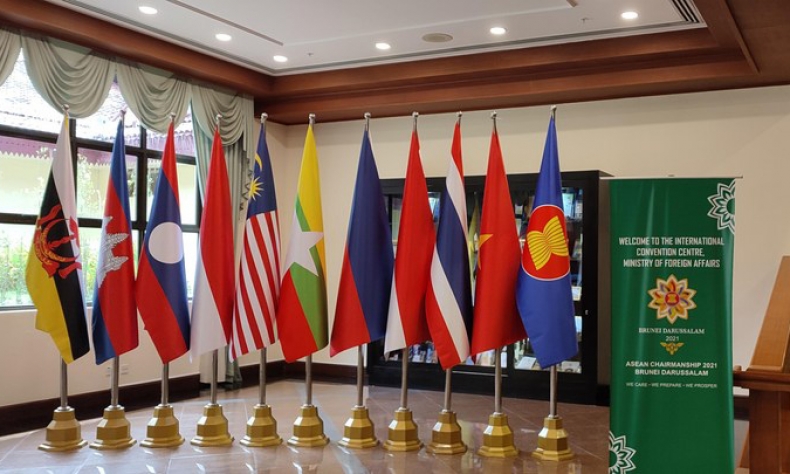
From the ASEAN perspective, no foreign political agenda could ever override its concerted aspiration to reinvigorate its floundering economies, left devastated by the deadly contagion.
The parliamentary ratification of the Regional Comprehensive Economic Partnership (RCEP) agreement by 10 signatory states has finally set the world’s biggest ever free trade bloc into motion, albeit only among the ratifying nations, on January 1, 2022. Six Association of Southeast Asian Nations (ASEAN) member states, namely Brunei, Cambodia, Laos, Singapore, Thailand and Viet Nam, as well as Australia, China, Japan and New Zealand, have completed the ratification procedures.
The RCEP was also signed by another four ASEAN members, namely Indonesia, Malaysia, Myanmar and the Philippines, as well as the Republic of Korea (ROK). Once in full effect, it will cover approximately 30 percent of the world’s population and one third of global GDP. The agreement manifests the firm commitment of all 15 signatory economies in the Asia-Pacific region to upholding an open, inclusive and rules-based multilateral trading system. Its implementation is particularly timely for the region as its economies struggle to recover from the impacts of COVID-19 and rising trends of de-globalization.
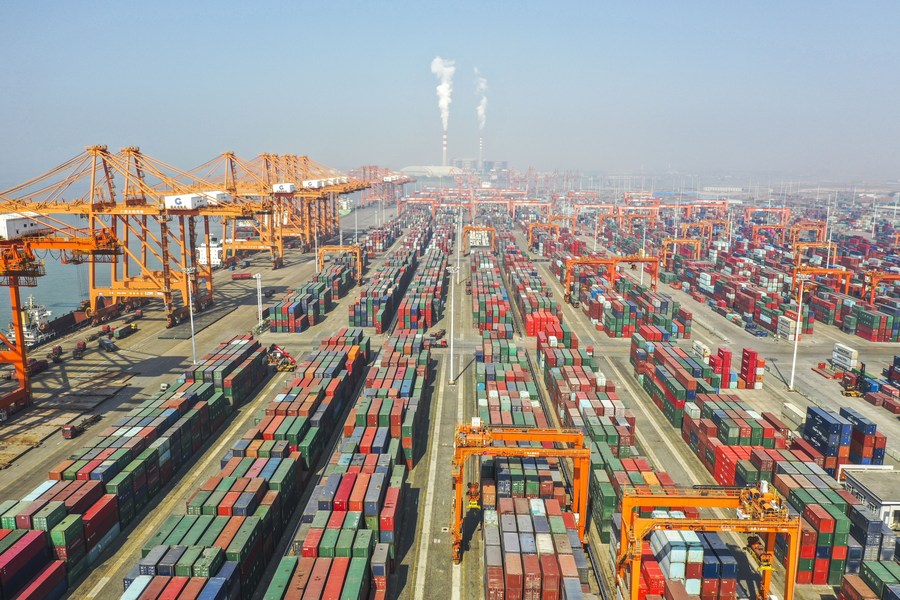
To date, economic analysis from many quarters has been optimistic about the future of the RCEP. One estimate, published by the U.S.-based Peterson Institute for International Economics before its signing on November 15, 2020, projected that the deal could add $500 billion to global exports by 2030.
The East Asian trio, namely China, Japan and the ROK—the RCEP technological powerhouse—is deemed to be the major beneficiary, with China’s exports projected to rise by $248 billion, Japan, $128 billion and the ROK, $63 billion. Another study by the Japan Institute of International Affairs indicated that the ROK may see the biggest economic benefit, with the RCEP adding 6.5 percent to its real GDP, compared with 5 percent for Japan and 4.6 percent for China.
Despite China continuing to grab global attention on its potential geopolitical and economic gains in the RCEP, many might still misinterpret the dual circulation development paradigm adopted by the country in its 14th Five-Year Plan (2021-25) as an inward-looking shift in the economic policy. The strategy in fact focuses primarily on strengthening China’s vast domestic market, achieving technological self-sufficiency, and promoting the adoption of its standards. The economic reforms brought by the adoption of “dual circulation” come at a time of challenging global geopolitical dynamics and a more fragile economic outlook. However, China’s efforts to decrease the dependence of its economy on export are more about bolstering internal economic drivers than soft-pedaling on external outreach, and even less about insulating the nation from international engagement. Instead, China’s engagement with the RCEP should be seen as an opportunity for exporters from other RCEP nations to better access its increasing domestic demand, rapidly growing middle-income group and enhanced consumer spending.

Closing gaps
The nascent agreement has been placed under microscopic scrutiny, and RCEP sceptics have been quick to cast aspersions on its purported failure to benefit the ASEAN developing economies. Yet the fact remains that the RCEP harmonizes rules-of-origin provisions and establishes a single set of regional content rules. This will effectively create a single market for intermediate goods that will promote the creation of supply chains across the region. From this perspective, it is the developing economies in ASEAN that will undoubtedly benefit the most.
Under the harmonized rules-of-origin provisions, tariff exemptions will apply as long as a sufficient proportion of the goods for export are made of inputs sourced from any of the 15 members of the bloc. This will reduce production costs in the supply chains of multinational corporations in these nations, while helping to strengthen and deepen the resilience of regional industrial supply chains.
All in all, this will translate to more job creation, higher GDP growth and speedier poverty reduction in the region. This is crucial in ASEAN nations, where propelling economic growth to drive post-COVID-19 recovery remains vital.
Be that as it may, the naysayers might still turn scornful of the RCEP’s capacity as the biggest free trade area in driving regional reform to meet the discerning standards of labor, environment and subsidy-free requirements set by the developed economies. They resort to hair-splitting by raising the threshold for the RCEP, irrespective of the capacity of its developing economies to meet the criteria.
Nonetheless, the RCEP will remain true to its goal of prioritizing the bridging of economic and developmental gaps between its developed and less developed member states. Due cognizance is given under the agreement to the disparate levels of development among the RCEP member states. Less developed economies such as Laos, Myanmar and Cambodia are given differential treatment with additional flexibility in implementing the agreement.
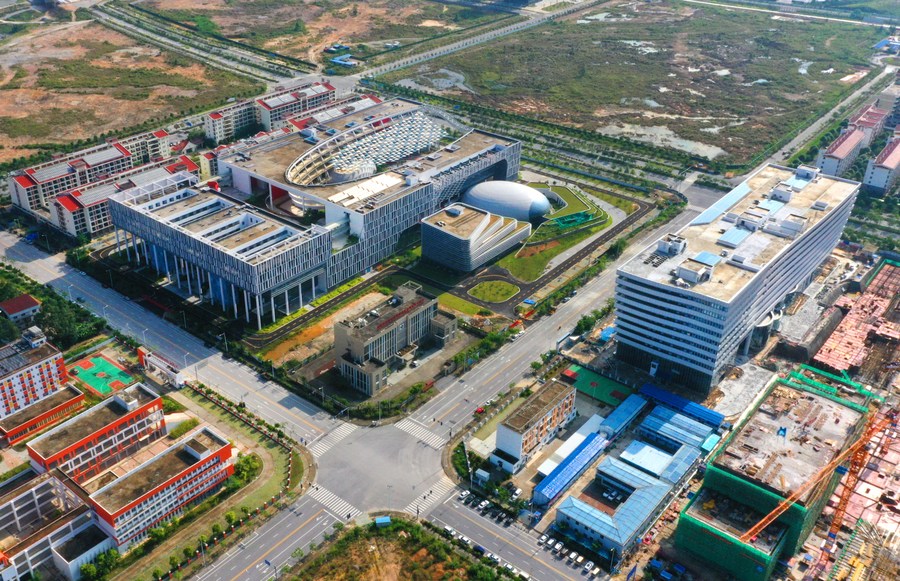
Inclusive cooperation
However, this inclusive economic integration does not spare the RCEP from the full brunt of its critics’ salvoes. It is viewed suspiciously as a move to be matched by fraying ties with outsiders. The centrality of ASEAN in the RCEP’s goals is maliciously called into question. The close collaboration of ASEAN with its biggest trading partner, China, is even seen as a geopolitical maneuver to bind the region into a China-led global order, thus ushering in an era of Pax Sinica.
Under the prevailing influence of obsessive paranoia, symptomatic Sinophobia is no longer peculiar among the spin doctors and fearmongers in the West. But expecting the ASEAN member states to turn a blind eye to the increasingly intertwined economic interest that would benefit a vast total population of more than 2 billion in ASEAN and China is simply unrealistic and outlandish.
While prioritizing its own economic interests, ASEAN remains sensitive to and pragmatic in facing the geopolitical reality. It has so far been striking cautiously a delicate balance between China and the American allies in the region. The inclusion of the latter’s Quadrilateral Security Dialogue partners, namely Japan and Australia, in the RCEP is sufficient to demonstrate its non-aligned positioning in the powers’ rivalry, to say the least.
ASEAN has time and again openly reiterated its collective unwillingness to pick sides under coercion in what many see as a U.S.-China geopolitical contest. Neither should the symbiotic ASEAN-China economic ties be left to derail under any external intervention in the perspective of ideological clashing or hegemonic rivalry.
From the ASEAN perspective, no foreign political agenda could ever override its concerted aspiration to reinvigorate its floundering economies, left devastated by the deadly contagion. Ultimately, it is still the livelihood and wellbeing of the people of ASEAN that matter.
The author is chairman of the Center for New Inclusive Asia, Malaysia.










