Reaching Beyond Technology to the Goal of Common Prosperity
 Facebook
 Twitter
 Linkedin
 Google +
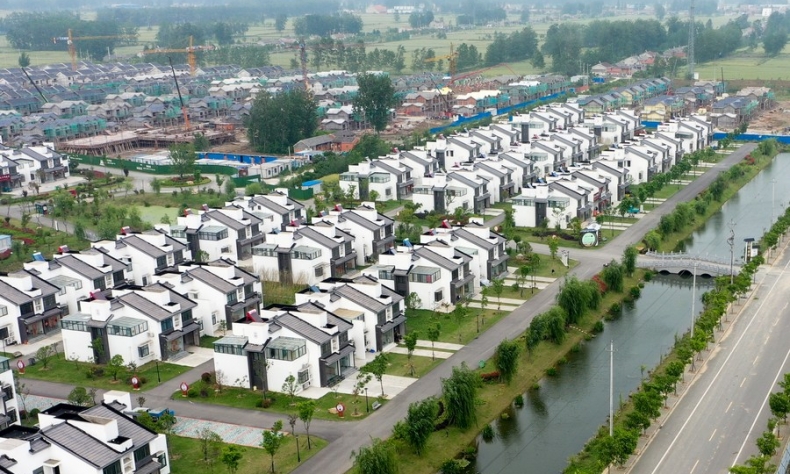
Having eradicated rural extreme poverty in 2021, China is now fully focusing on the goal of common prosperity, that is ensuring that the benefits of China’s economic growth are widely and more fairly shared.
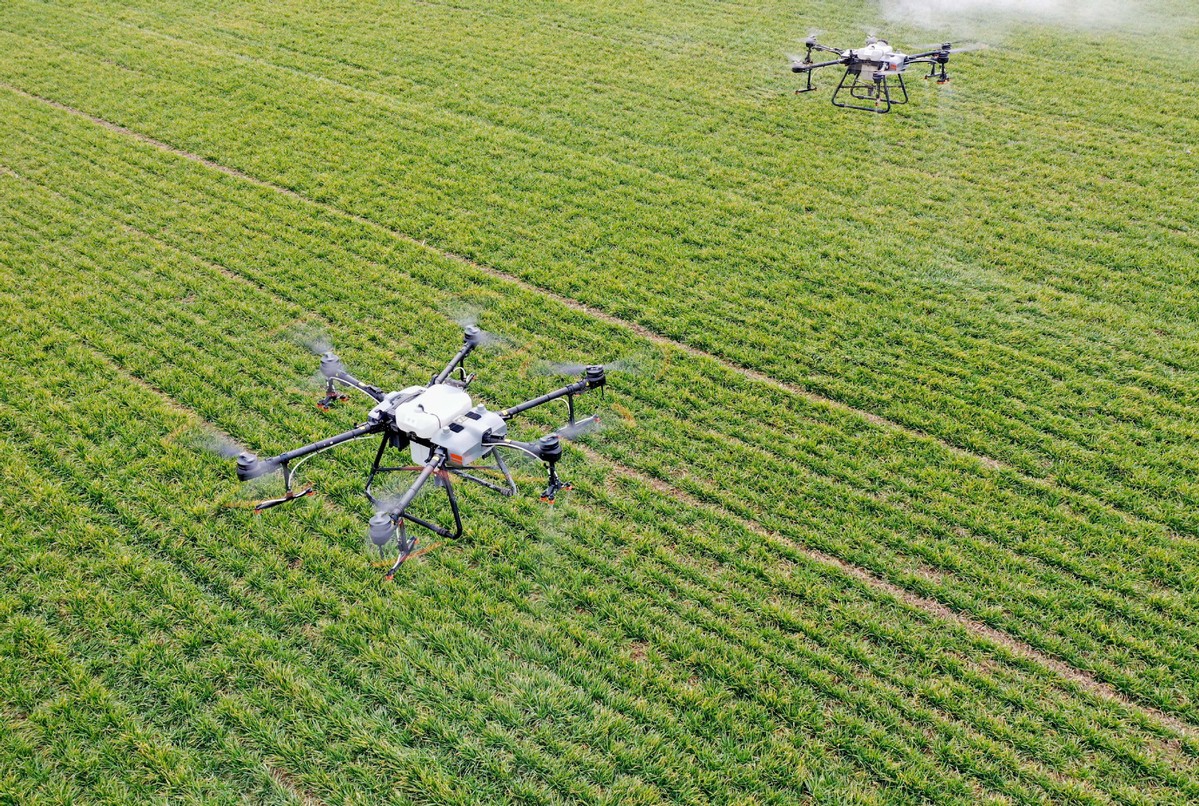
China already has 60,000 self-driving agricultural machines at work. Guided by satellite navigation systems, driverless tractors, harvesters and rice transplanters are replacing the romantic, but hurtful, image of peasants labouring by hand in the hot sun.
Advanced technology is central to the goal of China attaining common prosperity through revitalising the rural economy. But technology is not enough.
The traditional rural economy comprised agriculture and the processing of farm produce supported by local markets and commerce. The modern rural ecology includes all these things but adds e-commerce, industrial start-ups and relocations and, importantly, remittances from migrants to local and distant towns and cities. Hence, rural development is now closely tied to urban prosperity.
Recent research demonstrates the importance of technology in enhancing living standards. Zhao Jun and colleagues at University of International Business and Economics in Beijing have shown how the roll out of efficient, affordable and clean energy not only directly promotes green growth but does so indirectly. It stimulates technological innovation, better and more efficient use of equipment and improved productivity. Green growth delivers higher incomes without pollution and environmental degradation.
Digital financing, the ability to use smart phones and the internet to make payments, take out loans, contract insurance and make investments, is also reshaping the rural economy. Each additional unit of digital financing leads to a 10 percent fall in rural absolute poverty and to an 18 percent drop in relative poverty. This happens because digital finance reduces information constraints, eases the acquisition of credit, promotes social networks and social capital, and fosters increased entrepreneurial activity.

However, digital financing has a much greater impact on poverty levels in poorer provinces than in rich ones. This suggests that there may be a ceiling on the economic benefits that can be wrought from digital finance alone.
Likewise, it seems that the social benefits achieved through digital financing reducing absolute poverty are greater than those associated with falls in relative poverty. This is because digital financing lowers the risk of absolute poverty even among social disadvantaged groups including elders, persons with limited education and others less likely to be economically active. However, this is not the case with respect to relative poverty. The implication is that it is important to supplement the expansion of digital financing with systems that limit the creation of new forms of inequality.
One debilitating inequality that is already being addressed is the limited internet coverage in rural areas compared to urban ones. In 2020 and 2021, rural internet penetration was just 46 percent whereas in urban areas it had already risen to 77 percent; it is now 59 percent compared to the urban penetration of 82 percent.
The National Rural E-commerce Comprehensive Demonstration Project (NRECD) has proved that public investment and training in e-commerce significantly increases villagers’ incomes and that the impact is sustained for at least five years. However, these improvements are disproportionately concentrated among villages that are already relatively prosperous. The impact of e-commerce is much reduced and less sustained in villages characterised by higher rates of poverty. Indeed, the initial benefits of e-commerce for these villages typically disappear within five years.
It follows that the advance of e-commerce must be accompanied by policies to counter the disadvantages of poorer villages. The impediments to exploiting e-commerce are much more likely to be structural rather than cultural. For example, residents in villages with geography and environment unconducive to boosting agricultural productivity or industrial development may be encouraged to migrant to find urban employment. Consequently, these villages will be denuded of labour and entrepreneurial expertise.
Where counties and villages have invested in commerce and industrial development, they have typically succeeded in reducing absolute poverty. Villages have benefited greatly from enhanced physical infrastructure ranging from motorways and highspeed train services to industrial parks and mountain roads. However, subsidies and support to stimulate commercial and industrial growth have tended to be directed towards existing entrepreneurs rather than to villagers with limited prior experience. The reasonable expectation was that the benefits of industrial investment would reach everyone. However, this “trickle down”, or “trickle out”, has often not occurred.
Dr Camile Boullenois investigated why in an article published in 2020. She determined that the policy “did not challenge or alleviate current social inequalities”. Rather, already successful local entrepreneurs benefited from government subsidies that reduced their costs but frequently failed to employ villagers experiencing poverty. Moreover, she found that a “l(fā)ocal official discourse” often developed that “considers poor people either lazy and unwilling to work; or sick and unable to work.”
Hong, an entrepreneur cited by Dr Boullenois, explained why she chose to rely on existing employees: “Most of these [poor] people are lazy, which is why they are poor. They do not want to work.”
This self-justifying discourse is prevalent around the world but has repeatedly been demonstrated to be false. Poverty is predominantly caused by structural factors rather than culture, personality or “suzhi” (human quality). Nevertheless, myths linger. Xu Mengnan and colleagues have shown that, among the Chinese middle class, the belief that poverty is caused by poverty is explicable in terms of personality, lower educational attainment and opinions about the effectiveness of public policy.
Sickness, though, is a major cause of poverty since it reduces earning power. Its importance can be much reduced through a comprehensive policy infrastructure. Indeed, statistical modelling – undertaken with Professor Li Mianguan of Sun Yat-sen University using data from the China Family Panel Studies – shows that health insurance is protective against poverty.
The same analysis reveals that, aside from sickness, the most powerful predictor of relative poverty is a rural registration (Hukou). A good education, notably a college degree or above, minimises the risk of a person experiencing relative poverty.
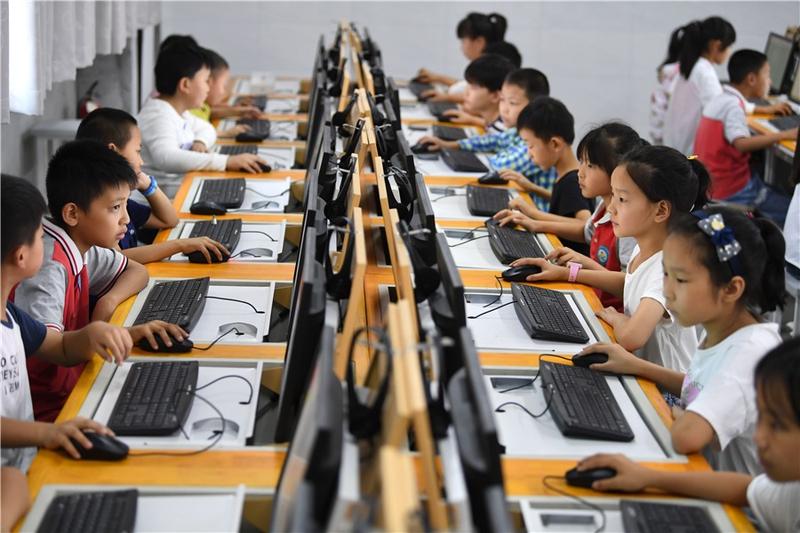
However, the value of education is not the same everywhere. The benefits that accrue in terms of higher earnings from additional years of education are 26 percent less in rural areas than in urban ones. Indeed, in terms of earning power, the average villager can triple the benefits of a basic education by migrating to the city. For persons with higher education, the financial rewards of migration are even greater.
Not surprisingly, therefore, some 55 percent of rural households now receive income earned in urban areas with remittances providing about 29 percent of their income. Moreover, remittances account for 16 percent of the average rural economy, albeit with marked regional variation.
Having eradicated rural extreme poverty in 2021, China is now fully focusing on the goal of common prosperity, that is ensuring that the benefits of China’s economic growth are widely and more fairly shared. Revitalising rural economies through investments in the complete range of digital technologies, from tractors to digital finance and e-commerce, is vital to the success of this goal.
Also essential, is strategic investment in public policy. This is necessary to prevent economic growth being restricted – and the advance towards common prosperity halted – by digitally driven inequality. The digital divide must be closed both in terms of access and expertise. Education should promote opportunity, not reproduce inequality. Artificial distinctions between rural and urban status need to be removed and both individuals and communities supported to make the just transition to a digital, green and sustainable economy.
The article reflects the author’s opinions, and not necessarily the views of China Focus.