Reframing Openness
 Facebook
 Twitter
 Linkedin
 Google +
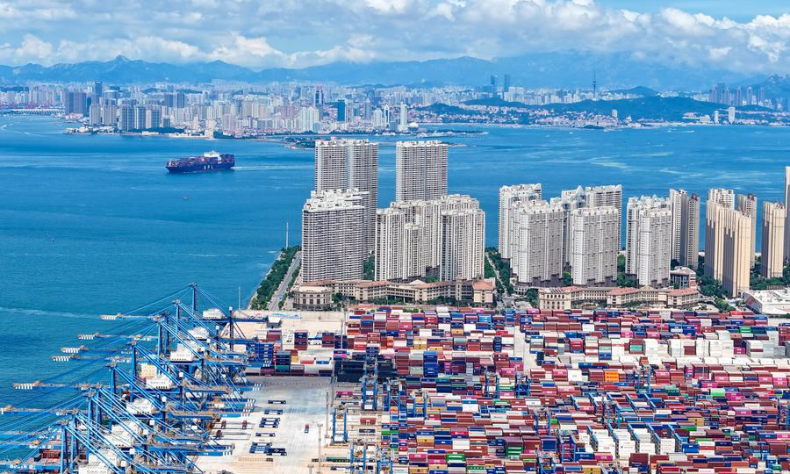
A higher level of openness will act as a powerful multiplier for mutually beneficial cooperation between China and the rest of the world.
The Central Economic Work Conference (CEWC), held in Beijing on December 10-11, sent a clear signal: China will remain committed to becoming more open.
Notably, the conference identified “steadily advancing institutional opening up and expanding self-initiated opening up in the services sector in an orderly manner” as a key pillar of China’s opening-up agenda for the coming year and for the broader 15th Five-Year Plan (2025-30) period.
This emphasis signals a new phase in China’s opening up. The focus is shifting toward the quality of rules, the leading role of services and a stronger commitment to mutually beneficial cooperation. Seen from this standpoint, institutional opening up and the opening up of the services sector go beyond economics and speak to issues of global governance.
By contributing more public goods in the areas of rules, standards and regulatory coordination, the country can promote trade and investment liberalization and facilitation while engaging more substantively in global agendas ranging from digital governance to climate action and public health.
As major reform measures and opening-up initiatives continue to take effect, an increasingly open China—one with more mature institutions, higher-end services and broader cooperation—will amplify its role as a stabilizer and growth engine amid profound global changes. This will inject new momentum into China’s own high-quality development, while offering stronger support and practical solutions for global economic recovery and the evolution of global governance.
From market access to rule alignment
The CEWC sent an unambiguous message: China’s opening up in the new era is no longer confined to the cross-border flow of goods, capital or people. Instead, it increasingly centers on proactively aligning domestic rules, regulations, governance practices and standards with high-level international economic and trade norms.
China has largely completed a phase of opening up defined by tariff reductions and port access. It is now accelerating toward a new form anchored in institutional alignment. At its core, institutional opening up seeks to build a transparent, stable and predictable business environment through regulatory innovation and reforms across key areas such as property rights protection, industrial subsidies, environmental and labor standards, government procurement, e-commerce, and financial regulation. The goal is deep compatibility between China’s domestic institutional framework and widely accepted international rules.
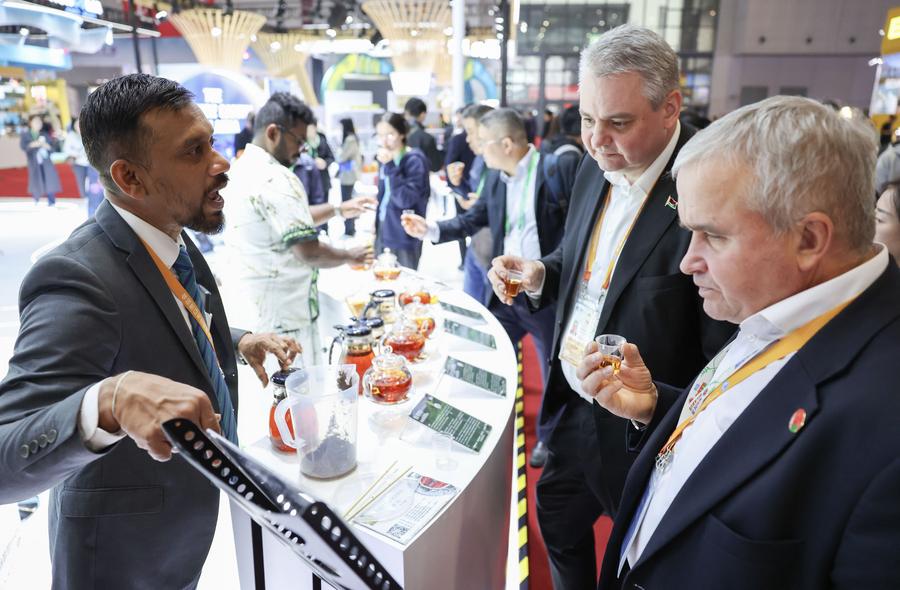
The conference’s arrangements carry at least three layers of strategic significance.
They represent a critical step toward offsetting external uncertainty and strengthening China’s initiative in opening up. Today, global competition over openness has shifted from tariff levels to rule-making power. From digital trade and green investment to supply chain security and cross-border data flows, high-standard rules have become decisive variables shaping the global division of labor. By steadily expanding institutional opening up, China is embedding its development more deeply into the global economic system through higher-quality rule provision, moving from passive adaptation to more active participation in shaping the rules.
This approach also reflects a systemic effort to use opening up to drive reform. Institutional opening up is, by nature, reform-oriented. Benchmarking against high-standard agreements such as the Comprehensive and Progressive Agreement for Trans-Pacific Partnership and the Digital Economy Partnership Agreement creates pressure for domestic improvements in competition policy, environmental regulation, labor protection and digital governance. This process helps remove hidden barriers and close institutional gaps, fostering a truly unified, fair, transparent and predictable domestic market, and translating visible institutional improvements into tangible market opportunities for businesses.
In addition, it provides a practical pathway for expanding “institutional dividends.” Whether through the “pressure-testing” of pilot free trade zones as they align comprehensively with high-standard trade rules, or through the island-wide special customs operations of the Hainan Free Trade Port (FTP), China is using pilot programs and phased experimentation to generate verifiable results and replicable models. Once institutional opening up reaches a sufficient scale, it no longer means opening a single city or strengthening one port. Instead, it enables nationwide optimization of resource allocation through coordinated institutional change.
As China continues to advance institutional opening up along the direction outlined by this CEWC, it will participate in global economic governance at a deeper level, offering the world more stable, transparent and reliable institutions.

A second growth curve
If institutional opening up defines the framework of China’s opening-up strategy, the orderly expansion of self-initiated opening up in the services sector identifies the key point of breakthrough for the next stage: services.
China has ranked first globally in goods trade for several consecutive years. Its services trade has also remained among the world’s largest and, in 2024, surpassed the $1-trillion mark for the first time. Growth has been especially strong in high-end producer services and digital trade. Against this backdrop, the CEWC designated the orderly expansion of self-initiated opening up in the services sector as a key task, signaling a clear intention to use services as a pivot for cultivating a “second growth curve” for the Chinese economy.
“Orderly” refers to pace and boundaries. Opening up will proceed by sector and by region, while refraining from crossing redlines related to national security, data security and financial stability. What can be opened will be opened decisively; what requires caution will be approached prudently; and what must be regulated will be governed with precision. “Self-initiated,” meanwhile, underscores initiative. This is not opening up under external pressure, but a process guided by China’s own development stage, industrial structure and comparative advantages, with clear roadmaps and timelines for what to open, to whom and how.
In practical terms, self-initiated opening up is taking shape along several key policy directions.
Deeper market access is being pursued in a range of priority sectors. Finance, telecommunications, healthcare, education, culture and professional services are among the most sensitive areas of services liberalization worldwide, and they are also where high-value segments of global value chains tend to concentrate. By continuously narrowing negative lists, lists that specify fields that are off-limits to business entities, and expanding areas of equal market access, China can attract more high-quality foreign investment into its services sector while pushing domestic firms to upgrade capabilities and service quality. Full competition, in turn, creates the conditions for the emergence of globally competitive service brands.
At the same time, China is working to build advantages in emerging fields. The conference called for encouraging services exports and accelerating the development of digital and green trade. This signals China’s determination not only to remain a global manufacturing hub, but also to become a provider of global solutions in areas such as cloud computing, industrial online applications, AI-enabled services, green finance and carbon asset management. China aims to become a global solutions provider in digital and green services, participating in global rule-making and standard-setting through openness and cooperation.

Equally important is the effort to balance international norms with domestic realities in institutional design. Services trade is deeply intertwined with issues such as cross-border data flows, personal privacy protection and algorithmic governance. China needs to engage proactively with international norms and advance cooperation on digital trade rules and green finance standards, while taking into account domestic developments. The objective is to build an institutional framework that combines openness, security and inclusiveness, offering a distinct Chinese pathway for global governance of services trade.
As self-initiated opening up in the services sector moves from incremental pilot programs to a more systematic rollout, China’s foreign trade structure is likely to shift from one dominated by goods trade to a dual-engine model driven jointly by goods and services. In undergoing this shift, China will accelerate its move toward the middle and upper segments of global value chains.
Not a solo, but a chorus
Opening up is not a one-way solo performance, but a multilateral chorus built on shared gains. By underlining the importance of promoting win-win cooperation across multiple fields, the CEWC delivered a clear message: China’s opening up is not solely about boosting domestic efficiency. It is also a proactive response to the global demand for stability, predictability and development opportunities.
High-level institutional opening up and services trade expansion will continue to position China as a stabilizing anchor within global cooperation networks. At a time when protectionism is on the rise and trade and investment are becoming increasingly fragmented, China’s firm support for the multilateral trading system centered on the World Trade Organization, its push for more high-standard regional and bilateral trade and investment agreements, and its efforts to advance integrated development between trade and investment, as well as between domestic and external markets, all send a strong signal of long-term commitment to openness.
With goods trade ranking first in the world for eight consecutive years and services trade continuing to expand, China has become a major trading partner for more than 150 countries and regions. Investing in China remains a strategic choice for multinational companies with a long-term global outlook. As the dividends of institutional opening up are further unleashed, platforms such as pilot free trade zones and the Hainan FTP will become more closely connected with the Belt and Road Initiative, BRICS cooperation and other multilateral frameworks, offering countries around the world more diverse market options and channels for cooperation.
A higher level of openness will also act as a powerful multiplier for mutually beneficial cooperation between China and the rest of the world. Whether in digital and green trade, or in healthcare, education, culture and tourism services, opening up in the services sector generates strong spillover effects. It supports industrial upgrading and job optimization within China, while enabling technology transfer, capacity building and standard alignment that help other developing economies strengthen their participation in global value chains. In this way, openness fosters a community with shared interests, one in which gains are increasingly intertwined.
The author is a research fellow with the Chongyang Institute for Financial Studies at Renmin University of China.