Reshaping the WTO
 Facebook
 Twitter
 Linkedin
 Google +
From a broader viewpoint, China, based on the concept of building a community with a shared future for humanity, has put forward the idea of creating a new type of major-country relationship, which provides a solution to the current multilateral economic and trade predicaments.
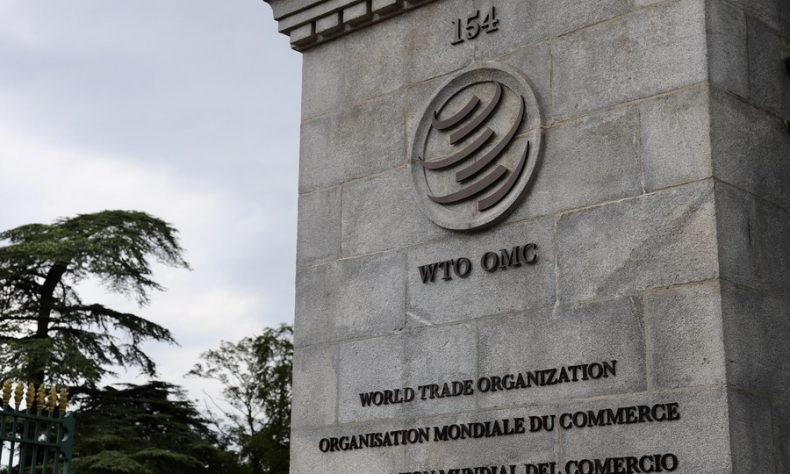
As our world is undergoing profound changes unseen in a century, the World Trade Organization (WTO) is also facing the greatest challenges since its founding. However, the ruling consensus among all member countries is still to promote an effective WTO functioning and performance. China, as one of the world’s leading markets and a major trading country in its own right, has been a loyal supporter of the organization’s prominent role in free trade and multilateralism, and intends to continue its contributions.
Past to present
The WTO was officially initiated in 1995. Before that, its predecessor, the General Agreement on Tariffs and Trade (GATT) launched by the U.S. in 1947, played a vital part in the promotion of global tariff reduction and trade liberalization. In 1995, the establishment of the WTO marked the peak of worldwide multilateral expansion. Since then, its number of member economies has grown from 128 to today’s 164.
Meanwhile, the organization holds a position of great authority in global economic and trade affairs, being the first international body in charge of the formulation and implementation of trade rules that bears a dispute settlement mechanism.
However, the WTO has made only little headway in critical subject negotiation since 1995. The Doha Round is a prime example thereof. First launched in November 2001, it marks the latest round of trade negotiations among the WTO membership. The round’s aim is to achieve major reform of the international trading system through the introduction of lower trade barriers and revised trade rules.
Two decades on, despite achieving some results such as the Agreement on Trade Facilitation, the expansion of Information Technology Agreement and the cancelation of agricultural export subsidies, there has been no breakthrough in the talks on key issues. As the WTO, in following GATT tradition, makes decisions not by voting but by consensus, this has led to the group’s increasingly low efficiency rates, in turn further restricting its full-fledged functioning.
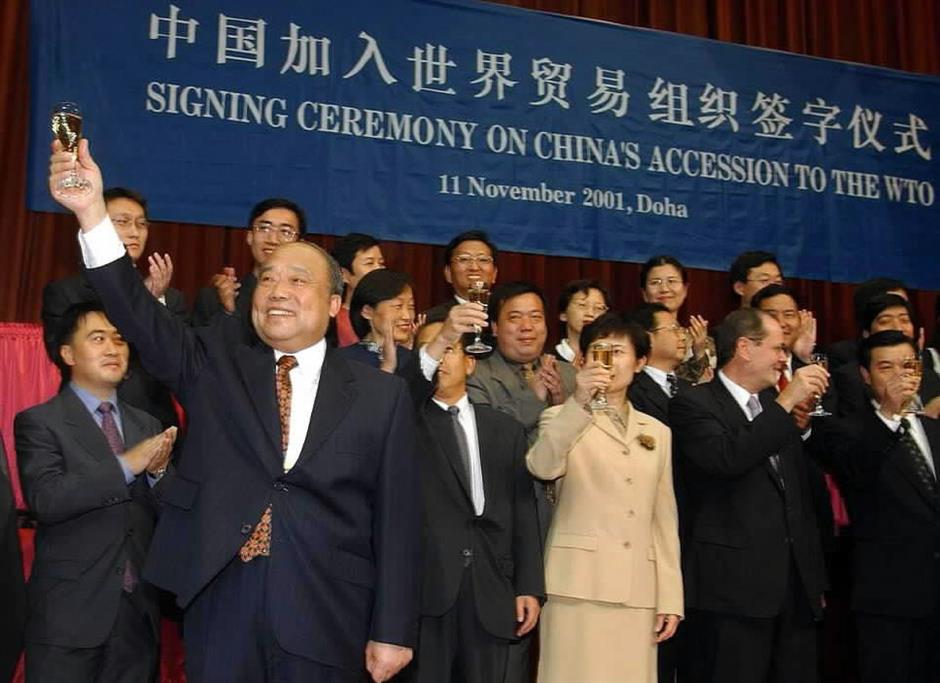
On December 11, 2001, China became the group’s 143rd member. This milestone denoted China’s further integration into the world economy as well as marked a momentous event in the history of global trade. By including one fifth of the world’s population, China’s accession enhanced the WTO’s international representation.
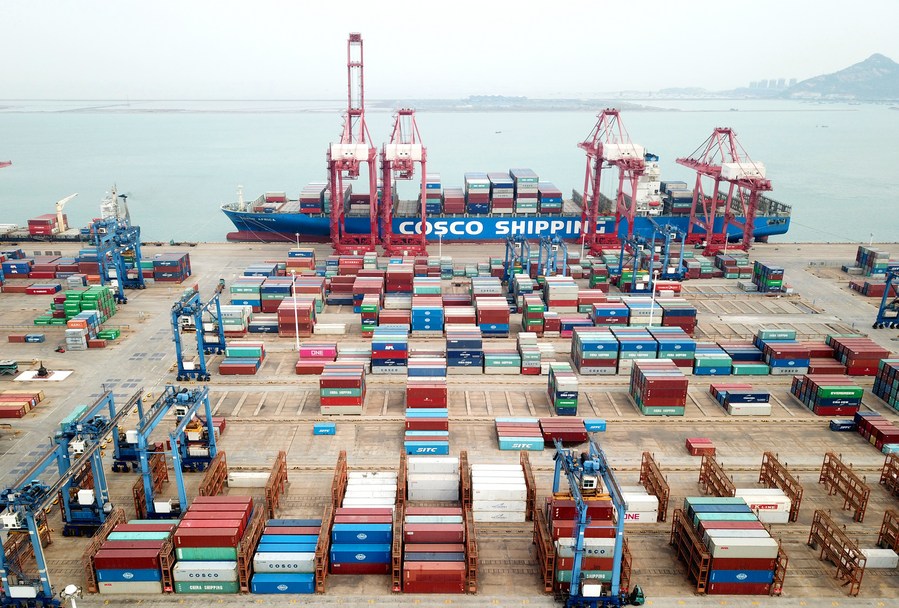
It also promoted the concepts of multilateralism and globalization. China is currently the largest trading partner of over 120 countries and regions and has offered the world a market with immense potential. China’s participation in the WTO has contributed to sustainable international economic development.
The Chinese economy has expanded nearly 11-fold since 2001, becoming the second largest worldwide. It has become the major engine of world economy and contributed 30 percent to global economic growth. Meanwhile, China is also the main export destination for the least developed countries across Asia, Africa and Latin America, having purchased 25 percent of their total exports since 2008.
High hurdles
Currently, major country competition has transcended cooperation, becoming the prime consideration of some countries in their global trade and economic activities. For the first time in its history, the WTO now faces the question of to be or not to be; the path ahead covered by challenges and uncertainties.
The first sore spot would be a lack of global leadership. The U.S. has played a significant role in promoting the past rapid growth of both the GATT and WTO. As the global political and economic landscape changes, both the American strength and its willingness to lead the world have declined. On the one hand, the strength of the EU and emerging markets such as China and Russia has increased, meaning the U.S. no longer enjoys a dominant status. On the other hand, faced with other countries’ enhanced economic competitiveness, the U.S. has become increasingly reluctant to provide global public goods fearing it shall be outperformed by these nations.
The existing basis for cooperation, then, stands on the verge of disintegration. Ever since Donald Trump assumed the U.S. presidency in 2017, a protectionist tide and the America First policy have prevailed in the country. As the U.S. adjusted its China policy, bilateral cooperation saw itself replaced with competition. Although incumbent President Joe Biden described the key words of his China policy as “compete, confront and cooperate,” its underlying notions have remained unchanged. Intense competition among major countries will inevitably inflict a negative impact on the WTO.

Last, but not least, there’s the issue of the organization’s lagged development. The disconnection between the WTO and the rapid transformation of the economic landscape also poses a big challenge. As a new round of technological revolution approaches, the world economy enters the digital era. The layout of the global industrial chain has undergone profound changes: new economic and trade formats, new models, and new products continue to emerge. The existing economic and trade governance and rule systems are increasingly unable to adapt to the new reality and subsequently should be upgraded.
Mutual methods
The crisis the WTO today finds itself in can be solved neither by a single country nor in a short period of time. The voice of the global society is clear and determined, calling on collective efforts to safeguard the core role of the WTO in global economy and trade, and jointly promote the development of multilateralism. The means to this end will prove tremendous.
A consensus must be forged and expanded to promote multilateralism in progressive manner by, for example, conducting manifold discussions within the WTO framework.
On December 2, 67 members, including China and the U.S., agreed to pare back regulations such as licensing requirements placed on service providers operating in foreign countries after four years of negotiations. Signatories represented 90 percent of global trade in services.

Pushing forward regional negotiations to promote multilateral trade is another viable option. Giant regional trade pacts, such as the Asia-Pacific Regional Comprehensive Economic Partnership (RCEP) and the Comprehensive and Progressive Agreement for Trans-Pacific Partnership, are considered economic and trade rule systems of the new century due to their high standards, advanced rules, and extensive content.
A final yet essential method should be an overhaul of the existing WTO framework. Regarding issues such as the formulation of trade rules, dispute settlement and institutional reforms, the U.S., the EU, Japan, China, Russia, and India, as well as smaller countries such as Singapore, have put forward their own reform plans. More efforts should go into the actual reaching of a consensus.
Nevertheless, the aforesaid efforts will not be exempt from hitches and glitches. For example, multilateral negotiations mainly focus on specific issues and cannot provide comprehensive solutions; regional negotiations may lead to exclusive economic and trade arrangements, and aggravate the fragmentation of the existing system; any WTO reforms are unlikely to achieve consensus on the short term. And none of these undertakings can solve its core issues: the lack of leadership and a disintegration of its cooperative basis. Members will have to propose solutions from a far broader perspective.
As a major global economic and trade partner, China has strived to endorse a new round of high-level and high-quality institutional opening up domestically. Meanwhile, it has actively participated in the RCEP and other regional negotiations and contributed its wisdom to WTO reform.
From a broader viewpoint, China, based on the concept of building a community with a shared future for humanity, has put forward the idea of creating a new type of major-country relationship, which provides a solution to the current multilateral economic and trade predicaments.
The author is an associate researcher with the China Institutes of Contemporary International Relations.