Rivers, Terraces, and Timeless Harmony
 Facebook
 Twitter
 Linkedin
 Google +
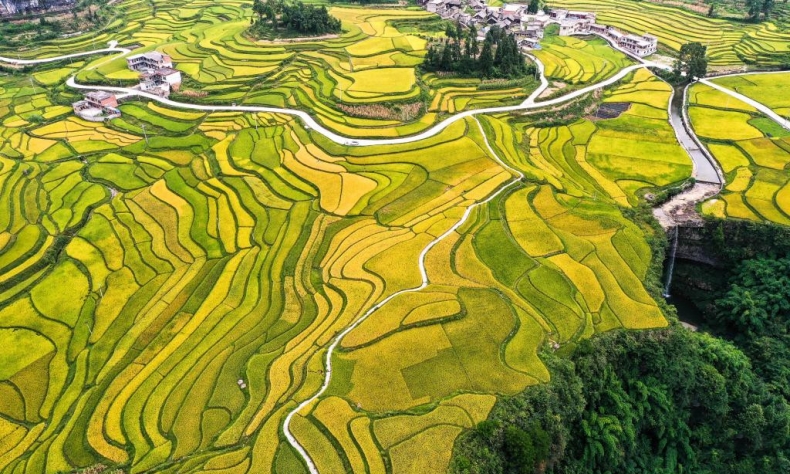
The terraces are a testament to the belief that humans, through hard work and unity, can overcome nature’s challenges without harming it.
China’s vast and diverse landscape is a testament to nature’s grandeur, with each region narrating a unique tale of human-nature symbiosis. Among these tales, two landmarks are of profound significance: the Yellow River and the Ziquejie Terraces. These aren’t mere geographical entities; they represent chapters of a story where humans, despite the challenges posed by nature, found ways to coexist, adapt, and thrive.?
The Yellow River, often dubbed the “Mother River,” has been the cradle of Chinese civilisation, nurturing life and culture for millennia. Similarly, the Ziquejie Terraces, with their intricate patterns, showcase the pinnacle of agricultural innovation and harmony with the land.?
Together, they encapsulate China’s enduring legacy of ecological balance and the nation’s commitment to preserving this delicate relationship for future generations. A deep delve into their significance offers lessons of resilience, innovation, and the timeless dance between man and nature.
Historic human-nature harmony
The annals of China’s history are deeply intertwined with the ebbs and flows of the Yellow River. Often referred to as the “Cradle of Chinese Civilisation,” its banks have witnessed the rise and fall of dynasties, the evolution of cultures, and the growth of ancient cities. It has been a cradle of Chinese civilisation for over 4,000 years, providing water for agriculture and supporting millions of people, as explained by Wang Wei, academician and?director?of the?History?Division at the?Chinese Academy?of?Social Sciences, “The Yellow River, including its upper, middle and lower reaches, is the place of origin of our Chinese civilisation. Especially in the middle and lower reaches, we have the thick Loess Plateau and vast plains. This provided a very good geographical basis and natural environment for the origin of our Chinese civilisation.”
In contrast, the Ziquejie Terraces located in Loudi Town of Xinhua County, Hunan Province, tell a tale of human ingenuity in the face of nature’s challenges. Nestled in mountains, these terraced fields are believed to have been cultivated for over 2,000 years, according to Zuo Zhifeng, deputy secretary of the Xinhua County Committee?of the?Communist Party of China, who reflected on the inventiveness and importance of these terraces.?
“Ziquejie Terraces symbolised the peak of agricultural civilisation for 2,000 years, providing a vivid example of ‘harmony between man and nature’ and ‘assiduous self-improvement,’ and a masterpiece of harmonious coexistence between man and nature,” said Zuo.
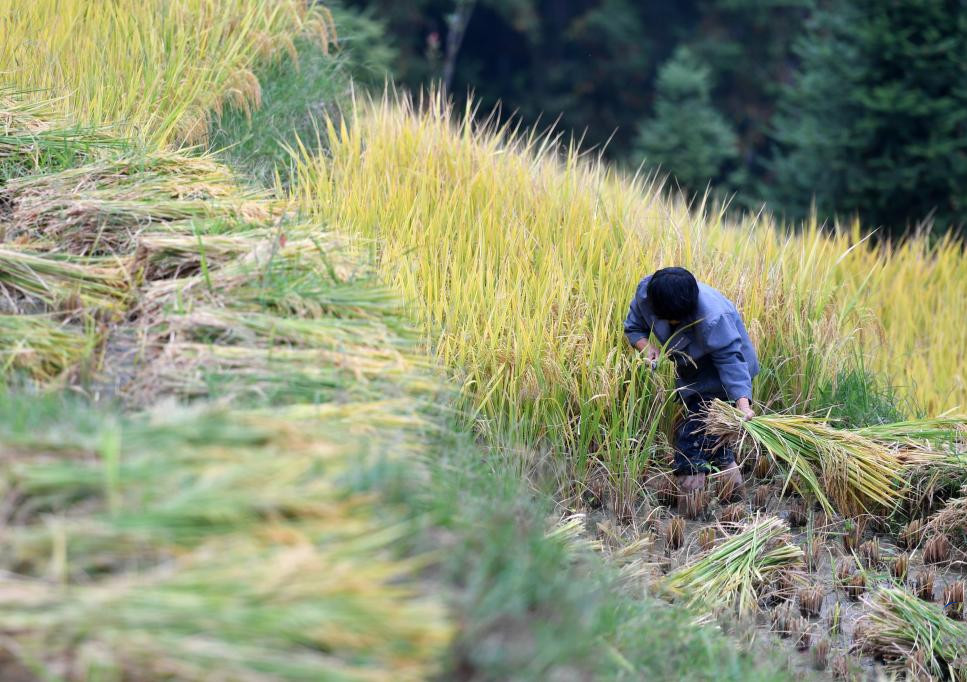
The ancient farmers, notably the Miao people, faced with rugged terrains and limited arable land, sculpted the mountainsides into cascading steps. Using simple tools and indigenous knowledge, they transformed the slopes into fertile fields, ensuring food security for their communities. The terraces became a living testament to humanity’s ability to adapt, innovate, and coexist with nature.?
Ecological significance
Beyond their historical and cultural importance, both the Yellow River and the Ziquejie Terraces play pivotal roles in maintaining ecological balance. This is testified by the fact that the Ziquejie Terraces have been recognised as a UNESCO World Heritage site due to their exceptional cultural and ecological significance.?
The Yellow River’s basin is a biodiversity hotspot, home to a myriad of aquatic and terrestrial species. Its wetlands, in particular, act as vital breeding grounds for migratory birds and provide habitats for several endangered species. The river’s health directly impacts the ecological wellbeing of a vast region, influencing everything from local climates to the health of downstream ecosystems.
The Ziquejie Terraces, on the other hand, are a marvel of sustainable agriculture. The traditional farming methods employed there prioritise soil health, water conservation, and biodiversity. The terraces, with their cascading water channels, ensure efficient water use, preventing runoff and soil erosion. The cultivation of diverse crops, practiced in rotation, enriches the soil and promotes a balanced ecosystem. In an age where industrial farming often disrupts local ecologies, the Ziquejie Terraces stand as a beacon of ecological harmony and sustainability.
In the tapestry of time, both the Yellow River and the Ziquejie Terraces have faced their share of challenges, but the modern era has brought forth unprecedented trials. The Yellow River, once a symbol of nature’s abundance, now grapples with the consequences of rapid industrialisation and urbanisation; the Ziquejie Terraces face the pressures of modernity.?
Yet, it’s not just the physical challenges that loom large. The cultural and spiritual connections that communities have with the river and the terraces are at risk of being eroded. As modern lifestyles take precedence, the ancient rituals, stories, and traditions associated with these landmarks face the threat of being forgotten, taking with them invaluable lessons of coexistence and harmony.
Conservation efforts
In the face of these mounting challenges, China has risen with a renewed commitment to safeguarding its ecological and cultural treasures. Recognising the invaluable legacy of the Yellow River and the Ziquejie Terraces, a slew of conservation initiatives have been set in motion.
For the Yellow River, comprehensive restoration projects are underway. These initiatives span from pollution control measures to sustainable water management practices. Effluent treatment plants are being established to treat industrial waste before it enters the river. Simultaneously, stringent regulations are being enforced to curb illegal discharges. On the water management front, efforts are being made to balance the water needs of agriculture, industry, and ecosystems. Reservoirs and water-saving technologies are being introduced to ensure that the river’s flow is maintained, and its natural sedimentation process is not disrupted.
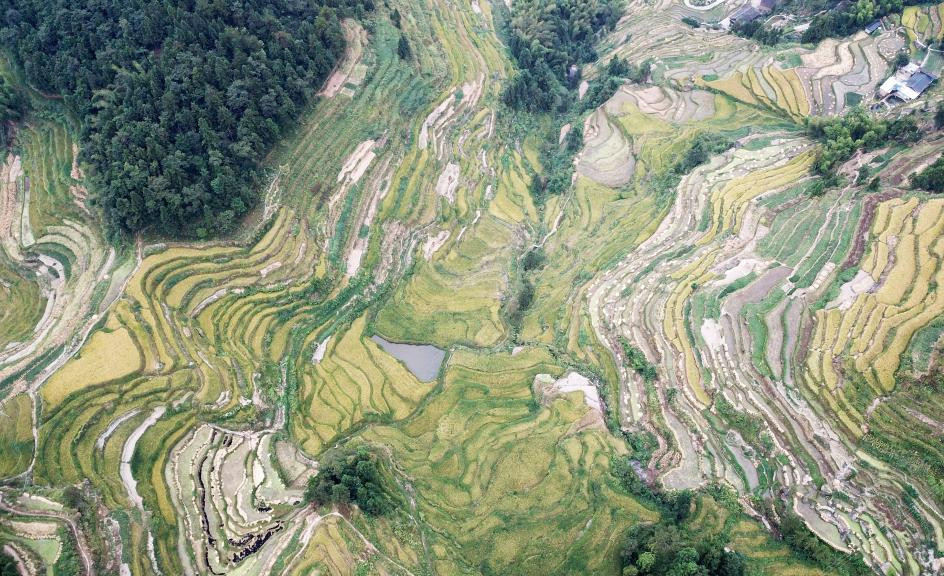
The Ziquejie Terraces have seen a resurgence of interest in their traditional farming methods. Recognising the ecological wisdom embedded in these practices, there’s a push to document and promote them. Training programmes are being organised for younger generations, ensuring that the knowledge is not lost. Additionally, the terraces are being promoted as eco-tourism destinations. This not only brings in revenue for the local communities but also raises awareness about the importance of sustainable farming and conservation.?
In Xinhua County, organic farming initiatives are being encouraged, and efforts are being made to secure Geographical Indication (GI) status for the crops grown, adding value and ensuring a fair price for the farmers. Concerted efforts are being made to refurbish terraced fields while simultaneously focusing on their conservation and development. For significant scenic terraced areas, the county has adopted a “Company + Cooperative + Farmers” model, implementing unified management, repair and restoration, as well as providing farming services.?
Beyond these tangible measures, there’s a growing emphasis on community involvement. Both the Yellow River and the Ziquejie Terraces are deeply intertwined with the lives of the communities that inhabit their respective regions. Conservation efforts are being designed to be participatory, ensuring that the local communities are stakeholders in the process. These conservation efforts, while rooted in local realities, have global implications. They serve as models of how heritage and ecology can be preserved in the face of modern challenges, offering lessons for the world at large.?
Philosophical and cultural insights
The Yellow River and the Ziquejie Terraces are not just ecological landmarks; they are repositories of profound philosophical and cultural insights that have shaped Chinese thought for millennia. These insights, deeply embedded in the relationship between humans and their environment, offer a window into China’s spiritual and intellectual heritage.
The Yellow River, with its ever-changing course and unpredictable nature, has often been likened to the concept of?“yin and yang”?in Daoist philosophy. The river’s dual nature, nurturing yet destructive, embodies the Daoist belief in the interdependence of opposites. Just as “yin”?and?“yang” coexist in harmony, the communities along the Yellow River have learned to harness its benefits while respecting its might. This relationship is not one of domination but of understanding and coexistence, mirroring the Daoist pursuit of balance and harmony.
“…as we all ought to know by now anyway, the first principle of Daoism is to seek harmony between humanity and nature – a principle that is now more highly valued by Chinese Marxism… Of course, a muddled mountain of words is not what we find here in Hunan. Here we find ancient but ecologically sustainable technologies producing the food we need to survive, surrounded by a serene but natural beauty [which] is the realisation of Daoist harmony…,” remarked Josef Gregory Mahoney, a professor of politics and international relations at East China Normal University.?
The Ziquejie Terraces, on the other hand, resonate with the Confucian ideals of diligence, respect for nature, and communal harmony. Robert Walker, a professor at Beijing Normal University, asserts that the meticulous design of the terraces, which requires collective effort and cooperation, reflects the Confucian emphasis on community and mutual responsibility. “…rice-farming leads to more collectiveness, and to a closer attachment to social norms,” he said.?
The terraces are a testament to the belief that humans, through hard work and unity, can overcome nature’s challenges without harming it. This symbiotic relationship between the farmers and the land echoes the Confucian principle of “ren” or benevolence, which advocates for kindness, empathy, and a harmonious coexistence with all beings.
Stories of deities, heroes, and ancient spirits associated with the Yellow River and the terraces have been passed down through generations, serving as moral compasses and cultural touchstones. These narratives, whether they speak of the river goddess who tamed the waters or the farmer who sculpted the first terrace, emphasise the virtues of respect for nature, perseverance, and community welfare.?