Stability and Development Are the Strongest Evidences of Human Rights
 Facebook
 Twitter
 Linkedin
 Google +
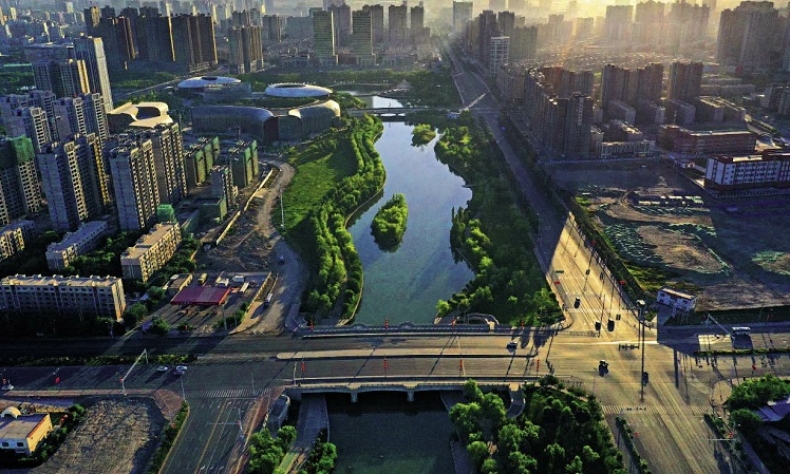
China protects, according to law, the political, economic, social, and cultural rights of its citizens, especially basic human rights — the rights to subsistence, health, and development.
Over the past months hostile elements in certain Western countries have trumped up charges against China concerning human rights in Xinjiang, spreading lies about “forced labor,” “genocide,” and “religious oppression” in the region. The voice of justice, however, prevails, as most countries in the world have joined China in refuting such lies on various occasions, including sessions of the United Nations Human Rights Council.
Facts speak louder than words. Over the past decades, the Communist Party of China (CPC) and the Chinese government have made respecting, promoting, and protecting human rights the purpose of state governance and worked hard toward that end. With the belief that the rights to subsistence and development are primary human rights, China has pioneered a path of human rights protection with its own characteristics. Since the founding of the People’s Republic in 1949, especially since the commencement of reform and opening-up in 1978, remarkable progress has been made in human rights protection in Xinjiang, a fact that is well recognized globally.
A new path based on national conditions
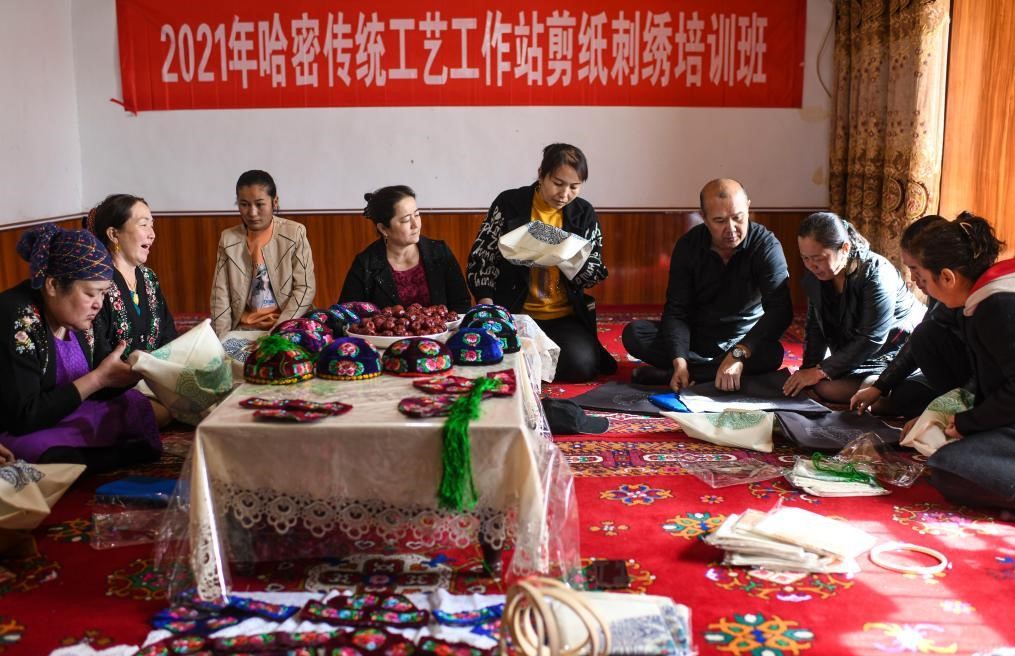
Xinjiang has been a multi-ethnic region since ancient times — home to more than 40 ethnic groups, including Uygur, Han, and Kazak, who practice Islam, Buddhism, Christianity, and Taoism among other religions. It is the largest and most ethnically diversified autonomous region in China, with Uygurs making up the largest ethnic group. Under the unified leadership of the central government, Xinjiang exercises the right of autonomy in handling local affairs in accordance with the Constitution and the law, a practice that ensures national unity and ethnic solidarity, while allowing people of all ethnic groups to run the country together. The Constitution stipulates that all ethnic groups in China are equal. This means that they enjoy equal rights and have the same obligations regardless of their size, stage of development or faith.
Since the 18th National Congress of the CPC in 2012, General Secretary Xi Jinping has stressed the strategic significance of economic development and livelihood improvement for Xinjiang’s stability and security. “With the goal of providing people of all ethnic groups a happy, peaceful life, we should launch more programs to improve their living and working conditions, bring them tangible benefits, and solve more problems of immediate concern to them. People of all ethnic groups will thereby feel the care of the Party and the state for them as members of a big family,” Xi told Xinjiang deputies to the National People’s Congress in 2017.
His remarks demonstrate the goal of promoting economic-social development and raising people’s living standard in Xinjiang. Governments at all levels have taken solid steps in this regard, creating employment in Xinjiang, increasing local people’s incomes, and boosting their confidence in an even better future. As a result, Xinjiang people of all ethnic groups rally more closely around the CPC, and their love for the autonomous region and China continues to grow stronger.
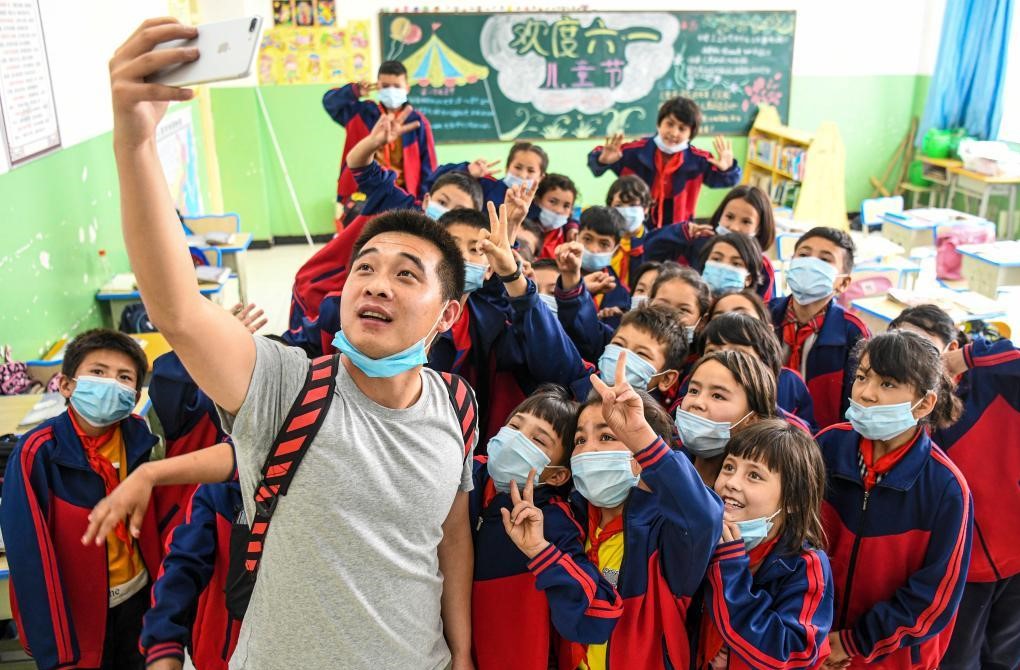
Since 1949, the volume of Xinjiang’s economy has increased more than 200-fold to exceed US $200 billion. As its economy grows, all the people in Xinjiang enjoy a fair share of the development bonus. Every year, as much as 70 percent of the region’s general public budget is spent on ensuring and improving living standards. Over the past five years, all the 3.06 million rural residents living below the current poverty threshold have been lifted out of poverty. Free nine-year compulsory education is now universal across Xinjiang, with its southern regions leading the way with full coverage of preschool and 12-year basic education. Local people now feel a stronger sense of gain, happiness, and security. As they put it, “Every family has a means of subsistence, with every member occupied and money earned every month.” All ethnic groups in Xinjiang stand closely united, like the seeds of a pomegranate that stick together. These are the best evidence of progress in human rights protection in the region.
Facts speak for themselves
China protects, according to law, the political, economic, social, and cultural rights of its citizens, especially basic human rights — the rights to subsistence, health, and development.
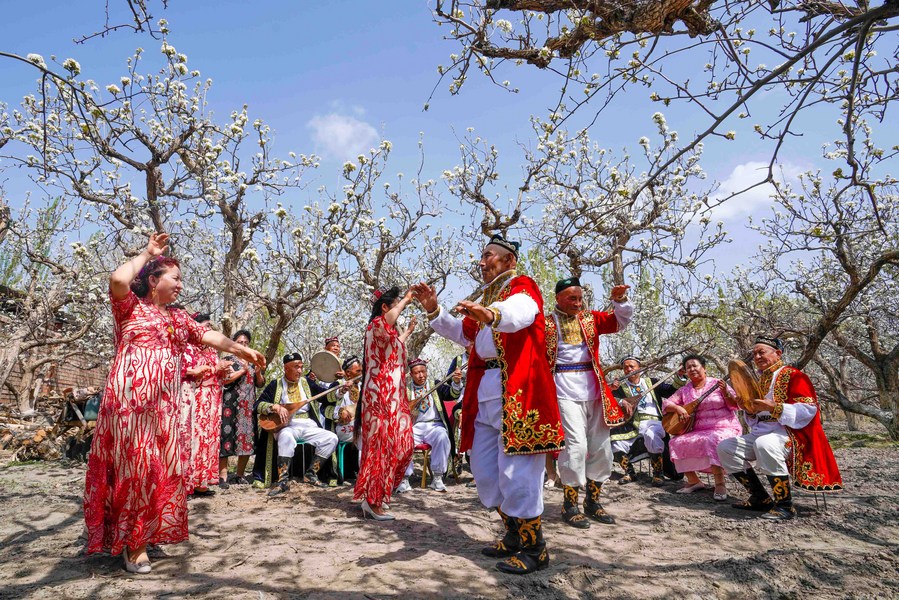
In Xinjiang, people fully enjoy freedom of religious belief, and normal religious activities of Muslims are respected and protected. There is a mosque for every 530 Muslims in the region, a rate higher than many Muslim countries. There are a dozen or more Islamic institutes in Xinjiang that constitute a relatively complete Islamic education system and enroll nearly 1,000 students every year. To facilitate Muslim people’s study of their holy classics, the government has funded the publication of the Koran and Sahih al-Buhari in Chinese, Uygur, Kazak, and Kirgiz languages.
History has made it clear that security is a prerequisite to human rights. The Chinese government is committed to providing its people a safe life. Since the 1990s, violent extremists, ethnic separatists, and religious extremists have carried out terrorist activities in Xinjiang, posing a grim threat to social stability and the fundamental interests of local people. In response, the Chinese government has launched anti-terrorism and de-radicalization measures based on the experience of other countries facing the same challenges. These measures are in accordance with Chinese laws and in line with international rules set in the United Nations Global Counter-Terrorism Strategy and Plan of Action to Prevent Violent Extremism. They have proved effective — Xinjiang has reported no violent terrorist cases for more than four consecutive years.
It is an indisputable fact that the endeavors made by Xinjiang authorities not only protect the life, safety, and religious rights of local people, but also contribute to the global fight against terrorism and radicalization.
The “genocide” accusation that politicians of certain Western countries have made against China is false, and seen as ludicrous because some of these countries have committed genocide themselves during centuries of colonial rule. By contrast, China has been a multi-ethnic country since ancient times, and people of different ethnic groups have long lived in peace as equals.
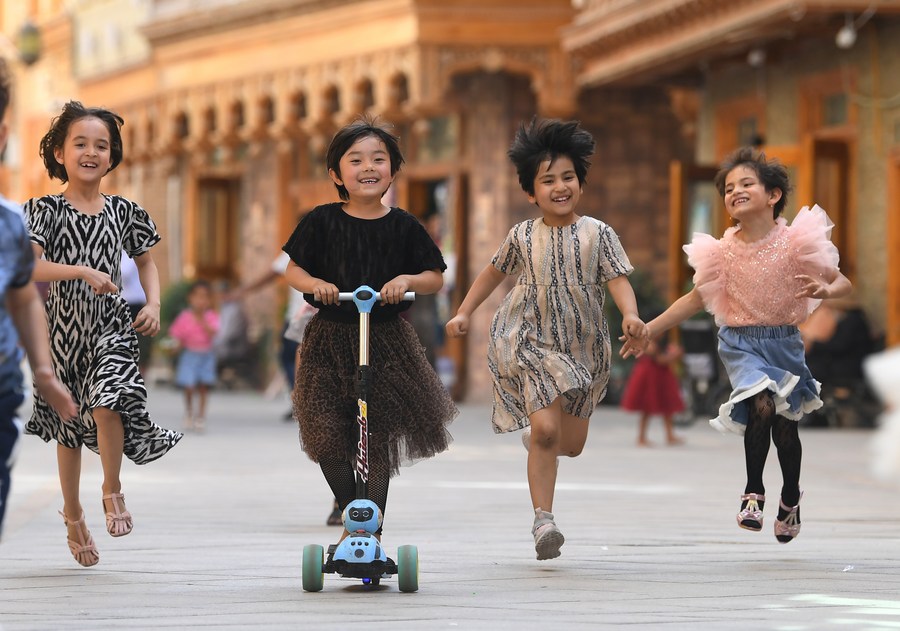
In China, ethnic minority groups, including the Uygur, are entitled to a more relaxed population policy than ethnic Han people. As a result, their populations have been growing at a rate higher than the national average. When the People’s Republic of China was founded in 1949, the Uygur population in Xinjiang was below two million, now it is above 11.62 million. And average life expectancy has soared from under 30 years to 74.42 years over the past seven decades. Between 2010 and 2018 the Uygur population in Xinjiang saw a marked increase of 25 percent, compared with 13.99 percent for the regional average and a mere two percent for local Han people. Such strong growth is anything but genocide.
With the belief that living a happy life is the most important human right, the CPC and the Chinese government center their work on the mission of creating a better life for the Chinese people. China embraces a people-centric conception of human rights, and seeks coordinated development in economy, politics, culture, society and environmental protection. It is fully engaged in global human rights governance, and has made remarkable contributions in this regard.
Under the guidance of a new philosophy of development, Xinjiang has entered a stage of unprecedented prosperity, thriving with sound economic growth, social stability, and ethnic solidarity. This has brought about unprecedented progress in human rights protection, of which the Xinjiang population is well aware.
Writing a new chapter
The smear campaign of certain Western countries against China, under the pretext of human rights violations in Xinjiang, is nothing but hegemonic interference in China’s internal affairs and violates international laws, including the UN Charter. Its purpose is to sow discord in Xinjiang and hamper China’s development. Chinese people know better and care more about their own rights than anyone else. How can they believe that politicians of other countries, who sit on their hands when their own citizens die en masse of a pandemic, genuinely care about human rights in China?
The international discourse on human rights has been evolving over the past centuries. New ideas emerged at different historical stages, from “all men are born equal” and “natural rights” during the bourgeois revolution in the 17th and 18th centuries, to the “right of nations to self-determination” and “collective human rights” in the 1950s, and later to “economic, social, cultural, and environmental rights” in the 1980s. The conception of human rights evolves with the times and is not monolithic. It is different from country to country, and region to region, due to disparity in the level of development.
For people in developing countries, who account for the majority of humanity, what matters most are the rights to subsistence and development. The human rights conception trumpeted by the U.S. is an utter denial of the progress in human rights protection in other parts of the world, especially developing countries, as well as the diversity and complexity of this issue. At the 46th session of the Human Rights Council earlier this year, more than 80 countries, including Muslim states, expressed support for China on issues related to Xinjiang through joint or separate statements. The truth is out there, but it is whether or not people choose to see it.
Hou Yuxiang is dean of School of Middle Eastern Studies, Beijing International Studies University.
Wu Sike is former Special Envoy of China on the Middle East Issue.