Technological Progress Drives Innovation Capacity
 Facebook
 Twitter
 Linkedin
 Google +
Science and technology have become a powerful engine of Xinjiang’s economic growth, driving industrial upgrading in agriculture, energy and transportation.
September 2025 marks China’s first National Science Popularization Month. In Xinjiang, nearly 2,000 events were staged, forming a lively “science carnival” with a broad reach and strong public engagement. For many, Xinjiang is known for its landscapes and cuisine rather than for its advances in science and technology, but this nationwide campaign opened a window for the public to discover the region’s achievements.
Statistics offer a vivid snapshot of Xinjiang’s progress. By the end of 2024, the region was home to 164 key laboratories, 21 hi-tech industrial development zones and 2,529 hi-tech enterprises. Over the course of the year, Xinjiang secured 21,642 patent authorizations and technology contract transactions reached 10.151 billion yuan ($1.43 billion). Total research and development (R&D) spending exceeded 10 billion yuan ($1.4 billion), with an annual growth rate ranking second nationwide.
Rising sci-tech?appeal
A series of breakthroughs is bringing Xinjiang’s scientific progress into the global spotlight. The region has, without fanfare, added innovation to its new identity: cultivating seafood in the desert and harnessing the wind and solar power to produce hydrogen.
The technology behind desert seafood farming comes from joint research by Tarim University, the Xinjiang Institute of Ecology and Geography under the Chinese Academy of Sciences and Guangdong Haid Group. For example, Ruoqiang County in Bayingolin Mongolian Autonomous Prefecture has developed a 333-hectare desert aquafarm, desalinating underground brackish water to recreate seawater conditions. The site achieves yields of 63 tons per hectare of Pacific white shrimp and giant grouper, enabling more than 2,000 local herders to transition from livestock to aquaculture. The project has also been introduced to the United Arab Emirates and Kazakhstan.
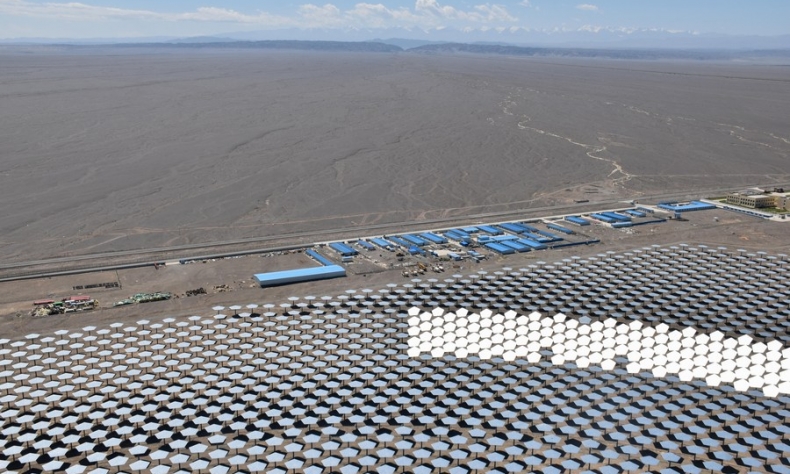
Hami City is turning wind and solar power into hydrogen. The city has built China’s largest integrated wind-solar hydrogen production base. The first-phase green hydrogen project, with a capacity of 10,000 tons per year, went into operation in September 2023. A second-phase project, designed to produce 100,000 tons annually, has been incorporated into the national “Desert, Gobi and Wasteland” Initiative, which focuses on using large areas of empty land to make electricity from the Sun and wind. These initiatives mark Xinjiang’s entry into the era of supplying large-scale green hydrogen to other parts of China.
In Urumqi’s Cloud Computing Industrial Park, more than 60 companies—among them Huawei, Alibaba Cloud and China Telecom—have set up operations. The park hosts 45,000 server racks and delivers multilingual content distribution and cross-border e-commerce computing services to Central Asia, supported by 12 terabits per second (Tbps) of outbound bandwidth. Tbps represents the amount of data that can be transferred per second, with 1 Tbps equaling 1 trillion bits per second.
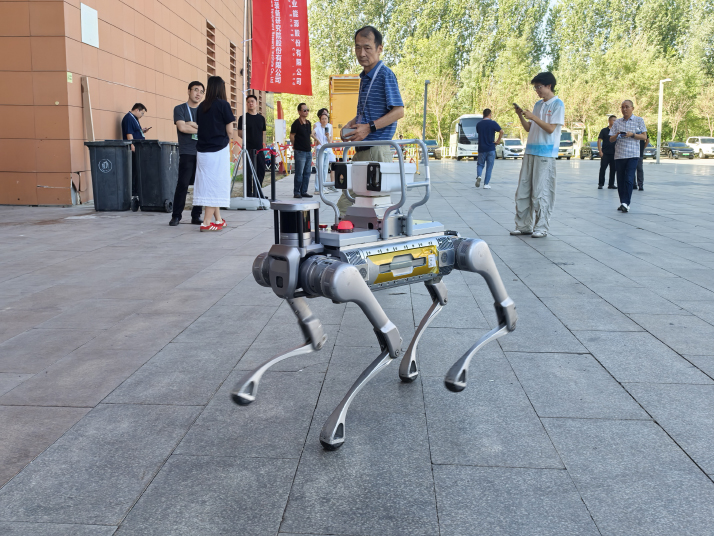
Over the past two years, Xinjiang has accelerated its drive for scientific and technological innovation. Platforms such as the Xinjiang branch of Huairou Laboratory, the National Wind Power Technology Innovation Center and the Tianshan Laboratory have become hallmarks of progress. The Tianshan Laboratory serves as a China-Central Asia technology transfer hub. Each year, it publishes a catalog of 100 advanced technologies for Central Asia and offers one-stop services covering intellectual property, standards, testing and certification. By 2030, it is expected to facilitate 50 billion yuan ($7 billion) in technology transactions, transforming Xinjiang into a Belt and Road innovation hub. The Belt and Road Initiative is a China-proposed blueprint to boost connectivity along and beyond the ancient Silk Road routes.
Xinjiang’s technological progress has produced national milestones and world-class achievements. Leveraging the abundant sunshine of the Taklimakan Desert, China’s largest desert and the world’s second-largest drifting desert, the region has launched the Desert Carbon Valley project—an initiative integrating photovoltaics, desertification control and carbon sinks. Carbon sinks are natural systems that suck up and store carbon dioxide from the atmosphere. By 2035, the project is projected to add 200 million kilowatts of newly installed new energy capacity, rehabilitate 1 million hectares of desertified land and create an annual carbon sink equal to 100 million tons of carbon dioxide. This will establish China’s largest carbon-trading reserve in “desert, Gobi and wasteland” regions.
In agricultural science, Xinjiang has made notable advances in the cultivation and processing of crops such as cotton, tomatoes and grapes. Working with BGI Group, a Shenzhen-based life science and genome research organization, and China Agricultural University, the Xinjiang Academy of Agricultural Sciences unveiled the world’s first ultra pan-genome of upland cotton, cutting the breeding cycle from eight to 10 years to just three to five years. At the same time, Xinjiang’s soilization technology—hailed as a Chinese solution for combating desertification—has been adopted by the United Nations Convention to Combat Desertification as a model for application across arid zones in Central Asia. Soilization mixes a water-based paste with sand and applies it to the desert surface, giving it the same physical and ecological properties as soil—with the same capacity for water and fertilizer retention and ventilation.
Driving high-quality development
In recent years, Xinjiang has placed science and technology at the core of its high-quality development agenda, identifying self-reliance and self-strengthening in science and technology as strategic priorities. Through an innovation-driven development strategy, the region has markedly improved its capacity for innovation.
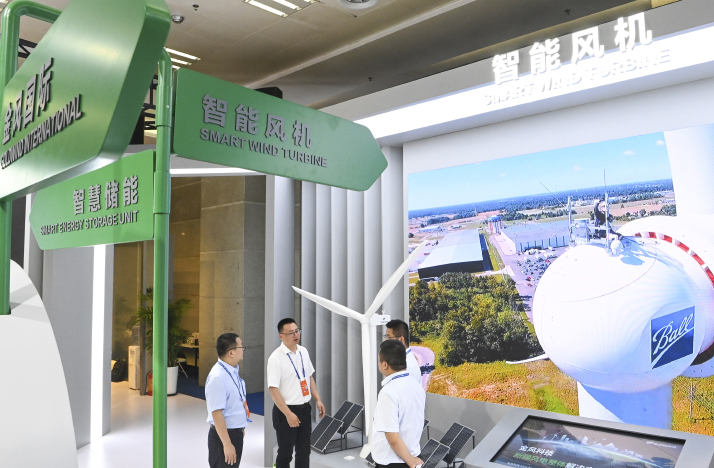
Xinjiang has stepped up systematic study and strategic planning for scientific and technological innovation. The region has introduced policy frameworks, including the Opinions on Strengthening the Supporting and Leading Role of Science and Technology Innovation to Promote High-Quality Development in Xinjiang and the Plan for Supporting Xinjiang’s High-Quality Development Through Science and Technology Innovation. These initiatives aim to pinpoint well-targeted and practical entry points for advancing science and technology. At the same time, the region has significantly increased science and technology funding, spurring R&D investment across society and injecting momentum into innovation.
Xinjiang is advancing major national science and innovation platforms. Recently projects like the China-Tajikistan Belt and Road Joint Laboratory on Biodiversity Conservation and Sustainable Use and the State Key Laboratory of Photovoltaic Materials and Cells were both approved. The region also launched the Aksu and Alaer National Hi-Tech Industrial Development Zone, the Karamay National Hi-Tech Industrial Development Zone and the Changji National Agricultural Hi-Tech Industry Demonstration Zone. Meanwhile, a fully steerable 110-meter aperture radio telescope—a landmark scientific project—is under construction in Qitai County, Changji Hui Autonomous Prefecture. This project is projected to be finished by 2028.
Xinjiang has focused on building clusters of distinctive and advantageous industries. Over the past five years, the region has invited nearly 100 leading experts nationwide to provide strategic advice for industrial growth. Efforts have intensified in original and pioneering technologies and a dedicated initiative has been launched to strengthen science and technology support for Xinjiang’s distinctive industrial clusters. As a result, notable advances have been made in petroleum and petrochemicals, coal and coal chemical, mineral resource development, new energy and new materials.
The Tarim Oilfield set a new Asian record with ultra-deep drilling at a depth of 10,000 meters. Exploration has revealed world-class deposits such as the Huoshaoyun lead-zinc mine in Hetian (Hotan), with reserves exceeding 10 million tons, and the Dahongliutan rare metal deposit with reserves in the millions of tons.
Science and technology have become a powerful engine of Xinjiang’s economic growth, driving industrial upgrading in agriculture, energy and transportation. Innovation has improved healthcare, education and ecology, leading to higher living standards. These advances are also helping close the development gap between Xinjiang and China’s eastern regions, contributing to balanced and sustainable national development.