The CPC at 104: Longevity, Resilience and the Turn to Governance
 Facebook
 Twitter
 Linkedin
 Google +
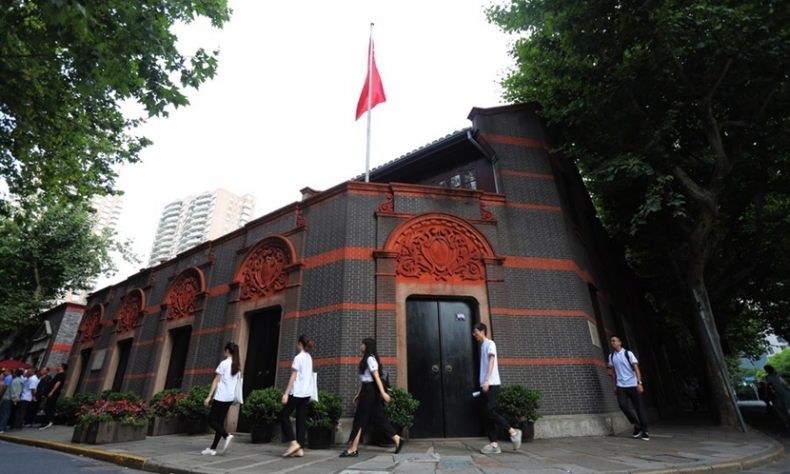
At the age of 104, the CPC is less a static ideological monolith than a complex, evolving system of governance and statecraft. This institutional elasticity—grounded in public support realized through performance, strategic foresight and a willingness to restructure itself—has enabled the Party to weather storms that have felled others.
At 104 years old, the Communist Party of China (CPC) stands as one of the enduring and consequential mass political parties of the modern era. With a membership now exceeding 100 million, the CPC is not merely an institutional link to revolutionary history—it is a living, evolving institution that has repeatedly defied predictions of decline. In a century marked by the collapse of many ideologically-driven parties, especially in the wake of the Cold War, the CPC’s persistence and dynamism invite serious reflection. What accounts for its longevity? How has it adapted to shifting historical conditions? And what does its current transformation into a governance-oriented party tell us about the nature of modern statecraft in China?
From revolutionary to ruling
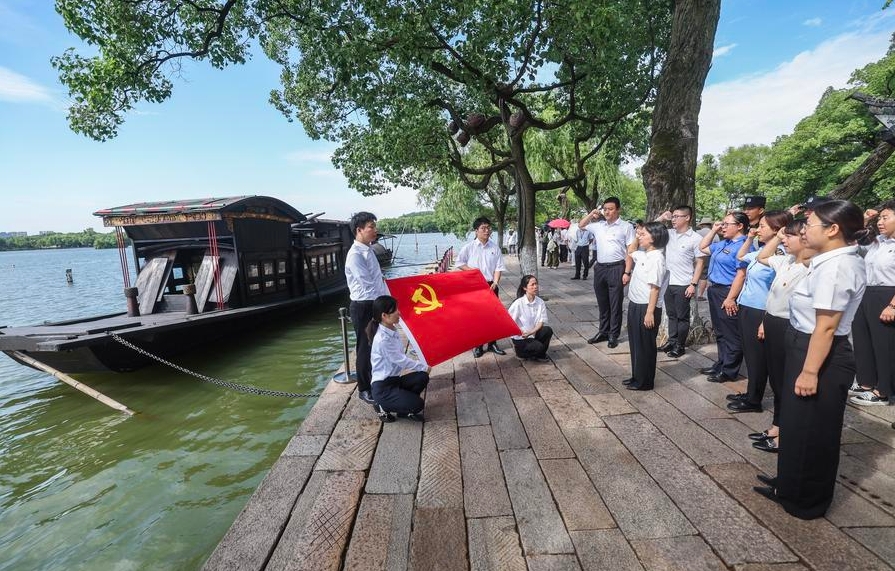
The CPC began in 1921 as a small intellectual circle inspired by Marxist theory and Russia’s 1917 October Revolution. Its early decades were defined by revolutionary struggle: first against domestic warlords and the Kuomintang regime, and then against Japanese aggression. With victory in the civil war in 1949 and the subsequent founding of the People’s Republic of China that same year, the CPC transitioned from revolutionary vanguard to ruling party.
Yet this transition was tumultuous at times. The post-revolutionary period witnessed periods of intense change that provoked a need for the Party leadership to recalibrate to emergent realities. In the face of intense international and domestic challenges, as the Party sought to chart a course out of a century of national humiliation and embark on a program of national rejuvenation, the Party was able to overcome challenges and adapt.
The best-recognized recent turn was that of “reform and opening up,” a strategy the CPC first embarked on in 1978 under the leadership of Deng Xiaoping. This turn signaled not only a change in economic policy, but a deeper institutional transformation. It revealed a party capable of critical self-reflection—a rare trait in large political organizations.
The capacity to learn and reform
This capacity for institutional learning is arguably the key to the CPC’s resilience. The Party has consistently demonstrated a willingness to diagnose its own failures, experiment with policy and adjust strategies in response to evolving conditions. From the rural household responsibility system (an agricultural reform that saw a shift from collective farming under the people’s commune system to individual household-based production—Ed.) and the establishment of special economic zones (designated areas with exclusive economic regulations and policies to attract foreign investment—Ed.) in the early 1980s, to China’s accession to the World Trade Organization in 2001, the CPC has fostered pragmatic policy innovation.
More importantly, these reforms have not been purely economic. The CPC has also built up an extensive apparatus of education, anti-corruption enforcement and public consultation mechanisms (including local-level elections and online grievance channels) that aim to maintain responsiveness and to ensure the apparatuses of government are attuned to the “conditions on the ground.” In short, institutional reform and social adaptability have become hallmarks of the Party’s mode of governance.
The CPC’s adaptive capacity is not static; it is a moving, evolving system. Rather than resting on historical laurels, the Party has actively managed transitions—from an agricultural to an industrial society, from low-end to high-end manufacturing, and now from high-speed growth to high-quality development.
The shift to governance: a new era
One of the most profound transformations of recent decades is the CPC’s pivot from a revolutionary, or even developmental party to a governance-oriented one. This is not merely a semantic move. It represents a change in how the Party conceptualizes its role: less about mobilizing the masses for ideological transformation, and more about ensuring social stability, economic inclusion, sustainable development and technological leadership.
In Chinese political discourse, this shift is often articulated as the move from party in power to party of governance. While the former suggests a hierarchical, command-based approach, the latter implies a more complex system of rule that integrates planning, regulation, participation and feedback loops. Governance here encompasses a broad array of domains: environmental protection, public health, rural revitalization, digital regulation, disaster response and social welfare expansion.
(China’s rural revitalization, a strategy introduced at the 19th CPC National Congress in 2017, promotes the economic prosperity and overall development of rural areas. It builds on the success of the nationwide poverty alleviation campaign that had eradicated absolute poverty as of late 2020—Ed.)
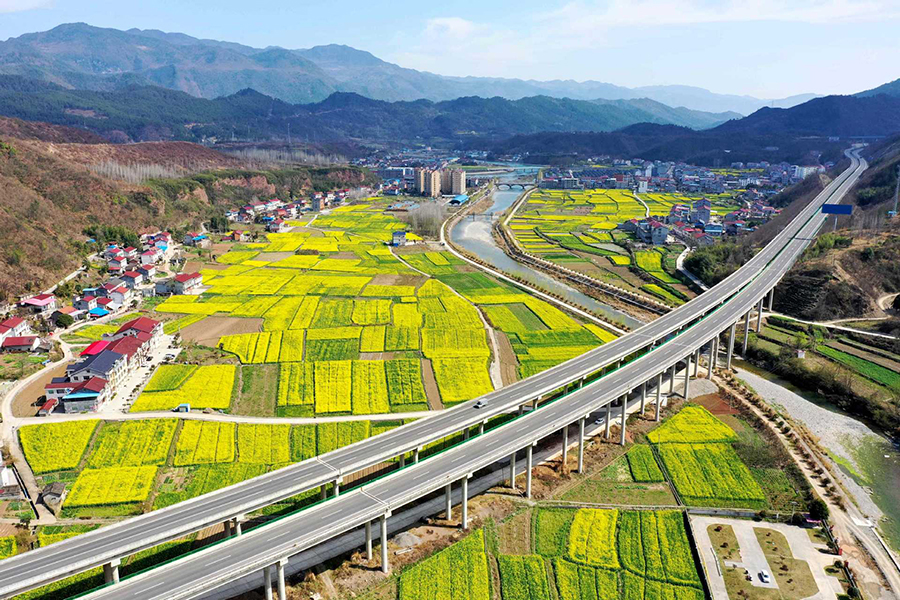
For instance, the Party’s emphasis on social governance—a concept which focuses on building a system where state, society and citizens collaborate to maintain order and deliver services. It’s a symbiotic network. The growing role of grid-style community management, big data-enabled early warning systems and social credit mechanisms exemplifies how governance is now understood as a distributed, technologically-augmented process.
The COVID-19 response, though not without its controversies, demonstrated the capacity of the CPC-led system to rapidly mobilize state and social resources. Likewise, the campaign against poverty, culminating in the declaration of eradication of extreme poverty in 2021, is a triumph of long-term governance, combining central directives with local initiative and social participation.
Rather than relying on ideological orthodoxy, the CPC today derives much of its support across the Chinese population from performance: from delivering rising living standards and modern infrastructure to improved public services and national pride. Its leadership has crafted a broad developmental narrative—the Chinese Dream, the great rejuvenation of the Chinese nation—that blends historical memory, geopolitical aspiration and promises of shared prosperity.
This performance-enabled public support is reinforced by continual institutional reform. The anti-corruption campaign, launched with renewed vigor since 2012, has not only disciplined Party members but also sent a signal to the public that the Party is serious about self-purification. Likewise, internal disciplinary bodies, Party schools and mechanisms of democratic centralism have been recalibrated to ensure unity while encouraging debate and policy experimentation.
This dual approach—of centralized leadership and distributed governance, and experimental implementation and execution—is reflected in how the CPC manages complexity. It allows for strong direction from the center, while encouraging initiative from provinces, municipalities and grassroots actors. This multi-level governance model is now fundamental in navigating emerging challenges: demographic pressures, technological disruption, inequality and global geopolitical turbulence.
A century-long experiment in institutional innovation
The CPC’s longevity is also being tested by external forces. The dynamics of the current China-U.S. relationship and broader shifts in the global order pose both threats and opportunities. Rather than retreat into defensiveness, the CPC has responded with a renewed focus on self-reliance in key areas: semiconductors, green technologies, advanced manufacturing and scientific research. This national security-development nexus further reinforces the Party’s claim to be the steward of China’s long-term destiny.
Indeed, the current phase of the CPC’s evolution is marked by what might be termed “governing for uncertainty.” Climate change, energy transitions, AI-driven economic disruption and potential geopolitical decoupling all require anticipatory governance. In this sense, the CPC is not simply reacting to crises; it is actively attempting to build institutional resilience for the unknown.
At the age of 104, the CPC is less a static ideological monolith than a complex, evolving system of governance and statecraft. This institutional elasticity—grounded in public support realized through performance, strategic foresight and a willingness to restructure itself—has enabled the Party to weather storms that have felled others.
As the era of American unilateralism ends, new challenges loom ahead. The Party has been a great enabler domestically. The transformation of a country from a war-torn backwater to a global power in the space of eight decades is a historically unprecedented accomplishment. At the same time, as China has developed, its role in the world also changes. And so, both the country and the Party are now focusing on how China can best fulfill its global role as a “great enabling power.”
At a time of widespread disillusionment with political parties worldwide, the CPC offers a case study in how a mass party can endure—not by clinging to rigid ideology, but by staying true to its purpose while continuously learning and adapting.
The author is an adjunct professor at Queensland University of Technology in Australia and a senior fellow at Taihe Institute, China.