The Global Rise of China’s High-Speed Rail Network
 Facebook
 Twitter
 Linkedin
 Google +
From Africa to Southeast Asia, China’s high-speed rail model shows how connectivity can drive development and why the future of global growth may increasingly run on high-speed rail.
China’s economic ascent is often symbolized by its towering skylines and extensive manufacturing capabilities. Yet, no achievement is more emblematic of its transformation than its high-speed railway (HSR) network. In less than two decades, China has constructed over 48,000 km (30,000 mi) of high-speed rail, more than the rest of the world combined, with plans to expand to 60,000 km (37,000 mi) by 2030. The network has become the backbone of travel for hundreds of millions of Chinese, shrinking distances between major cities and rural areas, boosting tourism, and stimulating regional industries. What began as a domestic venture has since evolved into a global initiative, with Chinese engineers, manufacturers, and financial institutions constructing railways abroad that showcase not only engineering prowess but also engines of growth and bridges of diplomacy.
China’s high-speed railway development did not happen overnight. Starting in the 1990s, Beijing launched a series of “speed-up” campaigns to modernize conventional rail lines, gradually increasing train speeds and reducing travel times. The turning point came in the early 2000s, when the country committed to building dedicated high-speed passenger lines in preparation for the 2008 Summer Olympics. On August 1, 2008, just one week before the games began, the first dedicated high-speed service opened between Beijing and the coastal city of Tianjin. The scale and pace of expansion that followed were unprecedented, accomplishing in little over a decade what took Europe and Japan half a century to achieve. Today, routes like Beijing–Shanghai, completed in under five hours, illustrate how mobility across the country has been redefined. This domestic success has emboldened China to export its model abroad, with results increasingly visible.
Exporting rail?from China?to the world
Africa provided some of the earliest examples of Chinese train adoption. The Addis Ababa–Djibouti Railway, a 752-kilometer line inaugurated in 2018, has transformed Ethiopia’s export capabilities from those of a landlocked economy into an African manufacturing powerhouse capable of shipping products to global markets. In its first six years, it transported 9.5 million tons of cargo and nearly 700,000 passengers between Djibouti and Ethiopia, generating approximately $200 million in revenue. In 2023 alone, income rose almost 40 percent year on year. By slashing transport times compared to trucking, the line has accelerated exports, boosted regional trade, and enhanced Ethiopia’s competitiveness.
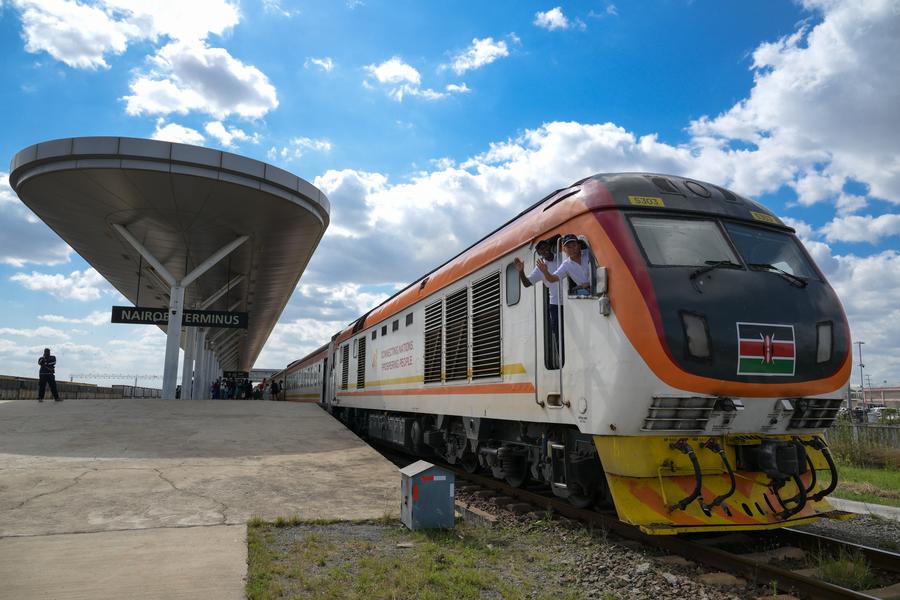
Another landmark project of Chinese rail investment in Africa is Kenya’s Mombasa–Nairobi Standard Gauge Railway (SGR), launched in 2017. Linking the capital with the nation’s busiest port city, the SGR has already carried over 14 million passengers, reducing travel times from 12 hours by road to under 5 hours by rail. Beyond domestic benefits, it underpins regional trade; goods destined for Uganda, Rwanda, South Sudan, and the DRC flow through Mombasa before reaching Nairobi and then onto East Africa. By easing road congestion, enhancing trade efficiency, generating jobs, and reinforcing Kenya’s strategic role, the SGR underscores both the demand for modern transport and the transformative potential of future regional extensions.
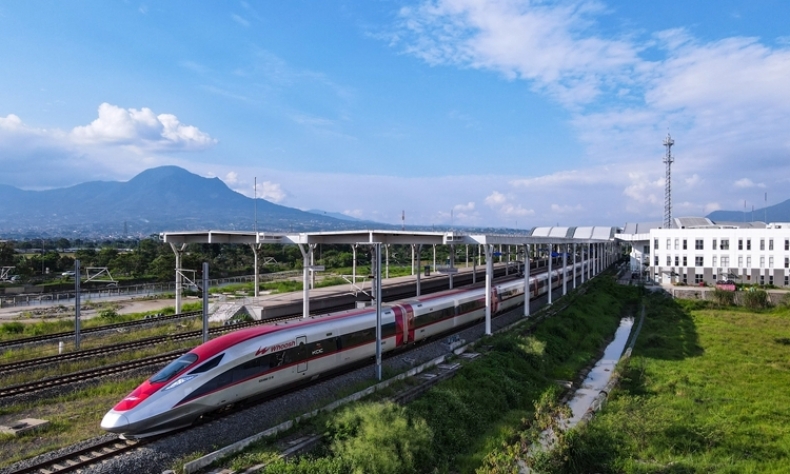
In Southeast Asia, China’s rail diplomacy has taken a significant step forward with the region’s first true high-speed rail line. The Jakarta–Bandung HSR, inaugurated in October 2023, has reduced the?travel time?between the Indonesian capital and Bandung, the country’s third-largest city, from over three hours by car to just 40 minutes. Within two years, it has carried more than 10 million passengers, with services expanding from 14 daily trips at launch to over 60 per day, often running at full occupancy. The high-speed rail line has reshaped commuting and tourism between the two cities, spurring property development, the creation of new business districts, and investment along the corridor. By cutting transport costs and stimulating local economies, it strengthens Indonesia’s long-term growth prospects, increasing travel and stimulating local economies. For Beijing, the project showcases its technical expertise, deepens economic ties with Southeast Asia’s largest economy, and opens the door for further cooperation on infrastructure across the region.
Perhaps the most illustrative case of how Chinese HSR can reshape economies is the Laos–China Railway (LCR). Since its opening in December 2021, the line linking Yunnan’s provincial capital, Kunming, with Laos’ capital, Vientiane, has carried nearly 60 million passengers, including travelers from over 115 countries. Freight volumes continue to surge, providing landlocked Laos with direct access to China’s vast consumer market and new export routes. The railway has boosted tourism, stimulated cross-border trade, and generated jobs and investment along the corridor, while also lowering transport costs for local businesses. For China, the project strengthens connectivity with Southeast Asia and reinforces regional economic integration, making the LCR both a lifeline for Laos and a strategic bridge for broader cooperation.
In Eastern Europe, the Hungary-Serbia HSR (Budapest-Belgrade), put into operation on October 3, 2024, is the first trunk high-speed railway in that region.
In the Middle East, the Istanbul-Ankara HSR in Turkey and Mecca-Medina HSR in Saudi Arabia are also landmark projects with Chinese investment, design, and construction.
Taken together, these projects underscore the tangible impact of China’s HSR investments abroad. They bring faster travel, open new trade routes, create jobs, and strengthen both cultural and commercial connections. What makes HSR unique is its visibility; unlike trade agreements or financial deals, rail lines are visible infrastructure, something people can ride, experience firsthand, and watch transform their communities.
The future of Chinese high-speed rail strategy
Looking ahead, China plans to expand its domestic high-speed rail network to 60,000 kilometers by 2030. Internationally, its focus is shifting toward sustainable, more adaptive approaches: tailoring financing to local needs, emphasizing environmental considerations, and ensuring lasting benefits for host countries. The broader lesson is clear: railways are more than steel and tracks. They build trust, strengthen economic ties, and create shared opportunities. From Africa to Southeast Asia, China’s high-speed rail model shows how connectivity can drive development and why the future of global growth may increasingly run on high-speed rail.