Better Explaining Chinese Political Values to the West
 Facebook
 Twitter
 Linkedin
 Google +
In short, ironically enough, what the West fears and dislikes about China is precisely what it understands about itself: it sees itself in the mirror but mistakes the image as its other, as its evil twin.
Editor’s Note: What are the values guiding Chinese development? This paper will help people better understand?the differences between the instrumental and intrinsic values guiding China’s development. It was first presented at the International Symposium on Chinese Path to Modernization and Global Development Initiative, held in Beijing on July 28, 2022. The original title of this article is?The Instrumental and Intrinsic Values of Chinese Development: Better Explaining Chinese Political Values to the West.?Authorized by the Academy of Contemporary China and World Studies, the paper is published by China Focus.
Intrinsic and instrumental values
The central questions before us are, what are the values guiding Chinese development and how should we communicate these to others, particularly in this new era emphasizing a shared future, but one in which “telling China’s story well” competes with a Washington-dominated discourse that aims to demonize Beijing?
To begin, we should first define what we mean by values and development.
By values, we will use two terms long familiar to philosophers—instrumental values and intrinsic values. These are the Western terms. In the Chinese tradition, these concepts correlate with instrument/device/qi?(器) and way/dao?(道)—first described in the Book of Changes?(Yijing/易經(jīng)) as “the?above-form is called the way/dao; the beneath-form is called a device/thing” (形而上者謂之道,形而下者謂之器).
In an ethical political order, instrumental values are things or devices, perhaps best described as “tools,” that are used to achieve intrinsic values, like justice. It’s important to distinguish between these two different kinds of values because too often in Chinese official discourse these values are conflated and not easily differentiated by foreigners especially. Consequently, this not only encourages misunderstanding, but it’s also useful for those who aim deliberately to undermine China’s image and stoke Sinophobia internationally.
The first instrumental value of New China is upholding the rule of the Party. This has been affirmed and reaffirmed by five generations of leadership. On the one hand, as the Party argues, history has repeatedly demonstrated the instrumental value of the Party as the tool for realizing China’s rejuvenation. On the other hand, while we understand that it’s important for some propagandists to assert the Party is sacrosanct, more accurately from a Marxist-Leninist perspective tools are merely devices used to achieve specific goals and objectives; and of the Party-state specifically, Marxism even envisions it “withering away” at some point in the distant future, eventually fulfilling its role as a “vanishing mediator” of human progress.
The Party itself knows it’s not sacrosanct because it repeatedly admonishes and disciplines itself, repeatedly valorizes reform and embraces its role as a change agent that can only lead change in China by also changing itself. It understands very well that catastrophic failure and systemic collapse are possible, that it must work hard to avoid this, and likewise continuously earn and re-earn its legitimacy by being a responsible steward of development, of increasingly meeting the people’s needs and expectations.
The first and over-riding intrinsic value of New China is justice. When we talk about overcoming the Century of Humiliation and re-emerging as a major power, when we talk about reestablishing sovereignty and maintaining security, when we talk about putting people first and fostering socialism with Chinese characteristics—including lifting people out of poverty, eliminating extreme poverty, beautifying the countryside, pursuing green development, advancing the rule of law, creating true multilateralism, promoting win-win solutions, building a shared future for mankind, and so on—what we’re always talking about are efforts to achieve the intrinsic value of justice.

Without question, the values associated with justice are sacrosanct. They have long been goals of Chinese development, past and present. Therefore, we can describe them in Hegelian terms as “concrete universals”—as unchanging truths—as indices of human progress and development even as standards and capacities for understanding and realizing these truths change through time and more broadly. Furthermore, they are not unique to China, we can find similar values across different cultures, places and periods of time. In this sense, they are transhistorical universals that must be historicized, and thus not imposed on others as a reductive universalism. Indeed, this understanding is at the heart of ensuring that Chinese development efforts correspond with “Chinese characteristics”—meaning, that they must fit China’s actual material conditions and situation and actively resist foreign universalisms that are either out of step with China’s needs or deliberately marching against them.
This brings us to our definition of development. As already suggested, development results if intrinsic values are achieved when and where they were previously absent. However, because we require instrumental values to help us achieve intrinsic values, we often also celebrate the achievement of instrumental values as being consistent with progress. For example, if we build a new school we might describe this as progress, and in terms of instrumental value it is. However, the reason we build the school, the reason we teach students, the reason we subject them to the rigors of testing and evaluation, is to achieve the intrinsic value of education, of liberating people from ignorance so they can better realize their potential and thus justice.
Fundamentally, the Chinese political system asserts itself as an ethical-political order predicated on Marxist-Leninist and, as some have argued, Confucian concepts of discipline. As Confucius understood, there must be a positive relationship between what one does and the virtue one seeks. However, this relationship is dialectical and transformative. In other words, while one can and must describe and follow specific rituals in a specific place and time, these rituals, or instruments, are always contingent. In this sense, Marxist-Leninist and Confucian concepts of discipline find a significant measure of accord.
For instance, in the Book of Rites?(Liji/禮記), Confucius describes many different examples of funeral rituals, guided fundamentally by the principle of whether they successfully achieve socially-necessary respect for the dead, including adequately addressing the wounds of community loss and the collective need for mourning. In the Chinese tradition, the proper ritual was always situationally determined. For example, how one conducts a funeral rite for a crown prince when passing through enemy territory is quite different from what one does when safely at home, and likewise how one handles the death of a peasant mother, a servant, and so on.
This is to say, there’s no fixed ritual, no fixed instrument that can always be used as a device to achieve a particular end.
These lessons remain deeply relevant today. China’s instrumental values, while quite important, while some of them endure, are in fact subject to reform, have been reformed extensively, and are only regarded positively if they remain useful in achieving intrinsic values like justice. This point in fact is likewise argued in various ways by leaders in Beijing, who, as already noted above, insist on basing solutions on China’s actual situation and conditions, continuously breaking new ground through reform when progress slows.

Why the West fails to understand
There are at least six reasons why the West generally fails to understand the differences between the instrumental and intrinsic values guiding China’s development. The first two we have already noted, but let’s recall them here briefly: first, in Chinese discourse, we frequently fail to distinguish them clearly and too often conflate them; and second, even when it should be clear that there are differences, those who oppose China intentionally conflate and mischaracterize them. These two reasons are simple enough to describe, and their remedies are found in the same solution: communicate more clearly, making it easier for others to understand and harder for others to make dishonest representations.
The remaining four reasons are a bit more complicated. The first of these is that Western political systems also frequently conflate instrumental and intrinsic values. For example, too often they mistake democracy as an intrinsic value, even when it fails to produce justice and instead creates the opposite. In fact, democracy, whether the sort practiced in the U.S. or the sort practiced in China, i.e., whole-process democracy, these are merely instrumental values, tools that are supposed to help us achieve intrinsic values like justice. However, if a particular form of democracy produces injustice, absolute or net, then we must seriously doubt even its claims to instrumental value. The same is true of markets, capitalism, and so on—points that have long resonated with Marxism, and were first acknowledged, in so many words, in the Communist Manifesto?in 1848.
The second of these includes a historical hostility to China, especially a rising China, and explicitly any system referencing positively Marxism, Leninism, Mao Zedong Thought, and others. The roots of this hostility go back hundreds of years, from early encounters during the Yuan and Ming dynasties, which provoked Sinophobia in the West. This fear then degenerated into the racial and ethnocentric biases associated with Orientalism that accompanied the West’s rise to global dominance starting with the Enlightenment and Industrial Revolution, leading to China’s Century of Humiliation. Both fear and bias returned in various ways when New China was established under a red flag; and they have accelerated in recent years as the West, especially the United States, has experienced relative but nonetheless exceedingly clear declines, as the covid-era above all demonstrates.
The third of these is due to one of the most commonly expressed principles of Western ethics, namely, that “the ends do not justify the means.” This value has long percolated in Western thought but was crystalized in reaction to Niccolò Machiavelli’s argument to the contrary. In short, as Machiavelli asserted in The Prince?(1532), ethically speaking a leader must do what is best for himself and his people even if the means are sometimes unsavory. And this lesson was above all clear for Machiavelli when the polis?was vulnerable to foreign aggression.
The fourth of these is rooted in a type of zero-sum Western thinking that perpetually seeks hegemony, that reductively insists that civilizational clashes and war are inevitable, because underneath it all, they wrongly claim, we are all guided by the same logic, the same instrumental means, and the same desires for the same ends. In short, ironically enough, what the West fears and dislikes about China is precisely what it understands about itself: it sees itself in the mirror but mistakes the image as its other, as its evil twin.
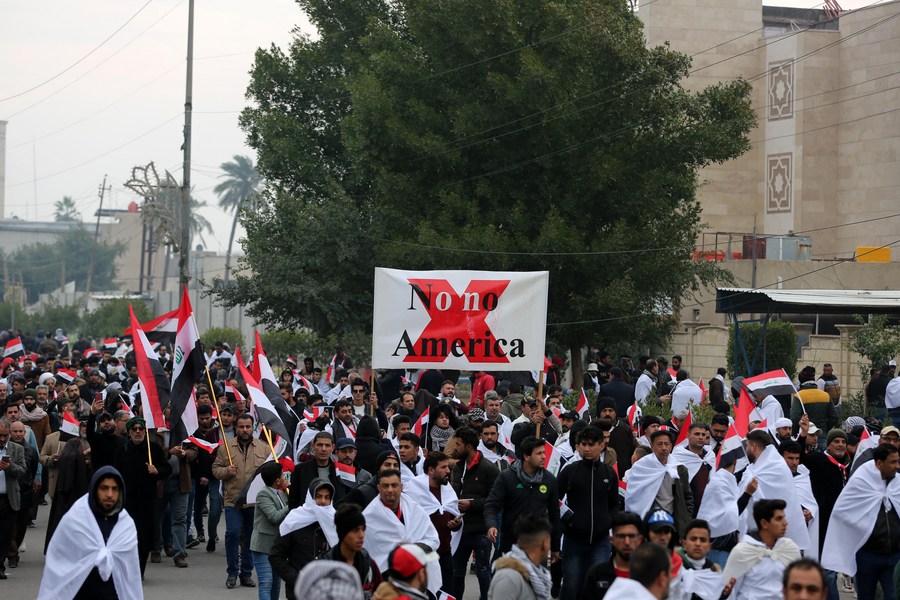
This kind of thinking produces perverse results. For example, the U.S. launched a two-decade war against Islamic countries, built secret prisons, used and even legally “justified” torture, invaded countries under false pretenses, lied about it to the United Nations, assassinated foreign leaders,?and set in motion regional devastation and hundreds of thousands of deaths, and yet falsely accused China of genocide given an admittedly robust but by no means comparable policing action in Xinjiang. The U.S. employs an extensive network of prison labor exploited by leading American firms, and yet it falsely alleges slave labor of Chinese Uighurs.
Of course, there are those who promote this nonsense despite knowing that it’s dishonest. Furthermore, a great number of those who credit these lies do so because they are inclined for self-serving reasons to believe China is worse than the U.S.—despite so much evidence to the contrary. Thus the U.S. wages war or proxy wars around the world for more than a century, but fearmongers that China will do the same, even using this as an excuse to provoke China into conflict, most especially over Taiwan. Again ironically, the U.S. portrays a provoked China as an international aggressor when Beijing merely defends its own sovereignty and security.
This is not a new trend. Washington routinely employs double standards and changes the rules of the game at will, with the intention of destabilizing others, provoking them into conflict, and then decrying them as aggressors who must be punished. If you play by the rules then you’re dominated, if you join the fight against them, then you’re demonized, likely isolated, and eventually decimated.
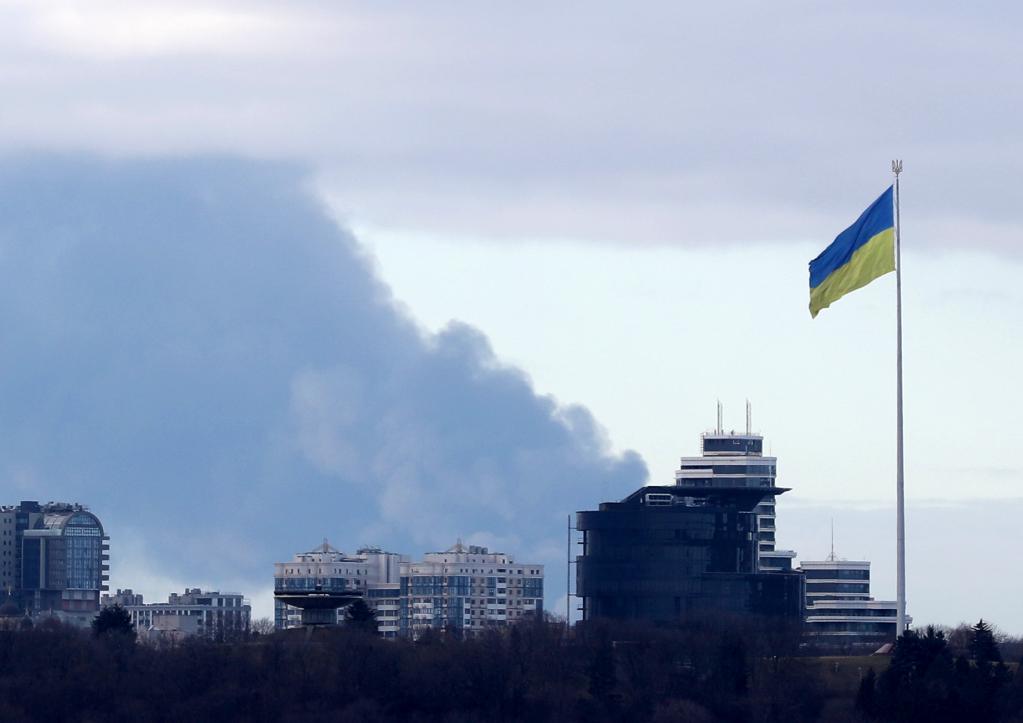
But lesson here runs deeper, on that’s been drawn clearest in recent time by those scholars who argue, for example, that terrorism, including that of Al-Qaeda, Islamic State, are not?ideologically the?“antithesis of?western neoliberalism,” as some in the West assert,?“but rather a dark reflection of its inner logic.” This Western construction of the Oriental other as its opposite, but confined to the same logic of being, creates a perpetual struggle that both favors and sustains imperial power and hegemony, including the normalization of crises that perpetually signal the world order is in danger to justify the violence of suppression that follows. And this is the same logic that guides U.S. support for separatists in Xinjiang, Hong Kong, Tibet and Taiwan, and likewise, America actively provoked tensions between Kyiv and Moscow through the years, and then fought a devastating proxy war in Ukraine that is used in turn to further “justify” expanding NATO while leaving the region in ruins and dependent on the U.S. to provide security that’s already lost.
This is the logic of the inevitably of conflict between China and the U.S., promoted by various Western intellectuals like Graham Allison’s ridiculous, ahistorical “Thucydides trap,” but also found in older but only superficially less innocuous discussions like Samuel Huntington’s normative “clash of civilizations.”
Concluding remarks
Let’s end this discussion by noting that this American worldview was played according to its logical ends with the U.S. “War on Terror,” culminating with Washington’s abrupt and destabilizing withdrawal from Afghanistan last year. The focus has shifted: America’s declared “strategic adversary” is now China. This was signalled firstly by the so-called “pivot towards Asia,” first described during the Obama Administration, and then advanced by Trump and Biden.
That the U.S. is largely responsible for radicalizing Central Asia in the first place, to create insurgencies against the Soviets in the late 1970s, and then invaded Central Asia to suppress the same after 9/11, with spillover effects for Xinjiang, and now supports Uighur Islamic separatists today in its efforts to demonize and destabilize China—this chain of events represents the long dark thread of U.S. imperialism, linking one era to the nest, one crisis to the next, and so on. Such are the instrumental and intrinsic values and what they mean for developing countries seeking justice. But these are not the values of Chinese development, nor does China have to play this self-defeating game, despite American attempts for force China down this path. Instead, China can be very clear about what its values are and do its best to avoid being drawn fatalistically into the American trap.
With this in mind, we know that Xi Jinping has insisted that we must do a better job telling China’s story well. And we know that U.S.-led efforts to poison China’s image have been damaging around the world. Thus it is incumbent on us to do a better job communicating the fact that China’s intrinsic values have so much in common with others. These values, again under the banner of justice, are at the heart of creating win-win solutions and a shared future for mankind, especially in a world struggling to deal with climate change, disease outbreaks, economic downturns, and war.
Additionally, we must do a better job of explaining that China’s instrumental values are not a threat to others. The Chinese political system is not exportable—it can neither be recreated by others who want to use it as a model to rule themselves nor can Beijing use it to rule others. And by no means is it part of a “communist conspiracy to rule the world,” as so many in Washington contend. Of course, these points are well-known in China itself and often repeated, and yet, for various reasons, the message is dismissed. We must work harder to ensure the message is heard.
The author is a professor of politics and international relations at East China Normal University and a senior research fellow with the Institute for the Development of Socialism with Chinese Characteristics at Southeast University.
The article reflects the author’s opinions, and not necessarily the views of China Focus.