The Key to Success: Four Decades of Reform and Opening Up
 Linkedin
 Google +
In the past four decades, the Chinese economy exhibited exceptional performance. How did China manage these remarkable achievements, and what experience can it share with other developing countries in this regard?
By Hu Biliang
At the end of 1976, China was, by and large, an agricultural country with a hefty 82.6 percent of its population living in the countryside, the majority in absolute poverty. After a decade of the “cultural revolution” (1966-76) that concluded in October that year, the Chinese economy had come to the verge of collapse, and its political system was in disarray. It was in these circumstances that the Chinese people took a hard look at the future of their country, and state leaders began to redesign development strategies, policies and plans.
After two years of deliberation and planning, and on the basis of best practices at the community level, a package of new economic policies, namely, reform and opening up, were unveiled at the end of 1978, steering China onto a new development path.
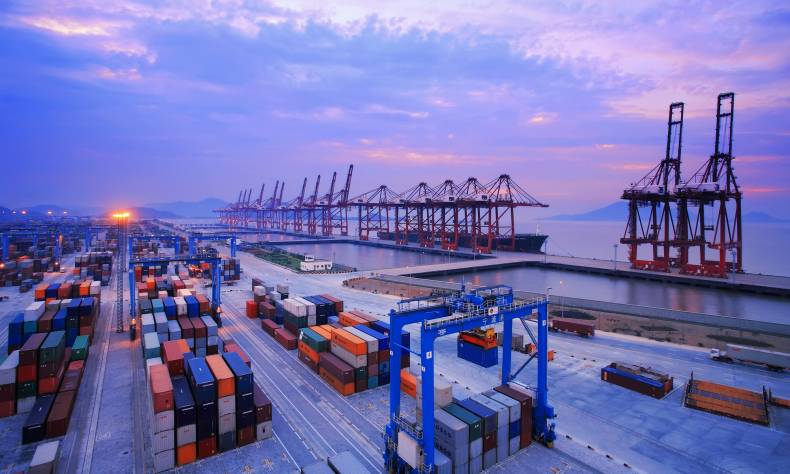
In the following four decades, the Chinese economy exhibited exceptional performance. Its manufacturing sector is now the world’s largest in terms of added value. Paid-in foreign direct investment has soared from nothing to $133.7 billion, the world’s third largest; and overseas direct investment surged from zero to $183.1 billion, second only to the U.S.
The 2016 Global Manufacturing Competitiveness Index of Deloitte gave the crown to China, which is the largest producer of 220 out of the 500 major industrial products, including iron and steel, coal, cement, electrolytic aluminum and refined copper. What’s more, its hi-tech industry has outperformed that of the U.S. in terms of added value and export value, indicating that China is approaching the pole position in hi-tech manufacturing.
With agricultural value-added output accounting for merely 8.6 percent of its 2016 GDP, China has completed its transformation from an agricultural to a manufacturing country. And with an urbanization rate of 57.4 percent, Chinese society has moved from the agrarian to the urban phase.
How did China manage these remarkable achievements, and what experience can it share with other developing countries in this regard? These are the questions this article tries to answer.

A path with Chinese characteristics
A development path unique to itself, referred to in the official jargon as socialism with Chinese characteristics. This path is, by nature, socialist and distinctive for its indigenous traits.
The socialist nature means it is a path to common prosperity. Though the government encourages some citizens to get rich first, its goal has always been to create a life of affluence for everyone. This is why the Chinese Government has put poverty alleviation high on its agenda, and rolled out a number of policies and measures in this regard. These efforts have paid off—700 million Chinese have risen above absolute poverty in the past 40 years, and the remaining 30 million are expected to follow suit by 2020.
In addition to poverty elimination, China has made great headway in improving people’s livelihoods, as manifest in four aspects. First, about 13 million urban jobs are created annually, keeping registered unemployment rate at 4 percent over recent years. Second, access to education has been remarkably expanded, reducing the illiteracy rate from over 30 percent to below 3 percent in 40 years. What’s more, the share of the labor force with higher education has surged from less than 0.5 percent to 25 percent. Third, social security has been significantly improved, with more than 85 percent of the population covered by a basic pension and over 95 percent carrying basic medical insurance. Fourth, urban-rural income disparity has been on a steady decline after peaking in the 2000-10 decade. The Gini coefficient has also shrunk since 2008, though it still hovers above 0.45, which means a high level of inequality.
The socialist nature is also defined and decided by the public ownership of land, development of state-owned enterprises and the government’s comparatively firm control over economic activities, among others.
China’s path of development shows unmistakable Chinese characteristics. First of all, its political system, including its electoral system, is different from that of Western countries. Taking into account its history, China doesn’t adopt the “checks and balances” model that divides government into legislative, executive and judiciary branches. Instead it follows the centralized, unified leadership of the Communist Party of China (CPC), with the National People’s Congress exercising the highest state power and other political parties actively participating in the deliberation and administration of state affairs. Second, the government plays a bigger role in all sectors of the nation, including boosting economic and social development. Third, the influence of historical, cultural and traditional factors is prominent. For instance, certain cardinal thoughts of Confucianism still hold sway over the relationship between the rule of law and rule of virtue, the relationship between order and rules, and the relationship between the social network and development. State institutions and moral norms are hence both at play in Chinese society.
Socialism with Chinese characteristics is the choice China makes in light of its own conditions. After decades of practice and improvements, it has developed unique advantages in coordinating the roles of the government and the market. The socialist system and institutions prove especially effective in pooling labor, material and financial resources for massive projects in national and regional development. There is, however, more to be done to coordinate the roles of the government and the market.

Market-oriented reform
It is known worldwide that China would not have arrived at where it is today without the reform first initiated by Deng Xiaoping. A key reason as to why it has been so fruitful is because this reform has been unwaveringly market-oriented.
In its early years, the People’s Republic of China copied the planned economy model of the Soviet Union, which led to increases in productivity and national economy but also concomitant problems. It later came to the understanding that solutions to these problems required introducing market-based systems and institutions. China therefore launched reform to develop the commodity economy by stimulating the production and exchange of goods. The reform then evolved to establish a robust market economy.
But in the course of these shifts, China didn’t abolish the systems and institutions of the planned economy entirely, and instead allowed the old and new systems and institutions to coexist and supplement each other. In this way government planning and market functioning were able to reach relative equilibrium in a dynamic process, in which the reform proceeded without disrupting social stability.
Forty years on, China’s market-oriented reform has come to a new stage, during which our goal is to deepen the reform so that the market can play a decisive role in resource allocation. By the measure of the Index of Economic Freedom of the Heritage Foundation, China’s economic freedom scores 57.4 on a scale of 100 in 2017. Its score was 52 back in 1995. Today no one in China disputes the market-oriented direction of the reform, a tour de force of the nation. Moving steadfastly in this direction, China’s reform will yield yet more fruits.
Opening wide
China’s achievements can also be attributed to its opening up, which has gone through three stages thus far. The first was during the 1980s and 1990s, when the goal was to solicit foreign investment in domestic infrastructure and industrial projects. Due to their geographical locations and historical and cultural heritage, coastal areas, especially Guangdong, Fujian and Shanghai, underwent the fastest growth during this period of time.
Guangdong, for instance, has long maintained affinity with neighboring Hong Kong through the close bonds between their people. After opening up kicked off, a spate of Hong Kong businesspeople opened factories in Guangdong. With industrial zones mushrooming across the province, a large number of hamlets were transformed into global manufacturing bases. One of them is Dongguan, now the world’s largest manufacturing base for electronic products. Foreign direct investment in China peaked in the late 1990s, securing the nation’s position as the world’s factory.
The second stage was from China’s accession to the WTO in 2001 to 2012. During this period it accomplished two missions—bringing its foreign trade and investment into compliance with international rules, primarily those of developed Western countries, and integrating itself with the international value chain. The first enabled the nation to be better accepted by the world at large, and the second made it an indispensable part of the global industrial and value chains.
Increasing integration with the world in that decade turned out to boost, rather than impair, the international competitiveness of Chinese manufacturing. Its value-added element surpassed that of the U.S. to be the world’s number one, and China’s GDP exceeded that of Japan to become the world’s second largest.
Opening up entered the third stage in 2013, marked by the nation’s proposal of jointly building the Silk Road Economic Belt and the 21st-Century Maritime Silk Road. Through the Belt and Road Initiative China hopes to bring into full play its advantages in funds, certain technologies and human resources of certain professions to advance interconnectivity of facilities, trade, investment, finance and people-to-people exchanges.
This initiative is expected to boost mutual support and synchronized development among participating countries, and hence safeguard world peace and realize open, innovative, and inclusive development globally. By increasing dialogues between civilizations, it aims to build a community with a shared future for mankind and create a better tomorrow for everyone around the world.

Focusing on growth
At the end of 1978, China put forward a package of new thoughts on national development. The most consequential of them was to shift the priority of the nation and the CPC from class struggle to economic development, which has since become the central task of CPC organizations and governments at all levels. In the following years, economic growth was the primary measurement of the development of a region and performance of an official, and the catchphrase “development is of paramount importance” appeared on placards all over the country. It became national consensus that development, synonymous with economic growth here, offered the solution to the problems facing China.
Seeing that manufacturing was a strong propeller of economic growth, China’s central and local governments put great emphasis on it. But in the 1970s, 1980s and early 1990s the country was short of money to build up this capital-intensive sector, which requires buying equipment and land, building factories and hiring workers. It therefore looked to foreign investors who were looking for opportunities in the Chinese market.
Foreseeing the multiple benefits of foreign investment including tax contribution, job creation, rising local incomes and consequently, spending, local governments raced to solicit foreign capital. To outmaneuver their peers, some regions offered extra favorable policies like tax cuts or breaks, discounted land prices or even free land. Some even went to the extent of lowering or scrapping environmental protection requirements.
While going after foreign investors, regional governments also jostled to woo domestic banks for loans to local enterprises. Meanwhile, they set up their own financing platforms to raise funds for local manufacturing and infrastructure to stimulate economic growth.
These efforts paid off. The economy rose briskly all over the country, with most regions reporting GDP growth rate higher than 10 percent. A spate of new infrastructure was completed, and manufacturing surged in both rural and urban areas. But the side effects soon emerged. The supply of low-priced or even free land to foreign investors led to a spike in land development for industrial projects and a steep fall in farmlands; and bribery was involved in many deals between local officials, foreign investors and banks. Realizing these problems, China began to correct its neglect of other sectors amid the frenzied pursuit of economic growth.
Political and social stability
A key factor behind the roaring pace of Chinese development in the past 40 years is political and social stability. It is acknowledged by both its own citizens and people of other countries that China is a safe and stable place. How is this possible for a country with the largest population on the planet that consists of dozens of ethnic groups? There are four reasons as I see it.
First, the CPC’s centralized, unified leadership is pivotal to political stability in China. The CPC is the sole governing party in China, and it is under its leadership that other political parties participate in state affairs. This structure underpins China’s political stability. Meanwhile, through its organizations that are found in every part of the nation and follow the same lines and rules, the CPC can execute the effective management of society. With a history close to 100 years, the Party has garnered rich experience in effectively governing the nation on the basis of national conditions. It is well worth noting that despite the mistakes it made in previous periods, such as the “cultural revolution,” the CPC has been able to keep abreast with the times, and is brave to correct itself, which wins it broad support among the Chinese people.
Second, the CPC organizations and governments at all levels give priority to social stability. A catchphrase in China is “putting stability above everything else.” It is a firm conviction of Chinese people that we could accomplish nothing without a stable society. In order to ensure social stability China has enhanced organizational work, extending social governance organizations all the way down to neighborhoods in both urban and rural areas. It also runs strong police and armed police forces to deter and combat subversive elements, defending social stability and order.
Third, China has sufficient fiscal resources to maintain stability. Financial support is always important.
Fourth, some elements of traditional Chinese culture also contribute to social stability. For instance, Chinese culture values harmony and amity, advocates the golden middle way and contentment, and discourages confrontation and extremism.
Drawing development plans
In any of the aforementioned realms, China devises and executes feasible plans on the basis of extensive field studies. There are plans for the Party’s work, for the government’s work, and for work in every aspect of society. There are long-term strategies for up to 30 years, medium-term schemes for five years, as well as yearly and quarterly action plans. They are all seamlessly connected, and what’s more important, implemented to the letter, turning ideas on paper into reality through concrete efforts.
Since 1949, China has made 13 Five-Year Plans. Each of them identifies major problems facing the nation during that specific period of time, sets goals for the next five years, and charts central policies and measures for their fulfillment.
The merit of these plans is that they keep the entire nation in the know about the clearly defined goals of future development, how to achieve them and how to avoid obstacles along the way. All Chinese people therefore pool their strength to accomplish these goals. Over the 60-odd years since the founding of the People’s Republic of China we have surmounted many problems and marched from victory to victory in the course of executing these plans, bringing our nation to where it stands now.
Last but not least, when we re-examine China’s development of the past 40 years, we should never overlook the hard work of the Chinese people. Any talk of China’s successful experience will be pointless if not recognizing the toils of its people. Meanwhile, the CPC is earnest to learn. It sums up and imbibes good experience—especially good ideas—of all humankind, makes innovations on this basis, and arms itself with this knowledge and these ideas in practice. Xi Jinping Thought on Socialism with Chinese Characteristics for a New Era is the latest theoretical innovation of the Party, and will guide the Chinese people in achieving more, and finally realizing the goal of national rejuvenation.
The author is dean of the Emerging Markets Institute, Beijing Normal University, and a professor of economics
This article was previously published by China Today