The People-First Approach to Urban Renewal
 Facebook
 Twitter
 Linkedin
 Google +
China has been actively promoting large-scale urban upgrading efforts, focusing on creating cities that are not only livable but also resilient and intelligent.
For decades, the Pengyi Community in Shanghai, constructed in 1958, was infamous for its 282 maze-like apartments—some barely larger than a parking space at 7.2 square meters. Families would be squeezed into windowless units, sharing communal bathrooms and navigating dark, narrow hallways.
In late June, 2,110 households in the community finally moved into their new homes, capping off a stunning 20-year redevelopment that revitalized the entire neighborhood. For Zhao Qiming, a retired teacher and 40-year resident of Pengyi, the transformation is night and day: “We used to line up for the bathroom every morning. Now, I have my own toilet, a balcony bathing in sunlight and even an elevator!”
Ongoing urban renewal and the renovation of aging, hazardous housing are essential for establishing a sustainable model for city development. China has been actively promoting large-scale urban upgrading efforts, focusing on creating cities that are not only livable but also resilient and intelligent.
On July 14-15, the Central Urban Work Conference took place in Beijing. President Xi Jinping, also General Secretary of the Communist Party of China (CPC) Central Committee, laid out the overall requirements, key principles and priority tasks for urban work at this key conference.
The meeting outlined the overall current requirements for urban work as well as those for the foreseeable future, including the construction of modern cities that are innovative, desirable to live in, beautiful, resilient, culturally advanced and smart, thereby forging a new path for urban modernization with Chinese characteristics.
Modern cities
China, a traditionally agricultural country, has seen its urbanization pick up after its reform and opening-up drive began in the late 1970s. More than a decade ago, the country’s urban population exceeded the rural population.
According to a report released by the National Bureau of Statistics last September, the number of cities in China had reached 694 as of late 2023. Among them, 29 cities had a permanent resident population exceeding 5 million, and 11 cities had more than 10 million residents.
The last Central Urban Work Conference was held in 2015, when China’s urbanization rate was 56.1 percent, with 770 million residents living in urban areas. By the end of 2024, around 67 percent of the country’s over 1.4 billion people—more than 940 million—were urban residents.
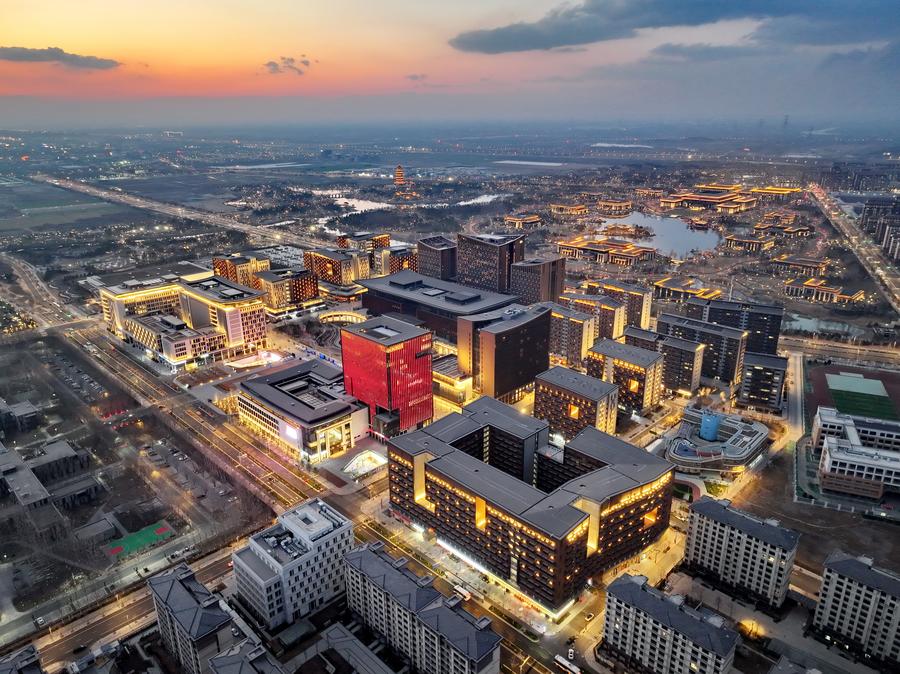
This year’s Central Urban Work Conference said key priorities for urban development include optimizing the modern urban system, building vibrant cities powered by innovation, and creating comfortable and convenient living environments, as well as promoting green, low-carbon and beautiful urban spaces.
The priorities also include enhancing urban safety and resilience, fostering cities that uphold moral integrity and social civility, and advancing the development of efficient and intelligent cities.
Xiong’an New Area in Hebei Province, located about 100 km southwest of Beijing, is much-anticipated as the “city of the future”—a model for green, smart and sustainable urban development that could redefine modern city life.
Established on April 1, 2017, Xiong’an aims to relieve Beijing of non-essential functions related to its status as the nation’s capital, while also advancing the coordinated development of the Beijing-Tianjin-Hebei region. The process explores a new model of development in densely populated areas.
Xiong’an extensively utilizes underground space for urban development. The rational development and use of underground space to alleviate congestion is an important aspect of building a smart city in the new era. A research team from Beijing University of Posts and Telecommunications has developed a navigation technology tailored to urban underground spaces like subways and tunnels. This navigation system achieves an accuracy of 2 meters—better than ground-level navigation—while costing only half as much as conventional underground navigation technologies to implement.
Xiong’an is also developing an industrial ecosystem that spans satellite Internet, spatiotemporal information, aerospace vehicles and the intelligent manufacturing of commercial satellites. So far, it has attracted around 60 enterprises in the aerospace information sector.
Other cities, too, are exploring intelligent paths of development. Baiyun District in Guangzhou, Guangdong Province, is the largest and most populous central urban area in the city. It has developed a smart management model that combines 5G technology with AI to enhance governance capabilities.
The model leverages the real-time data transmission capabilities of 5G technology. This system monitors over 65,000 public facilities and more than 26,000 sanitation vehicles, processing a daily average of over 20,000 work orders, ensuring clean living spaces and alleviating the burden on sanitation workers.
Chongqing Municipality, then, has adopted an AI-powered traffic management system that integrates data from 14 government departments, including public security, transportation and meteorology, and numerous AI models to optimize traffic signals in real time. The system boosts average peak-hour speeds by 5.5 percent, reduces accidents during major events by some 20 percent and cuts crowd dispersal times by 30 minutes after large gatherings.
Greener push
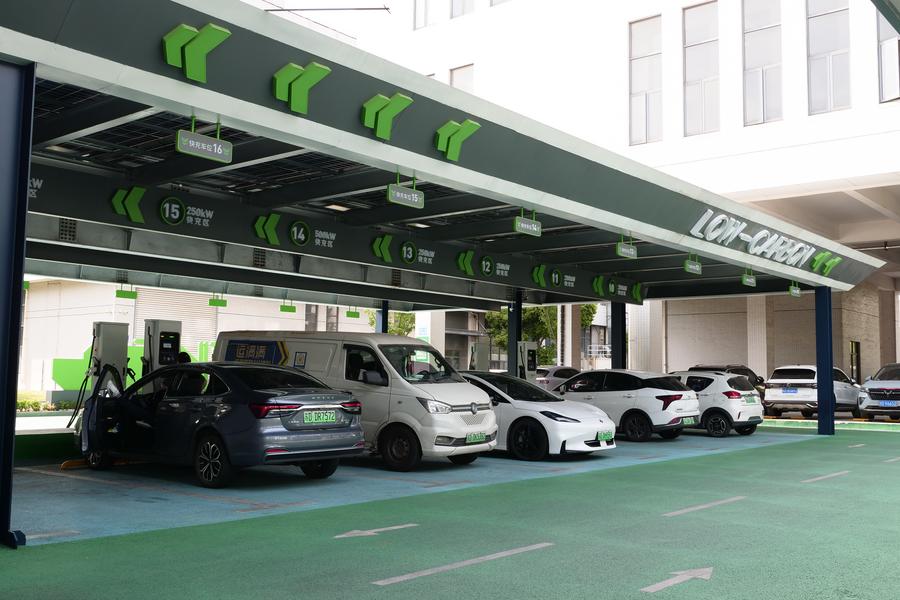
Building beautiful cities that are green and low-carbon is another top priority for the country’s urban development. More effective measures should be implemented to address challenges, including urban air pollution, the protection of drinking water sources and the treatment of pollutants. From zero-waste ecosystems to carbon-neutral infrastructure, cities are pioneering innovative solutions that merge sustainability with economic growth.
For example, the coastal city of Qingdao in Shandong Province has established itself as a model for circular economy practices, minimizing waste and making the most of resources. With dozens of national-level green factories, the city has reduced industrial waste intensity to the lowest rate in Shandong. At a smart recycling factory of China’s leading home appliances company Haier, 2 million old appliances
are dismantled each year, producing 30,000 tons of recycled new materials. This results in an annual carbon reduction capacity of approximately 17,000 tons, equivalent to planting 1.55 million trees.
Hangzhou in Zhejiang Province has turned to modern technology to protect the city’s ecology. The city’s Qianjiang New Town has created Zhejiang’s first “low-carbon street,” featuring green buildings, smart grids and a comprehensive electric vehicle infrastructure serving 15,000 residents. Meanwhile, the National Wetland Museum of China, located in the city’s southeastern corner of the Xixi National Wetland Park, educates over 70,000 annual visitors about conservation while operating on solar power and rainwater harvesting systems.
For the people
Greater emphasis must be placed on adopting a people-oriented approach, according to July’s Central Urban Work Conference.
From 2019 to 2024, China renovated 280,000 old residential communities, benefiting more than 120 million people, Vice Minister of Housing and Urban-Rural Development Qin Haixiang said at a press conference on a set of guidelines regarding the country’s urban renewal efforts in May. The nationwide program has thus far benefited 48 million households. The renovation program has upgraded 360,000 km of aging pipelines, added 3.87 million parking spaces and constructed 78,000 community service facilities for senior care and childcare.
Regions across China have also prioritized installing elevators in walk-up residential buildings as a key livelihood project. This initiative has particularly benefited the elderly and mobility-impaired.
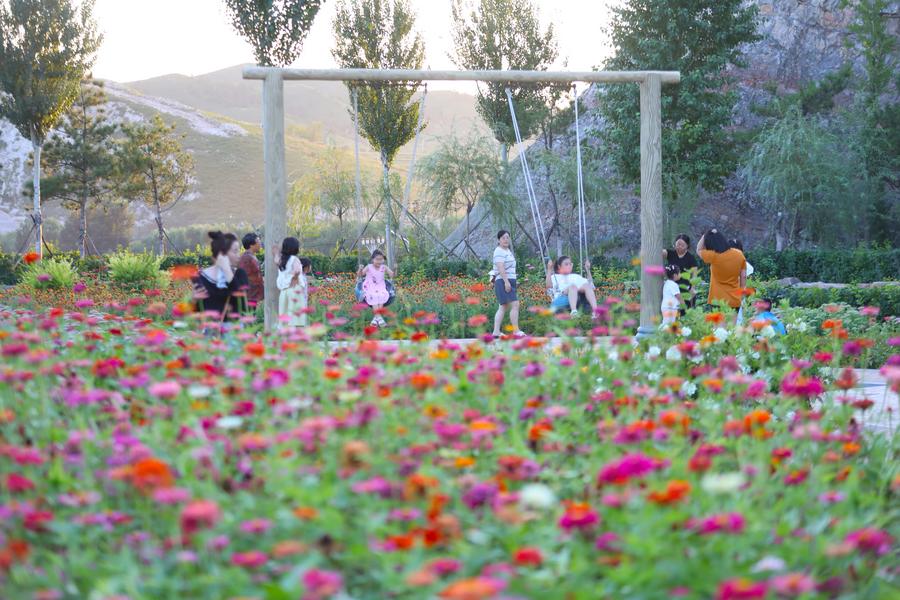
“This allows elderly people with mobility difficulties and trouble navigating stairs to now conveniently go downstairs to enjoy sunshine and chat with longtime neighbors,” Qin said. “This benefits their physical and mental health and has been widely welcomed by the communities.”
In its recent push, China on May 15?unveiled guidelines to increase policy and financial support for urban renewal projects, which can range from gas pipe updates and lift installations to the renovation of old factories into commercial zones.
The guidelines, issued by the?general offices of the CPC Central Committee and the State Council, the country’s highest state administrative organ, are designed to achieve key progress in the country’s urban renewal campaign by 2030. They also aim to improve safety conditions, enhance service efficiency, elevate living environments, develop business models and preserve cultural heritage.
“We’re working to improve the use of existing resources by renovating old factories, inefficient buildings and traditional commercial facilities,” Qin noted.
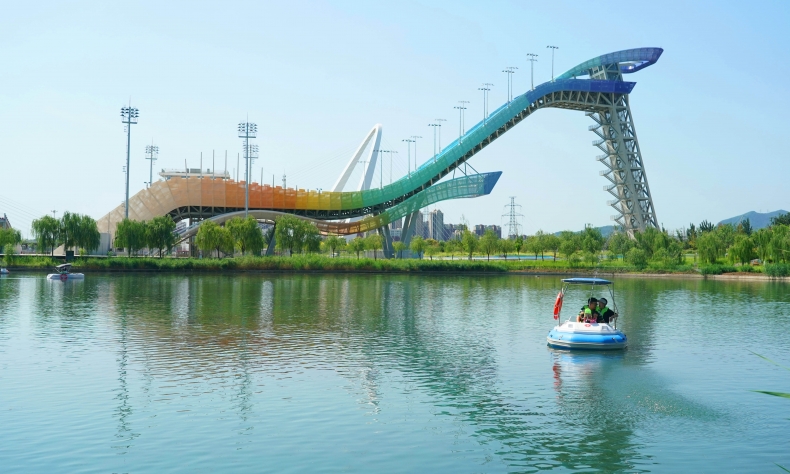
Shougang Park in the capital’s Shijingshan District, where the Beijing 2022 Olympic venue Big Air Shougang is located, has turned from an old factory area into a multipurpose urban entertainment facility.
Shougang Group, a leading steelmaker in China founded in 1919, once posted an annual output record of 10 million tons. As part of Beijing’s economic restructuring and pollution control initiatives, Shougang Group in 2005 started relocating its production base to the neighboring Hebei, where the steel conglomerate has managed to build high-end and eco-friendly iron and steel production lines.
Its steel-making operations in Beijing were halted in 2010, which left a large stretch of industrial heritage in the area. Deserted repair workshops, coking plants and shaft furnaces were renovated into a high-end industrial comprehensive service area integrating business, science and technology, sports, culture and tourism.
For instance, the park has repurposed its industrial structures into one-of-a-kind sports facilities that have become magnets for fitness enthusiasts. Its Olympic facilities have since 2022 become an extreme sports playground with adrenaline-pumping activities, including rope descents and rock climbing. In addition, residents can also enjoy free weekend concerts and explore science fiction-themed parks at the park, while having a decent meal or a cup of coffee at a stylish restaurant or café.
“My grandmother gets wide-eyed seeing the transformation of the Shougang Park,” Xiao Xie, a 20-year resident of Shijingshan, told Beijing Review. “My husband and I often take my son to the park. It’s our backyard playground with industrial charm.”