The Profound Significance of the Global Governance Initiative
 Facebook
 Twitter
 Linkedin
 Google +

Grounded in the current global transformation unseen in a century, this initiative responds to the international community’s call for a more just and equitable global governance system.
This?year marks the 80th anniversary of the victory in the Chinese People’s War of Resistance against Japanese Aggression and the World Anti-Fascist War. At this historical juncture, Chinese President Xi Jinping put forward the Global Governance Initiative (GGI) at the “Shanghai Cooperation Organization Plus” meeting in September. Focusing on the question of our times, essentially “what kind of global governance system should be built and how can global governance be reformed and improved,” the GGI embodies China’s solution to addressing the deficit in global governance.
China’s contribution to global governance
Eighty years ago, drawing painful lessons from World War II, the international community established the United Nations (UN) to make an institutional system for post-war peace and development, which signified a new mode of global governance. Eighty years later, the world remains fraught with instability. Regional conflicts have broken out one after another, anti-globalization sentiments are surging, international rules and the rule of law are lacking, and the deficits in peace, development, security, and governance are growing. Humanity once again finds itself at a critical crossroads. The UN, as the most authoritative mechanism for global governance and the multilateral system it represents are both facing grim tests.
On the one hand, hegemonism and power politics persist, while unilateralism and the law of the jungle are prevalent. These conditions severely impact the international system centered on the UN, undermine the international order based on international law, and erode the fundamental norms of international relations underpinned by the purposes and principles of the UN Charter.
On the other hand, global challenges are multiplying. Threats like climate change, public health crises, and the digital divide are becoming increasingly acute. As existing rules and mechanisms prove ineffective or dysfunctional, and governance gaps emerge in new frontiers such as artificial intelligence, cyberspace, and outer space, it is of utmost importance that new rules be established. This has rendered the global governance system even more rigid and incompetent.
At the same time, the rising Global South calls for more tangible representation as equal interlocutors in international affairs. Under these circumstances, questions like what kind of global governance system should be built and how can we reform and improve global governance have become great concern for the international community.
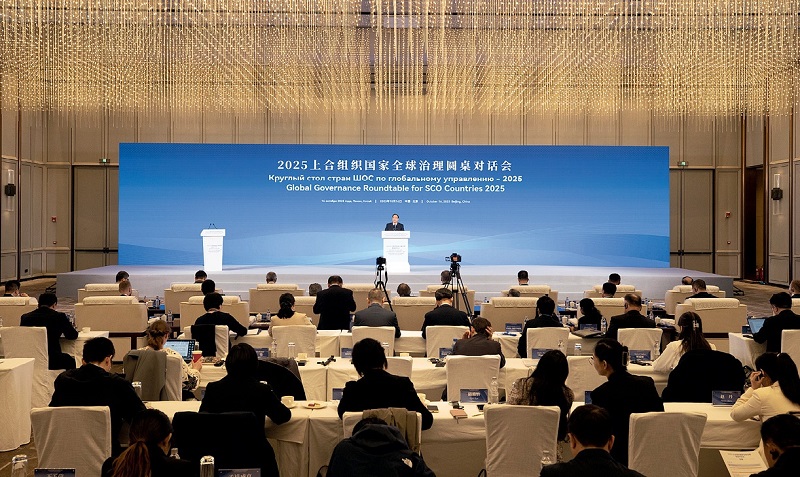
Since 2021, China has introduced a series of influential international public goods, including the Global Development Initiative, the Global Security Initiative, and the Global Civilization Initiative. They have provided theoretical references for how to address global governance issues and offered empirical insights for the proposal of the GGI – another major initiative that embodies the latest development of Xi Jinping Thought on Diplomacy.
The four global initiatives each have their own focus and are mutually reinforcing. They inject stability and certainty into a turbulent world in the realms of development, security, civilization, and governance, demonstrating China’s sense of responsibility in international affairs. These four realms are interrelated and complement each other: development serves as the foundation, security as the safeguard, civilization as the bond, and governance as the key. Together, they form a synergistic framework, providing a holistic approach to building a community with a shared future for humanity.
Profound philosophical significance
While chairing the 27th group study session of the Political Bureau of the 18th CPC Central Committee a decade ago, General Secretary Xi Jinping put forward the principle of extensive consultation and joint contribution for shared benefit in global governance, calling for more just and equitable global governance to create favorable conditions for China’s development and world peace. This principle has since become the fundamental guideline for China’s engagement in global governance. It also laid the theoretical foundation for the GGI.
At the “Shanghai Cooperation Organization Plus” meeting in September, President Xi elaborated on the key elements of the GGI, namely adhering to sovereign equality, abiding by international rule of law, practicing multilateralism, advocating the people-centered approach, and focusing on taking real action. These five elements constitute a close-knit theoretical framework, thereby clarifying the principles, methods, and pathway for improving global governance.
Sovereign equality is the primary prerequisite for just global governance. It is a most essential norm for regulating relations between states and the foremost principle upheld by all international institutions and organizations, including the United Nations. President Xi emphasized at the September meeting, “We should maintain that all countries, regardless of size, strength, and wealth, are equal participants, decision-makers, and beneficiaries in global governance. We should promote greater democracy in international relations and increase the representation and voice of developing countries.” His remarks underscore the inclusivity and democratic nature of the global governance system, which transcends the traditional Western-dominated model of global governance. The unfair situation where a handful of countries monopolize global governance should not continue any longer.
International rule of law is the fundamental guarantee for global governance. International law and rules should be formulated, upheld, and implemented by all countries, with no exceptions.
President Xi emphasized, “The purposes and principles of the UN Charter and other universally recognized basic norms of international relations must be observed comprehensively, fully, and in their entirety. International law and rules should be applied equally and uniformly. There should be no double standards, and the house rules of a few countries must not be imposed upon others.”
This view underscores the importance of safeguarding the authority and integrity of international law. Major countries, in particular, must take the lead in championing and upholding international rule of law, rejecting exceptionalism and the law of the jungle, and preserving international fairness and justice.
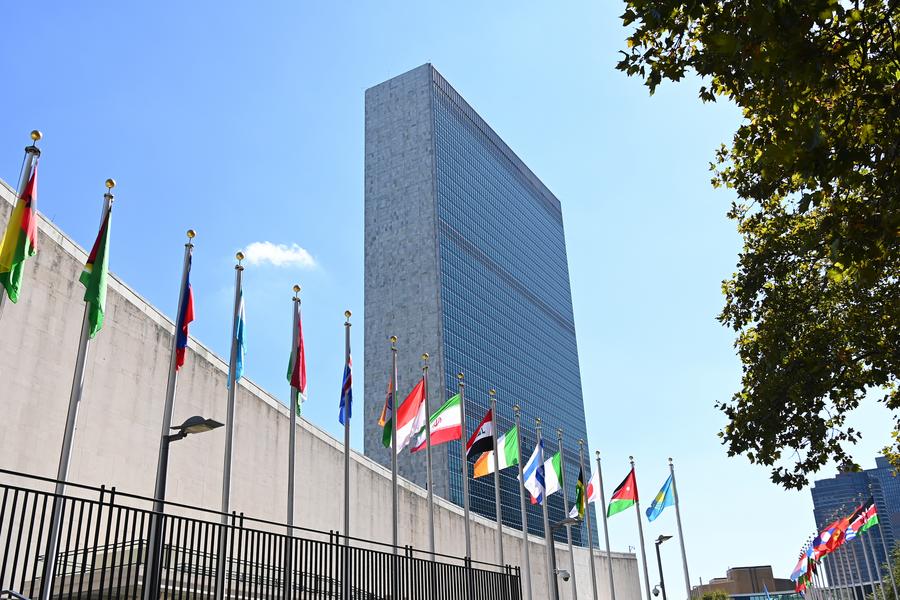
Multilateralism is the pathway for global governance. Global governance is a matter for all, affecting the vital interests of every country. It relies on coordination and cooperation, not unilateralism or bullying. President Xi articulated, “We should uphold the vision of global governance featuring extensive consultation and joint contribution for shared benefit, strengthen solidarity and coordination, and oppose unilateralism.” True multilateralism means that international affairs are addressed through consultation among all nations, instead of being dictated by those with “bigger fists.” The UN is the core platform for practicing multilateralism and advancing global governance. Its role must be strengthened, not weakened. This view explicitly confronts unilateralism and hegemonic politics, underscoring the collective and cooperative nature of global governance.
The people-centered approach represents the value and goal of global governance – to turn the people’s aspirations for a better life into reality and to jointly build a world of prosperity, health, and well-being for all. As President Xi said, “We should reform and improve the global governance system to ensure that the people of every nation are the actors in and beneficiaries of global governance, so as to better tackle the common challenges for mankind, better narrow the North-South gap, and better safeguard the common interests of all countries.” Only when the public have greater confidence and stable expectations can the global governance system win broad support and function effectively. This people-centered approach reflects an inclusive global governance whose outcomes benefit all countries and all peoples.
Focusing on taking real, tangible actions is an essential principle of global governance. The vitality of global governance stems from practice, relies on action, and is ultimately judged by results. The global community should address both immediate and long-term needs, solving issues of concern for all countries, especially developing nations. President Xi noted, “We should adopt a systematic and holistic approach, coordinate global actions, fully mobilize various resources, and strive for more visible outcomes. We should enhance practical cooperation to prevent the governance system from lagging behind or being fragmented.” The effectiveness of global governance fundamentally depends on its ability to solve real-world problems. Highlighting the practical nature and tangible results of global governance, this principle ensures that global governance moves beyond empty rhetoric and toward concrete solutions.
A community with a shared future
Today, changes of an unprecedented magnitude not seen in over a century are accelerating across the world. Complex problems are emerging one after another. And issues of a grim nature are becoming more acute, such as security disarray, development imbalance, and governance failure. All these have resulted in a sharp increase in global uncertainty and instability. Facing stiff challenges in the global governance system, the international community is now standing at a crossroads.
The GGI provides not only theoretical guidance for China’s major-country diplomacy with its own characteristics, but also a Chinese approach to reducing the global governance deficit. It enriches the knowledge and theories of global governance with Chinese wisdom.
The GGI provides theoretical underpinning for the vision of building a community with a shared future for humanity. Its implementation will reinforce the institutional foundation and chart the right path for this vision.
The GGI will steer the international order toward greater fairness and equitability. As a permanent member of the UN Security Council and the largest developing country, China firmly upholds the purposes and principles of the UN Charter.
The GGI breaks the Western monopoly in legal discourse and provides new perspectives and solutions for reforming the international legal system. It is open to all countries and regions worldwide and against hierarchical divisions or bloc politics, advocating for sovereign equality, inclusiveness, and shared benefits. It calls for unified, equal application of international law and rules, opposing double standards. By implementing the GGI, the international community can reform outdated international legal institutions, develop new international norms, and hence advance international rule of law.
New norms for international relations
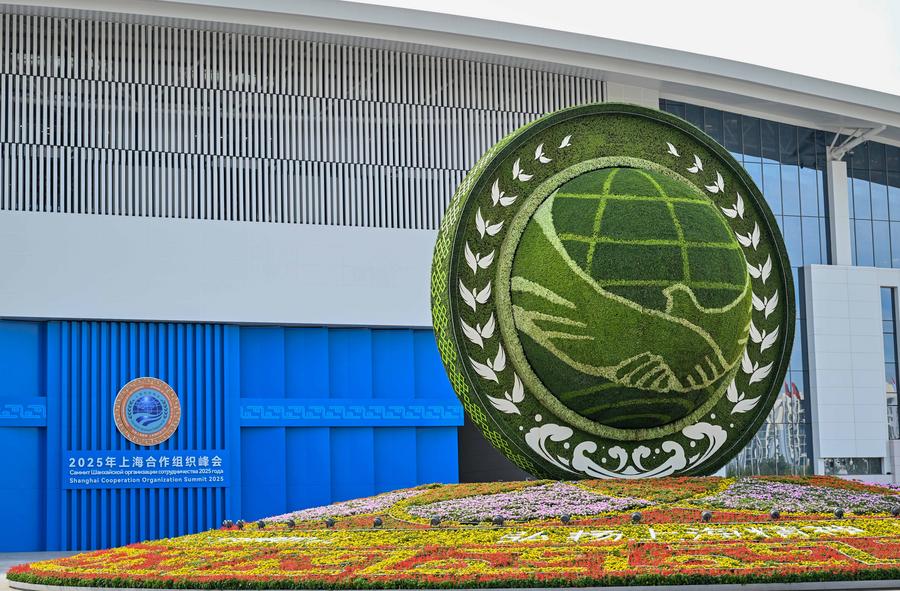
The SCO can become a model for implementing the Global Governance Initiative. Adhering to the Shanghai Spirit of mutual trust, mutual benefit, equality, consultation, respect for diversity of civilizations, and pursuit of common development, the SCO promotes joint deliberation on regional affairs, co-building of platforms and mechanisms, and sharing of cooperation outcomes. It has initiated many new global governance concepts and put them into practice. As a result, it has made remarkable achievements in combating terrorism, separatism, and extremism, safeguarding energy and information security, enhancing cooperation on public health, and fighting drug trafficking and transnational organized crime.
At the Tianjin Summit, leaders of SCO member states witnessed the inauguration of the SCO Universal Center for Countering Security Challenges and Threats, the Center for Combating Transnational Organized Crime, the Information Security Center, and the Anti-Drug Center. These initiatives will serve as an example for advancing the development and reform of the global governance system.
In the Concept Paper on the Global Governance Initiative, for instance, China declared that it will “work under the framework of the GGI with all parties to enhance policy communication and coordination, so as to build extensive consensus and enrich the methods and pathways for reforming and improving global governance … Priority will be given to areas where governance is in urgent need and scant supply, such as the reform of the international financial architecture, AI, cyberspace, climate change, trade, and outer space.” By increasing communication and cooperation in these areas, China will help build consensus and bring about bountiful achievements.
The initiative is warmly received by the international community. Many state leaders and heads of international organizations have expressed their support for the principles advocated by President Xi, including international rule of law, multilateralism, a people-centered approach, and extensive consultation and joint contribution for shared benefit. In implementing the GGI, China will enhance policy communication and coordination with all parties through multilateral international organizations and institutions like the UN to bring these principles to fruition. Through collective efforts, the international community will surmount the risks and challenges of our times.
Grounded in the current global transformation unseen in a century, this initiative responds to the international community’s call for a more just and equitable global governance system. It also demonstrates the historical responsibility of China as a major country, who has all along been a staunch builder of world peace, contributor to global development, defender of the international order, and provider of public goods.
Looking ahead, the GGI is poised to inject new momentum into the reform and improvement of the global governance system, offer new solutions to address our common challenges, and make new contributions to building a community with a shared future for humanity.

Liu Qing is vice president and senior research fellow of China Institute of International Studies.?