The Quest for Order in a Multipolar World
 Facebook
 Twitter
 Linkedin
 Google +
The rise of the Global South is injecting new momentum into global governance discussions, pushing for frameworks that better reflect the interests and needs of a broader, more diverse set of global players.
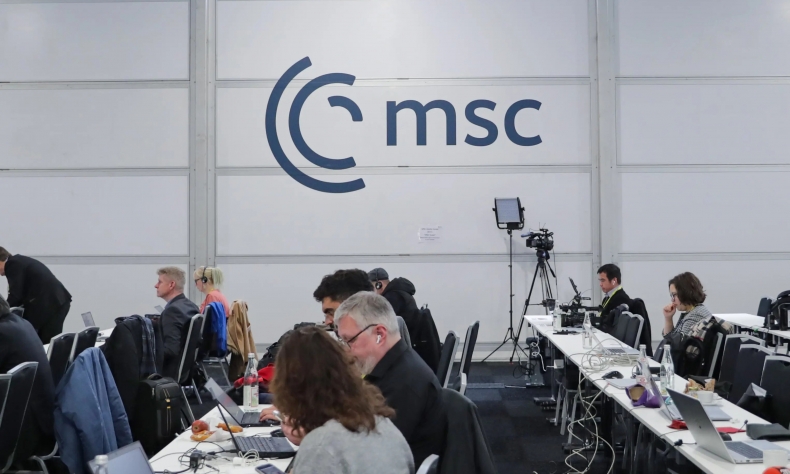
The 2025 Munich Security Conference (MSC) was held from February 14 to 16?in Munich, Germany, amid profound shifts in global power dynamics. Since its inception in 1963, the MSC has served as a vital forum for addressing the pressing security issues of the time. This year, the conference drew the participation of over 60 heads of state, as well as 150 ministers, underscoring the growing importance nations attach to participation in shaping the future of international relations.
The discussions at MSC 2025, along with the accompanying MSC Report 2025, highlighted the profound transformations underway in world order, including the ongoing Russia-Ukraine conflict, evolving U.S. policy and the growing influence of the Global South. The report’s title, Multipolarization, reflects the undeniable reality of a world increasingly defined by a shift toward multiple centers of power.
At the heart of the conference’s deliberations was a clear message: The international order is entering a period of profound change, one where established rules are being reevaluated and reshaped. As the Global South, including China, asserts its influence, the contours of this new global architecture are beginning to take shape, with implications that will emerge across the world stage for years to come.
Rupture of the West?
The U.S. stands at a geopolitical crossroads, caught between two competing realities. On one hand, it has become increasingly clear that the world is no longer defined by a unipolar, American-led order, a shift that even the U.S. acknowledges. On the other, the U.S. remains hesitant to relinquish the Cold War-era dominance?that has long shaped its foreign policy. The latest manifestation of this paradox emerged during a controversial speech by U.S. Vice President JD Vance at the MSC, where he harshly criticized Europe for what he called “backsliding” on individual liberties. This sharp critique only underscored the growing transatlantic rifts, pointing to a deeper strain in the longstanding alliance between the U.S. and Europe.
According to a Reuters report published on February 15, the European Union’s foreign policy chief, Kaja Kallas, described Vance’s speech as an attempt to provoke Europe. “It seemed they were trying to pick a fight with us, and we have no desire to quarrel with our friends,” Kallas said.
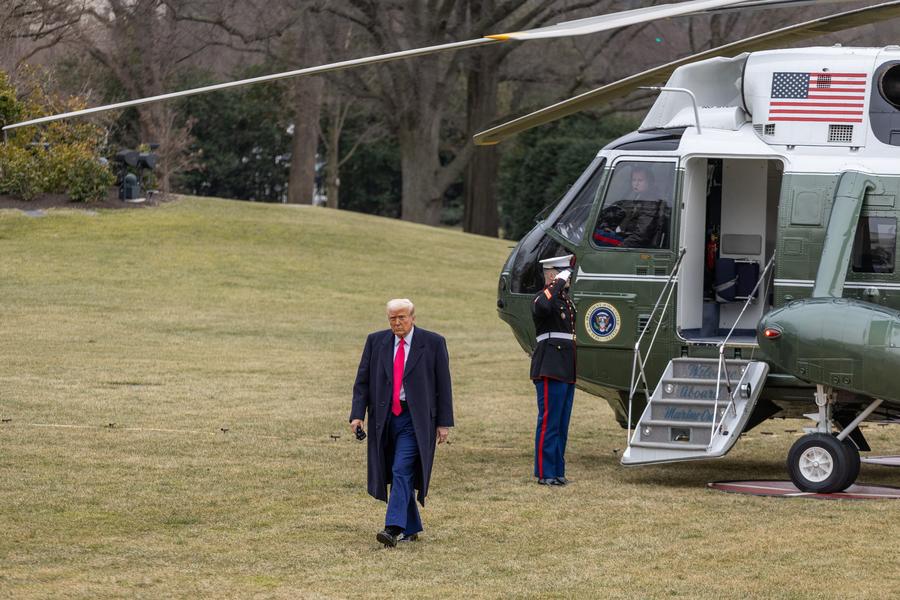
Since its formation in 1949, the North Atlantic Treaty Organization (NATO) has been the cornerstone of the Western alliance, led by the U.S. However, following Donald Trump’s reelection, Europe is now left to grapple with an uncertain future. Trump’s administration is pursuing policies aimed at scaling back U.S. involvement in Europe, including efforts to end the prolonged Russia-Ukraine conflict and alter U.S. support for Ukraine and NATO. As a result, Europe finds itself visibly marginalized in key global discussions.
This shifting landscape was starkly illustrated on February 18, when?delegations from the U.S. and Russia held a meeting in Saudi Arabia without the participation of representatives from Europe and Ukraine. The talk was widely seen as signaling the start of official U.S.-Russia diplomatic?negotiations aimed at reaching a peace agreement, further diminishing Europe’s role in the process.
For Europe, the implications are deeply unsettling. The MSC’s security debate revealed the increasing unease about the future of transatlantic relations. European leaders are struggling to balance their reliance on NATO with the growing imperative for strategic autonomy. Many fear that under a more isolationist U.S. agenda, Europe may be gradually left to fend for itself in terms of security. Yet, the task of building a unified European defense framework remains a formidable challenge. Europe’s military capabilities are still fragmented, with defense industries lagging in critical areas such as interoperability and rapid response.
This sense of vulnerability is compounded by Europe’s economic uncertainties. On February 10, Trump signed an executive order imposing a 25-percent tariff on all steel and aluminum imports to the U.S., and announced it would begin levying “reciprocal tariffs”—matching existing tariffs other countries place on goods from the U.S.—exposing key European sectors such as automotive, luxury goods and agriculture to increased risk. Just days later, the European Commission condemned the move, calling it “unjustified” and “a step in the wrong direction.”
These economic pressures are part of a broader set of challenges facing Europe: Slow economic growth, rising populism and a growing influx of refugees and migrants have all strained the continent’s social fabric. These interconnected issues have created economic stagnation and social division.
According to Josef Gregory Mahoney, a professor of politics and international relations at East China Normal University, Trump’s approach is often more about playing for leverage and gauging reactions through staged aggression than conveying genuine intent.
“Do we see a real rupture that necessitates a paradigm shift in European thinking, particularly in terms of providing for security? Likely. Or is he deliberately threatening worst-case scenarios to gain leverage in negotiations on NATO, trade, Ukraine and more? Probably,” Mahoney said in an interview with CGTN, the international division of state broadcaster China Central Television, on February 17. “Both are strong possibilities, and both carry significant costs and risks.”
From silent majority to agenda setters
As debates over transatlantic relations between the U.S. and Europe continue, global governance is increasingly shifting “southward.” For decades, the Global South was often relegated to the role of a passive recipient of aid, its interests largely sidelined in global policymaking. However, the 2025 MSC report highlights a dramatic shift in this dynamic, with the Global South now emerging as a key agenda-setter on the global stage.

The International Monetary Fund’s October 2024 report reveals that the economic growth rate of emerging markets and developing countries is projected to reach 4.2 percent in 2025, significantly outpacing the 1.8-percent growth forecast for advanced economies. This shift in economic momentum reflects broader changes in global governance and a departure from Western-dominated institutions toward a more diversified and inclusive governance model. The 2025 MSC report also highlights the growing influence of BRICS, noting that, in terms of purchasing power parity, the group surpassed the G7 in 2018.
Since 2022, the MSC has increasingly invited representatives from Global South countries to participate, seeking the support of this “silent majority” in the Russia-Ukraine conflict. This year’s MSC report further underscores the rising prominence of the Global South by providing detailed chapters on key countries such as China, India, Brazil and South Africa. According to the organizers, around 30 percent of the conference’s speakers this year hailed from Global South nations, reflecting the growing influence of these countries in shaping global?discussions.
The MSC report highlighted a gap in global governance, emphasizing that current mechanisms fail to adequately represent the perspectives of developing nations. As the Global South gains influence in a multipolar world, issues like poverty reduction and food security are expected to take a more prominent role in future MSC.
This shift is reflected in the Munich Security Index (MSI), a data set on global risk perceptions which, released as part of the report, reveals a stark contrast in optimism between emerging economies and established powers.
The MSI data show that respondents from countries like Brazil, India, China and South Africa, are generally more optimistic about their countries’ future security and economic prospects than those in Group of 7 (G7) nations. For instance, majorities in China and India believe their nations will be better off in the next decade, while Brazil and South Africa show mixed outlooks.
In contrast, only the U.S. among the G7 countries anticipates improvement, while the other members expect a decline. This divergence signals how emerging economies are charting a more optimistic path, as opposed to the growing sense of uncertainty within the G7, reshaping global security and governance dynamics.
Beyond poverty reduction and food security, countries in the Global South are increasingly asserting their influence in international rule-making. Through mechanisms such as South-South cooperation and regional integration, developing nations are driving reforms in global governance systems. This trend not only signals a realignment of economic power but also represents a growing effort to create a more equitable and inclusive global order. The rise of the Global South is injecting new momentum into global governance discussions, pushing for frameworks that better reflect the interests and needs of a broader, more diverse set of global players.