The Road to the Shanghai Communiqué and Beyond
 Facebook
 Twitter
 Linkedin
 Google +
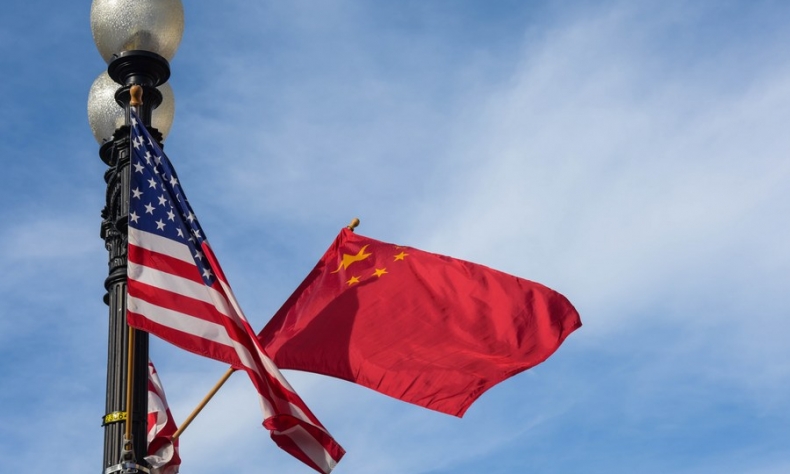
We need to reengage with China on practical, not political, projects that collectively are meaningful for both societies, such as mitigating climate change.
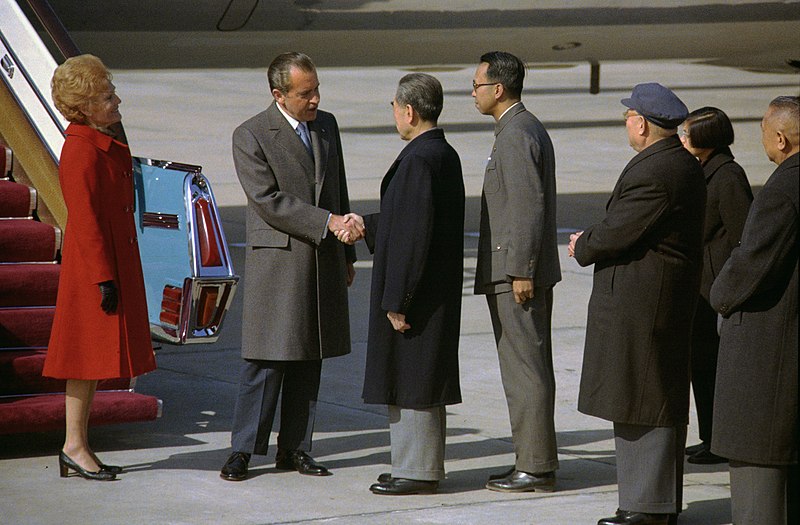
The Shanghai Communiqué, a path-breaking accord signed by then U.S. President Richard Nixon and China’s Premier Zhou Enlai on February 27, 1972, marks a defining moment in the modern history of both the United States and the People’s Republic of China; 50 years on, its significance endures. Both nations are much changed and the world has grown very small in the interim. In 1972, from the American perspective, China was a virtual unknown outside a small group of Americans with true first-hand knowledge of its people, history and culture–just like now.
The political backdrop
In 1972, the U.S. found itself embroiled in a war in Asia which was waged in every American’s home day and night. Many American cities still bore the scars of violent racial upheaval from the late 1960s, political upheaval of the established order was underway, and citizens were increasingly concerned about their government’s ability to deliver the stability they were demanding.
The odds that China was the obvious choice for a political high-stakes wager seems clear in hindsight, but wasn’t to those alive in America at that time. The Soviet Union still occupied Eastern Europe, as they had since the end of World War II, and appeared a threat at every turn. Americans thought of China and Russia as one block: solid and united in their wish for bad things to befall the U.S.
The political structure of China was arguably not entirely sure what to think when Dr. Henry Kissinger secretly dispatched our ambassador to Pakistan to Beijing to float the idea of some sort of bilateral overture: never intended as “rapprochement.” The signal came back, “we may listen if it is of interest to us.” That message was conveyed to Kissinger and the White House.
In Washington, the old State Department China hands (many born in China) and internationalist wing Republicans (now extinct) were pleased for anyone to initiate a thaw because they knew once the door was no longer shut–even slightly ajar: China would take it from there. Maybe it could be split off the Soviet Bloc–that was the American hope.
First, China needed Nixon, in person, to demonstrate the reality: a hardline anti-communist who was the only credible person in America who could prove he had seen the Chinese up close and personal and deemed them “OK” for America to deal with. Nixon had served his purpose and validated the obvious.
Reagan gets on board
After the Shanghai Communiqué was signed and toasted, the Chinese proceeded with caution because they too could read the Washington Post and knew they did not want to go down with Nixon’s ship. Over the following six years, the gradual thaw gathered strength in commercial relations creating Chinese opportunities to satisfy American consumer wants and U.S. businesses to help rebuild China’s industrial base.
It would take President Ronald Reagan, a similarly-placed early anti–communist, yet a supreme realist, to send the First Presidential Trade Mission to China in 1984. An American reality is that commercial achievements are tangible, whereas political achievements are vague and easily forgotten.
Earlier in 1984, President Reagan had traveled to China and, like Nixon before, helped authenticate, by their prior political reputation, that China was okay for American business. Deng Xiaoping, then leader of the Communist Party of China and the country’s first post-Mao leader, had said so himself. China, in turn, would tap into the American power to help drive its economic (not political) goals.
I personally know how important the Presidential Trade Mission approach was as I was tasked as a young White House Staff member to help organize it together with the International Trade Administration of the Commerce Department. I had previously worked in the State Department’s Economic and Business Affairs Bureau. The National Security Council and White House senior staff were satisfied and agreed it could proceed with thorough preparation and without raising too many expectations.
Much as during the initial Shanghai Communiqué era a decade earlier, a new president (Reagan) was focused on domestic economic and political matters. American commercial interests were longing to establish themselves on the Chinese market as they had been for two centuries, but this time around needed some air cover. Many of the concerns Nixon had faced regarding any “future Chinese intentions” had been better understood by President Reagan’s time, but the power of China to help make a better America was not yet evident.
Past to present
China, a desperately poor country in the early 1980s, was not considered a high-level priority since global attention was still consumed by the Soviet Union. Then U.S. Secretary of Commerce Malcolm Baldrige was a man of impeccable intellect and manners; himself previously a member of America’s commercial elite. His counterpart in China was Madame Chen Muhua of the Ministry of Foreign Economic Relations and Trade, with whom he had a genuine and fond relationship.
The Presidential Trade Mission was mostly formed around aerospace and telecommunications services and for most members it was the first time they had the opportunity to visit China and meet Chinese people in similar industrial sectors. I know skepticism was rife prior to arriving in China, but that evaporated shortly after touching down in Shanghai.
China and its people made a remarkable impression. There was also a shared sense to help China work toward its push for modernity. For many, the Presidential Trade Mission in 1984 was a catalyst or a signal to letting commercial activities lead and political expectations (upon which we cannot rely) evolve very slowly without arbitrary deadlines and a need for immediate gratification.
I think based on my own experiences, and 38-year-long reflection, we need to reengage with China on practical, not political, projects that collectively are meaningful for both societies, such as mitigating climate change. We are, after all, the two biggest emitters of carbon pollution on our shared planet. I for one am hopeful this collaboration, provided the right signals are sent, in the near term may designate this area as “OK” for the U.S. and China to work together again in pursuit of mutual benefit.
The author is chairman of National Center for Sustainable Development in Washington, D.C.