The Summit of U.S., Japan?and Philippines: A Step Closer to New Cold War
 Facebook
 Twitter
 Linkedin
 Google +
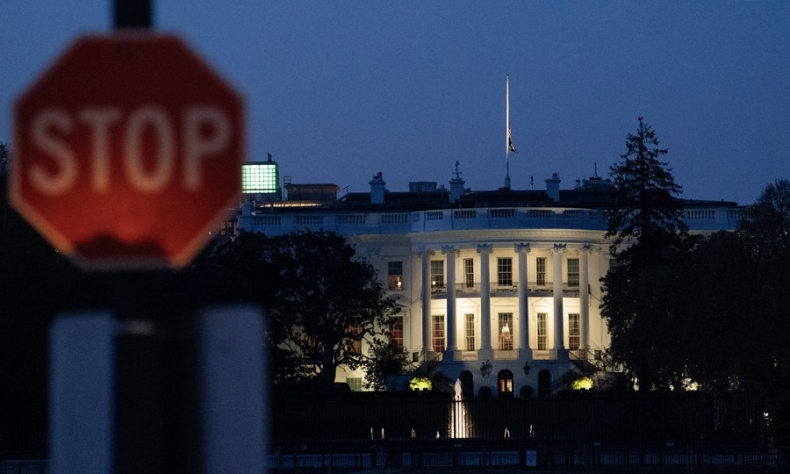
The Asia-Pacific needs an architecture for peace not a securitized architecture for war.
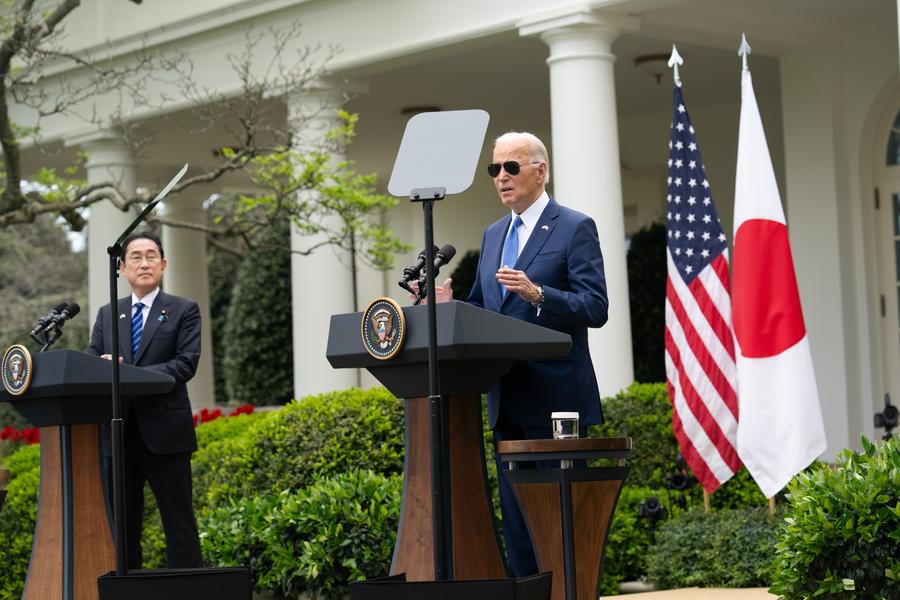
The leaders’ summit of the United States, Japan, and the Philippines held in Washington, D.C. is billed as“historic”. Manila will join the?Washington-led new arrangements?targeted at China.
Actually, the design for the new U.S.-led “Co-Prosperity Sphere”?is longstanding and has been developed over the past two decades. Washington’s foreign policy establishment beginning with the George W. Bush administration began to update Cold War policy to respond to changes in the international system.
“We have to manage the rise of China and India,” then Deputy Secretary of State, Richard Armitage, explained to me back in 2001. Managing the “rise of China”?meant bringing to bear national power using military, diplomatic, economic, political, and information tools.
Armitage for many years has been a stalwart supporter of the Japan Lobby in Washington D.C. and remains influential in Washington.
When the Obama administration came into office, plans for managing the “rise of China”?were in place. An elite bi-partisan group conducted a review of U.S. foreign policy and in 2005 made recommendations for updating it considering the changing international situation.
This Cold War policy update focused on new measures to contain China and Russia.?To contain China militarily the “pivot” strategy was adopted. The idea was to swing U.S. military forces into the Asia-Pacific to?deploy?about 60 percent of U.S. military power in the Pacific. This swing of forces to the Pacific was also termed “rebalancing”.
In addition to this military pivot, a range of measures involving the other tools of national strategy were implemented. On the diplomatic front, strengthening regional security alliances?among the U.S., Japan, Philippines, Australia, and New Zealand began. India was also included in the policy mix to counterbalance China.
The U.S.-Japan relationship takes the lead in what is referred to as the “hub and spokes” regional security architecture with the U.S. as the hub.
The 2005 Cold War policy update remains key to Washington’s national security planning. ?Successive administrations continued to develop and implement the general lines of this bi-partisan consensus.
When considering U.S. foreign policy, it is important to recognize its fundamental continuity. There is continuity because there is an elite bi-partisan consensus on the role of the U.S. in the world. The elite consensus drives policy.
Role of the Philippines
Given?its strategic location, the Philippines played a key role for the Spanish empire for several centuries. With the Spanish-American War of 1898, the United States took over the Philippines as a colony. It was seen as a stepping stone to China and?Southeast Asia.
The United States and the Philippines have a security treaty and Manila has recently?agreed to permitting new military facilities on its territory. While President Ferdinand Marcos pursued a more independent policy and limited U.S. military presence his son Bong-Bong, the current president has rushed to embrace the United States.
This embrace of Washington, not to mention Tokyo, raises issues. The Philippines now becomes a formal member of the regional Co-Prosperity Sphere the U.S. creating through military, diplomatic, economic, political, and information means.
The intention of such regional security arrangements is to contain?and suppress China.
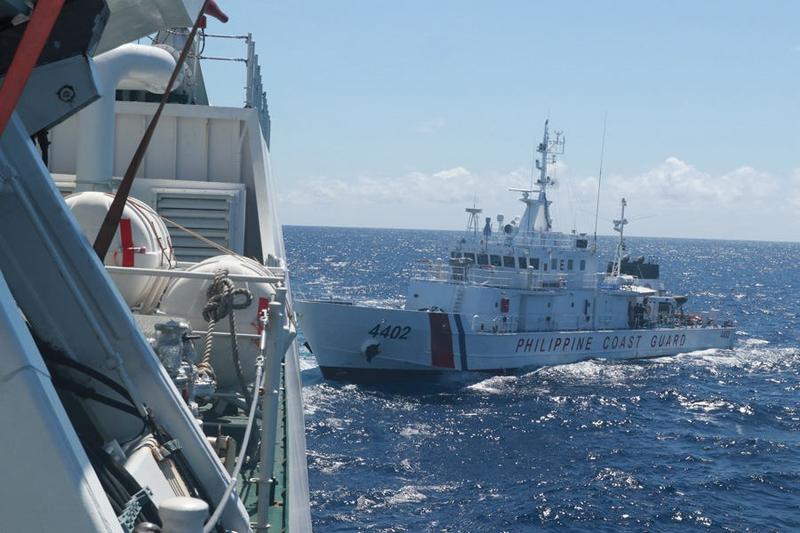
For a number of years, there have been disputes over the Nansha, or Spratley, islands in the South China Sea. These disputes are a complex matter and involve historical claims, international law, economic issues, and diplomacy. They could even lead to military conflict.
Manila?said?it began to put forward its?claims?in the 1930s before World War 2. However, neither the Spanish Empire nor the United States as colonizer recognized any such claims to such various islands.
From the standpoint of international law, the territory of the Philippines was defined and demarcated in several treaties with the United States. They are: the Treaty of Peace of Paris 1898 between the U.S. and Spain, the U.S.-Spanish Treaty of 1900, and the 1930 Convention regarding the Boundary between the Philippine Archipelago and the State of North Borneo agreed by the United States and Great Britain.
The boundary cited in these treaties for the Philippines was 118 degrees east longitude. This border was included in the 1935 Constitution of the Philippines. Such a border does not include the Nansha Islands.
Recent historical research using diplomatic archives has shown that in the late 19th?century France and Britain considered the Nansha Islands as part of China. No doubt such findings had an influence on the United States after it had colonized the archipelago. This accounts for the boundary line at 118 degrees east longitude used later by Washington.
The Nansha islands today could become a military flashpoint given that the U.S. has said it will defend the Philippines. The same applies, for example, to the disputed Diaoyu?Islands which are historically Chinese but are claimed by Japan. The U.S. has said that they are within the U.S. guaranteed security perimeter around Japan.
Washington’s regional design?threatening peace and stability
The U.S.-Japan Asian Co-Prosperity Sphere currently being cobbled together involves several overlapping arrangements. There are longstanding security treaties between the U.S. and Japan, the U.S. and the Philippines, the U.S. and Australia, and the U.S. and New Zealand. Then there are new arrangements such as “AUKUS” which is among?the U.S., Australia, and the United Kingdom.?Added to this is the presence of NATO in the region and, for example, its relationship to Japan.
All the above are part of Washington’s “shaping” of the Asia-Pacific security environment with the objective of containing China. Japan is Washington’s main ally in this design.
Attitudes in the region are divided. According to recent public opinion polls there is a swing in the region toward favorable opinions of China. Washington’s reputation has been impaired by its support of the brutal Israeli campaign against Gaza, among other factors. Thus, the U.S. is now seen less favorably.
The ASEAN countries understandably have repeatedly said that they do not want to be forced into a position of choosing sides between the U.S. and China. The opinions above suggest that the increasingly aggressive U.S. behavior on the global stage is causing second thoughts among many in the Asia-Pacific. Will Washington trigger a war in the region?
What will be the fallout from the U.S.-Japan-Philippines?summit? Will memories of World War II cause concern and even trepidation about a looming war in the region?
It is high time for cool heads in Washington to advocate for peace in the Asia-Pacific. Washington’s delusional hotheads and their schemes for the militarization of the region must be rejected. The Asia-Pacific needs an architecture for peace not a securitized architecture for war.
The article reflects the author’s opinions, and not necessarily the views of China Focus.