The U.K.’s Long Political Crisis Continues
 Facebook
 Twitter
 Linkedin
 Google +
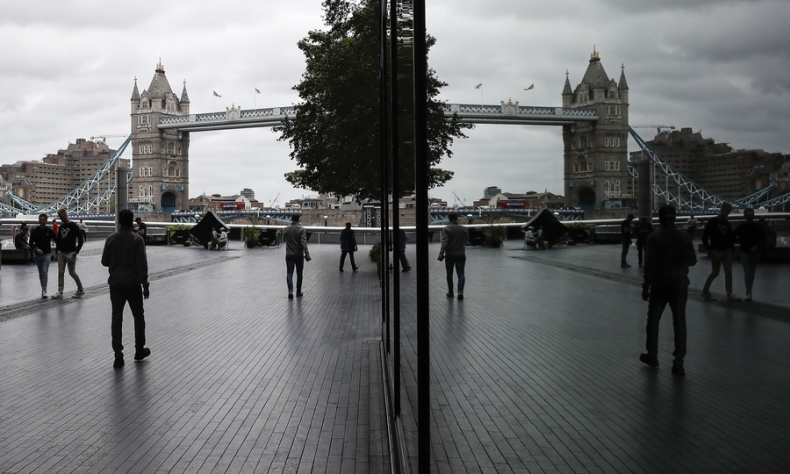
One way or another, the U.K.’s long political crisis looks set to continue for a few years yet.
The United Kingdom has been in the grip of a prolonged political crisis since the referendum on membership of the European Union in 2016.
On that occasion, most voters decided that the U.K. should withdraw from the EU. This was not the result desired by the country’s most powerful circles of big business and the ruling establishment. The financial institutions of the City of London, the main employers’ federations, the mainstream political parties and battalions of retired diplomats, top civil servants, intelligence service heads and military chiefs had called to remain in the EU. They applaud its character as a capitalist free-market alliance led by powerful member states of NATO.
On the other side of the referendum campaign stood a small number of hedge funds and industrialists, minority sections of the Conservative and Labour parties, a small number of trade unions and the Communist and far-left parties.
But the decisive factor was the mass of the people.
For many electors, the EU was a remote and bureaucratic machine making decisions about their lives that should have been taken by elected representatives in the U.K. parliament at Westminster. For many workers and the unemployed, the European single market, with its free movement of capital, labor, goods and services, had deindustrialized the U.K. and allowed a large number of migrant workers from eastern Europe to undermine the wages and conditions won by decades of trade unionism.
Since 2010, Conservative-led governments have been cutting back on social and welfare programs in the name of “austerity.” They claimed that this was necessary to fund the bail-out of the banks and the financial system after the 2008 crash.
The EU referendum was an opportunity for people to vote against the government and its policies – a continuation of the mass campaign led by the People’s Assembly Against Austerity.
Soon after the referendum result was announced in June 2016, Prime Minister David Cameron resigned and was replaced by another pro-EU Conservative Party leader, Theresa May. The majority of MPs – Conservative and Labour – were opposed to Brexit. For the next three years, they refused to agree on any plan for the U.K. to leave the EU.

The crisis deepened in the General Election of June 2017, when the Labour Party, led by left-wing MP Jeremy Corbyn, made unexpected gains. This alarmed the ruling elite. Corbyn had a long record of campaigning with mass movements against austerity and imperialist war and in favor of progressive taxation and nationalizing key sectors of the economy. A savage offensive was launched by the mass media, the Conservative government and by right-wing pro-EU, pro-NATO Labour MPs against him. At the same time, Parliament continued to reject every plan for Brexit.
Prime Minister Theresa May then resigned and new Conservative Party leader Boris Johnson won a General Election in December 2019 with the slogan: “Get Brexit Done.” But this was not the end of the U.K.’s long political crisis.
First, the Conservative government began losing support because it failed to protect the people and the National Health Service during the COVID-19 pandemic. Years of austerity cuts, under-investment and privatization had weakened the capacity of the health, social care and civil emergency services to meet the COVID-19 challenge.
Second, the Scottish National Party again won the elections to the Scottish Parliament in May 2021, demanding a second referendum on taking Scotland out of the U.K. (thereby preparing the way for re-entry to the EU). In November 2022, the U.K. Supreme Court ruled that the Scottish Parliament had no power to conduct such a referendum without the consent of Westminster.
A third crisis factor has been the new trade arrangements for Northern Ireland, negotiated with the EU as part of the Brexit deal. This has lost the support of the main Northern Ireland unionist party for the Conservative government at Westminster.
With Labour finally overtaking the Conservatives in the public opinion polls in late 2021, a series of COVID-19 and financial scandals forced Boris Johnson in July 2022 to announce his resignation as prime minister.
As the British people faced rising energy bills and a severe cost of living crisis, trade unions launched a wave of strikes in the summer of 2022 in defense of wages and employment. The new Conservative leader and Prime Minister Liz Truss announced tax cuts for the super-rich and big business, and a massive subsidy for energy companies to keep prices down. But her government failed to explain how it would avoid ballooning state debt.
The financial City of London responded by trebling the cost of borrowing for the government, businesses and households, and by speculating against the pound, pushing up the cost of food and housing. This forced the resignation of Liz Truss and her government after just 44 days in office. It also made clear who really rules the U.K. – the big financial corporations.
Any government that acts against the wishes of the financial markets and institutions will be challenged and punished by the City of London.
Bankers and financiers welcomed Rishi Sunak’s arrival at No. 10 Downing St., despite his support for Brexit. As a multi-millionaire who once worked for Goldman Sachs, he has extensive connections with the City.
Ideologically, he belongs to the right wing of the Conservative Party.
After taking his seat at Westminster in 2015, Sunak voted against higher welfare spending, against the devolution of more powers and resources to local government, Wales and Scotland, against any return to public ownership in the rail and bus industries, and against most measures to combat global warming.
He supported the privatization of state schools as not-for-profit academies, lower taxes on wealth and corporate profits, tighter controls on trade unions and the right to strike, stricter limits on immigration, and repeal of the 1998 Human Rights Act. He has also voted for the retention of hereditary peers in the House of Lords, military interventions overseas and for the expansion of the U.K.’s nuclear arsenal.
During the Tory leadership contest, he described China as the biggest long-term threat to the U.K. and the world’s security and prosperity. Previously, when chancellor, he had called for closer economic ties between the two states. After winning the contest, he said the U.K. could not rely on “simplistic Cold War rhetoric” against China, which he now regards as a “systemic challenge” rather than a “threat.”
Despite his past record, Sunak’s new government has withdrawn most of the tax cuts promised to the rich – except for a lower levy on bankers’ bonuses – and reinstated the hike in corporation tax on company profits first proposed by him when chancellor.
The government’s package to subsidize energy prices and profits – dressed up as support for gas and electricity consumers – will cost 56 billion pounds ($68 billion), with renewed help for businesses next year. This comes on top of a 40 billion pounds government-backed liquidity scheme to help energy companies resolve cash flow problems.
By restoring future tax revenues and cutting back on previous spending plans, especially from 2025 (after the next General Election),?Sunak’s new Chancellor Jeremy Hunt?has reassured the City that his government will be able to service its higher borrowing costs.
But with inflation rising by more than 10% in 2022, workers have struck for more pay, better pensions and job security on a scale not seen for more than a decade. Railway and postal workers have led the wave, joined by Royal College of Nursing staff in their first-ever strike, with action also breaking out in many smaller and private-sector workplaces.
Despite the disruption to many services, public opinion has been unusually sympathetic to the strikers, especially to nurses and other health workers. Some Conservative MPs, ex-ministers and newspaper editors have urged the government to help settle the disputes.
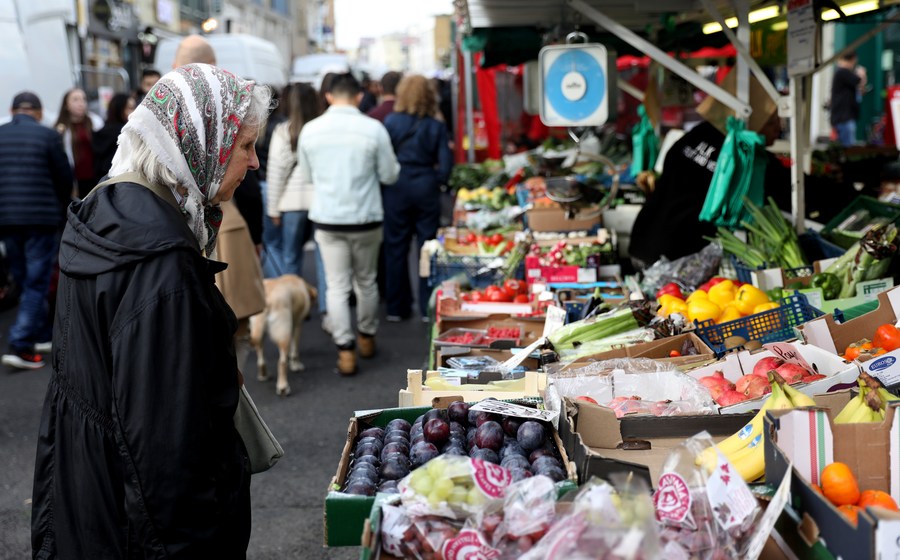
Prime Minister Sunak and most of his Cabinet, too, claim to feel people’s pain caused by the cost of living crisis, pointing to various short-term schemes to help households, pensioners and welfare claimants. Moreover, the government plans to increase public spending on the NHS, social care and schools, while cutting housing, transport and local government services.
But there is a fist inside the velvet glove. New anti-strike and anti-union laws are being drafted and troops have been trained to operate some emergency services.
Nevertheless, the upsurge in popular and trade union resistance to austerity policies could yet destabilize Sunak’s government. The Labour Party still has a big lead over the Conservatives in opinion polls (about 46%-48% against 24%-27%). Moreover, the Northern Ireland issue has not been settled and the Scottish National Party still rules the Scottish Parliament with a large majority.
Underlying all this, the British economy is likely to dip into recession, which the Office for Budget Responsibility reckons will last for more than a year. Living standards will continue to fall as unemployment rises to around 5%.
It is difficult to see how Sunak can resolve the U.K.’s prolonged political crisis in such an economic and social environment.
There does not have to be a general election until 2024; almost anything could happen between now and then. The U.K. ruling class might prefer to keep the Conservative Party in office. But it might not be too alarmed by the prospect of a Labour government – still less a minority regime dependent upon Liberal Democrat votes in the House of Commons – if Labour leader Sir Keir Starmer maintains his current trajectory.
Although the Labour leader has vowed his party would expand employment and trade union rights and make the tax system more progressive, he and his shadow cabinet have also embarked on a “charm offensive” aimed at big business leaders. In a series of 250 meetings, they are assuring company chief executives that Labour is pro-business as well as pro-worker, that corporate taxes will be kept as low as possible, that there will be no wealth tax and no drive to take most of the privatized industries – oil, gas, electricity, water, steel and docks – back into public ownership.
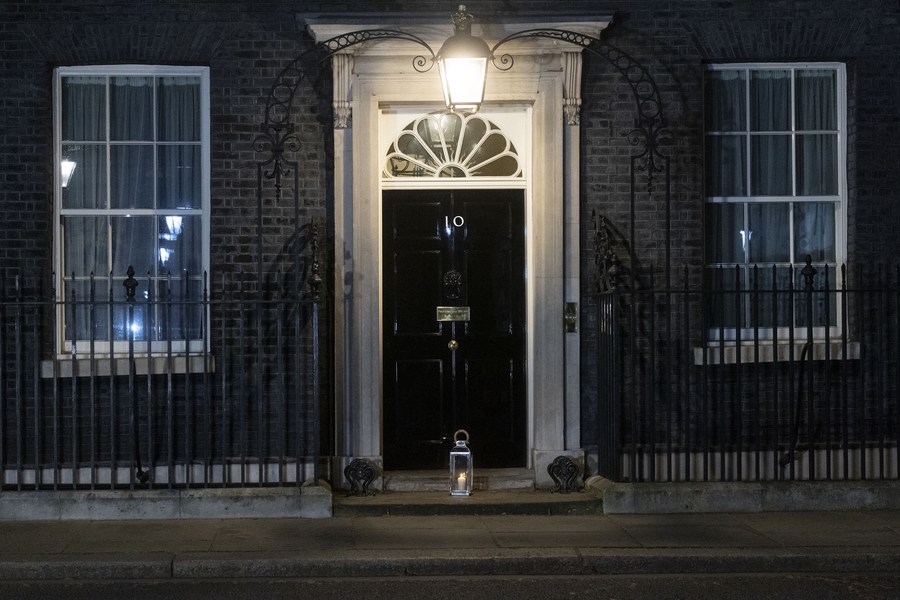
Labour’s strategy up to the next general election relies heavily on the Conservatives remaining as unpopular as they are now. Rather than putting forward a radical left-of-center program, Starmer is at pains to emphasize his loyalty to the U.K., the monarchy, nuclear weapons, NATO and the country’s subservient alliance with the U.S.
For fear of antagonizing pro-Brexit working-class electors in seats that Labour must regain, he pledges to “make Brexit work” rather than seeking re-entry to the EU or its single market. This does not convince those pro-Brexit former Labour voters who remember Starmer’s determination to keep the U.K. in the EU by committing the next Labour government to a second referendum on EU membership – a disastrous change of party policy that lost 52 Labour seats to the Conservatives in 2019.
Furthermore, Labour will probably face a government still led by Rishi Sunak, who has already shown himself to be an infinitely flexible and thoroughly unscrupulous politician.
As with his predecessor Boris Johnson, he seizes every opportunity to accuse Labour of being extremely left-wing, in the pocket of the unions, intent on leaving the U.K. defenseless and with an “open borders” policy in place of immigration controls. None of these charges are remotely true, but they are often repeated by England’s right-wing, xenophobic and jingoistic press.
Unless Starmer’s Labour Party ends the purge of its own left wing and awakens genuine enthusiasm among those whose support has proved vital in the past – the young and the working class by hand and brain – then it could fall well short of winning the 130 or so extra MPs needed to form the barest majority in the House of Commons.
Starmer will also find that some of his new-found patrons and donors in business, the intelligentsia and the media will switch to the Liberal Democrats, the Greens, or back to the Conservatives, whichever way he moves, whether to the right or the left, or towards the EU or further away.
On the other side, there is dissatisfaction with Sunak inside his own party, where elements on the right accuse him of excessive public spending and borrowing. Journalists are even speculating about moves to bring back Boris Johnson.
One way or another, the U.K.’s long political crisis looks set to continue for a few years yet.
Robert Griffiths is a former Senior Lecturer in Political Economy and History at the University of Wales and currently the General Secretary of the Communist Party of Britain.