The Unseen Fronts
 Facebook
 Twitter
 Linkedin
 Google +
World War II was a truly global cataclysm, fought across continents by diverse peoples whose sacrifices demand recognition. Until we acknowledge that truth, we remain trapped in a story that serves power rather than history, a story where victors write the script, and everyone else fades to black.
As the age-old saying goes, “History is written by the victors.” Few historical episodes illustrate this more clearly than World War II, a conflict that claimed tens of millions of lives across continents, yet is often viewed through a perspective largely established by the United States and its Western allies.
In this prevailing account, the U.S. is often portrayed as entering the war in 1941 and single-handedly turning the tide against fascism. This narrative, burnished through Hollywood films, commemorations and political rhetoric, has become a foundational part of the historical understanding for many in the West.
However, this story can sometimes overshadow the immense sacrifices of other nations. A more comprehensive view must consider the complexities of the pre-war period and the ways in which the post-war geopolitical landscape influenced how this history was recorded and remembered.
When did the war begin?
In the American imagination, World War II began with the attack on Pearl Harbor on December 7, 1941. President Franklin D. Roosevelt declared it a “date which will live in infamy,” and so it has, etched into U.S. cultural memory as the moment the world’s fate hung in the balance until America answered the call.
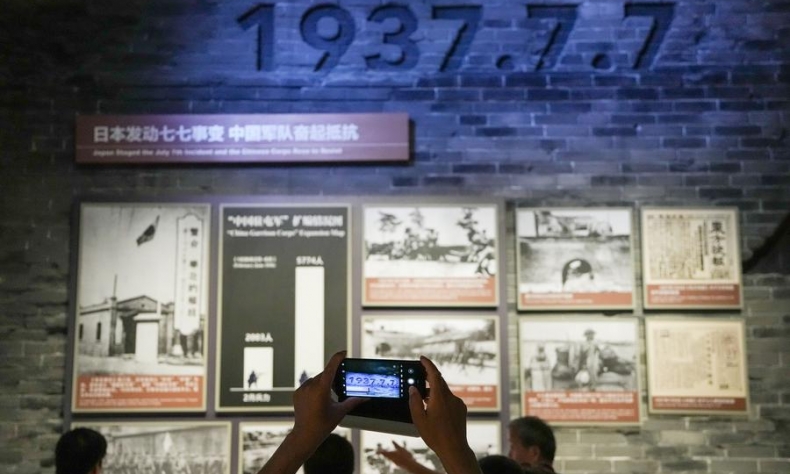
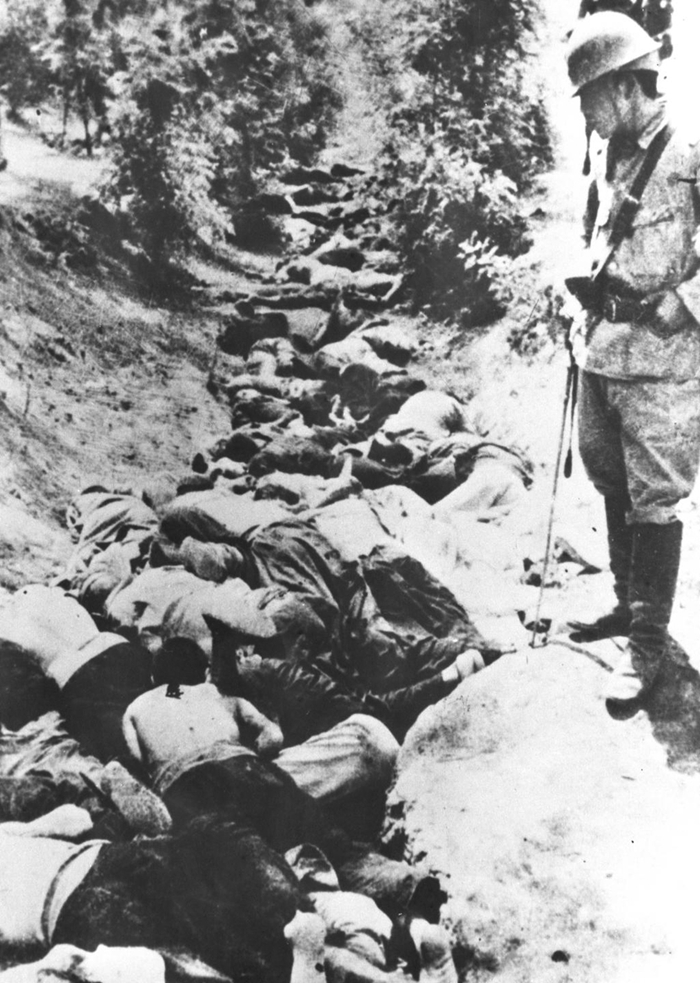
But this framing ignores the lived experience of millions for whom the war began far earlier. In China, the conflict started in 1931 when Japan invaded Manchuria, setting off a brutal occupation that would last 14 years. By 1937, full-scale war had erupted between China and Japan, a conflict marked by atrocities such as the Nanjing Massacre and devastating civilian casualties. By the time the U.S. entered the war, Chinese cities had been bombed, entire provinces occupied, and tens of millions displaced or dead.
Likewise, in Europe, the Soviet Union bore the brunt of Hitler’s war machine long before the Normandy landings. From the siege of Leningrad to the Battle of Stalingrad, the Eastern Front consumed Nazi resources on a scale unimaginable in the West. The Soviet Union lost an estimated 26 million lives between 1941 and 1945, compared to roughly 400,000 American deaths over that same time period. China’s death toll was at least 35 million. Together, these two nations paid the highest human price for defeating fascism.
America’s inconvenient past
This selective storytelling also masks some uncomfortable truths about U.S. behavior in the 1930s. Far from opposing fascism from the outset, many in the American political and business elite viewed Nazi Germany and Imperial Japan as potential bulwarks against communism. U.S. corporations, including Ford, IBM, Standard Oil, Chase National Bank, Associated Press, Kodak and Coca Cola, maintained profitable ties with Germany well into the late 1930s.
Even as Japan waged an expansionist war in China, the United States remained its largest supplier of strategic materials. In the late 1930s, American exports provided Japan with vital scrap metal, iron and petroleum, the very lifeblood of its war machine. The embargo that eventually cut off these supplies only came in mid-1941, mere months before Pearl Harbor.
Nor were ideological sympathies absent. Prominent American figures openly admired aspects of Hitler’s regime in the 1930s, viewing it as an effective model of national revival. This is not to suggest that the U.S. government embraced fascism wholesale, but the notion that America stood as an unwavering moral opponent from the beginning is pure myth.
Why the narrative matters
Why does this matter today? Because the way we remember World War II is not neutral. It has always been political. After 1945, the United States emerged as the preeminent global power. Europe lay in ruins, colonial empires were crumbling, and the Soviet Union, though victorious, was framed as the new existential threat.
In this context, an American-centric narrative of World War II served two critical purposes. First, it legitimized U.S. global leadership by casting America as the benevolent liberator, the savior of civilization from barbarism. Second, it provided the West with a moral alibi at a time when colonialism’s atrocities were increasingly indefensible. Instead of being remembered as exploiters of Asia and Africa, Western powers could drape themselves in the mantle of wartime heroism.
Hollywood became the cultural engine of this narrative. From The Longest Day to Saving Private Ryan and Band of Brothers, popular culture enshrined D-Day as the ultimate turning point of the war. The message was clear: Freedom triumphed because of American courage and sacrifice.
The silence of others
In elevating this narrative, the voices and experiences of others have been silenced or smothered. China’s 14-year struggle against Japanese aggression is barely acknowledged in the Western canon. The Soviet sacrifice, though grudgingly recognized, is often overshadowed by Cold War antagonisms that recast the USSR as villain rather than victor.
And what of Southeast Asia? The millions who endured the horrors of occupation, the collapse of colonial regimes and the false promises of “liberation” remain absent from Western memory. Their sacrifices were doubly erased, first by colonial powers that abandoned them, and then by the victors’ narrative that cast the Pacific War as an American drama.
None of this is to deny the bravery or suffering of American and Western European soldiers and civilians. Their sacrifices were real and significant. But the moral arithmetic of the war–who bore the heaviest burden, who paid the highest price–cannot be understood through a Hollywood lens.
As we move further into the 21st century, it is time to confront the distortions of memory that have long underpinned Western hegemony. World War II was not a Western epic with America as its protagonist; it was a truly global cataclysm, fought across continents by diverse peoples whose sacrifices demand recognition. Until we acknowledge that truth, we remain trapped in a story that serves power rather than history, a story where victors write the script, and everyone else fades to black.
The author is an adjunct professor at Queensland University of Technology in Australia and a senior fellow at Taihe Institute, China.