The Way Democracy Works in China
 Facebook
 Twitter
 Linkedin
 Google +
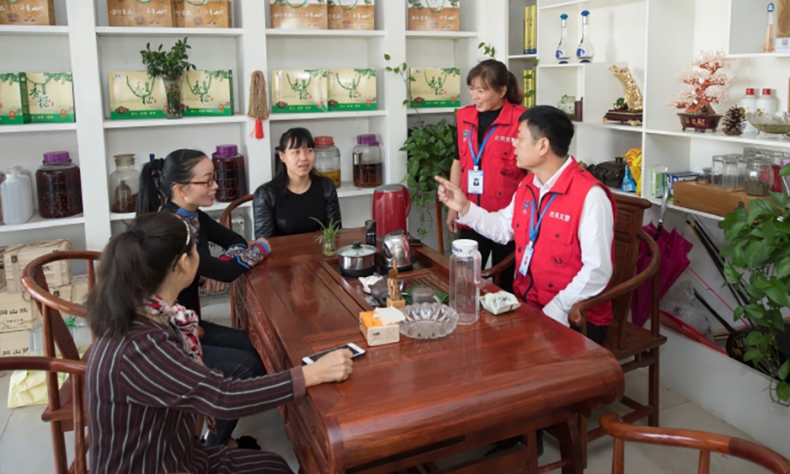
China’s approach to address problems including those triggered by the novel coronavirus pandemic is people-oriented, a philosophy that is deeply rooted in its culture
The annual meetings of China’s national legislature and top political advisory body were wrapped up in May with people-centric plans to create jobs and help businesses.
China’s approach to address problems including those triggered by the novel coronavirus pandemic is people-oriented, a philosophy that is deeply rooted in its culture.
Ancient sage Mencius said, “The people are the most precious of all things. The sovereign matters less.” Then the communist revolution planted the idea of equality in the hearts of the people, and today, socialist consultative democracy is people-oriented.
Negotiated solutions
People would like the government to respond to their opinions.
The government encourages people to express their opinions on major national and local affairs and projects that are closely related to their rights and interests and welcomes their supervision. People have the right to express their opinions and give their proposals to lawmakers and political advisers and through various channels including public hearings and online platforms. Citizens’ proposals can be incorporated into laws, regulations, policies and measures. In addition, a Chinese citizen can also supervise the government by submitting petitions and complaints.
Xinfang, the Chinese way of petitioning, literally means “letters and visits from the people.” It is a public opinion collection system designed to hear complaints and grievances. Petitioners may lodge complaints and seek redress at the local level with letters and calls to government offices. If they are not satisfied with the response, they can take their cases to higher-level offices and, at the highest level, to the National Public Complaints and Proposals Administration in Beijing.
A lot of unlawful acts have been exposed through this process, such as inadequate compensation for houses demolished to make way for development. The petitioning system itself is a form of democracy, through which the government responds to petitioners.
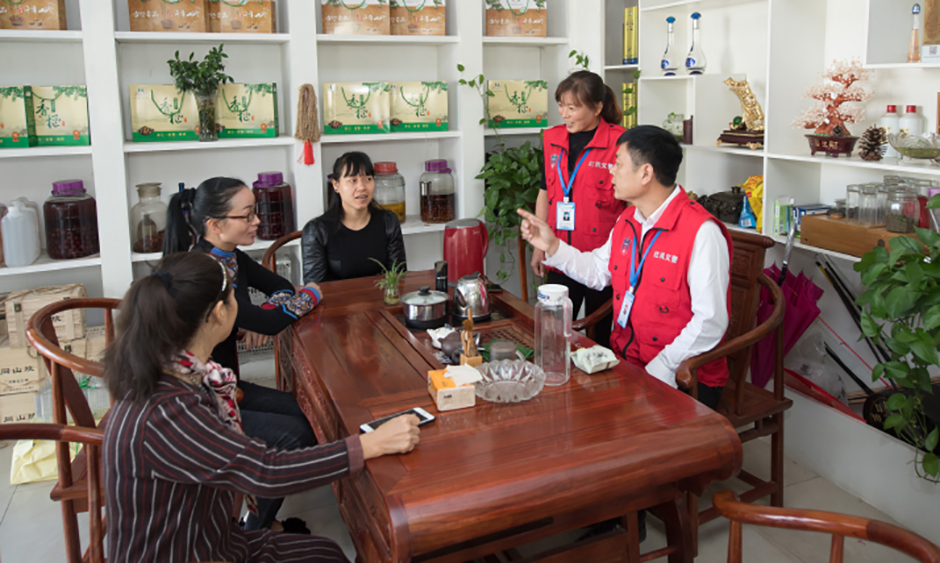
Changning, a district in Shanghai boasting a booming economy and many foreign consulates, is known for its Hongqiao Sub-District, a grassroots administrative unit that mobilizes residents to participate in the legislative process. It explores ways to convey the voice of the people to national and local law-making bodies. By October 2019, its residents had put forward 509 pieces of opinions and suggestions on 30 draft laws, and 25 of those were adopted.
For example, when the Domestic Violence Law was enacted in 2015, the protection of women and children’s rights and interests was highlighted, as in Western countries. Then some residents suggested it should also protect the elderly, especially the elderly cohabiting with their children. Their advice was taken and the elderly were put under the protection of the law. The Hongqiao model was later promoted in a number of other pilot areas in the country.
Full-process democracy
People-oriented governance, embodying a special kind of full-process democracy, is also being practiced in China through the training of officials. Zhang Weiwei, a professor at Fudan University, holds that China’s system for selection and promotion of government officials is better than the electoral system in Western countries. Chinese officials are usually tempered at the grassroots level in the early years of their career. The Chinese approach ensures that officials know how to deal with the people, understand their needs, and obtain the truth from facts.
One special training mechanism for officials is placing them in temporary positions in other places. Every once in a while, officials are transferred to other work units, returning after one or two years. In doing so, different departments can share their perspectives and opinions via the exchange of officials. As for the officials themselves, by taking on new challenges at different places they can improve their ability to serve the people. This way, only the top ones stand out and can climb the political ladder.
Renowned anthropologist and sociologist Fei Xiaotong said China’s social governance is “pluralistic but organically unified, harmonious but different.” Similarly, President Xi Jinping also said the Chinese nation is pluralistic but organically unified. It is different from the “pluralism” in the West, which emphasizes that pluralism exists side by side and competes with each other under the legal framework but rarely integrates.
But the harmony of the Chinese is a balance between competition and compromise. It is an act of mutual cultural perception, which has given birth to the Chinese political and cultural tradition of seeking common ground while reserving differences. Therefore, the idea of harmony not only makes public discussion the criterion for the Chinese to resolve disputes, but also enables democratic consultation to become an important way of political life in China.
The Chinese call this unique form consultative democracy, which includes extensive and multi-layered forms, including consultations carried out by political parties, people’s congresses, government departments, communities and social organizations. Consultative democracy runs through different levels, parties, institutions, organizations, fields and issues of contemporary Chinese politics.
Multiparty cooperation
The cooperative relationship between the Communist Party of China (CPC) and non-communist parties is different from the finger-pointing between the ruling party and the opposition in the West. Through the Chinese People’s Political Consultative Conference, an important institution of the CPC-led multiparty cooperation and political consultation, the Chinese try to pool collective wisdom and make suggestions to achieve more scientific and rational decision-making.
For example, every year, according to the expertise and characteristics of non-communist parties, the CPC entrusts them to carry out research on major issues related to the national economy and people’s livelihoods. In 2018, the Central Committee of the China Democratic League was entrusted with a key research project on deepening integrated cooperation in the Yangtze River Delta and promoting coordinated development of the regional economy. The countermeasures and suggestions it made resulted in the development of regional integration in the delta becoming a national strategy.
The CPC hopes to make decisions reflecting people’s wishes. Therefore, extensively listening to the opinions and suggestions of the people is a prerequisite for the Party to put forward governance strategies. For instance, when formulating the Outline of the 13th Five-Year Plan for National Economic and Social Development (2016-20), the CPC Central Committee commissioned 42 organizations to research 31 major topics and produced 117 reports. President Xi, Premier Li Keqiang and other senior officials went to various places and government departments for in-depth research. Xi listened to the opinions and suggestions from the leaders of 18 provinces, autonomous regions and municipalities.
For the draft version of the outline, over 2,500 suggestions from more than 3,000 people were collected. The outline took nine months to finish, most of it spent collecting public feedback, which was in contrast to the fact that Western representative democracy spends most of its time on bipartisan debates.
In addition, the CPC has created other direct democratic forms at primary-level organizations, such as urban and rural community autonomy, and democratic management of enterprises and institutions. They are designed to be diverse, institutionalized and of wide coverage.
In community affairs, the residents elect their representatives and the final decision is reached through dialogue, discussion, negotiation and voting. The forms of democracy include informal talks, consultative councils and meetings. It is the most common and popular form of consultative democracy among the Chinese.
China’s mediation system may be difficult for Westerners to understand. An experienced mediator in China listens to the views of the opposing sides, gives suggestions, soothes their emotions, and helps them reach mutual understanding. While Western democracy is a debate between two sides, Chinese consultation and mediation are often carried out by three parties, with one side mediating. Such a form of democracy is more responsive to the needs of the people.
The author is an honorary research fellow with the Academy of Contemporary China and World Studies and a research fellow with the China Institute, Fudan University
Edited by Fan Daqi and Zhao Qing with the Academy of Contemporary China and World Studies