Treated with Respect?
 Facebook
 Twitter
 Linkedin
 Google +
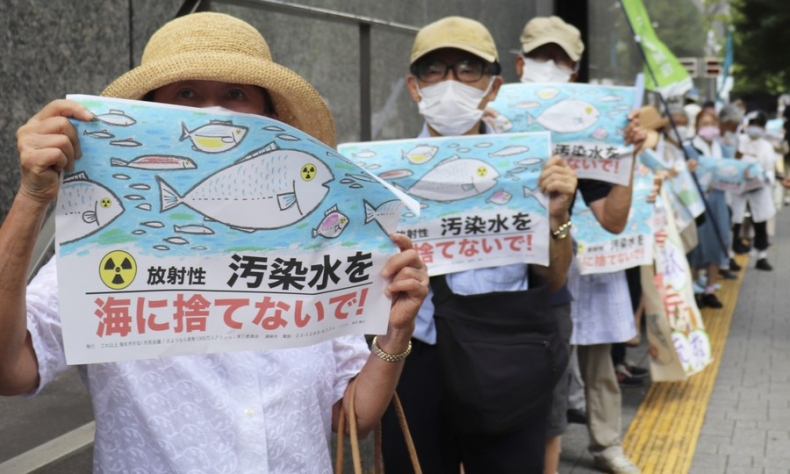
Japan’s willful action is extremely selfish and irresponsible. By dumping the nuclear-contaminated water into the ocean, Japan is spreading the risks to the rest of the world and jeopardizing future generations of humanity.
After much back and forth, and heated global debate, Japan started discharging Fukushima nuclear-contaminated water into the Pacific Ocean on August 24.
Japanese officials deliberately misrepresent nuclear-contaminated water as “treated nuclear wastewater.” Generally, nuclear wastewater refers to the water produced in the normal operation of nuclear power plants, such as nuclear reactor cooling water, which does not come into direct contact with radioactive materials inside the nuclear reactor. Nuclear-contaminated water, or radioactive wastewater, refers to the water that comes into direct contact with radioactive materials inside the reactor when the reactor is breached after a nuclear accident, and still contains a high concentration of radioactive materials. The nature of the two is different and they should not be confused with each other.
Twelve years ago…
The Fukushima nuclear accident is one of the world’s most serious nuclear disasters to date.
Following a major earthquake, a 15-meter tsunami cut off power and cooling to three Fukushima Daiichi nuclear power plant reactors, causing a nuclear accident that began on March 11,
2011. All three cores melted to a large extent within the first three days.
This was the second level-7 power plant disaster on the International Nuclear Event Scale in the history of humankind’s peaceful use of nuclear energy, after Chernobyl in the Soviet Union in 1986.
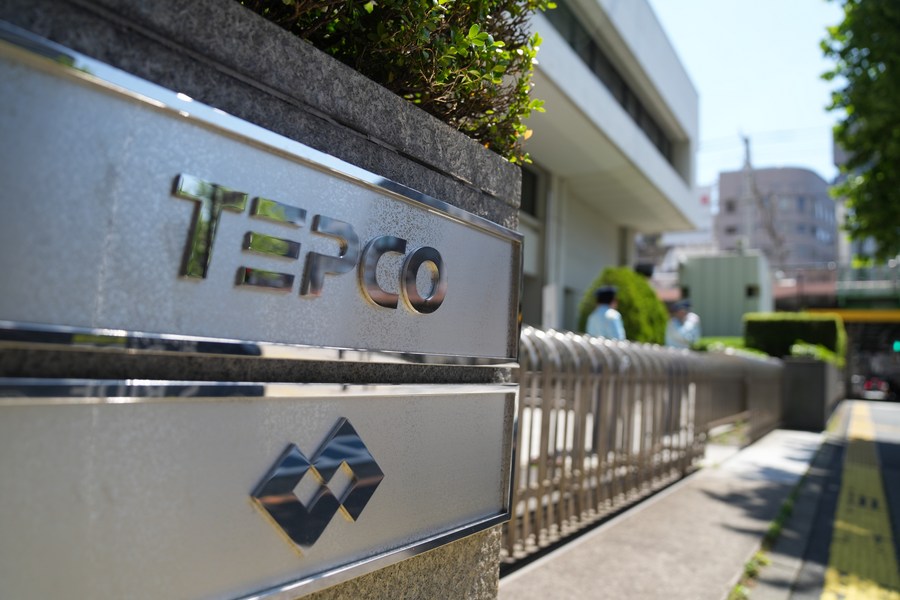
After the accident, Tokyo Electric Power Co. (TEPCO), the operator of the plant, continued to inject water into the containments of Units 1 to 3 so as to cool the reactor core and recover sewage. With the original coolant in the reactor and the infiltration of groundwater and rainwater, more than 12 years later, the amount of nuclear-contaminated water in storage at the Fukushima Daiichi nuclear power plant is very close to the upper limit of its storage capacity of 1.37 million cubic meters.
How to manage the nuclear-contaminated water has been a thorny problem for the Japanese Government. Experts offered Japan a variety of solutions, including separating radioactive substances from water by evaporation or filtration or storing contaminated water semi-underground after hardening it with concrete and mortar. This is how the 1957 nuclear leak at the Savannah River Site in South Carolina, the United States, was treated. However, Japan opted for the plan with the lowest economic cost, i.e., dumping the “treated nuclear wastewater” into the Pacific Ocean. Starting on August 24, and continuing for the next 30 years, the country is slowly releasing the “treated water” stored in tanks at the site into the ocean through a pipeline extending 1 km from the coast.
Public opinion
The Japanese Government and TEPCO have always claimed that the Advanced Liquid Processing System (ALPS) can remove radioactive substances other than tritium, a radioactive form of hydrogen. However, according to data released by TEPCO last December, after secondary treatment, the “treated water,” in addition to tritium, still contained 12 types of radioactive substances with extremely long half-lives, such as iodine-129, caesium-135 and carbon-14.
The stability of the ALPS system has also been questioned. Park Ku-yeon, First Deputy Director of the Republic of Korea’s (ROK) Office for Government Policy Coordination, said at a press conference on June 16 that Seoul’s team of experts who’d conducted an on-site inspection the previous month had received a list of major ALPS malfunctions having occurred between 2013 and 2022, including corrosion of equipment and problems with filters. There have been eight confirmed cases of ALPS malfunction during that time.
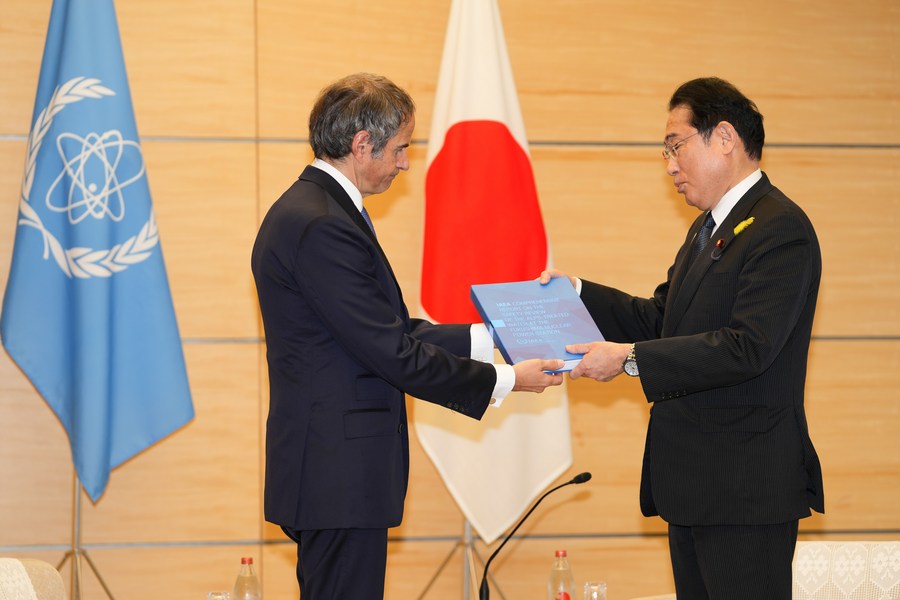
Although the International Atomic Energy Agency (IAEA) in its final report in July concluded that Japan’s process was “safe and consistent with internationally accepted nuclear safety standards,” neighboring countries and Pacific island nations remain deeply concerned because there is no precedent for discharging nuclear-contaminated water into the sea, and the effects on the marine environment and human health are unpredictable.
Even more telling is the attitude of the Japanese people toward the issue. According to the latest poll released by Japan’s Kyodo News on August 20, 88.1 percent of the Japanese people worried that discharging nuclear-contaminated water into the ocean would damage Japan’s international image. A whopping 81.9 percent of people surveyed believed the Japanese Government’s explanation of the sea discharge plan had been “inadequate.”
Political show
Having the support of the U.S. is one major reason why the Japanese Government has the courage to defy public condemnation. Many fail to understand why the U.S. has publicly expressed its support. On August 15, U.S. Secretary of State Antony Blinken said his country was satisfied with Japan’s “safe, transparent and science-based process.” American Ambassador to Japan Rahm Emanuel said he was planning a visit to Fukushima Prefecture and the region in support of Tokyo’s decision.
Whether to oppose the discharge of Japan’s nuclear-contaminated water seems to have become, to some extent, a test of loyalty for American allies. Previously, Japan’s neighboring countries all opposed the ocean discharge plan. But to further strengthen its alliance with the U.S., the ROK’s Yoon Suk-yeol administration chose to compromise on this issue, even though 78 percent of ROK residents were worried that Japan’s nuclear-contaminated water would pollute the ocean and seafood, according to a poll conducted by global consulting firm Gallup in June this year.
On the other hand, the American support for Japan’s dumping of nuclear-contaminated water into the ocean is further aggravating the conflict between China and Japan and is intensifying the already tense situation in Northeast Asia. This benefits the American stakes in the region’s geopolitical competition. Not only can the U.S. firmly tie Japan and the ROK to the so-called trilateral alliance, but it can also provoke other countries in Northeast Asia—neighboring countries such as China, Russia and the Democratic People’s Republic of Korea, which the U.S. considers competitors, and disturb their strategic development plans.
A crime against future generations
Japan’s willful action is extremely selfish and irresponsible. By dumping the nuclear-contaminated water into the ocean, Japan is spreading the risks to the rest of the world and jeopardizing future generations of humanity.
The nuclear-contaminated water is predicted to reach China’s coastline in 240 days and the North Pacific in 1,200 days, according to a 2021 simulation issued by Tsinghua University. Although the wastewater will take longer to reach San Diego on America’s western coast than Shanghai on China’s eastern coast, its concentration near San Diego is predicted to be significantly higher.
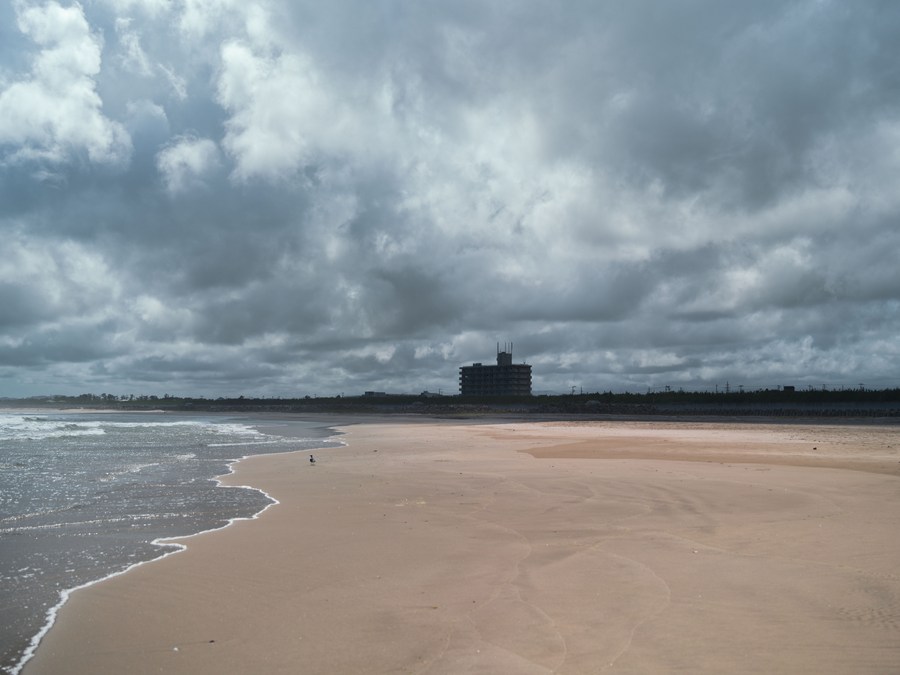
Accounting for more than 40 percent of total global production, China is currently the world’s largest producer of aquatic products. China’s per-capita consumption of aquatic products reached 48.6 kg in 2022, and seafood is an important food source for the Chinese people. Discharging nuclear wastewater into the ocean may not only have unpredictable and negative effects on the health of China’s residents, but can also lead to the reduced scale of the country’s aquatic products industry.
The General Administration of Customs of China (GACC) said in a statement on August 24 it had decided to take emergency measures “to comprehensively prevent any potential radioactive pollution risks caused by Japan’s discharge of contaminated water, protect the health of Chinese consumers and ensure the safety of food imports.” To avoid potential health hazards from Japan’s discharge of nuclear-contaminated water, China has suspended imports of all aquatic products from Japan from August 24.
The decision was made in accordance with China’s food safety laws, its administrative protocols on food import and export safety, and the World Trade Organization’s Agreement on the Application of Sanitary and Phytosanitary Measures, which outlines the basic directions on food safety and animal and plant health standards that governments are required to follow. The GACC said a human development issue should be negotiated and resolved within the framework of global governance.
What choices will these politicians who can determine the fate of many, many people make in the face of the common interests of humanity and the geopolitical interests of individual countries?
The least they can do is treat everybody with respect.