Trump Set to Reshape Africa Policy
 Facebook
 Twitter
 Linkedin
 Google +
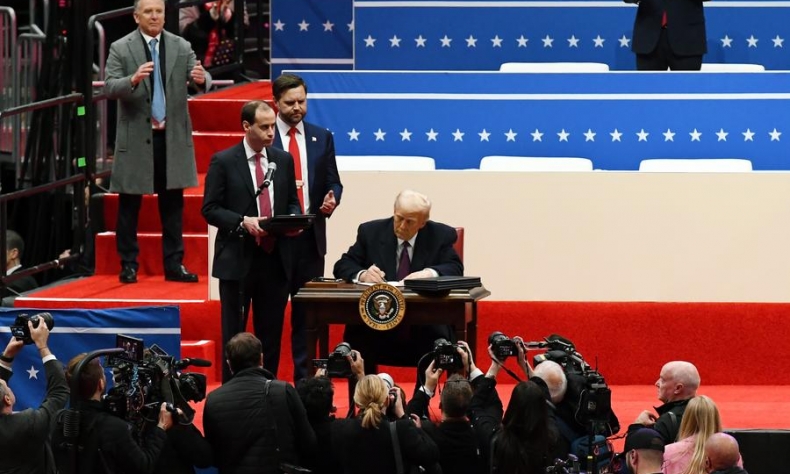
Trump’s second?term is likely to feature an Africa?policy that largely ignores the continent,?with all his actions closely tied?to the two core priorities of domestic?reform and strategic competition with?China.
During his second White House?term, Trump’s governing style?remains characteristically?assertive, launching a full-scale?offensive from day one. Domestically,?he’s pushing for sweeping government?reforms. On the international stage,?he’s swiftly announcing withdrawals?from numerous international organisations?and aggressively deploying foreign?policy moves, seeking to reshape?the landscape of American influence?globally.
So, what does Trump’s return mean?for Africa? Despite his stated policy?goal of maintaining American hegemony,?Africa may become the biggest?victim of his policies. Guided by the?America First principle, Trump’s second?term is likely to feature an Africa?policy that largely ignores the continent,?with all his actions closely tied?to the two core priorities of domestic?reform and strategic competition with?China.
Changing priorities
Despite his lack of prior political experience,?Trump’s first term saw several?policy “innovations” concerning Africa.
Trump sought to remodel U.S.-Africa?economic and trade cooperation in?line with his America First agenda.?Consequently, early in his first term,?Trump proposed significant cuts to?foreign aid, which failed to materialise?due to opposition from Congress.?In seeking new cooperation models,?the Trump administration initiated?Strategic Trade and Investment?Partnership (STIP) negotiations with?Kenya, intending to build a new framework?distinct from the African Growth?and Opportunity Act (AGOA). However,?the U.S.-Kenya STIP negotiations did?not achieve a breakthrough before the?end of his term.
In terms of political relations, Trump?prioritised counterterrorism in Africa,?focusing on security assistance. On?one hand, to address the threat of terrorism?in Africa, the Trump administration?established the Security Force?Assistance Brigades (SFABs) and?launched the U.S. Strategy to Prevent?Conflict and Promote Stability. On?the other hand, driven by a desire to?reduce international commitments,?the U.S. significantly curtailed security?assistance and, towards the end of his?term, attempted to withdraw troops?from Somalia.
Trump also updated the critical minerals?policy, signing three executive?orders, adopting a national strategy?on critical minerals, and setting up the?Energy Resource Governance Initiative?(EGRI) in June 2019, aimed at strengthening?control over countries rich in?critical minerals, four of which are?African countries.
In his second term, Trump’s Africa?policy will likely revolve around trade?and security, while significantly reducing?aid and strengthening control over?critical mineral resources.
In terms of trade strategy, the Trump?administration is expected to adjust its?approach to Africa, shifting its focus?to economic interests and seeking?African partners capable of providing?such interests. It may allow AGOA?to expire automatically at the end of?September this year due to its low?economic contribution. As an alternative,?the U.S. plans to elevate Kenya’s?strategic position, restart and complete?STIP negotiations with Kenya, and use?it as a template for future trade negotiations?with African countries.
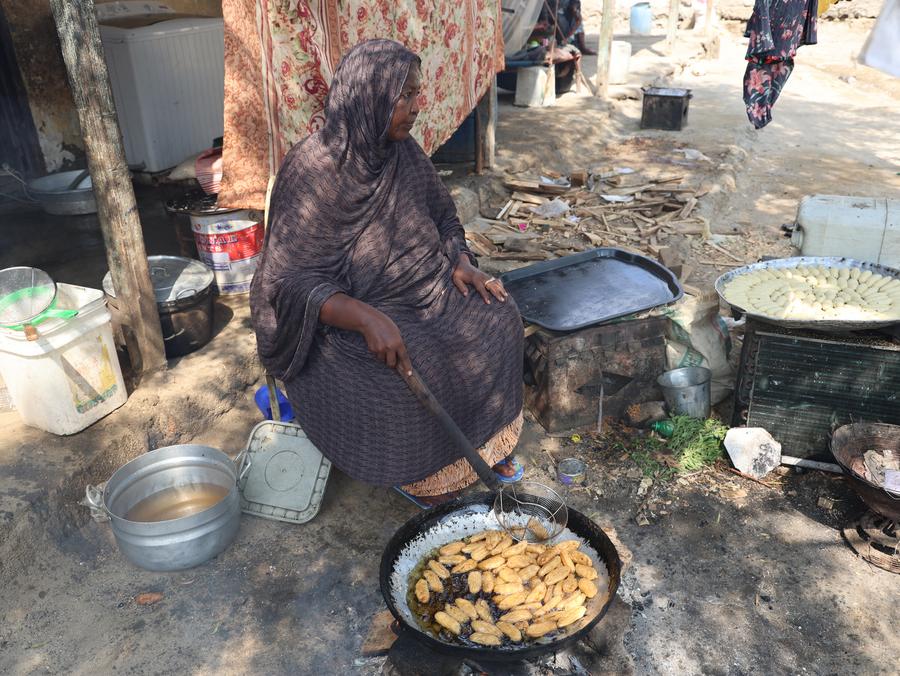
Significant cuts to aid to Africa are?likely to be a key measure in the second?term. Specifically, aid cuts would?impact Africa in three key areas: public?health, climate change governance, and?food security.
With the aim of controlling critical?mineral resources, the Trump administration?is highly likely to restart or?upgrade the EGRI, focusing on minerals?for which China has significant?processing capacity and Africa has?abundant reserves, such as cobalt, lithium,?copper, nickel, and antimony.?Resource-rich countries are expected?to be key partners.
In terms of security assistance,?although the Trump administration?attaches great importance to counterterrorism,?it faces many complex?challenges in the African security?arena, which may constrain its?actions. These challenges include the?dilemma between counterterrorism in?Somalia and recognising Somaliland,?the influence of the UAE in the Sudan?conflict, tensions between the DRC?and Rwanda in the Great Lakes region,?Chad’s demand to renegotiate the status?of U.S. troops, and the legacy of?withdrawing troops from Niger in West?Africa. Constrained by these factors,?the Trump administration may adopt?a more pragmatic strategy in security?assistance to Africa, potentially narrowing?its focus to a proxy model in?the Great Lakes region and regional?security cooperation in West Africa.
Implications for China
To counter China’s influence in Africa,?the U.S. is using diverse strategies to put?pressure on African countries to gain?greater support in international affairs.
Politically, the U.S. is urging African?countries to “choose sides.” For example,?the Trump administration is deeply?concerned about South Africa’s close?relations with Russia, China, and?Iran, and has publicly criticised South?Africa’s position on human rights?issues regarding Israel.
In terms of economics and resources,?the U.S. will strengthen its competition?with China in Africa, especially?in the critical minerals sector. The U.S. regards mineral-rich countries such as?the DRC, Zambia, Angola, and Ghana as?key targets, striving to compete directly?with China in these countries. In order?to weaken China’s influence in Africa,?the U.S. may promote the “digital health”?plan proposed in Project 2025 aimed at?curtailing China’s influence in Africa in?the fields of information and communication?while restricting the development?of Chinese technology and industries?on the continent.
In the geopolitical arena, the U.S. may use regional hotspots to check China. The Somaliland issue is a potential lever. Although the U.S. publicly emphasises combating terrorism in Somalia, the Trump administration has shown signs of intending to recognise Somaliland’s independence. If the U.S. recognises Somaliland, it could trigger a dramatic change in the geopolitical landscape of the Horn of Africa, further exacerbating the complexity of the regional situation, which could provide the U.S. with an opportunity to curtail China’s regional influence.
The author is a Researcher with the Academic Committee, Centre for African Studies, Yunnan University.