U.S. Congress’ ‘Decoupling’ Bills Are Out of Tune with Times
 Facebook
 Twitter
 Linkedin
 Google +
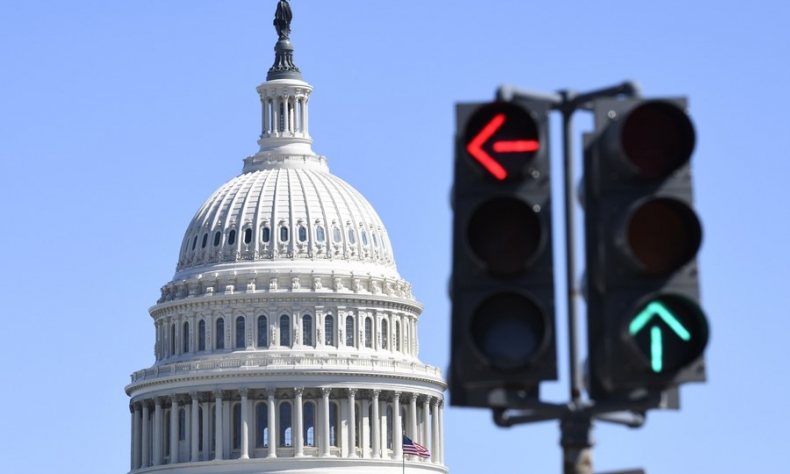
The U.S Congress’ negative ‘decoupling’ efforts are being questioned by multiple parties.
With the U.S. government further pushing its “strategic competition” with China, the rhetoric of “decoupling,” aiming to reduce mutual economic interdependence between China and the U.S., and even attempting to “squeeze out” China out of the existing international economic system, has been making waves in Washington for some time.
Since the Trump administration, the U.S. Congress has been proposing an increasing number of bills related to “decoupling” from China with more extreme provisions, in order to gain attention. Although the majority of these bills are still in the “proposed” stage and have not entered the review process in both houses, they have had a significant negative impact on the overall atmosphere of U.S.-China relations.
The 118th Congress, with more extreme right-wing and anti-China hawkish forces advocating America-first and protectionism, is clearly more dangerous and extreme. It is trying to expand and deepen “decoupling” from China beyond the critical and hi-tech sectors.
Since taking office, the new congress has rapidly introduced a number of bills that seek expanded and even game-changing “decoupling” actions. These bills broadly fall into four categories.
First, some bills aim to reinforce existing measures by means such as further tightening export controls and introducing new mechanisms for reviewing investments to China. An example is the China Competition Act 2.0 proposed by Chuck Schumer, leader of Senate’s Democratic Caucus. Meanwhile, the Biden administration is currently considering new rules to strengthen the review of direct investments to China, a policy proposal stemming from the previous Congress’ National Critical Capabilities Defence Act, an unprecedented bill in U.S. history proposed in 2022.
Second, there are bills introducing “decoupling” measures in fields where both countries have traditionally cooperated well, such as agriculture and energy. These include the proposed Promoting Agriculture Safeguards and Security Act of 2023, as well as the Protecting America’s Strategic Petroleum Reserve from China Act passed by the House of Representatives.
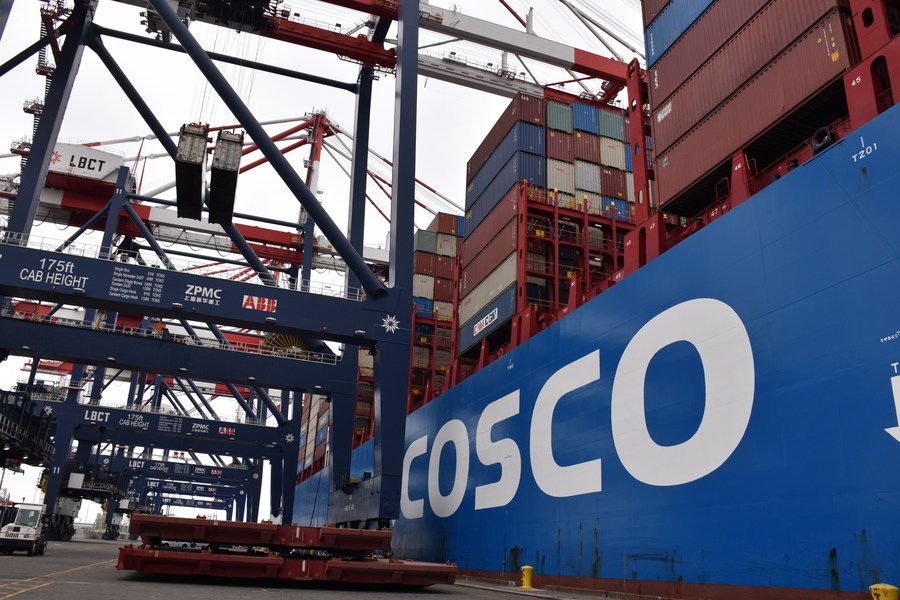
Third, there are bills setting out measures for “worst-case scenarios” across the Taiwan Straits, including specific provisions for economic and financial sanctions against China. In the first hearing of the House’s Select Committee on the Strategic Competition Between the United States and the Chinese Communist Party, the chairman of the committee Mike Gallagher distorted bilateral relations as “an existential struggle over what life will look like in the 21st century” and a threat to “the most fundamental freedoms.” On the same day, the House Financial Services Committee passed three Taiwan-related bills and four bills pressuring China financially.
Fourth, there are bills attempting to significantly roll back U.S.-China economic and trade relations, such as the proposed China Trade Relations Act seeking to withdraw normal trade relations treatment for China, and the PRC Is Not a Developing Country Act passed by the House.
It appears that the U.S. Congress is trying to completely overturn U.S.-China economic and trade relations. Not only does it intend to destroy the longstanding foundation of the bilateral relationship, but also tries to limit its future trajectory, presenting a posture of even being ready to provoke an “economic war.” Unlike the White House focusing on “decoupling” in key and emerging sectors, the Congress is inclined to expand this irrational sentiment to a broader range of areas. However, its negative “decoupling” efforts are being questioned by multiple parties. The fact that many China-related bills ended up being shelved is a proof.
Doubts about ‘decoupling’
First of all, how will the administrative departments respond? Currently, the Biden administration is caught in a dilemma over “decoupling” from China. It wants to “win the competition,” but is hesitant about bearing the high costs and backlash of full “decoupling.” Therefore, while it is floating the idea of “de-risking,” it repeatedly emphasises its unwillingness to fully “decouple” from China. In fact, what the White House wants is cakeism: while “de-risking” implies a continued focus on constraining China in hi-tech and emerging industries as well as turning things into security and political issues and creating exclusive circles, the “unwillingness to decouple” reveals its intention to avoid irrational and extreme “decoupling” moves. Although many bills with extreme measures are still in the “proposed” stage or have passed only in the House of Representatives (or its subcommittees), once they go through all the procedures and become laws, it will be difficult to revoke them or prevent the fallout. This will significantly limit the alternatives and flexibility of the White House’s future policies towards China and put the U.S. itself in great uncertainty. How to deal with these “legislations” is becoming increasingly challenging for the White House.

Meanwhile, does the U.S. business community buy into this? In comparison to the frequent political theatrics of “decoupling” on Capitol Hill, situations on the other side of the Pacific Ocean have been recovering since this spring, with intensive visits made by executives of U.S. businesses across various industries including automobiles, consumer goods, manufacturing, healthcare, finance, electronics, and technology. The visits have demonstrated their continued confidence in the prospects of China and the Chinese market and their willingness to expand their business presence in China. A survey of member companies conducted by the American Chamber of Commerce in China in March and April showed that U.S. companies are more optimistic about their business prospects in China for the next two years, with increased confidence in China’s economic recovery and domestic market. For U.S. companies, including those in the financial sector, hi-tech enterprises, and even small and medium-sized enterprises, the general and mainstream wish remains not to “decouple” from China.
Furthermore, will the international community follow suit? While the U.S. Congress seems aggressive in its stance on “decoupling,” it actually represents a very small minority and does not reflect the mainstream sentiment of the international community. Economic globalisation remains an irreversible trend, and maintaining an open global economic and trade system is the consensus of the international community. Recently, leaders of international organisations such as the United Nations and the International Monetary Fund have emphasised the need to address global issues collectively, firmly opposing the fragmentation of the world economy. Leaders of various developed and developing economies have also sent strong signals against “decoupling” from China. Among them are allies and partners of the U.S., including the European Union.
In essence, the U.S.-China economic and trade relations are mutually beneficial, rather than a zero-sum game, and should not be politicised. In a world where economic globalisation, peaceful development and win-win cooperation remain the trend and the aspirations of the people, China’s efforts in promoting high-level opening up and the Chinese-style modernisation are offering new opportunities to the world. In doing so, it is gaining increasing recognition and positive feedback from the international community. Hence, the political forces in the U.S. advocating “decoupling” from China, especially those in the Congress, will increasingly find themselves marginalised as they become more extreme.
The author is an associate research fellow at the Department of American Studies, China Institute of International Studies.?