U.S. Governance: Not the Gold Standard
 Facebook
 Twitter
 Linkedin
 Google +
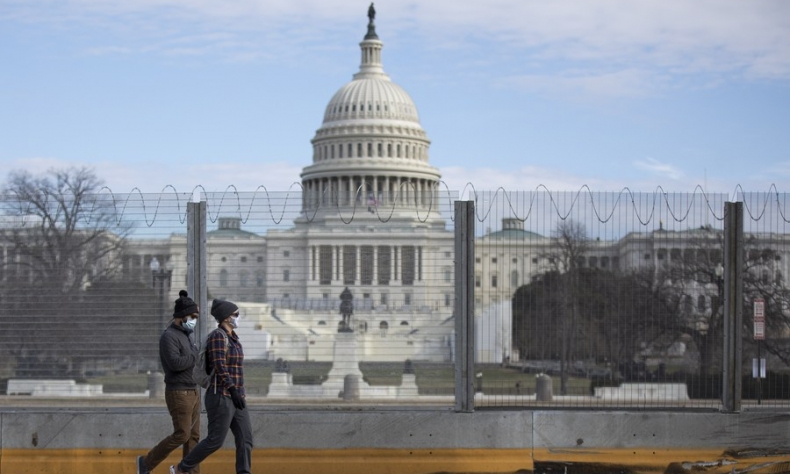
This brings us to the great irony of its democracy summit: The fundamental purpose appears to be reasserting hegemony over erstwhile allies and then aligning them as a global front against China.
China has recently consolidated the theories and practices associated with its whole-process people’s democracy, which was first named formally in 2019, and more clearly expressed this year. As a recent white paper on the subject clarifies, it reflects the longstanding effort to build and advance a socialist people’s democracy in China, one century in the making.
Released in early December, the white paper notes that people in China enjoy universal suffrage and do vote in elections with much higher turnout rates than seen in the U.S., with much higher trust in governance and satisfaction in policymaking as well. In fact, there is a multitude of democratic mechanisms in the Chinese system, but above all, it emphasizes that one cannot sacrifice the material needs of national development to the idealism promised by some forms of democracy. One must be connected with realities and actually increase real freedoms, security, wellbeing and so on.

Fulfilling promises
As one commentator put it at a recent conference in Beijing, China’s democracy doesn’t emphasize campaign promises, but promise fulfillment. It does so with various forms of direct and indirect citizen engagement, voting and consultation, and democracy between and within parties and social organizations.
Whole-process democracy is a development of socialist democracy. The first principle of the latter is liberation, followed by the progressive realization of social justice. This is what we saw with the Communist Party of China (CPC) winning the civil war and establishing the People’s Republic of China (PRC) in 1949, reestablishing sovereignty and pushing forward China’s stalled transition to modernity.
We see this again being renewed and adjusted with each generation of leadership that follows, up to the present. We’ve seen 770 million lifted out of extreme poverty and a moderately prosperous, or xiaokang, society established, with more than 400 million middle-income earners. We see an empowered China that not only handles its own affairs and handles them well, it also supports democracy globally through multilateralism and win-win approaches, and cooperates extensively to address the crises affecting all of us, including climate change, the pandemic and peacekeeping.
The Chinese system, based as it is on identifying and addressing challenges, and reforming and adapting itself when necessary, is inherently a system that is crisis-seeking. This periodically includes the crises that arise in its own system. As the CPC learned how to solve the existential crises facing itself in its early years, it learned the art of adaptation and change, through revolution and reform, and this knowledge proved instrumental in China’s national rejuvenation, including the development of its socialist, whole-process democracy.
And this is what we don’t see in other countries. We see certain people and families, certain industries, certain ethnic and interest groups, establishing their elite positions and then entrenching these through an impenetrable, conservative rule of law. This is not the failure of democracy in a broad sense, but the opposite. It’s not justice. It’s the lack of real democracy, it’s fake democracy.
The U.S. problems
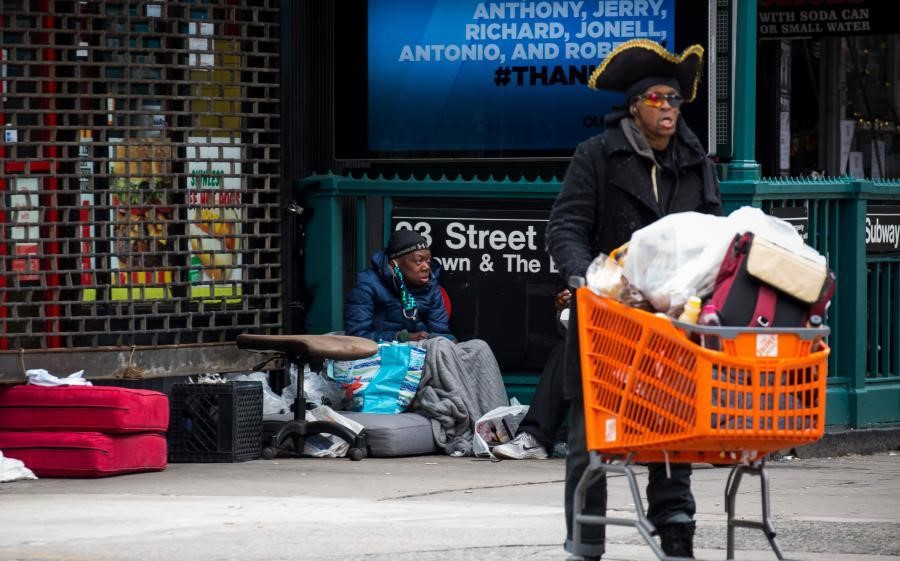
A document recently issued by China’s Foreign Ministry touches on some deep-rooted problems within the U.S., including systemic racism and wealth inequality. On the one hand, all countries, both developing and developed, have long-standing as well as emergent social problems that need to be addressed and improved. No country has reached the endpoint of its development or reached the best version of itself, in its domestic or international affairs.
On the other hand, as Wang Huning, a current member of the Standing Committee of the CPC Central Committee Political Bureau, wrote in his book America Against America in 1991, the problem with the U.S. at that time was not that it had more problems than China, but that its problems had become systemic and perhaps impossible to reform insomuch as they were part of the system itself. Wang was then a professor of international relations at Fudan University.
We should keep in mind that Wang noted this 30 years ago, when the U.S. was declaring victory in the Cold War, celebrating the “end of history” and asserting its political system was the best that humans have ever produced. But today we see the crises Wang describes have indeed perpetuated and worsened in the U.S., including systemic racism and wealth inequality, but also polarization and systemic decline. This has also produced profound spillover effects for the rest of the world, as U.S. problems have often been exported in its foreign and economic policies. Thus, the fact that the white paper notes these problems is merely a reflection of current facts, the trends of which have been observable to Chinese leaders over the last three decades at least.
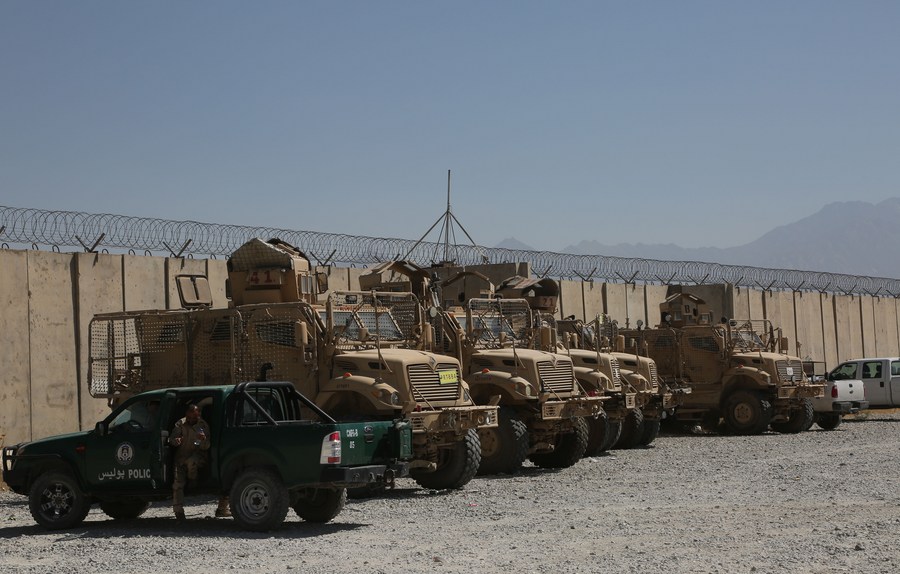
Although scholars debate how many times the U.S. has intervened aggressively against other countries since the end of World War II, or even, since the end of the Cold War, conservative estimates are in the dozens of times, including many unilateral actions aimed at regime change and contrary to international law. In 2020 alone, reported figures indicate the U.S. likely spent much more than $800 billion on its military and related intelligence operations. Many say this contradicts its image as a purveyor of world peace, and for good reason. This year alone we have seen the outcomes of U.S. imperialism in Afghanistan, as well as its efforts to divide the world against China.
Again, the U.S. often asserts itself against others, and it often does so unilaterally and without an ounce of expressed shame or irony. Additionally, it also exports its problems, and sometimes does so intentionally in order to relieve pressure on itself, particularly following especially egregious bouts of negligent governance. We’ve seen this time and time again.
For example, recall the U.S.-instigated global financial crisis in 2008, when American leaders exercised extra-constitutional powers to salvage the nation’s economy, when the Federal Reserve abused its power via its control of the U.S. dollar, the supranational currency, to soften the blow at home. This effectively spread the crisis elsewhere in ways that ruined other economies, political systems and lives. And did we not see something similar again last year when the Fed increased the money supply by 20 percent to cover the failures associated with pandemic control, which have resulted in more than 800,000 dead and now the highest inflation in decades—a pain that is borne at home and abroad.
There are many other examples, and whether the U.S. does these things intentionally or not, it’s still a form of international aggression and abuse. But more directly, we can say that the U.S. enthusiastically promotes its version of bourgeois democracy as the gold standard for other countries, which is increasingly silly as we see clear indicators of democratic declines in U.S. politics, but more to the point, its actual practices in global affairs emphasize unilateralism and hegemony. And what happens in democratic countries like Bolivia if the people elect leaders the U.S. doesn’t like? Attempts to foster a coup. Ostracization. No invitation to the “democracy summit.”
This brings us to the great irony of its democracy summit: The fundamental purpose appears to be reasserting hegemony over erstwhile allies and then aligning them as a global front against China. This is not only undemocratic toward those with whom the U.S. has differences, but also undemocratic toward its friends. And as we know, when other countries don’t follow the American lead, then the U.S. has the demonstrated tendency of “throwing off the velvet glove of hegemony to reveal the fist of imperialism inside.”
The author is a professor of politics and international relations at East China Normal University in Shanghai.