Unity in Diversity
 Facebook
 Twitter
 Linkedin
 Google +
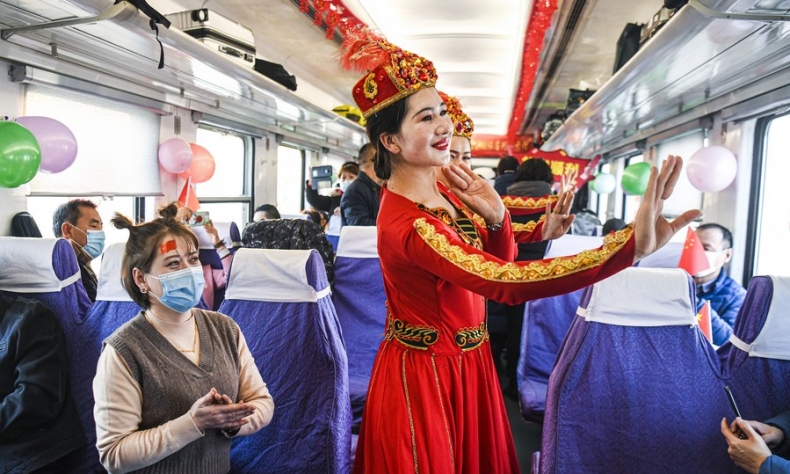
On a global scale, humanity should adopt a more open mindset, fully recognize the subjective value of different cultures, and achieve cultural diversity and coexistence.
“Unity in diversity” is an important concept in traditional Chinese culture. Its rich connotations are deeply rooted in the coexistence of different ethnic and regional sub-cultures within Chinese culture, as well as the exchange and integration of Chinese culture with other cultures.
Meanwhile, throughout China’s long history, Chinese people have formed a set of common values and pursuits which contain a high sense of identification intertwined with moral beliefs such as filial piety, brotherhood, loyalty, faith, propriety, integrity, and the sense of right and wrong, all of which are important manifestations of the unity of different elements of Chinese culture. “Diversity” and “unity” render Chinese culture uniquely creative and cohesive, making it a civilization that has prominent features and a far-reaching influence.
The concept of “unity in diversity” was born during the early development of the Chinese civilization. Over 10,000 years ago, due to differences in natural conditions such as temperature and terrain, different regional cultures were formed in various tribes living along the vast areas of China’s Yangtze River Basin, Yellow River Basin, West Liaohe River Basin, and surrounding areas.
More than 5,000 years ago, the dawn of civilization rose over these places almost during the same period, leading to the coexistence of diverse cultures. Between 2500 BC and 1900 BC, roughly equivalent to the late Five Emperors period recorded in documents such as Sima Qian’s Records of the Grand Historian, various regional cultures gradually converged on the Central Plains due to the comprehensive influence of productivity development, climate change, and other factors. Later on, through the consolidation and development of the Xia (2070-1600 BC), Shang (1600-1046 BC), and Zhou (1046-256 BC) dynasties, while preserving their own cultural elements, each region fully accepted the ritual and music system of the Central Plains, creating a “diverse and integrated” civilization.
The fruitful achievements of modern Chinese archaeology give us a clearer picture of the emergence and development process it went through. In the Chinese National Museum of Ethnology, there is a prehistoric colored pottery named “Painted Pottery Jar with Saw Tooth and Swirl Pattern”, from the Banshan branch of the Majiayao Culture, dating back approximately 4,700 to 4,300 years.
The Majiayao Culture is mainly distributed in the upper reaches of the Yellow River, where unearthed colored pottery is the pinnacle of prehistoric Chinese colored pottery art and holds an important position in the world history of colored pottery culture. Of course, this type of painted pottery was not created in a cultural vacuum, it was clearly influenced by the Yangshao Culture in the Central Plains region. China is one of the first countries in the world to create and utilize pottery, with relics of pottery found in such cultural systems as the Shangshan Culture, Dadiwan Culture, and Yangshao Culture. Among them, colored pottery is a distinct feature of the Yangshao Culture which dates back about 5,000-7,000 years, gaining it the reputation “a culture of colored pottery.” The “Painted Pottery Basin with a Fish and Human Face Design” from the Banpo period of the Yangshao Culture and the “Painted Pottery Basin with a Petal Design” during the Miaodigou period are representative cultural relics.
Studies have also shown that there is a certain correlation between the the “Painted Pottery Jar with a Saw Tooth and Swirl Pattern” in the Banshan Type of Majiayao Culture and the eastward spread of painted pottery jars with saw tooth patterns found in countries in present-day southern Central Asia, such as Turkmenistan. It can be said that the “Painted Pottery Jar with a Saw Tooth and Swirl Pattern” is a witness to the development of colored pottery culture in Gansu and Qinghai provinces of northwest China. It not only reflects the cultural impact of the Central Plains on this region, but also the exchange and mutual learning that occurred between early Chinese and foreign cultures, serving as a vivid example of the diversified yet integrated development of China’s early civilization.
Such cultural exchanges can also be seen in China’s bronze ware. In Sanxingdui Museum, the “Bird-footed Deity Statue” combines the typical features of Xia and Shang civilizations with the ancient Shu regional culture.
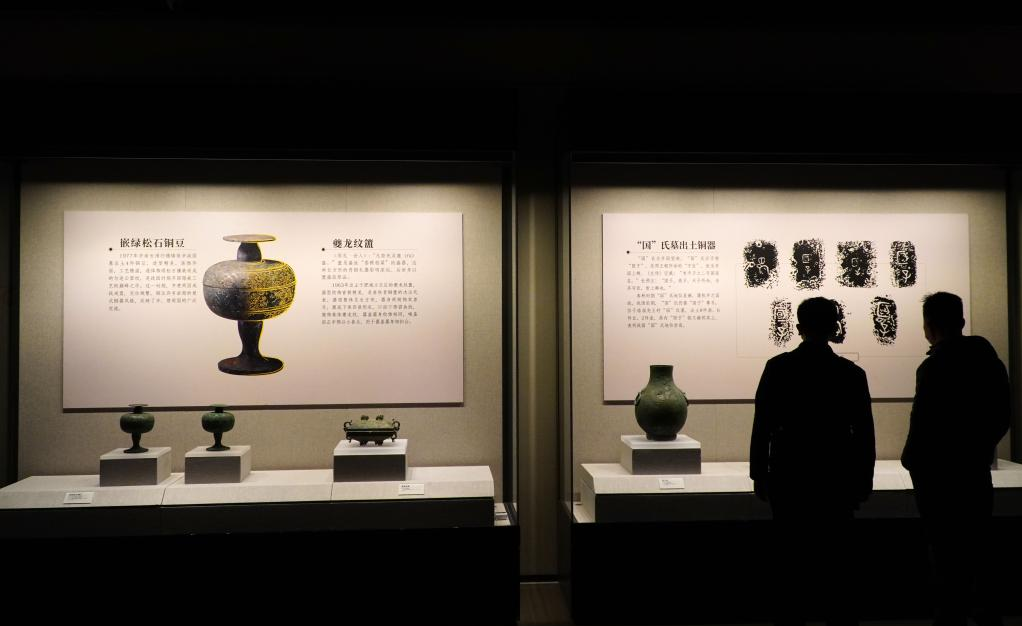
This pattern of “unity in diversity” that emerged in the early stage of Chinese civilization has long been part of the cultural genes of the Chinese people, shaping their national and political concepts and cultural beliefs. Taking the understanding of their nation as an example, the Chinese concept of “unity in diversity” is different from the Western view of simplistic equation between ethnic groups and nations, and between national borders and ethnic and linguistic boundaries. In China, “diversity” means that each ethnic group in China has its own unique historical and cultural heritage, while “unity” refers to the Chinese national community formed by the inseparable internal connections based on the common interests of all ethnic groups.
It has been pointed out that the national consciousness of China was formed during the struggle against invasion of Western powers for over 100 years in modern times. However, the existence of a national community has just an equally long history as the Chinese civilization itself.
In other words, although “Chinese nation” is a rather modern term that reflects China’s response to the impact of Western civilization on the modern world system, the concept of the Chinese nation as an entity has already undergone thousands of years of evolution and is deeply rooted in people’s hearts. In the mind of the Chinese people, the vast territory of China is jointly developed by all ethnic groups, our long history is jointly written by all ethnic groups, our brilliant culture is jointly created by all ethnic groups, and our national spirit is jointly cultivated by all ethnic groups. As a result, the history of China is the history of communication, exchange, and integration between various ethnic groups working together to create, develop, and consolidate a unified great motherland.
In fact, the dialectical unity of “diversity” and “unity” is the most prominent feature of the Chinese national community. The “diversity” in “unity” is the key to the continuous and sustainable development of the Chinese civilization, as well as the vitality and creativity of the Chinese nation. While the “unity” in “diversity” is the reason the Chinese nation has always had the cohesion and centripetal force throughout its long history, it is also the foundation for the establishment of the Chinese nation.
The concept of “unity in diversity” is not only a powerful spiritual element for China’s long-term stable development, but also exhibits the wisdom contributed by the Chinese nation to all humanity. Against this background, the concept of tianxia (the world) emerged as early as the pre-Qin period in China with the ultimate pursuit of constructing an order of coexistence that transcends boundaries such as blood, tribe, geography, and state. As researchers have pointed out, if the Greek “city-state” view constructs the concept of “national politics,” then the Chinese tianxia idea constructs the concept of “world politics.”
On a global scale, humanity should adopt a more open mindset, fully recognize the subjective value of different cultures, and achieve cultural diversity and coexistence. While promoting the development of our own civilization, we should also build a common values system for all mankind, promote the formation of a community with a shared future for mankind, in a bid to effectively resolve various problems caused by cultural differences and conflicts. These are precisely the great tensile force and vitality that the concept of “unity in diversity” possesses.
In conclusion, the concept of “unity in diversity” gradually came into being in China’s unique natural and cultural environment. Throughout history, it effectively promoted the development of the Chinese civilization and served a major role in forming China’s national characteristics. In the new era, it is still subtly influencing the contemporaneity of China, and is a key to understanding China.
Fang Wei is a research fellow at China Confucius Research Institute.