Universalism without Uniformity
 Facebook
 Twitter
 Linkedin
 Google +

The salient point of the multiple modernity’s approach is the insight that the logic of modernization can never begin in a tabula rasa, but only within a given dense civilizations as its frame.
Editor’s Note: Thomas Meyer is a former long-time Vice-Chairman of the Commission for the Study of Basic Values of the SPD, Professor of Technical University of Dortmund and co-editor of the monthly political Magazine for Social Democracy “Neue Gesellschaft/Frankfurter Hefte”. This is his speech delivered at China’s Development Blueprint and Global Development Opportunities, Sub-forum of the 5th Hongqiao International Economic Forum and Parallel Symposium on Communication of Civilizations and Vitality of Innovation in November. The article reflects the author’s opinions, and not necessarily the views of China Focus.
Since the eighteenth century the West presupposed that the success of its own model of modernization must finally result in global “westernization” – not only in industry, technology, science and communication but in culture, politics and government as well.
This idea was in the era after World War II underpinned by the famous academic “modernization theory”, which insisted that global convergence was on the horizon. In this mood in the 1990s, after the implosion of the Soviet Imperium, “the End of History” was declared with the Western model as its ultimate aim.
However, reality took a different path: the unexpected persistence of the great civilizations revived in updated versions in the form of multiple modernities – like the Chinese, the Hindu, the Buddhist, the Judeo-Christian and the Islamic Civilization. Each of them adopted modernization in different countries in their own ways.
S. Huntington interpreted this unexpected phenomenon as the rise of worldwide conflicting cultural identities, separated by permanent, unbridgeable fault lines between their basic values, that resist trust building cooperation. A fatal clash seems unavoidable. This theory was flawed because it ossifies culture and civilization and could not explain, why most cultural clashes happened inside the existing civilization between conflicting milieus.

This theory was soon challenged by the pioneering historical research of the Israeli sociologist Shmuel Eisenstadt. His new Paradigm of “Multiple Modernities” reconciles both, the observable features of reality as ongoing global Modernization and the persistence of old civilizations. Three powerful sources nourish this process of synthesizing both and prevent the resulting civilizational units from running into fault lines that make communication, understanding and cooperation among them impossible:
First, a powerful notion of humanity/humanism/justice underlies all great civilizations;
Second,?there is a transcultural component in modernization itself which promotes everywhere the evolutionary step from fate to choice: i.e. to human agency, reflexivity and subjectivity; and
Third, the increasingly globalized communication between different civilization activates bench marking effects of learning from better practice and ideas.
In full contrast to Huntington’s notion, cultures or civilizations whether large (societies) or small (milieus), are never monolithic, ossified, closed, static systems. To varying degrees they are always contradictory, and dynamic social discourse spaces in which the validity of given traditions is permanently being re-negotiated among competing groups/classes/milieus with different economic, social, and cultural positions, interests, views, and resources. Some of their core features are of very “long duration” (Fernand Braudel 1993); others, more peripheral ones may change from generation to generation, but never overnight or on command.
Crucial for the modernized version of tradition handed down to the next generation is not alone the content of that tradition, but also on the balance of forces among the competing socio-cultural milieus and political elites engaged in its interpretation and reconstruction (Max Weber 1993).
Even when it seems as though an entire society clings rigidly and dogmatically to certain cultural legacies, closer examination in most cases shows that its elites, and the socio-cultural milieus who?support them, are constantly challenged.

?“Modernization” means both, a practice that is opposed to dogmatic traditionalism and a normative goal of social evolution. The salient point of the multiple modernity’s approach is the insight that the logic of modernization can never begin in a social tabula rasa, but only within a given dense civilizational frame. The driving force of modernization is called its “logic”. It can be identified as the joint thrust of increasing rationality (critical reflection and argument), secularism (separation of religion and state), individualism (emphasis on human agency), and universalism (transcending traditional parochialism).
Obviously, the process of unfolding the same logic of modernization in the setting of the different civilizations (called the “dynamics of modernization”, R. Münch), will be conducive to different results. This is one of the reasons why the right of (and to) civilizations should be respected – within certain limits. Whereas the national governments in all civilizations have to guarantee the conditions of a good human life for all their citizens,?universal basic rights must be an expression of the common core of all civilizations and be shaped and institutionalized by way of a consensus omnium.
Presently, there is no clear human rights consensus in the world community of civilizations. That hampers productive communication and cooperation among them. I hold, that the greatest innovation in the relations between the civilizations today, must and can be a new fundamental UN-Dialogue with the common purpose to update the Human Rights in content and mode of monitoring.
Today three models of understanding basic rights in our time are on the global table.
First, it is often ignored that in the West itself there are two divergent readings of the UN basic rights: The U.S. and some other countries deny the universal validity of the First Part of the UN Covenant of 1966 that attributes to the social and economic Basic Rights the same weight and validity as to the civil and political basic rights. This denial represents the “libertarian” reading of human rights.
Second, in opposition to this, the European countries (EU) insist on the same importance and rank of both categories of basic rights, civil and social. This has consequences for the relevance of government output for the human rights balance of each country. This is fully in tune with the philosophy and the judicial status of the UN Covenant of 1966 itself and the text of its preamble. This is the social reading of human rights.
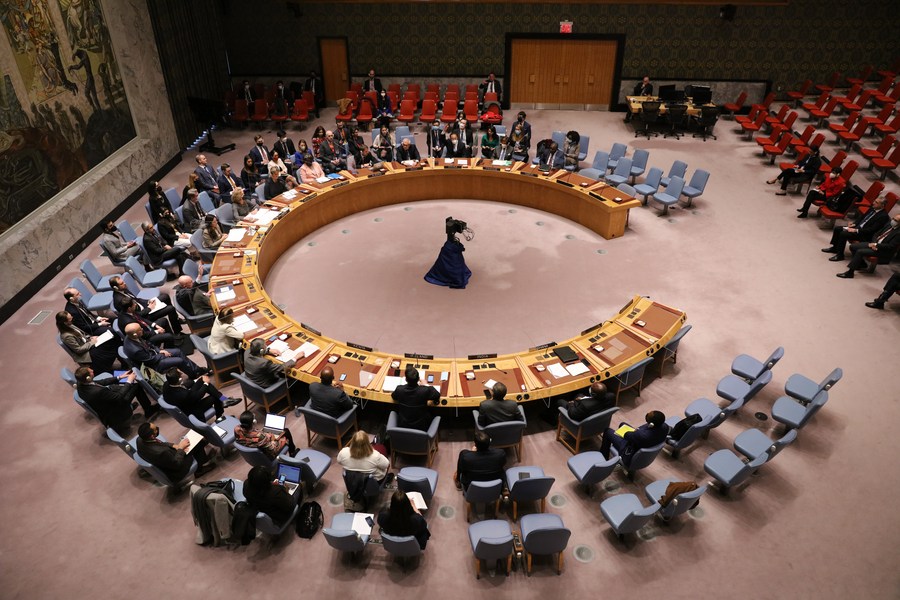
Third, China has ratified the social rights Part of this covenant and signaled that it needs more time of further development in order to ratify the civil and political rights as well. Meanwhile in certain speeches of President Xi and positions papers by the government of the country three proposals have been launched for new consensus on human rights:
“It is important to uphold a Human Rights philosophy that centers on the people… and advance all types of Human Rights, among which the rights to subsistence and development are the basic Human rights of paramount importance” (Position Paper of the State Council, 17.9.2022)”. This paper also insists on the human “right to development” and the “right of each country to chose its own way of development”. This approach aims at taking the government output of a country into consideration concerning its human rights balance. It may be termed “the development state reading of human rights”.
A couple of years back the Advisory Council of the Dutch Foreign Ministry stated that the universality of Human Rights is not tantamount to their uniformity. i.e. the complete neglect of the cultural and social context. The difference between derogable human rights and non-derogable rights, the council states, must however be respected by all in all circumstances.
These are some of the controversies and proposals concerning the innovation of communication between the civilizations in our time. This would also greatly enhance understanding and cooperation in many of the more practical fields of politics, like climate change, emergent pandemics, terrorism etc., which are on the agenda today.
As mentioned above, what decides which updated version of a respective tradition will be handed down to the next generations depends not only on the content of that tradition, but also on the balance of forces among the competing socio-cultural milieus and political elites engaged in interpreting and reconstructing it (Max Weber). To make the right of civilizations work, we need also to make sure that the right of freedom to express and develop cultural life according to its own rules must be guaranteed.
The UN Alliance of Civilizations, that exists already, seems to suggest itself as the appropriate platform for such a timely project.